
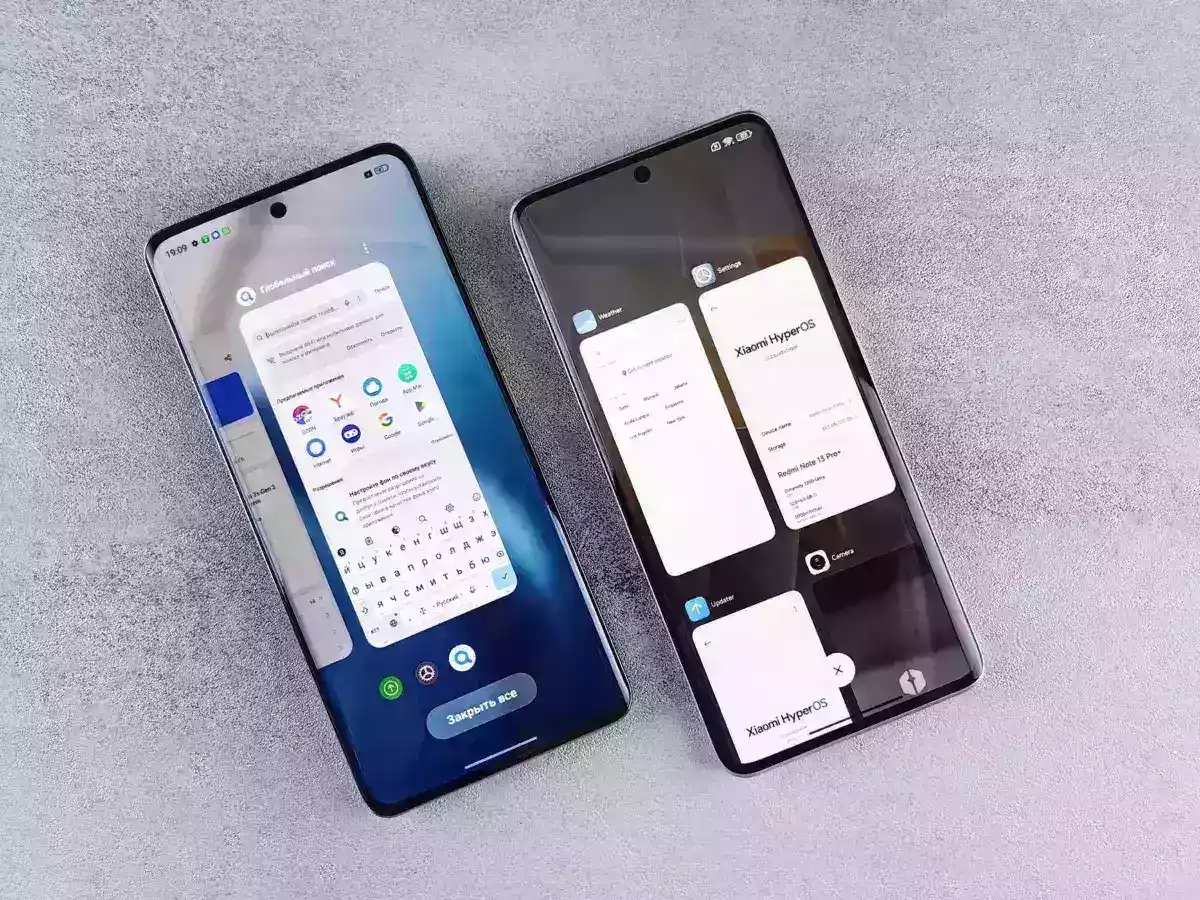
Apple’s foldable iPhone display is not interesting because it bends; it matters because it forces Apple Inc. to solve a problem that ordinary iPhone hardware never had to face: how to preserve premium image quality, touch accuracy, and durability while the device behaves like a miniature machine rather than a rigid slab. The headline about an iPhone Duo-style bendy screen is flashy, but the real story is engineering discipline. A true foldable smartphone lives or dies by the weakest layer in the stack, not by the marketing name on the box.
That is why this topic deserves a technical reading instead of a hype cycle. A folding handset must keep the feel of a premium iPhone while managing stress, heat, light transmission, and repeated motion. The screen is only the visible part of the puzzle. Underneath it are materials that have to flex, adhesives that have to survive, and a mechanical structure that has to guide movement with precision. The question is not whether the screen can fold once. It is whether it can fold thousands of times without turning the user experience into a compromise.
What the bendy screen actually is
A foldable display is usually an organic light-emitting diode panel built on a flexible display substrate, not a standard rigid panel. The pixels themselves can be made thin enough to bend, but that does not solve the entire problem. The panel still needs a driving layer, often built with thin-film transistor technology, plus a protective stack that limits visible wear. In foldables, the panel is typically attached to a polymer base such as polyimide because it tolerates bending better than conventional glass.
That stack is where the engineering trade-offs begin. A rigid smartphone can rely on a strong front cover and a flat internal architecture. A foldable device cannot. It needs a cover that is soft enough to flex, hard enough to resist scratches, and thin enough not to make the device bulky. Some designs use ultra-thin glass over a polymer layer, because glass improves the in-hand feel and scratch resistance while the underlying structure absorbs the bend. The result is not true magic. It is a careful compromise among optics, durability, and thickness.
| Component | What it does | Why it is difficult |
|---|---|---|
| OLED panel | Delivers deep contrast and thin construction | Must bend without damaging pixels or brightness uniformity |
| Polyimide substrate | Provides a flexible base for the panel | More vulnerable to heat, wear, and long-term deformation |
| Ultra-thin glass | Adds a glass-like feel and better scratch resistance | Can still fracture if the bend radius is too aggressive |
| Touch layer | Registers input across the full surface | Must stay accurate near the fold and under repeated stress |
| TFT backplane | Controls the pixels behind the image | Electrical fatigue can appear after years of flexing |
The hinge is the real product
Consumers focus on the screen because it is visible. Engineers focus on the hinge because it controls the bend radius, the closing force, and the stress pattern across the display. If the hinge is too loose, the panels do not align cleanly. If it is too tight, the screen suffers more stress every time the device opens and closes. The hinge also determines whether dust can enter the mechanism, whether the device feels balanced in the hand, and whether the folded phone becomes too thick to carry comfortably.
This is where prior foldable devices from Samsung Electronics and others matter as reference points, even if Apple chooses a different design language. The challenge is not novel. The market already knows that a folding phone can work. What remains unresolved is whether it can work at an Apple level of fit, finish, and longevity. That means minimizing the visible crease, maintaining uniform brightness, and avoiding a hinge that feels engineered by necessity rather than intention.
A foldable screen is not a single invention; it is a coordinated failure-management system.
Why foldables are still expensive to make well
Foldables remain a premium niche because the economics are harsh. The device requires more parts, tighter tolerances, and a much more complex assembly process than a standard smartphone. The visible panel is only one cost center. The hinge, reinforcement layers, adhesive tuning, and protective cover all add expense. Repairability is also worse. A damaged foldable screen is often harder and costlier to replace than a conventional phone display.
There is also a perception problem. Consumers do not buy a foldable because it is elegant in a teardown video. They buy it if the device feels practical every day. If a foldable is heavy, awkward when closed, or visibly compromised in bright light, the novelty fades quickly. That is why Apple’s rumored version is interesting: Apple usually waits until it can reduce the visible penalty of a category. If it cannot hide the awkwardness, it will likely wait longer.
Material choices that matter
One of the biggest strategic questions is whether Apple aims for a softer, more obviously flexible design or a more rigid feeling outer shell. In the latter case, the company would likely lean on cover materials associated with premium durability, including strengthened glass families such as Gorilla Glass for the non-folding surfaces. Inside the device, however, Apple would still need a stack that behaves more like flexible electronics than like a standard iPhone logic board.
That balance matters because users compare Apple products to the best in the category, not to the average one. A bendy screen that looks clever but feels flimsy will not be enough. Apple would need to deliver a display that remains readable, responsive, and tactically reassuring. That is a high bar, especially in a market that already understands the weaknesses of foldables.
The risks Apple cannot ignore
Three risks dominate the category: durability, visual artifacts, and display aging. Burn-in remains a concern for OLED-based panels, particularly when interface elements sit in the same place for long periods. The fold line can become more visible over time, which is partly a mechanical problem and partly an optical one. And any panel that flexes repeatedly must survive stress cycles that a flat phone never experiences.
There are also software consequences. A foldable interface is not just a larger screen. It must adapt when the device changes shape. Apps need to handle continuity between the outer display and the inner display. The operating system has to understand posture, orientation, and partial folding states. Without that software polish, even a technically advanced hardware design can feel unfinished. In that sense, the product is as much about interaction design as it is about materials.
What a future-proof panel might look like
Some analysts argue that Apple could eventually move beyond today’s OLED-centered approach and look toward microLED or other next-generation display formats. That is plausible in the long term, but it is not a near-term escape hatch. MicroLED is promising because it could offer brightness, efficiency, and longevity advantages, yet it still faces serious manufacturing and scaling hurdles. For now, OLED remains the most realistic foundation for a bendable premium screen.
In other words, Apple’s path is probably evolutionary, not revolutionary. The company can refine the geometry, improve the protective layers, and reduce the crease, but it cannot repeal the physics. A folding screen will still be a foldable screen. The only question is how invisible Apple can make the engineering compromises.
How to judge the product when it finally appears
When a true Apple foldable arrives, the useful questions will be practical, not promotional. Buyers and analysts should watch the device in the following ways:
- Does the display show a visible crease under normal indoor light?
- Does the hinge close flush, or does it leave a gap that collects dust?
- Does the inner panel keep color and brightness uniform near the fold?
- Does the software adapt cleanly when the device is partially open?
- Is the folded device still thin and light enough to feel like a phone, not a tablet in disguise?
Those tests matter more than launch-day slogans. A company can describe a foldable as a productivity breakthrough or a design milestone, but users will judge it by friction. Does it open smoothly? Does it stay durable? Does it feel coherent after months of use? That is the standard Apple has to meet if it wants the foldable category to feel inevitable rather than experimental.
FAQ: what readers usually want to know
Will a foldable iPhone still use OLED?
Most likely, yes. A foldable iPhone display would almost certainly rely on OLED technology because OLED is thin, flexible, and capable of high contrast. A rigid LCD is far less suitable for repeated folding. The real issue is not whether Apple uses OLED, but how it packages the panel to keep it durable and visually consistent.
Why do foldable phone screens get a crease?
The crease appears because the display and its supporting layers must bend around a fixed radius. Even with careful hinge tuning, repeated folding can produce deformation, optical distortion, and a change in surface tension. The crease can be reduced, but it is difficult to eliminate entirely without changing the basic mechanics of the device.
Is ultra-thin glass actually better than plastic?
In many cases, yes, because ultra-thin glass gives the user a more premium feel and better scratch resistance than a fully plastic surface. But it is not a perfect answer. Glass still has limits, especially in a repeatedly folded environment. That is why foldables often combine glass with polymer layers instead of relying on a single material.
The question Apple still has to answer
The most important insight is simple: the success of a foldable iPhone display will depend less on whether Apple can make a screen bend and more on whether it can make bending feel unremarkable. That means hiding the compromise so well that users stop thinking about the hinge, the crease, and the protective layers. It is the same logic Apple has used in other categories: reduce the visible complexity until the device feels obvious in hindsight.
What to watch next is not just the panel itself, but the supporting system. Apple will need to decide how much it trusts current OLED supply chains, how it manages device thickness, and whether the software can exploit the format instead of merely surviving it. If the company succeeds, the foldable category could shift from novelty to normality. If it fails, the market will get another expensive demonstration of how hard smartphone innovation becomes once physics, repair costs, and user expectations collide.
SEO DATA
Primary Focus Keyphrase: foldable iPhone display
Related Keyphrase 2: flexible OLED display
Related Keyphrase 3: iPhone foldable screen technology
Related Keyphrase 4: how does a foldable phone screen work
Related Keyphrase 5: bendable display materials
Primary Keyphrase Synonyms:
foldable iPhone screen, flexible iPhone display, bendable OLED panel, folding smartphone screen, hinged smartphone display
SEO Title:
Foldable iPhone Display: How Apple’s Bendy Screen Could Work
Meta Description:
Foldable iPhone display explained: the materials, hinge design, and trade-offs Apple must solve before a bendy screen can ship reliably.
URL Slug:
foldable-iphone-display
Image Filename:
foldable-iphone-display-bendy-screen.jpg
Image ALT Text:
Foldable smartphone display bending at a hinge in a lab test
Image Title:
Foldable iPhone display engineering
Image Caption:
A bendable OLED panel must balance durability, thickness, and crease control.
Search Intent:
Informational
Frequently Asked Questions
Will a foldable iPhone use the same kind of screen as a regular iPhone, just bent in the middle?
No. A foldable iPhone would need a different display stack built to flex repeatedly. The article describes a flexible OLED panel on a polymer substrate, often with ultra-thin glass layered in for better scratch resistance and feel. A standard rigid iPhone display is optimized for flatness, not repeated bending, so the materials and structure must change.
Why is the hinge considered more important than the display itself?
Because the hinge controls how the screen bends, how much stress it experiences, and how the two halves align when closed. Even a strong flexible panel can fail if the hinge creates too tight a bend radius or allows dust ingress. In practice, hinge design determines durability, thickness, and the overall premium feel of the device.
If the screen can bend, why does crease visibility remain a problem?
A crease is a side effect of repeatedly folding layered materials that were never as stable as a single rigid sheet of glass. The article notes that Apple would need to minimize this by carefully managing the hinge, materials, and pressure distribution. In foldables, the challenge is not just folding, but keeping the fold visually unobtrusive over time.
Does ultra-thin glass mean the display is as durable as normal iPhone glass?
Not quite. Ultra-thin glass improves scratch resistance and gives a more familiar glass-like feel, but it still has limits. It works because the flexible layer underneath absorbs the bend. If the bend radius is too aggressive or the mechanism is poorly tuned, the glass layer can still fracture or the stack can wear out over time.
What kind of long-term failures are most likely in a foldable iPhone?
The most likely issues are not dramatic breakage at first, but gradual fatigue: brightness unevenness, touch inaccuracies near the fold, mechanical looseness in the hinge, and wear in the TFT backplane or adhesive layers. The article emphasizes that a foldable device lives or dies by repeated stress, not by whether it functions on day one.