
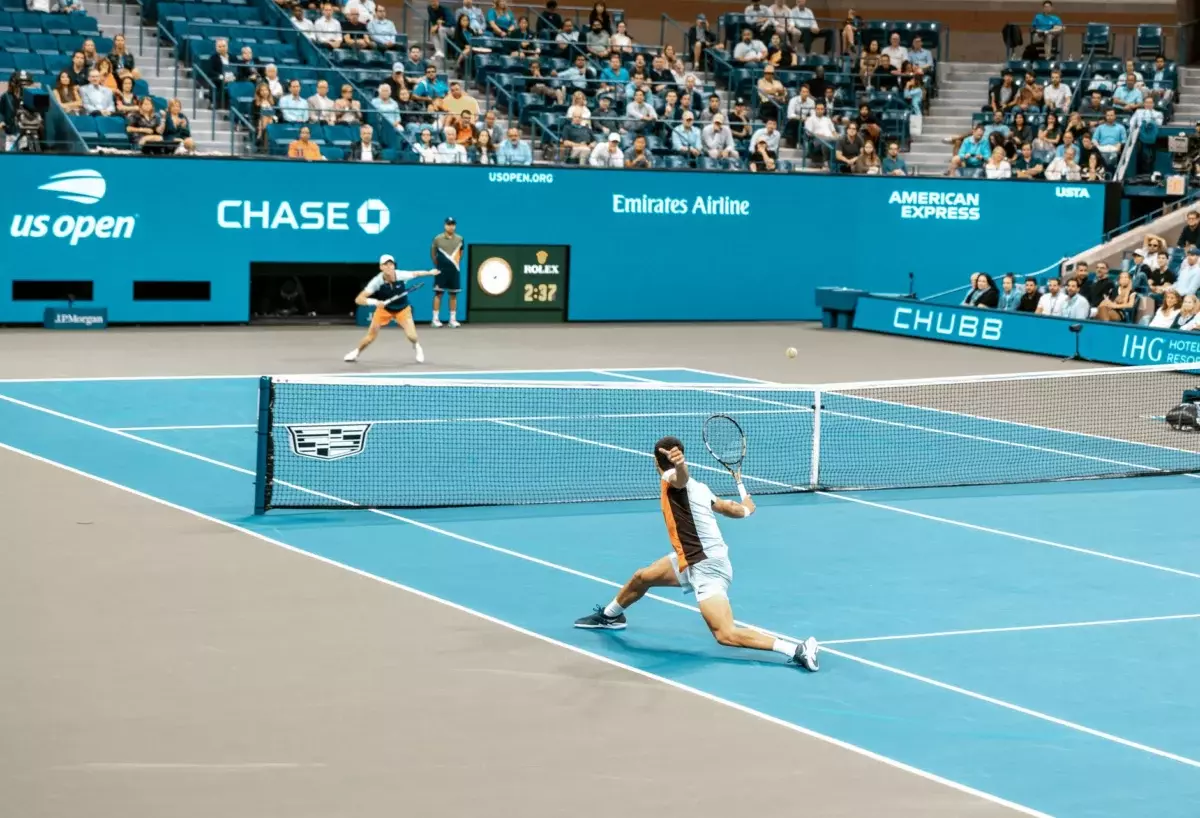
The question of an American winning the men’s singles at the U.S. Open is less about patriotic hope and more about structural constraints: how current American profiles match up against the tournament’s prevailing performance model on high-pace hard courts. This analysis is unique because it treats the U.S. Open as an engineering problem—serve effectiveness, return position, rally geometry, and physical/mental variance—then stress-tests those variables against what recent U.S. Open winners and deep runs imply.
Background context: why the
Frequently Asked Questions
Can an American realistically win the men’s singles at this year’s U.S. Open?
Yes, it’s possible, but the odds depend more on fit than on nationality. The U.S. Open tends to reward players whose serving and returning patterns match the tournament’s high-pace hard-court model. If an American can consistently win early points, control return position, and manage variance during long rallies, they can translate matchups into deep runs.
What does it mean to treat the U.S. Open like an “engineering problem”?
It means breaking performance into controllable mechanics rather than relying on motivation or historical narratives. Key variables include serve effectiveness (pace + placement), return position (how close they are to neutralize depth), rally geometry (angles, depth, and step patterns), and physical/mental variance (how they hold form through momentum swings).
Why do high-pace hard courts make it harder for some Americans?
High-pace conditions shorten reaction time and reduce the margin for technical errors. Players who serve effectively and return with confidence—especially against powerful opponents—benefit most. If a player’s return position allows the opponent to set rally geometry too comfortably, the match can tilt toward faster dictation, fewer neutral exchanges, and more pressure on every hold.
Which skills are most predictive of success at the U.S. Open for men?
The article’s framework points to serve effectiveness, return position, and rally geometry as the most predictive. In practice, that means landing serves that don’t invite attack, returning to the opponent’s weaker zones while blocking depth, and using angles to force shorter reply windows. Physical and mental variance then determines whether those advantages last across five-set stretches and late-round fatigue.
Does “recent winners and deep runs” actually reveal a pattern?
It can, because tournament outcomes often reflect the prevailing performance model rather than a single style. When recent winners and frequent deep finishers share repeatable traits—like strong high-pace serving, reliable returns under pressure, and the ability to sustain rally structure—it suggests the event favors specific mechanics. That makes matchup analysis more actionable than broad expectation.
What’s the biggest uncertainty factor for an American trying to win this year?
The biggest uncertainty is variance: how often a player’s execution breaks under pressure, fatigue, or momentum swings. Even with a good stylistic match, late-round dynamics can disrupt serve quality, return timing, and shot selection. The U.S. Open’s demanding physical and mental environment can turn a small mechanical dip into a decisive swing, so consistency matters as much as peak level.