
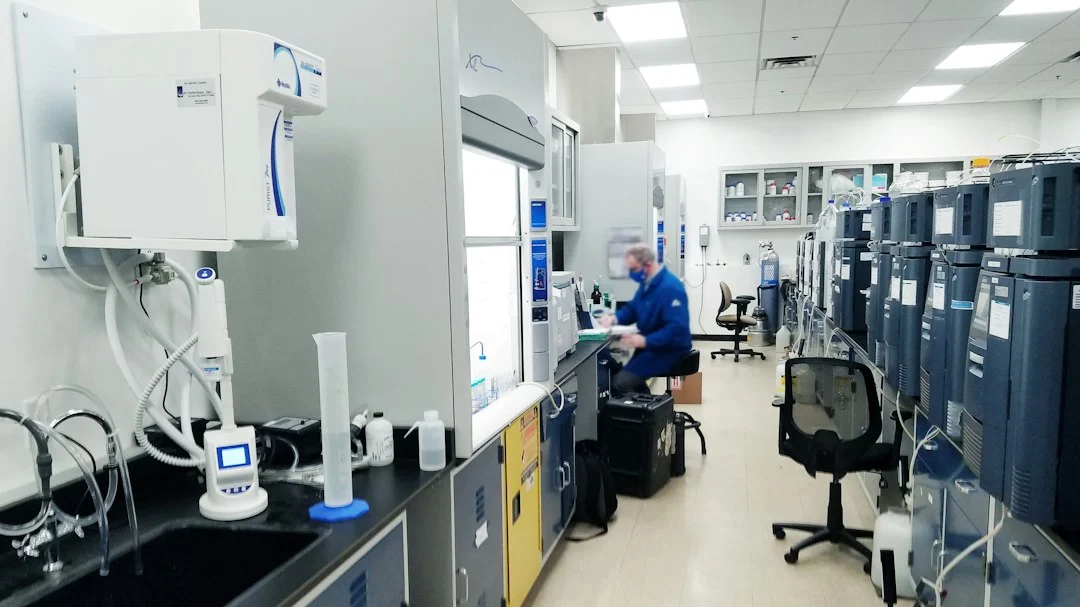
AI in biology is moving from a bold promise to a practical toolchain, but Anthropic’s recent messaging and IPO-era caution also expose the central tension in the field: the distance between a model that sounds revolutionary and a system that can reliably produce verified biological discoveries. That gap matters because biology is not a language game. It is a world of cells, proteins, assays, and failures that only count when they survive the scientific method.
AI in Biology: What Anthropic’s IPO Filing Reveals About Discovery
At the center of the debate is a simple question with complicated consequences: how quickly can artificial intelligence help scientists move from hypothesis to validated result? In areas like computational biology and bioinformatics, the answer is already faster than before, but unevenly. In other areas, especially where causality and wet-lab validation matter, the answer is still: not nearly as fast as public rhetoric suggests.
Why the promise feels plausible
The optimism around AI in biology is not irrational. Modern machine learning systems are exceptionally good at finding patterns in large, noisy datasets, and biology produces plenty of both. Sequencing data, microscopy images, chemical libraries, and scientific literature are all rich enough for models to extract structure that humans would miss. That is part of why large language models can appear so useful in scientific workflows: they are fast at synthesis, classification, and retrieval.
But there is a crucial difference between pattern recognition and discovery. A model can suggest a plausible mechanism, rank candidate proteins, or summarize prior work. It cannot, on its own, prove that a hypothesis is true in a living system. The word
Frequently Asked Questions
What does Anthropic’s IPO-era messaging actually reveal about AI in biology?
It reveals a gap between capability and proof. Anthropic’s cautious tone suggests that even the most advanced models are still better at generating useful hypotheses than at delivering validated biological findings. In other words, the industry may be moving fast in software terms, but biology still demands experimental confirmation before a result can be called real.
Why is AI more effective in bioinformatics than in wet-lab biology?
Bioinformatics is largely a data interpretation problem, which plays to AI’s strengths: pattern recognition, ranking, classification, and retrieval. Wet-lab biology is different because results depend on physical systems, experimental design, and reproducibility. A model can suggest what to test, but it cannot replace the assay, the cell culture, or the validation step.
What is the main difference between a plausible biological insight and a real discovery?
A plausible insight is something the model can infer from existing data, such as a likely protein interaction or mechanism. A real discovery survives empirical testing. That means it must be reproducible, causally supported, and confirmed in a biological system. Without that final step, the output is still a hypothesis, not a discovery.
Can large language models help scientists even if they cannot prove hypotheses?
Yes. Their value is often in accelerating the research process, not completing it. They can summarize literature, surface relevant papers, propose candidate explanations, organize experimental options, and help researchers move faster through large datasets. The key is treating them as assistants in scientific workflow, not as substitutes for experimental evidence.
Why does the article emphasize causality so strongly?
Because biology is not just about finding patterns; it is about understanding what causes what. A model may spot correlations that look convincing, but causality requires controlled experiments and careful validation. Without that, AI can produce ideas that are statistically attractive yet biologically wrong, which is especially risky in drug discovery and therapeutic research.