
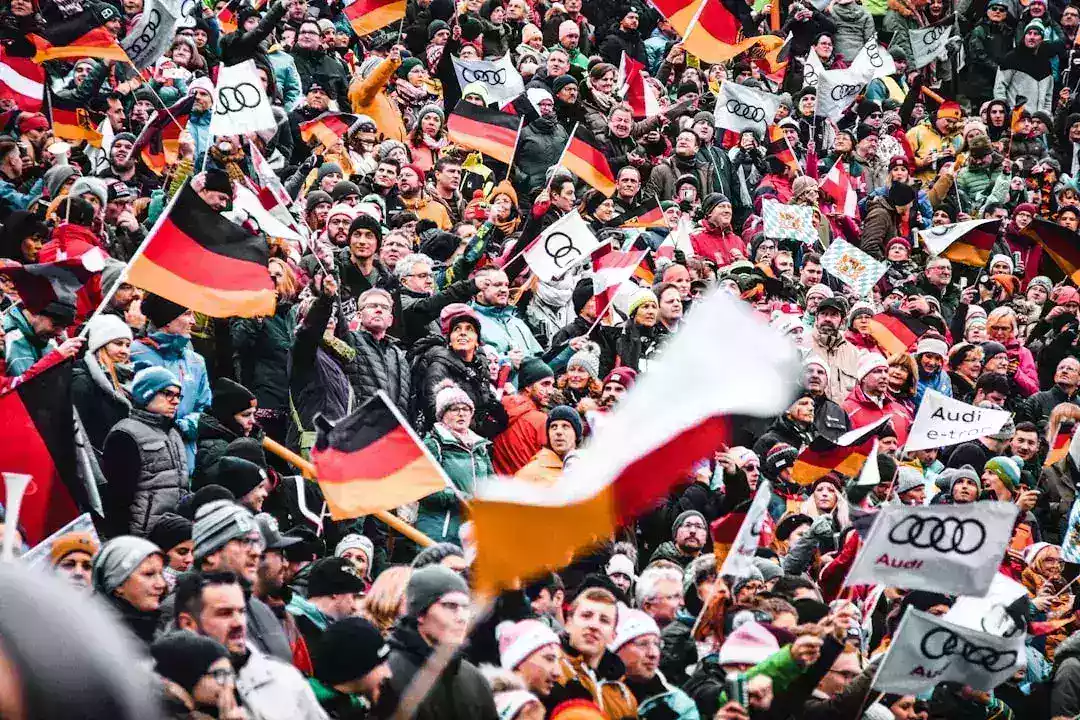
The AfD victory in Saxony-Anhalt is more than a regional upset. It is a warning shot aimed at one of Europe’s most comforting political assumptions: that the far right must soften, sanitize, and slide toward the center before it can win real power. The election result suggests a harsher possibility. In the logic of Alternative for Germany, radicalism itself may be the product, not the liability. For anyone trying to understand the new phase of right-wing populism, this is a crucial case study.
Why Saxony-Anhalt Became a Laboratory for the Far Right
Saxony-Anhalt, in eastern Germany, sits inside a political landscape shaped by the aftershocks of reunification, demographic drift, and a long-running sense that Berlin’s national elite does not fully hear the region’s grievances. That does not automatically produce far-right majorities, but it helps explain why the AfD can turn cultural unease into electoral momentum more easily there than in many western states. In East Germany, identity politics often arrives before policy detail, and resentment can become a shortcut to loyalty.
The party’s 44% result, just three seats short of an absolute majority, matters because it is not merely a protest score. It is close enough to power to look plausible, but distant enough to keep the story emotionally charged. That combination is potent. It allows the AfD to present itself as an embattled movement denied its rightful place, while still demonstrating that hard-edged messaging can dominate the local battlefield.
Local anger, national symbolism
What happens in one German state rarely stays there. Eastern German politics has often served as a testing ground for national narratives, especially when parties seek to convert frustration into identity. The AfD’s breakthrough gives far-right activists elsewhere a new script: don’t imitate the center, pressure it. Don’t apologize for extremity, celebrate it as authenticity.
The New Radical Playbook: Keep the Edges Sharp
This is where the story breaks with the path taken by leaders such as Giorgia Meloni and Marine Le Pen. Meloni’s rise has been described as a kind of mainstreaming, sometimes called Melonization, while Le Pen has spent years de-demonizing National Rally. She moved away from the most openly toxic symbols, while her party worked to look governable, even presidential. The AfD, by contrast, has often chosen the opposite route: provoke, polarize, and treat outrage as fuel.
That strategy shows up in migration politics. The party’s support for remigration is not a rhetorical accident; it is an organizing principle. It speaks to an electorate that wants a politics of exclusion stated plainly and aggressively. Figures such as Martin Sellner have helped normalize this world of coded ethnic nationalism, while the AfD’s willingness to be associated with such ideas signals that, in some spaces, radicalism is now a badge of seriousness rather than shame.
- Identity first: the message is not policy compromise, but national purity and cultural defense.
- Conflict as attention: controversy is treated as proof that the party is telling forbidden truths.
- Purity over coalitionability: the goal is not broad compatibility, but a disciplined base.
In today’s far-right ecosystem, the ability to remain provocative can be more valuable than the ability to become respectable.
That is why the AfD’s success reverberates beyond Germany. It reinforces the argument made by figures on the hard edge of Europe’s politics, from Vox in Spain to Chega in Portugal. It also helps explain why challengers like Eric Zemmour could briefly surge by outflanking their rivals on identity before voters pulled back.
Why Radicalism Can Win Locally, but Stall Nationally
The same qualities that energize a strong local result can become liabilities at national scale. The deeper the rhetoric sinks into exclusion, historical revisionism, or open antagonism toward minorities, the harder it becomes to appeal to voters who want change without rupture. That tension is central to the AfD debate. It can dominate protest sentiment, but it still has to persuade broader publics that it can govern responsibly.
Germany’s political system adds another barrier: the mainstream parties’ refusal to cooperate with the AfD, the so-called firewall. When a movement is excluded from coalition arithmetic, it may gain moral martyrdom, but it also loses access to the machinery of government. That matters in a parliamentary system where legitimacy and seats are not the same thing.
The contrast with Viktor Orbán is instructive. Orbán showed how an illiberal project can consolidate power over time, but even long stretches of dominance eventually collide with institutional limits, economic frustration, and voter fatigue. History has also humbled other strongmen who believed culture-war intensity could substitute for administrative competence. The lesson is simple: opposition can reward maximalism, but governing rewards the ability to deliver.
That is why the AfD’s local triumph does not automatically translate into national inevitability. National elections demand broader legitimacy, a steadier image, and a tolerance for compromise that radical movements often reject. In that sense, the party’s strategy may be optimal for mobilization and suboptimal for rule.
What Europe’s Next Far-Right Wave May Copy
The international ripple effect may be the most important part of this story. From the lens of populism, the AfD result offers a fresh proof-of-concept to activists who believe moderation is a trap. The presence of U.S. President Donald Trump in the broader conversation also matters. His brand of insurgent politics, amplified by platforms like Truth Social, tells Europe’s hard right that institutional restraint is optional and that disruption can be marketed as courage.
That shift is especially significant heading into future contests for the European Parliament, where migration, sovereignty, and cultural conflict remain powerful mobilizing themes. As European Union politics becomes more fragmented, far-right parties may feel less pressure to converge on a single respectable model. Some will continue the Le Pen-Meloni route; others may decide the AfD route is more honest, more energizing, and, in their view, more electorally efficient.
The risk is not just that more parties adopt sharper rhetoric. It is that the broader political center grows numb to it. Once extremism becomes routine, the threshold for what is considered acceptable keeps moving. That is how a fringe argument can become a mainstream talking point before many voters realize the line has shifted.
Signals to watch next
- Whether far-right leaders keep distancing themselves from hardliners or start embracing them openly.
- Whether coalition firewalls hold when regional arithmetic becomes more fragile.
- Whether migration remains the dominant issue, or whether cost of living and public services reclaim the center of debate.
- Whether copycat movements in other countries choose the AfD model of confrontation over the National Rally model of image repair.
FAQ: What Readers Usually Want to Know
Can far-right parties win without moderating?
Yes, but usually under specific conditions: a strong grievance climate, a fragmented opposition, and an electorate that values identity messaging over policy breadth. The AfD’s result shows that radicalism can be electorally profitable, especially at the regional level.
Why is the AfD different from Marine Le Pen’s party?
Le Pen’s National Rally has worked hard to appear governable and less extreme. The AfD has often done the opposite, leaning into conflict, historical provocation, and sharper anti-immigration language.
What is the firewall in German politics?
It is the mainstream parties’ refusal to form coalitions or cooperate with the AfD. That exclusion limits the party’s ability to turn votes into governing power, even when its electoral performance is strong.
The Real Test Is Whether Radical Victory Can Survive Responsibility
The deepest lesson from the AfD victory in Saxony-Anhalt is not that moderation is dead. It is that moderation is no longer the only route to relevance. In some places, radicalism is now a competitive strategy because it turns fear into identity and identity into turnout. But that same strategy can freeze a party in permanent opposition, making it loud, influential, and still unable to govern.
What happens next will reveal whether Europe is entering a new era of hard-right confidence or simply another cycle of insurgency and disappointment. Watch the next elections for the answer to a harder question than who wins: when the center weakens, does the far right become more responsible, or does it discover that extremity is easier to sell than competence?
Frequently Asked Questions
Why does the AfD’s result in Saxony-Anhalt matter beyond the state itself?
Because it challenges the assumption that far-right parties must moderate to gain power. Saxony-Anhalt is being read as a test case: if the AfD can win by staying hard-edged and polarizing, other parties across Europe may copy that strategy rather than moving toward the center.
What makes eastern Germany especially receptive to the AfD’s message?
The article points to reunification’s long shadow, demographic decline, and a persistent feeling that national elites do not fully understand the region. Those conditions do not automatically create far-right support, but they make identity-based appeals and anti-elite resentment easier for the AfD to turn into votes.
How is the AfD’s strategy different from that of Giorgia Meloni or Marine Le Pen?
Meloni and Le Pen have largely tried to make their movements look more governable and acceptable to mainstream voters. The AfD has often done the opposite: it treats provocation, conflict, and ideological sharpness as assets, not problems, and uses outrage to reinforce its authenticity.
Why does the article say radicalism may be a product rather than a liability for the AfD?
Because for part of its base, the party’s appeal comes precisely from refusing compromise. The article argues that being openly exclusionary or confrontational can signal seriousness and loyalty to supporters who want a politics of identity, not a softened version designed to attract everyone.
If the AfD can do so well locally, why might the same approach fail nationally?
A local campaign can thrive on grievance, identity, and symbolic confrontation, but a national race exposes a party to broader scrutiny. The more extreme the rhetoric becomes on migration, minorities, or history, the harder it is to win voters who want stability, coalition potential, and a governable image.