
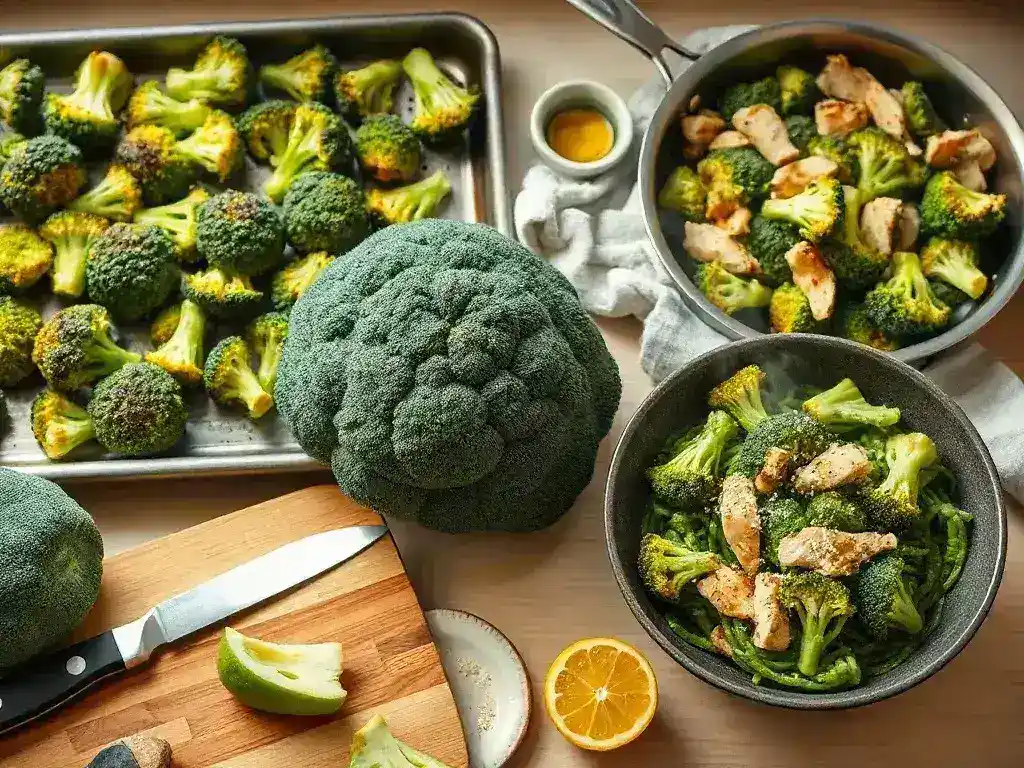
Easy broccoli dinners are one of the more practical ideas in weeknight cooking. A single head of broccoli is cheap, widely available and more versatile than its side-dish reputation suggests. The premise behind recent roundups, including a list of ten dinners that start with one head, is sound: treat broccoli as the foundation of the meal rather than a garnish. This analysis looks at why that works, where it fails, and how to do it well.
Why a Whole Head of Broccoli Works as a Dinner Base
Broccoli is a cultivar of Brassica oleracea and belongs to the cruciferous vegetables. It offers dietary fiber, vitamin C and vitamin K. Exact amounts are listed in the USDA FoodData Central database. Its structure matters as much as its nutrition. The florets, stems and leaves behave differently under heat, so one vegetable gives you several textures.
The economics also favor it. Buying a whole head is usually cheaper than buying pre-cut florets, and using the stalk reduces food waste. The stalk is edible, and when peeled and sliced thin it is tender and mildly sweet. Discarding it is a habit, not a necessity.
The Main Formats Behind Quick Broccoli Dinners
Most recipes that start with one head fall into a few categories. Understanding the categories matters more than memorizing any list of ten.
Pan and Sheet-Pan Dishes
Roasting at high heat browns the edges through the Maillard reaction, which softens broccoli’s bitterness. Stir-frying gives a faster, crisper result. Both pair easily with a protein.
Pasta, Rice and Grain Dishes
Broccoli folds easily into pasta or fried rice. Finely chopped stems blend into the dish without dominating it. This is where broccoli shifts from side to structural ingredient.
Baked and Egg-Based Meals
A frittata or a casserole suits make-ahead cooking. The weakness is moisture. Under-drained broccoli turns watery, and overcooked broccoli turns gray and sulfurous.
Soups
Blended soup is the most forgiving format. It hides imperfect texture and uses the stems, but it needs a fat or a salty cheese such as Parmigiano-Reggiano to avoid tasting flat.
Does Cooking Method Change the Health Value?
This is where popular coverage often oversimplifies. Broccoli contains glucosinolates, which the enzyme myrosinase converts into compounds such as sulforaphane, which has been studied for potential health effects. Myrosinase is sensitive to heat, so long boiling can reduce its activity. Light steaming or brief cooking is generally considered gentler. Research on sulforaphane is still developing, and strong claims about disease prevention from eating broccoli are not established. The safer conclusion is practical: cook it so you enjoy it and will eat it again. Vegetables that taste good get eaten, which counts for more than small differences in compound retention.
For wider context, the Dietary Guidelines for Americans and MyPlate both encourage regular vegetable intake, including dark green vegetables.
Common Mistakes and How to Avoid Them
- Overcooking: Mushy, olive-colored broccoli is the main reason people dislike it. Pull it while it is still bright green.
- Uneven cutting: Florets and stems cook at different rates. Cut stems smaller or start them first.
- Crowding the pan: Overloaded pans steam the broccoli instead of browning it.
- Skipping acid and salt: Lemon juice, vinegar or a salty finish brightens broccoli’s flavor.
- Not drying it after washing: Excess water prevents browning and dilutes sauces.
Quick Answers
How much does one head of broccoli feed?
A medium head typically serves two to four people as part of a meal, depending on what else is on the plate. Treat this as a rough guide, since head sizes vary widely.
Can you use the broccoli stalk?
Yes. Peel the tough outer layer, then slice, shred or dice the inner core. It works in stir-fries, slaws and soups.
What can you make with a head of broccoli besides a side dish?
Pasta, fried rice, frittatas, casseroles, soups and sheet-pan dinners are the most reliable options.
The Bigger Lesson Behind the Broccoli Trend
The appeal of a ten-dinner broccoli list is not novelty. It is a framework: one inexpensive ingredient, several techniques, little waste. The useful skill is learning which technique fits which night. Roasting suits a slow evening, stir-frying a rushed one, soup a fridge cleanout. The test of this approach is whether people keep cooking it after the first week, and that depends on whether recipes respect time, texture and flavor rather than just nutrition. Watch whether food media keeps pushing whole-vegetable cooking as grocery prices and waste concerns persist. If it does, the stalk may finally stop going in the bin.
Frequently Asked Questions
Does boiling broccoli destroy its health benefits?
Not entirely, but long boiling can reduce myrosinase activity, the enzyme that helps form sulforaphane from glucosinolates. Light steaming or brief cooking is generally considered gentler. Research is still developing, so the practical advice is to cook it in a way you enjoy and will eat again.
Why does my roasted or baked broccoli turn out watery instead of browned?
Usually the cause is moisture or crowding. Broccoli that is not dried after washing, or that is under-drained in a frittata or casserole, releases water. An overloaded pan also steams the florets instead of browning them. Dry the pieces well and leave space between them.
How do I keep broccoli from turning gray and sulfurous?
Overcooking is the culprit. Mushy, olive-colored broccoli develops a strong sulfurous taste. Pull it from the heat while it is still bright green, and finish with lemon juice, vinegar or a pinch of salt to brighten the flavor.
Is it worth buying a whole head instead of pre-cut florets?
Yes, in most cases. A whole head is usually cheaper than pre-cut florets, and it lets you use the stalk, which cuts food waste. Peeled and sliced thin, the stalk is tender and mildly sweet, and it works well in stir-fries, slaws and soups.
How do I cook florets and stems together so they finish at the same time?
Florets and stems cook at different rates, so cut the stems smaller than the florets or start them in the pan first. For pasta or fried rice, chop the stems finely so they blend in without dominating the dish.
Which broccoli dinner format is the easiest for beginners?
Blended soup is the most forgiving format because it hides imperfect texture and uses the stems. It does need some fat or a salty cheese such as Parmigiano-Reggiano, otherwise it can taste flat.