
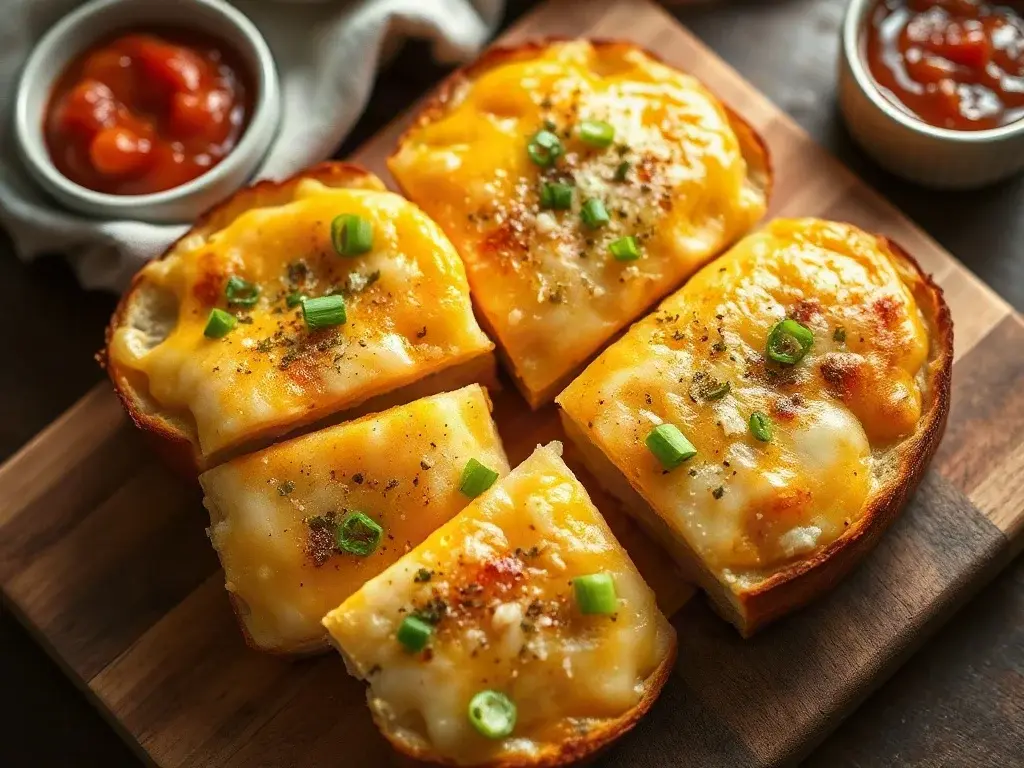
A good cheesy bread recipe looks simple, yet it often fails in predictable ways: bland cheese, greasy crumb, burnt garlic. This version relies on three decisions: sharp cheddar for flavor, garlic and green onion for a savory edge, and a serving format that works as a side or a party appetizer. Here is why those choices hold up and where the approach has limits.
Why Sharp Cheddar Carries the Flavor
The recipe’s core decision is cheddar cheese aged to sharpness rather than a mild melter. Mild cheese melts well but tastes of little once baked into bread. Aged cheddar has concentrated flavor, so a modest amount still registers against the starch. That is the practical logic behind sharp cheddar cheesy bread.
There is a trade-off. Aged cheeses have less moisture and a more fragile casein structure, so they can turn oily instead of stretchy when overheated. A common professional fix is blending: sharp cheddar for taste, a little mozzarella for pull. That is interpretation rather than part of the original recipe, but it is a reasonable adjustment if you value texture over intensity.
The Garlic and Green Onion Balance
The recipe pairs garlic with green onion, also called scallion. The pairing is smart because the two behave differently. Garlic supplies pungent depth. Green onion adds a milder, fresher onion note and visible color. Together they lift the richness of the cheese, giving cheesy bread with garlic and green onion more dimension than the standard garlic bread.
Raw Garlic Versus Cooked Garlic
Raw garlic exposed to direct oven heat can scorch and turn bitter. Mixing it into a fat or the cheese blend, or keeping it beneath a topping, protects it. Finely mincing it also spreads the flavor evenly, so no one bites into a harsh clump.
Fresh Versus Baked Green Onion
Green onion tastes sharpest when fresh and turns mellow when baked. Folding some into the mixture and scattering a little on top after baking gives both a cooked and a raw note. This is a sensible technique, not a requirement of the source recipe.
How to Make Cheesy Bread Work as a Side or an Appetizer
Many readers ask how to make cheesy bread suit different occasions. The recipe’s answer is format: serve larger slices alongside soup, pasta or salad, or cut smaller pieces as a cheesy bread appetizer. The same flavors adapt to both, but the engineering differs.
- Large slices: Better for a soft interior and a pronounced contrast with the crust. They hold up to dipping and sauce.
- Small pieces: Better for crisp edges, since more surface area means more browning. Each piece is a one-bite hors d’oeuvre, so guests need no plates.
Smaller pieces also dry out faster, so watch the oven closely and serve soon after baking.
Technique and Common Mistakes
Browning matters because the Maillard reaction creates much of the toasted, savory character that makes cheese-topped bread appealing, and it is part of what delivers umami. The usual errors follow from that:
- Underbrowning. Pale cheese tastes flat. Let the top color properly.
- Overloading the cheese. Too much weight sinks into the crumb and leaves a greasy bottom.
- Choosing the wrong base. A sturdy loaf such as a baguette or ciabatta holds toppings far better than soft sandwich bread.
- Pre-shredded cheese. Anti-caking additives can interfere with melting, so shredding a block yourself is usually the better choice.
Variations and Their Limits
Cooks often add butter as a base layer, or bind the topping with mayonnaise, an emulsion that helps the topping spread evenly and brown. Adding Parmesan or using sourdough adds tang and complexity. Each change shifts the balance away from the original’s simplicity, though, and the more components you add, the more the sharp cheddar gets crowded out.
FAQ About Cheesy Bread
What type of bread is best for cheesy bread?
A sturdy loaf with a firm crust, such as a baguette or ciabatta, handles the topping without turning soggy.
Can I use other cheeses instead of sharp cheddar?
Yes, but flavor changes. Milder cheeses melt more smoothly and taste less assertive, so blending is often the best compromise.
How do I stop garlic from burning?
Mince it finely and mix it into the topping rather than leaving it exposed on the surface.
Is cheesy bread better as a side or an appetizer?
Both work. Larger slices suit meals, while smaller pieces suit gatherings.
What a Simple Loaf Reveals About Cooking
The strongest lesson here is that restraint beats complexity. Three flavor ingredients, chosen for contrast, outperform a long list of add-ins. The recipe works because each element has a clear job: cheddar for richness, garlic for depth, green onion for freshness.
The open question is whether home cooks will keep trusting simple formulas as recipe culture rewards novelty. My prediction, which is only a prediction, is that dishes like this will endure precisely because they are reliable. Watch for how cooks adapt them with different cheeses and breads, and judge each variation by whether the sharp cheddar still leads.
Frequently Asked Questions
Why does my cheesy bread turn greasy instead of stretchy?
Aged sharp cheddar has less moisture and a more fragile casein structure, so it can release oil when overheated. Piling on too much cheese also makes the weight sink into the crumb. Use a moderate amount, avoid excessive heat, or blend in a little mozzarella for pull.
How do I keep garlic from burning and tasting bitter on top of the bread?
Raw garlic exposed to direct oven heat scorches quickly. Mix it into fat or the cheese blend, or tuck it under the topping so it is shielded. Mince it finely so the flavor spreads evenly and nobody bites into a harsh clump.
Is it worth using green onion both inside the mixture and on top?
Yes, it gives two textures of flavor. Green onion folded into the mixture turns mellow when baked, while a scattering added after baking stays fresh and sharp. This is a suggested technique, not a requirement of the original recipe, so you can skip it.
Why should I shred my own cheese instead of buying pre-shredded?
Pre-shredded cheese usually contains anti-caking additives that can interfere with melting, leaving the topping less smooth and cohesive. Shredding a block of sharp cheddar yourself takes only a few minutes and typically gives a better melt and browning on the bread.
Should I cut the bread into large slices or small pieces for an appetizer?
It depends on the texture you want. Large slices keep a soft interior, contrast well with the crust, and hold up to dipping. Small pieces brown more and get crisp edges, ideal for one-bite appetizers, but they dry out faster, so serve them soon after baking.
Will adding butter, mayonnaise or Parmesan improve the recipe?
They can, but each addition shifts the balance. Butter adds a base layer, mayonnaise helps the topping spread and brown, and Parmesan adds tang. The more components you add, the more the sharp cheddar gets crowded out, so add them sparingly.