
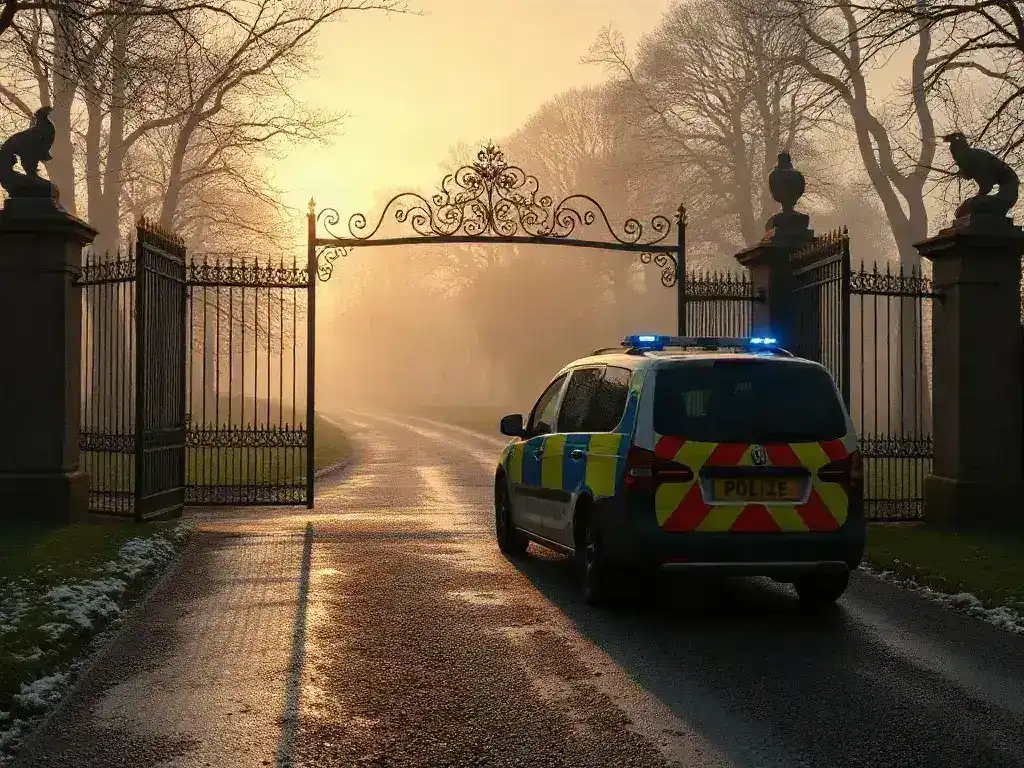
Two men have been charged with trespass at the Norfolk home of the Prince and Princess of Wales, after police were called to reports of suspicious activity. The case of Sandringham estate trespass is, at this stage, a short news story with few public details. It still raises useful questions about how the law treats trespass, how rural royal properties are protected, and what a charge means before a court has heard any evidence.
What We Know So Far
The facts available are limited. Norfolk Constabulary was reportedly called to suspicious activity on the Sandringham estate, and two men were subsequently charged with trespass. The couple’s Norfolk residence is widely reported to be Anmer Hall, a country house on the estate. Prince William and Catherine use it as a family base.
The reports I am working from do not give the men’s identities, the date of the incident, the exact location, or whether any member of the royal family was present. Those details should not be assumed. A charge is an allegation, and under the principle of the presumption of innocence both men remain innocent unless a court finds otherwise.
Is Trespass a Criminal Offence in England?
Many readers searching this story want to know whether trespass is a criminal offence in England. The answer is that it depends on the circumstances.
Civil Trespass Versus Criminal Offences
Ordinary trespass to land, meaning entering someone’s property without permission, is generally a civil wrong. The owner can seek remedies in court, but police do not usually prosecute it. Criminal liability arises only where a specific statute applies or where the trespass accompanies another offence.
When Trespass Becomes a Crime
- Aggravated trespass under the Criminal Justice and Public Order Act 1994, which involves trespassing and then intimidating or obstructing lawful activity.
- Trespass on specially protected sites, a power introduced by the Serious Organised Crime and Police Act 2005 for designated locations.
- Trespass linked to burglary or other offences, where entry with intent to steal or cause damage is itself the crime.
Which provision applies here has not been made clear in the reporting. The specific wording of the charge will matter once the case reaches a magistrates’ court. Official guidance is published by the Crown Prosecution Service and on GOV.UK.
Why Royal Residence Security Is Difficult
Protecting a royal residence in open countryside is very different from guarding a central London palace. Sandringham House sits within a large working estate of farmland, woodland and public-access areas. That makes a hard perimeter impractical, and security relies on layered measures instead.
Layered Protection
Royal protection in the UK is led by Royalty and Specialist Protection, part of the Metropolitan Police. Local forces such as Norfolk Constabulary support it. Typical measures include patrols, CCTV, controlled access points and intelligence sharing. Details are deliberately not published, so outside analysis can only be general.
Lessons From Past Intrusions
Past breaches show how serious the consequences can be. In 1982, Michael Fagan entered Buckingham Palace and reached the Queen’s bedroom. In December 2021, Jaswant Singh Chail entered the grounds of Windsor Castle armed with a crossbow, and was later sentenced in 2023. Nothing in the current reports suggests this case is comparable. These incidents explain why police treat any suspicious activity near a royal home seriously, even when the eventual charge is relatively minor.
Reporting Restrictions and Fair Coverage
Once someone is charged, the Contempt of Court Act 1981 means publications must avoid anything that could create a substantial risk of prejudicing the proceedings. Responsible coverage should stick to confirmed facts and avoid speculation about motives or identities. Readers should treat unverified social media claims with caution.
Frequently Asked Questions
Who are the two men charged?
The reports used for this article do not name them. Any names would come from police or court statements.
Were the Prince and Princess of Wales at home?
That has not been confirmed in the available reports, so it should not be assumed.
Can you be arrested for trespassing in the UK?
Yes, but only where trespass is tied to a specific offence, such as aggravated trespass, entering a protected site, or intending to commit another crime. Simple trespass is usually a civil matter.
Where can I find official updates?
Check Norfolk Constabulary and the court listings once the case is scheduled.
The Question That Matters Next
The most revealing detail will not be the headline but the wording of the charge. A narrowly drawn trespass offence points to a very different story from one linked to harassment, intent to cause harm or a protected-site offence. Watch for the first court appearance, which should clarify the legal basis, the dates and the plea.
The wider issue is how security can be maintained at private royal homes inside open, publicly accessible landscapes without turning them into fortresses. Expect continued investment in surveillance and intelligence-led protection rather than visible barriers. Whether this case becomes a minor local matter or a prompt for a policy rethink depends on facts that have not yet been published.
Frequently Asked Questions
Does a trespass charge mean the two men are guilty?
No. A charge is only an allegation that police and prosecutors believe an offence may have been committed. Under the presumption of innocence, both men are treated as innocent until a court hears the evidence and reaches a verdict. Until then, readers should avoid assuming guilt.
Why is simple trespass usually not prosecuted by police in England?
Ordinary trespass, entering land without permission, is generally a civil matter, so the owner can seek remedies in court. Police only get involved when a specific statute applies, such as aggravated trespass or protected-site rules, or when the trespass accompanies another offence like burglary or criminal damage.
Why is it harder to secure Sandringham than a London palace?
Sandringham is a large working estate of farmland, woodland and areas open to the public, so a hard perimeter is impractical. Protection depends on layers such as patrols, CCTV, controlled access points and intelligence sharing, rather than the walls and gates typical of a central city palace.
Who is responsible for protecting the Prince and Princess of Wales in Norfolk?
Royal protection is led by Royalty and Specialist Protection, part of the Metropolitan Police. Local forces such as Norfolk Constabulary support them. Specific security arrangements are deliberately kept confidential, so outside observers can only describe the general approach, not the details.
Is this case comparable to the Michael Fagan or Windsor Castle intrusions?
Nothing in current reports suggests that. Those cases involved a palace bedroom intrusion in 1982 and an armed crossbow incident in 2021. They show why police take suspicious activity near royal homes seriously, even when the eventual charge turns out to be relatively minor.
Why are so few details about the case being published?
Few facts have been confirmed, and the Contempt of Court Act 1981 requires publications to avoid creating a substantial risk of prejudicing proceedings once someone is charged. Responsible coverage therefore sticks to verified facts and avoids speculation about motives or identities, particularly from unverified social media claims.