
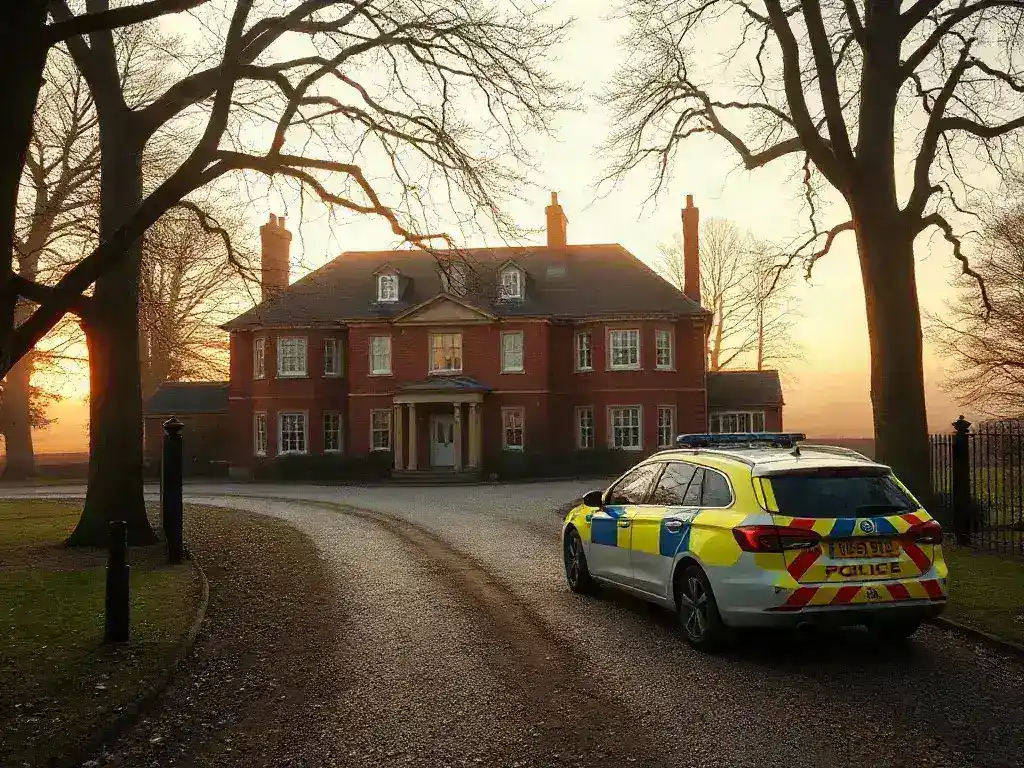
The Prince and Princess of Wales burglary inquiry moved forward when two people were arrested on suspicion of burglary at the family’s country retreat in Norfolk, on the Sandringham Estate. The reported facts are limited, but the case raises wider questions about rural security, royal protection and how the justice system treats a suspect’s arrest. This article separates what has been confirmed from what remains unknown.
What We Know About the Norfolk Home Break-In
The report says two people were arrested on suspicion of burglary at the home of Prince William and Catherine, Princess of Wales. The property is their country retreat on the Sandringham Estate. The Wales family’s Norfolk base has long been associated with Anmer Hall.
The report does not say when the incident happened, whether anyone was at home, or whether anything was taken or damaged. Those details would normally come from the investigating force, so it is best to avoid speculation until police release more information.
An arrest on suspicion of an offence is not a finding of guilt. It means officers have reasonable grounds to suspect involvement and need to investigate further.
Sandringham Estate Security and Why It Is Unusual
The Sandringham estate is a large private property in the county of Norfolk, and the British royal family has used it for generations. Its size makes Sandringham Estate security a different problem from guarding a palace in central London. Large rural estates have long boundaries, farmland, woodland and public rights of way, so perimeter protection is hard.
Layers of Protection
Royal security usually combines several elements:
- Specialist officers from Royalty and Specialist Protection, which protects senior royals.
- Local policing by Norfolk Constabulary, which covers the wider area.
- Technical measures such as CCTV, alarms and access control.
Protection of this kind works best when the family is in residence. A second home that is empty for long periods carries a different risk. Public reporting does not say whether any of these factors played a part here.
What Happens After an Arrest on Suspicion of Burglary
Readers searching for what happens after an arrest on suspicion of burglary should know the process is the same for every suspect. In England and Wales, burglary is defined by the Theft Act 1968. Burglary of a dwelling carries a maximum sentence of 14 years.
- Arrest and questioning: suspects are interviewed and evidence is gathered, including forensic material and camera footage.
- Custody decision: police may release a suspect without charge, on bail, or under investigation while enquiries continue.
- Charging decision: the Crown Prosecution Service decides whether a case meets its evidential and public interest tests. Police can charge some offences directly.
- Court proceedings: if charges follow, the case begins in court and the presumption of innocence applies throughout.
The Crown Prosecution Service and Norfolk Constabulary publish official guidance and updates on their websites.
Why a Royal Residence Security Breach Draws Scrutiny
Any royal residence security breach attracts attention because of precedent. The public remembers earlier intrusions at royal properties, and each new case prompts questions about whether protection is adequate. Two considerations matter here.
Public Interest Versus Privacy
The family’s home is also a private place, and privacy concerns apply, especially where children may live or stay. Responsible coverage should avoid publishing details that could help someone else target the property.
Proportionality
An arrest does not show that the royal status of the home was the motive. Many rural burglaries are opportunistic and target tools, vehicles or valuables. Without police confirmation, nobody can say whether this case was targeted or opportunistic.
Practical Lessons for Rural Property Owners
The case also offers lessons for owners of country homes:
- Combine visible deterrents with monitored alarms rather than relying on either alone.
- Light and cover entry points on isolated boundaries, where response times are longer.
- Keep keys, tools and ladders locked away, since outbuildings often supply the means of entry.
- Tell neighbours or estate staff when a property will be unoccupied.
- Keep records and photographs of valuables to support any police investigation.
Frequently Asked Questions
Who was arrested over the Norfolk break-in?
The report says only that two people were arrested on suspicion of burglary. No further details are given, and none should be assumed.
Does an arrest mean the suspects will be charged?
No. Suspects can be released without charge, released on bail or under investigation, or charged, depending on the evidence.
Where is the Prince and Princess of Wales’s Norfolk home?
It is a country retreat on the Sandringham Estate in Norfolk, widely associated with Anmer Hall.
The Question Beyond the Arrests
The most important point is the limit of what is known. Two arrests are not a prosecution, and the home’s royal connection should not be mistaken for evidence of motive. What matters now is whether police confirm the circumstances: the timing, what was taken, whether the property was occupied and how entry was gained.
Watch for a charging decision, any court appearance and a statement on security. If the case proceeds, it may show how well protection works on a sprawling rural estate when the family is away. Whatever the outcome, the case is a reminder that even the best-protected homes depend on layered security, and on careful, accurate reporting.
Frequently Asked Questions
Does the arrest of two people mean they are guilty of the burglary?
No. An arrest on suspicion means officers have reasonable grounds to suspect involvement and need to investigate further. Suspects may be released without charge, on bail or under investigation. Guilt is only decided in court, and the presumption of innocence applies throughout any proceedings.
Do we know when the break-in happened or what was taken?
No. The report does not say when the incident took place, whether anyone was at home, or whether anything was stolen or damaged. Those details would normally come from the investigating force, so it is wise to wait for official information instead of speculating.
Why is protecting Sandringham harder than protecting a London palace?
Sandringham is a large rural estate with long boundaries, farmland, woodland and public rights of way, which makes perimeter protection difficult. A palace in central London is compact and easier to control. A second home that is often empty also carries a different risk profile.
Who decides whether the suspects will be charged?
The Crown Prosecution Service usually decides whether a case meets its evidential and public interest tests, although police can charge some offences directly. Until then, officers may release suspects without charge, on bail, or under investigation while enquiries continue.
Was the home targeted because it belongs to the royal family?
That cannot be said without police confirmation. An arrest does not show that the home's royal status was the motive. Many rural burglaries are opportunistic and target tools, vehicles or valuables, so both targeted and opportunistic explanations remain possible.
What penalty can burglary of a home carry in England and Wales?
Burglary is defined by the Theft Act 1968. Burglary of a dwelling carries a maximum sentence of 14 years. Any actual sentence would depend on the court, the circumstances of the offence and a conviction, which has not occurred in this case.