
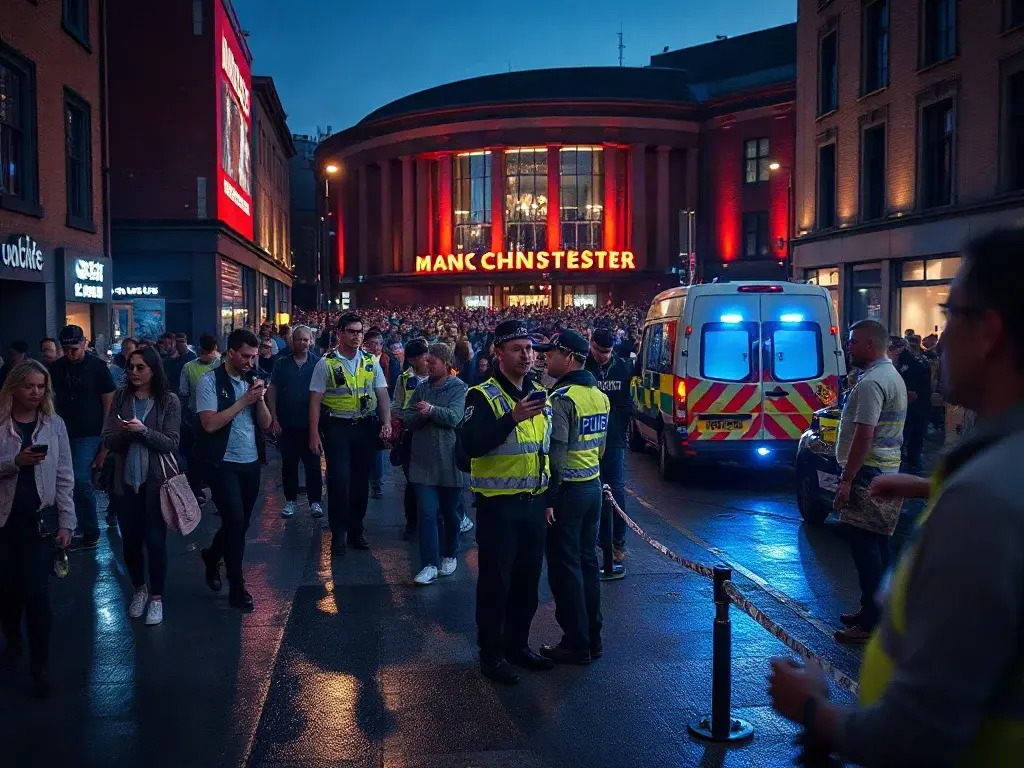
The Manchester concert evacuation began when police said an ‘unknown substance’ was released into the crowd. Thousands of people were moved out of the venue, the concert was cancelled, and emergency services attended the scene. Some people in the crowd reportedly booed when the cancellation was announced. This article separates what is confirmed from what is not, and explains how incidents like this are normally handled.
Early reports of fast-moving incidents are often incomplete. At the time of the original report, police had not publicly identified the substance. The article therefore does not speculate about its nature, the cause or anyone’s intent.
What Is Confirmed About the Incident
The confirmed facts are limited:
- A concert in Manchester was cancelled.
- Thousands of people were evacuated.
- Police said an unknown substance had been released into the crowd.
- Emergency services attended the scene.
- Some audience members booed after the cancellation.
Nothing in the initial report establishes the number or severity of any injuries, the substance involved, or whether anyone has been arrested. Readers should treat claims on social media beyond these points with caution until police or health authorities confirm them.
How an Unknown Substance Release Is Typically Handled
When a substance is released in a crowded venue, responders usually act first and identify the substance later. The priority is to protect people while the cause is unclear.
The Role of Emergency Services
An incident like this normally involves Greater Manchester Police, the North West Ambulance Service and the fire and rescue service. Ambulance services in the UK can also deploy a Hazardous Area Response Team for contaminated or hazardous environments. Whether such a team was used here has not been confirmed. Every emergency service works to a joint plan so that medical triage, scene control and investigation happen together.
Possible Explanations, Without Assuming One
In past venue incidents, ‘unknown substance’ reports have involved irritant sprays such as pepper spray or tear gas. Others have involved harmless but alarming releases. Only testing can settle the question. Symptoms in a crowd can also spread through anxiety, a phenomenon documented as mass psychogenic illness. This does not mean that is what happened here. It does explain why officials are cautious about confirming causes early.
Why Evacuating Thousands of People Is Risky in Itself
An evacuation is a safety measure, but it creates its own hazards. Fear can turn an orderly exit into a surge. Research on crowd psychology suggests that people in emergencies often cooperate rather than panic. Even so, narrow exits, poor communication and sudden changes of direction can lead to a crowd crush.
Venue staff and security personnel reduce this risk through clear announcements, staged exits and trained crowd control. The fact that thousands left without any reported crush in the initial coverage points to a functioning process, but that is an inference rather than a confirmed finding.
Manchester’s Security Context
Any emergency at a large Manchester event is read against the 2017 Manchester Arena bombing. That attack shaped how the public and the authorities view venue safety. It also led to the UK’s Martyn’s law, which is intended to strengthen protective security at public venues. Nothing in the current report links this incident to that history. It does explain why the response, and the public reaction, may be heightened.
The Booing: Frustration After a Cancellation
Booing after a cancellation is common, and it does not necessarily mean people were unaware of the danger. Fans have often paid significant sums and travelled to attend, and information in the first minutes of an evacuation is usually thin. That gap between uncertainty and disappointment is a communication challenge for organisers.
Practical Guidance for Concert-Goers
- Follow staff instructions and leave by the nearest safe exit, not necessarily the one you entered by.
- Move away from the venue once outside, so you do not block emergency access.
- Seek medical help if you have breathing difficulty, irritation or other symptoms, and tell responders you were inside.
- Rely on official sources, such as Greater Manchester Police and the venue’s own channels, for updates.
- Keep your tickets and check the promoter’s refund or rescheduling announcements.
Frequently Asked Questions
What was the unknown substance at the Manchester concert?
Police have described it only as an ‘unknown substance’. It had not been publicly identified in the initial report.
Were people hurt in the Manchester concert evacuation?
The original report does not give injury figures. Check official police and ambulance statements for confirmed numbers.
Will ticket holders get refunds for a cancelled concert?
That depends on the promoter and ticket seller. Ticket holders should watch official announcements, as refund or rescheduling terms are typically announced after the event.
What This Incident Will Test Next
The key question is the identity of the substance. Whether it was a deliberate act, an accident or a false alarm will decide the legal outcome. It will also shape how the evacuation is judged. The next signals to watch are a police statement on the substance, any arrests, and the promoter’s decision on refunds.
The broader lesson may be about communication. Thousands of people left safely on incomplete information, and the booing shows how little the audience knew in the moment. As venues prepare for stricter duties under Martyn’s law, the open question is whether they can explain a safety decision to a frustrated crowd quickly enough to keep trust while they protect lives.
Frequently Asked Questions
Has the unknown substance been identified?
No. At the time of the original report, police had not publicly named the substance. Past venue incidents have involved irritant sprays or harmless releases, but only testing can settle the question. Until police or health authorities confirm it, any claim about the cause or intent is speculation.
Why do responders evacuate before they know what the substance is?
Responders put protecting people first while the cause is unclear. Moving a crowd away from a possible hazard limits exposure, and identification can follow. Emergency services work to a joint plan so that medical triage, scene control and investigation run at the same time.
Could the symptoms people reported be caused by anxiety rather than the substance?
It is possible in general. Mass psychogenic illness is a documented phenomenon in which symptoms spread through a crowd because of anxiety. The article stresses this does not mean it happened here. It explains why officials are cautious about confirming causes early.
Is evacuating thousands of people dangerous in itself?
It can be. Fear can turn an orderly exit into a surge, and narrow exits, poor communication or sudden changes of direction can cause a crowd crush. Clear announcements, staged exits and trained staff reduce the risk. No crush was reported in the initial coverage.
Does this incident have any link to the 2017 Manchester Arena bombing?
Nothing in the current report links the two. The 2017 attack does shape how the public and authorities view venue safety in Manchester, and it led to Martyn's law on protective security at public venues. That history may heighten both the response and the public reaction.
Why did some people boo when the concert was cancelled?
Booing after a cancellation is common and does not mean people ignored the danger. Fans often pay significant sums and travel to attend, and information in the first minutes of an evacuation is usually thin. That gap between uncertainty and disappointment is a communication challenge for organisers.