
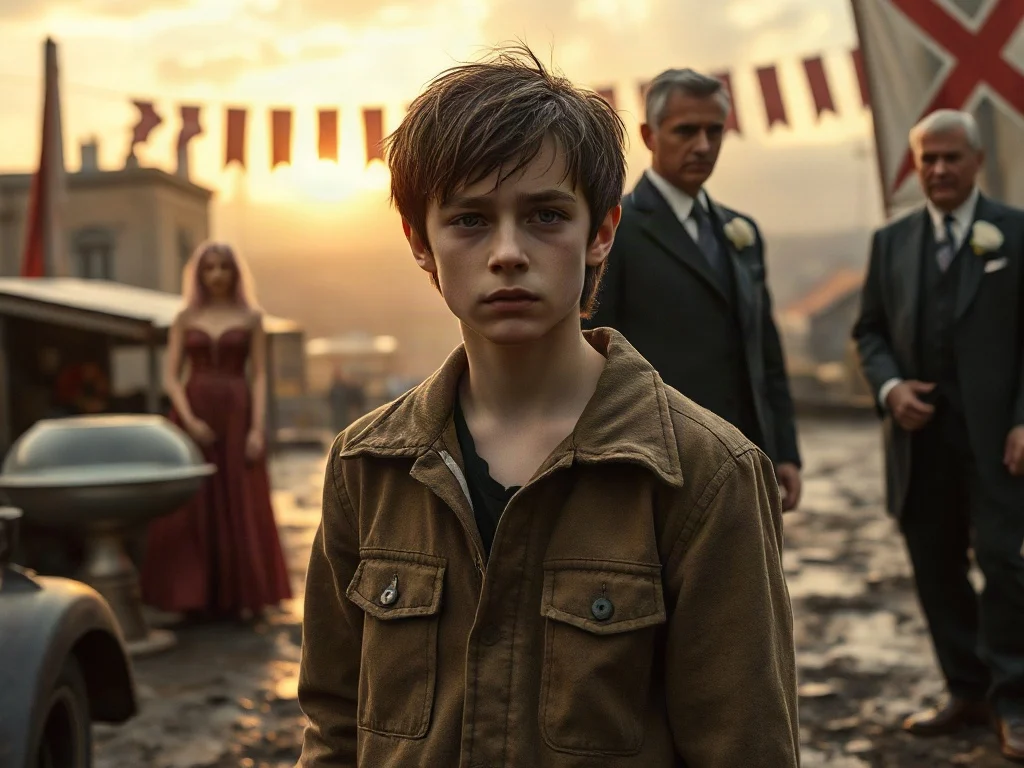
The Sunrise on the Reaping cast is the most prestige-heavy ensemble the Hunger Games franchise has assembled for a prequel. Newcomer Joseph Zada leads as the young Haymitch Abernathy. Around him are Elle Fanning, Ralph Fiennes, Kieran Culkin and Glenn Close. That mix of a relatively unknown lead and decorated supporting names is a deliberate strategy. This analysis looks at who plays whom, what each casting choice implies, and where the film is exposed to risk.
What Sunrise on the Reaping Is and Why Casting Matters
Sunrise on the Reaping is based on the 2025 novel by Suzanne Collins. It is set during the 50th Hunger Games, the second Quarter Quell, when the Capitol doubled the number of tributes. The story follows Haymitch, a teenager from District 12 who becomes the only person to win that edition. In the original trilogy, Haymitch is a bitter, alcoholic mentor, so this story has to explain how that man was made.
That is why casting carries so much weight here. The film must make audiences believe in a version of a character they already know. The same applies to a young Effie Trinket and to President Snow at a different stage of his rise. The project belongs to the broader Hunger Games film series and is being developed by Lionsgate. Francis Lawrence, who directed most earlier entries, is attached as director, and the film is slated for a November 2026 release.
The Sunrise on the Reaping Cast: Principal Players
Joseph Zada as Young Haymitch
Zada plays the young Haymitch, the young Haymitch actor role that the whole film depends on. In the original films the older Haymitch was played by Woody Harrelson, whose wry, worn performance is now part of the character’s identity. Zada’s task is not to imitate Harrelson. He has to present a recognisable younger self whose defiance and warmth can plausibly curdle into the man audiences remember.
Casting a lesser-known actor in the lead is the safer creative choice. A famous face would invite comparison with Harrelson, while an unfamiliar one lets the audience build the character from scratch. It also repeats the franchise’s founding logic, since the first film made a star of its lead rather than borrowing one.
Elle Fanning as Effie
For anyone searching who plays young Effie in Sunrise on the Reaping, the answer is Elle Fanning. In the original films Effie was played by Elizabeth Banks as a brightly lacquered Capitol escort. Effie works as a satirical figure because her cheerfulness sits on top of real cruelty, and Fanning has a track record of playing polished surfaces with something unsettled underneath. The risk is caricature, because the original performance was so stylised. The better outcome is a younger Effie whose Capitol enthusiasm still looks sincere before it hardens into habit.
Ralph Fiennes as Snow
Ralph Fiennes takes on Coriolanus Snow, a role earlier associated with Donald Sutherland in the original films and with Tom Blyth as the young man in The Ballad of Songbirds & Snakes. Here Snow is established in power, which suits an actor known for controlled menace. Fiennes has played political and psychological predators before, and his presence signals that the film treats Snow as a structural antagonist, not a cameo.
Kieran Culkin, Glenn Close and the Wider Ensemble
Reports on the casting also place Kieran Culkin and Glenn Close in significant supporting parts. Culkin is reported as Caesar Flickerman, the Capitol’s television host, a role Stanley Tucci made famous in the earlier films. That choice makes sense, because the franchise’s media satire depends on a host who is charming and morally empty. Casting a performer associated with sharp, unpredictable comic timing suggests the film wants that satire to bite. Readers should check the studio’s official announcements for the full supporting list, since casting details tend to shift between trade reports and final credits.
Prestige or Discovery: What the Casting Strategy Reveals
The pattern is easier to see when the franchise’s films are compared by structure.
| Film | Young or central lead | Veteran or prestige anchors |
|---|---|---|
| The Hunger Games (2012) | Jennifer Lawrence | Woody Harrelson, Donald Sutherland, Stanley Tucci |
| The Ballad of Songbirds & Snakes (2023) | Tom Blyth, Rachel Zegler | Viola Davis, Peter Dinklage |
| Sunrise on the Reaping (2026) | Joseph Zada | Ralph Fiennes, Elle Fanning, Kieran Culkin, Glenn Close |
Each film pairs a discovery-style lead with established actors, but the ratio has shifted. In this film the supporting bench is arguably deeper than the lead’s résumé. That is good for credibility and a risk for focus. The first film’s emotional spine was Jennifer Lawrence‘s performance, and the rest of the cast served it. Here, if Fiennes, Culkin and Close are given the most memorable scenes, the story could drift away from Haymitch.
Analytical Risks: Legacy Characters and Prequel Fatigue
The Foreknowledge Problem
Every prequel has to create tension when the audience knows the outcome. We know Haymitch survives and, in the original story, that he becomes an alcoholic mentor. The film therefore has to generate suspense through character, not plot. That puts unusual pressure on Zada, because the audience is watching for how Haymitch changes, not whether he lives.
Franchise Repetition
The film arrives after the original novel and its adaptations, and after the 2023 prequel. A sceptical viewer may reasonably ask whether another arena story adds anything. The strongest argument in its favour is the material itself. The dystopian premise of a Quarter Quell with doubled stakes allows a harsher, more propagandistic portrait of the Capitol than the earlier films attempted. Whether the film delivers that depends on tone, which casting alone cannot guarantee.
Release Date and What to Watch Before Opening Night
Readers asking when is the Sunrise on the Reaping movie release date should note that Lionsgate has positioned the film for November 2026. Release dates in studio tentpole schedules do move, so confirm with Lionsgate’s official channels before planning anything around it.
The following steps will make the film easier to appreciate:
- Read the novel first. Its internal portrait of Haymitch is the baseline against which the performance should be judged.
- Rewatch Harrelson’s scenes in the original films, paying attention to how Haymitch’s cynicism is expressed.
- Review the list of Hunger Games characters to see how Effie, Snow and the Capitol figures were originally defined.
- Watch for trailer choices. Whether marketing foregrounds Zada or the veteran actors will reveal where the studio thinks the film’s appeal lies.
Frequently Asked Questions
Who plays young Haymitch in Sunrise on the Reaping?
Joseph Zada plays the young Haymitch Abernathy. Woody Harrelson played the older version in the original films.
Who plays Effie in Sunrise on the Reaping?
Elle Fanning plays the younger Effie Trinket. Elizabeth Banks played the character in the original films.
Who plays President Snow in the new Hunger Games prequel?
Ralph Fiennes plays Coriolanus Snow. Tom Blyth played the younger Snow in the 2023 prequel, and Donald Sutherland played the older Snow in the original films.
Is Sunrise on the Reaping based on a book?
Yes. It adapts Suzanne Collins’s 2025 novel of the same name, which centres on the 50th Hunger Games.
The Real Test Is Whether Star Power Serves Haymitch
The most important insight is that this casting is built around contrast. An unproven lead is surrounded by actors who can dominate a scene with minimal effort. That structure can produce a compelling portrait of a boy overwhelmed by systems far larger than himself, which is the story’s central theme. It can also let the supporting actors overshadow the central character. The unanswered question is which outcome the film chooses.
Watch the first trailer and early reviews of Zada’s performance. If critics focus on Haymitch’s interior life rather than the famous names around him, the casting worked as intended. If the conversation is about Fiennes and Culkin, the film may have repeated the franchise’s habit of letting spectacle outrun its protagonist. A reasonable prediction is that audience loyalty to the books will carry opening-weekend interest, while the lasting reception will depend on whether Zada can make a familiar tragedy feel unresolved.
Frequently Asked Questions
Why was a relatively unknown actor chosen to play young Haymitch instead of a famous name?
A lesser-known lead avoids direct comparison with Woody Harrelson, who defined the older Haymitch. Audiences can build the character from scratch and accept a younger version whose defiance and warmth later turn bitter. It also echoes the franchise's origins, when the first film turned its lead into a star.
Is Joseph Zada trying to imitate Woody Harrelson's performance?
No. Zada's job is to present a recognisable younger self, not an impression of Harrelson. His Haymitch must show the defiance and warmth that could plausibly curdle over time into the wry, worn, alcoholic mentor audiences remember from the original films.
What is the main risk in casting Elle Fanning as young Effie Trinket?
The main risk is caricature, since Elizabeth Banks's original performance was so stylised. The stronger result would be a younger Effie whose Capitol enthusiasm still seems sincere before it hardens into habit. Fanning has a track record of playing polished surfaces with something unsettled underneath.
Why does Ralph Fiennes' casting as Snow suggest the character is important in this film?
Here Snow is already established in power, which suits Fiennes, an actor known for controlled menace and for playing political and psychological predators. His casting signals that Snow is treated as a structural antagonist rather than a brief cameo, unlike the younger Snow seen in The Ballad of Songbirds & Snakes.
Is the supporting cast, including Kieran Culkin and Glenn Close, fully confirmed?
Not entirely. Culkin is reported as Caesar Flickerman, a role Stanley Tucci made famous, and Close is also placed in a significant part. Casting details can shift between trade reports and final credits, so readers should check the studio's official announcements for the complete supporting list.
When is Sunrise on the Reaping set, and why does that matter for the story?
It takes place during the 50th Hunger Games, the second Quarter Quell, when the Capitol doubled the number of tributes. Haymitch is the only winner of that edition. The story must explain how a teenager from District 12 became the bitter, alcoholic mentor seen in the original trilogy.