
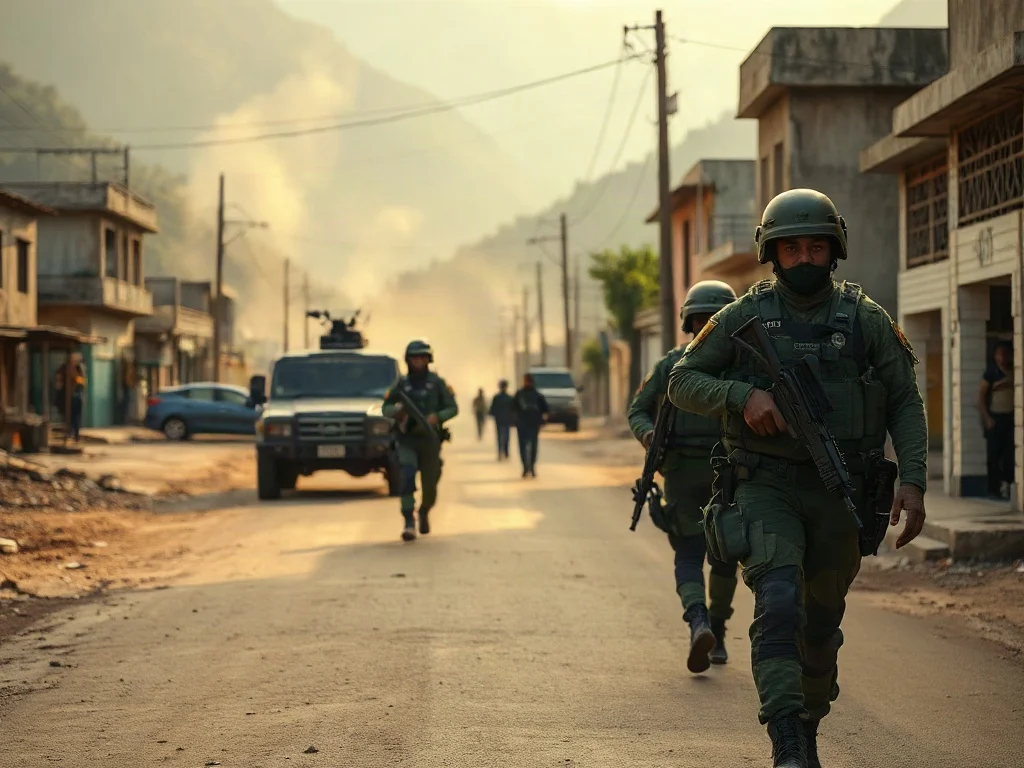
The Martissant offensive launched on Thursday is one of the most consequential security operations Haiti has attempted in years. Haitian security forces moved to retake Martissant, a strategic corridor linking Port-au-Prince with the country’s western and southern regions, which gangs have controlled for five years. Police said at least 34 suspected gang members were killed in clashes involving a private security task force. This analysis explains why this narrow strip of road matters, what is known and unknown about the operation, and what to watch next.
Why Martissant Matters More Than Its Size Suggests
Martissant sits on the southern edge of the capital. Whoever holds it controls the main land route between Port-au-Prince and the south, including cities such as Les Cayes and Jérémie. When armed groups seized the area in 2021, the road became a toll point for fear. Travelers faced kidnapping, extortion and shootings, and many communities were pushed toward costly and slower alternatives such as boat and air transport.
The loss of the corridor coincided with a deeper collapse. Months after the assassination of Jovenel Moïse in July 2021, gangs in Haiti expanded rapidly. By 2024 many had joined the Viv Ansanm coalition, associated with Jimmy Chérizier. UN officials have repeatedly said that armed groups control most of the capital.
What We Know About the Operation
The confirmed facts are limited. The offensive began Thursday, police reported at least 34 suspected gang members killed, and a private security task force took part alongside state forces. The casualty figure comes from police and has not been independently verified in the information available. In operations like this, the line between combatant and bystander is hard to confirm in real time.
The Role of the Private Task Force
The involvement of a private security task force in Haiti is the most unusual feature. Reporting in recent months has described the government working with private military contractors, including firms linked to Erik Prince, and using armed drones. The details of this particular task force should be treated with caution until officials clarify its composition, chain of command and rules of engagement.
A Stretched and Underequipped Security Apparatus
The Haitian National Police has long been outnumbered and outgunned. Its shortage of officers is the reason the government turned to outside help. In 2023 the United Nations Security Council authorized a multinational mission led by Kenya, and the Council later moved toward a larger gang suppression force. Mixing national police, foreign contingents and private contractors can multiply firepower, but it can also blur accountability.
Gains, Risks and the Human Cost
The Case for Optimism
Retaking a chokepoint can restore trade, lower food and fuel costs in the south, and weaken a gang’s revenue from tolls and ransom. Control of territory is also symbolic. It tells residents that the state can return.
The Case for Caution
History offers warnings. Gangs often disperse rather than disappear, shifting to neighboring districts and returning when pressure eases. Heavy-handed operations may also trigger reprisals against civilians. Human rights bodies, including the UN human rights office and the United Nations Integrated Office in Haiti, have documented extrajudicial killings in the country, which makes independent monitoring of this operation essential. Meanwhile, the International Organization for Migration has tracked more than a million internally displaced people in Haiti, so any new fighting adds pressure to an already overwhelmed humanitarian system.
What Determines Success: Holding Ground
Experts on stabilization generally argue that clearing territory is the easy part. Holding it requires a lasting police presence, functioning courts, lighting, health services and local trust. Without them, a vacuum forms and armed groups return. The key indicators to monitor are:
- Road reopening: whether commercial traffic and buses actually resume on the southern route.
- Civilian return: whether displaced families go back to Martissant in meaningful numbers.
- Independent casualty verification: whether the reported toll and civilian harm are confirmed by outside monitors.
- Gang displacement: whether fighters regroup in adjacent neighborhoods.
Frequently Asked Questions
Who controls Port-au-Prince?
UN officials have said that armed groups control most of the capital, though the exact share changes with each operation and is hard to measure precisely.
Why is Martissant strategically important?
It is the main land gateway between the capital and Haiti’s south and west, so control of it affects trade, travel and aid delivery.
Who took part in the offensive?
Haitian security forces and a private security task force, according to police. Further details have not been fully clarified.
The Real Test Begins After the Gunfire
The most important insight is that the Martissant offensive will be judged less by the number of fighters killed than by what fills the space afterward. A road reopened for a week is a headline; a road that stays open for a year is a turning point. Watch for a visible civilian state presence, transparent accounting of casualties, and clarity about the private contractors’ legal status. The unanswered question is whether Haiti can build institutions fast enough to keep what force has taken. If it cannot, Martissant may become another chapter in a cycle the country knows too well.
Frequently Asked Questions
Why is Martissant so important if it is such a small area?
Martissant is a narrow chokepoint on the southern edge of Port-au-Prince. Whoever controls it controls the main land route to southern cities such as Les Cayes and Jérémie. Gang control since 2021 made travel dangerous and pushed people toward slower, costlier boat and air transport.
Can the figure of 34 gang members killed be trusted?
Not fully yet. The number comes from police and, in the information available, has not been independently verified. In such operations it is difficult to tell combatants from bystanders in real time, which is why independent monitoring by human rights bodies is considered essential.
Why is a private security task force involved in the operation?
The Haitian National Police is outnumbered and outgunned, so the government has sought outside help, including private military contractors, some reportedly linked to Erik Prince, and armed drones. The composition, chain of command and rules of engagement of this task force remain unclear, which raises accountability concerns.
Does retaking the corridor mean the gangs are defeated?
Not necessarily. Gangs often disperse rather than disappear, moving into neighboring districts and returning when pressure eases. Clearing territory is the easy part; holding it requires a lasting police presence, working courts, health services and local trust, otherwise a vacuum forms and armed groups come back.
What benefits could residents in the south expect if the road reopens?
A reopened road could restore trade, lower food and fuel prices in the south, and cut the gangs' income from tolls and ransom. It would also send a symbolic message that the state can return. These gains depend on the road staying open and secure over time.
What are the main risks for civilians?
Heavy-handed operations can trigger reprisals against residents, and the UN has documented extrajudicial killings in Haiti. New fighting also adds pressure to a humanitarian system already struggling with more than a million internally displaced people, according to the International Organization for Migration.