
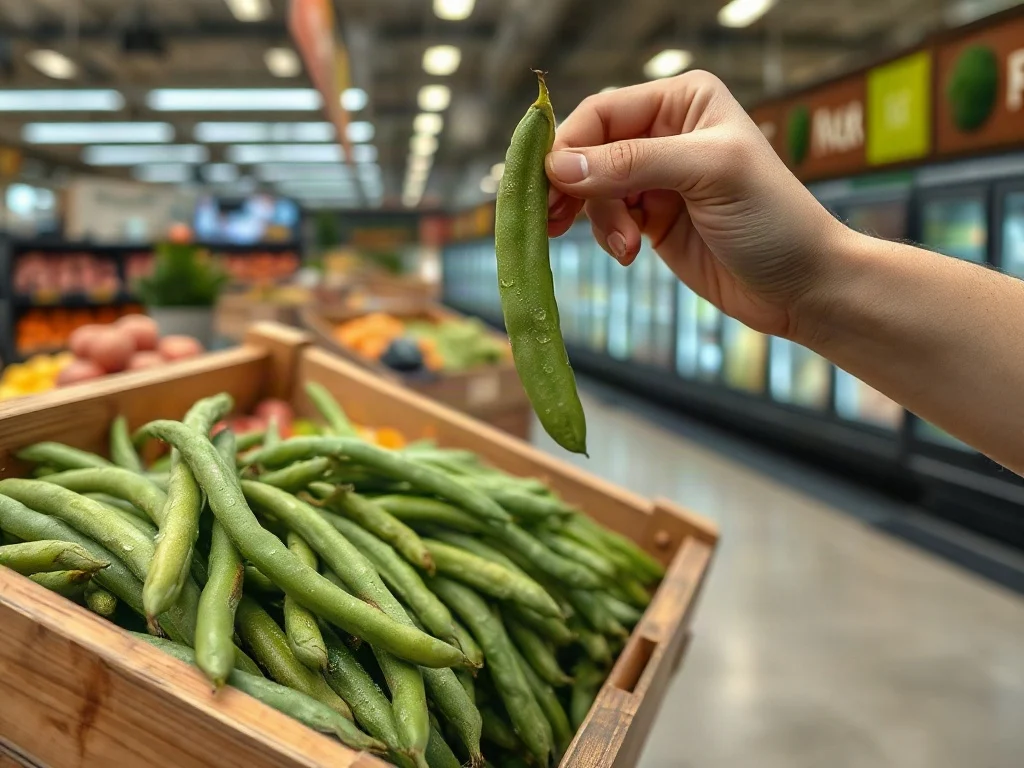
If you want to buy green beans that last more than a couple of days in your kitchen, start by looking at where the store puts them. Shoppers usually judge beans by color and snap, but the display location often says more. It shows how the green beans were handled before you arrived, and handling largely determines how long they keep. This analysis explains what the red flag is, why it matters, and how to check it.
The Red Flag: Beans Displayed Without Temperature Control
The warning sign is a display that suggests the beans have spent time outside a controlled, cool environment. Examples are a bin under warm lights, a table near a sunny entrance or loading door, a heaped pile with wilted lower layers, or bags fogged with condensation. The display location is a proxy for the store’s cold chain. A break in that chain cannot be seen directly, but it shows up in shelf life.
One caveat: this is an inference, not a lab test. A well-managed warm-looking display can still hold good beans, and a refrigerated case can hold old ones. Treat location as a screening signal and confirm it with a physical check.
Why Green Beans Are Unusually Sensitive
High Respiration and Water Loss
Green beans are immature pods of the common bean, harvested while tissue is still tender and metabolically active. Their rate of respiration is high, and warmth speeds it up. Faster respiration consumes sugars, softens the pod, and shortens shelf life. Dry, warm air also pulls moisture from the pod, leaving the limp, rubbery texture shoppers associate with age.
The Chilling Paradox
The fix is not simply to keep beans as cold as possible. Postharvest research, including guidance from the UC Davis Postharvest Technology Center, generally places the ideal range for snap beans at roughly 40 to 45°F (4 to 7°C) with high humidity. Below that range, beans can suffer chilling injury, which appears as pitting and rusty brown spots. A properly handled display is therefore cool and humid, not frozen and not ice-packed for long periods.
How to Tell If Green Beans Are Fresh
Once the display passes, run a physical inspection. These checks separate fresh from tired beans:
- Snap test: A fresh bean breaks cleanly with an audible crack. Bending without snapping signals moisture loss.
- Surface: Look for an even, vivid green with a slight sheen. Avoid rust-colored freckles, pale patches, and shriveled skin.
- Seed bulges: Prominent, lumpy seeds suggest overmature pods, which are tougher and stringier.
- Moisture: Slime, standing water, or fuzzy spots indicate early mold or bacterial breakdown. Leave the whole bag.
- Bag condition: Heavy condensation can mean temperature swings, which promote decay.
Loose Versus Prepackaged
Loose beans let you sort and inspect each pod, which is a real advantage. Prepackaged beans hide the pods at the bottom and trap humidity, but they also reduce water loss. Judge the bag by its weakest visible pods.
How to Store Fresh Green Beans at Home
Good storage extends what good buying starts. Keep unwashed beans in a breathable or loosely closed bag in the crisper drawer of your refrigerator, with a dry paper towel to absorb stray moisture. Wash them just before cooking, since wet beans decay faster. Under these conditions, beans typically keep for about a week, and quality declines gradually rather than suddenly. For longer storage, blanching and freezing preserves color and texture far better than freezing raw pods.
Common Mistakes
- Sealing beans in an airtight container while wet.
- Storing them beside heavy ethylene producers such as ripening fruit, which can hasten yellowing in some produce.
- Leaving the bag on the counter during a long grocery unpack.
- Buying in bulk without a plan to cook or freeze within a few days.
Safety and Waste Considerations
Spoiled beans are mostly a quality problem, but food safety still applies. Rinse produce before use, and discard anything slimy or moldy. Quality-driven purchasing also reduces food waste, because produce that deteriorates quickly at home is often thrown away. Official guidance on handling produce is available from the U.S. Food and Drug Administration.
Frequently Asked Questions
Why do green beans go bad so fast?
They are harvested immature, respire quickly, and lose water easily. Warmth and dryness accelerate both processes.
Should green beans be refrigerated at the store?
Ideally they are kept cool and humid. Misting and moderate refrigeration are common, but extreme cold can cause chilling injury, so a visibly neglected, warm display is the bigger concern.
How long do fresh green beans last?
Under good conditions, roughly a week in the refrigerator. Beans that were mishandled before purchase may last far less.
What the Display Tells You About the Whole Produce Aisle
The useful lesson reaches beyond beans. Shoppers rarely see the supply chain, so the visible environment is the only evidence they have of it. Store layout, temperature, and turnover are signals you can read on any visit. The open question is whether retailers will make that handling data easier to read, through clearer dating or better display standards, or whether shoppers will keep relying on a quick look and a snap test. Until that changes, the best predictor of a bean’s life at home is its first few days on the shelf.