
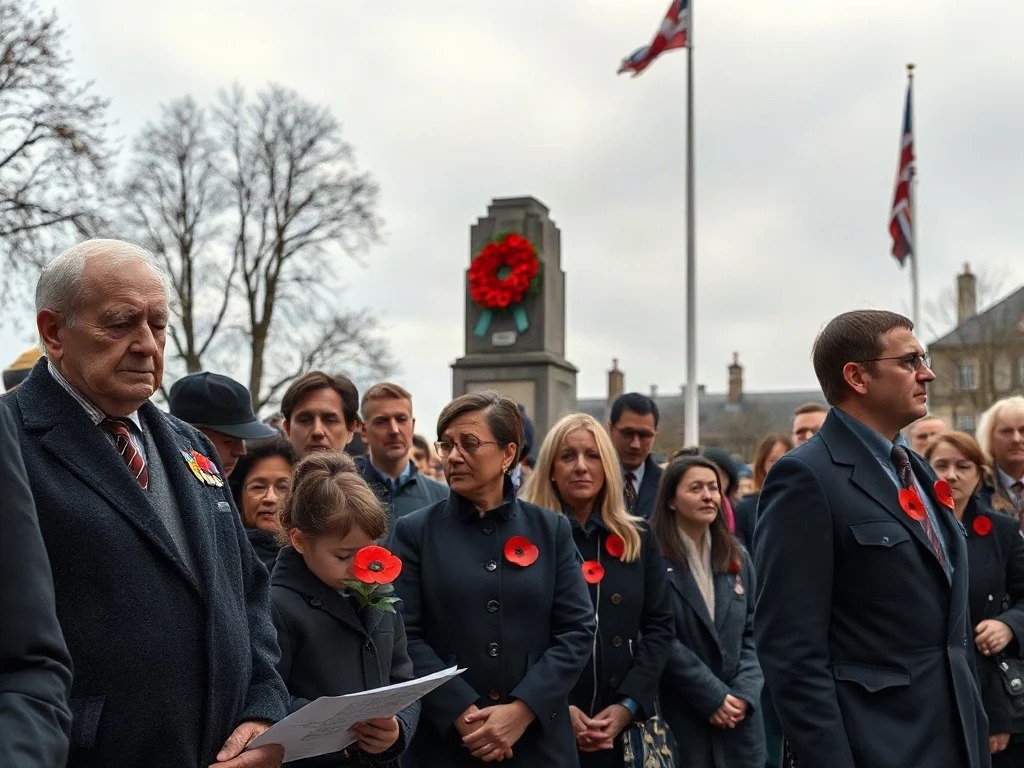
At 11am on 11 November, people from Belfast to Cardiff and from London to Edinburgh paused for the Armistice Day two-minute silence. They marked the end of fighting in the First World War and remembered those who have died in conflicts since. The ritual is simple and costs nothing, yet it is one of the few moments when a politically and culturally divided country stops at the same time. This analysis looks at what the silence commemorates, where it came from, how it differs from Remembrance Sunday, and what its durability says about collective memory in the UK.
What the Armistice Day Two-Minute Silence Commemorates
The silence refers to a specific moment in the First World War. The Armistice of 11 November 1918 was signed in a railway carriage in the forest of Compiègne, and the ceasefire took effect at 11am. That is the origin of the phrase “the eleventh hour of the eleventh day of the eleventh month”. The timing is the reason the silence is held at 11am rather than at a more convenient hour.
The commemoration has widened considerably. Armistice Day began as a remembrance of the 1914-1918 dead. It now covers service personnel and civilians lost in the Second World War and in later conflicts. That broadening is the main reason the ritual has survived. A commemoration tied only to a war with no living veterans could easily have faded, but a ceremony that absorbs new losses stays relevant.
Origins: How a Two-Minute Silence Became a National Ritual
The 1919 proposal
The silence was not an immediate product of the ceasefire. It was first observed in 1919 after a proposal from the Australian-born journalist Edward George Honey. A similar suggestion was put to the government through other channels, and King George V endorsed the idea. The result was a request that the nation stop for a short period at 11am. The first observance was therefore a deliberate act of civic design, not a spontaneous gesture, a point that is often lost in sentimental retellings.
Monuments and the language of loss
The silence soon acquired physical settings. The Cenotaph in Whitehall became the central focus of national ceremony. The burial of the Unknown Warrior at Westminster Abbey in 1920 gave the nation a symbolic figure for the dead who had no grave. Regional monuments followed, including the Scottish National War Memorial in Edinburgh and the Welsh National War Memorial in Cardiff. Each gave a local community a place to carry out the same national act.
Shifts after 1945
After the Second World War, the main national ceremony moved to Remembrance Sunday, the second Sunday of November. The 11 November silence continued in a reduced form. Its prominence returned in later decades through campaigning by remembrance organisations and a renewed public appetite for observing the moment on the date itself. The image of the whole country pausing at 11am is therefore partly a revival, not an unbroken tradition.
A Shared Act Across Four Nations
The reported scenes of silence from Belfast, Cardiff, London and Edinburgh matter because the UK’s constituent nations remember war differently. Northern Ireland’s history of political and sectarian division gives remembrance a different weight there than in England, Scotland or Wales. Scotland and Wales have their own national memorials and their own narratives of sacrifice. That so many different places hold the silence at the same minute shows an unusual degree of consensus on a ceremony that carries no legal obligation.
It is worth separating what is established from what is interpretation. The observance itself is documented: people stop, usually in public squares, workplaces, stations and schools. Claims about how many people took part, or what each person felt, are not something a news clip can establish. A silent crowd on camera is evidence of participation by those present, not a measure of national sentiment.
Armistice Day vs Remembrance Sunday
Many people confuse the two commemorations. They share symbols and purpose but differ in date, format and emphasis.
| Feature | Armistice Day | Remembrance Sunday |
|---|---|---|
| Date | 11 November, fixed | Second Sunday of November, variable |
| Core act | Two-minute silence at 11am | Two-minute silence at 11am plus a national service |
| Central event | Local and dispersed observances | Ceremony at the Cenotaph in Whitehall |
| Historical link | Ceasefire of 1918 | Post-1945 consolidation of remembrance |
The practical consequence is that Armistice Day is the more decentralised of the two. There is no single stage and no televised procession. The ritual depends on individuals and institutions choosing to take part, which is why scenes of ordinary people stopping in streets and stations carry such weight.
Why the Silence Works, and Where It Can Be Criticised
The strengths of the ritual
Silence is an efficient commemorative form. It requires no shared language, religion or political view, so it can include a very wide range of people. Two minutes is long enough to feel the absence of noise and short enough to be possible in a workplace or a shop. Unlike speeches, a silence leaves interpretation to the individual, which reduces the risk of a ceremony being captured by one political message.
The critiques
A fair analysis has to note the tensions. Critics argue that remembrance can drift into spectacle or be used to endorse military action. The remembrance poppy, tied to the Royal British Legion‘s fundraising, is worn by many public figures, which has prompted debate about social pressure to display it. Some people choose the white poppy to emphasise peace. Others point out that the dominant narrative can sideline groups whose service was under-recognised, including colonial and Commonwealth troops.
These objections are not reasons to dismiss the ritual. They show that its meaning is contested, and the silence tolerates that contest because it does not prescribe what anyone should think while it lasts.
Literature and the cultural frame
The cultural vocabulary around the day owes a great deal to wartime writing. The poem “In Flanders Fields” helped establish the poppy as a symbol of remembrance. Bugle calls such as the Last Post frame the silence at formal ceremonies, and Reveille marks its end. At informal gatherings, the silence usually has no such markers.
How to Observe the Silence Well
For individuals, schools and employers, the practical questions are less about meaning than logistics. A few approaches work consistently:
- Fix the time in advance. A silence that starts raggedly loses its force. A clear signal, whether a clock, a bell or an announcement, helps everyone begin together.
- Plan for accessibility. Workplaces and schools should consider people who cannot stand for two minutes, people with sensory sensitivities, and staff on customer-facing duty.
- Keep the framing short. One or two sentences of context before the silence is usually enough. Long speeches dilute the effect.
- Avoid compulsion. Invitation produces a more sincere observance than obligation, and it respects those who prefer to mark the day differently.
- Use authoritative sources for education. The Royal British Legion and the Imperial War Museums publish reliable historical and practical material for classrooms and organisations.
A common mistake is treating the day as a branding opportunity. Organisations that use the silence to promote products tend to provoke the criticism they hoped to avoid.
Where Remembrance Is Heading
The most important structural change is generational. The last people with direct memory of the First World War have died, and the Second World War generation is shrinking. Remembrance is shifting from personal memory to inherited memory, and that transition carries a risk. Rituals without living witnesses can become formal and hollow unless they are anchored to specific stories.
Several developments are reasonable to expect, though none is certain. Digital archives and local history projects are likely to give individual names and records more prominence. Debates about inclusion, particularly of Commonwealth and colonial service, will probably continue to shape ceremonies and educational material. Recent conflicts will keep adding names, which keeps the ritual connected to present reality rather than only to history. Whether the silence remains a shared national moment, or splits into more fragmented observances, depends mainly on schools, workplaces and broadcasters continuing to treat 11am as worth stopping for.
Frequently Asked Questions
Why is there a two-minute silence on Armistice Day?
It marks the moment the ceasefire took effect at 11am on 11 November 1918 and gives people a short period to remember those who died in war. The first national observance took place in 1919.
What time is the Armistice Day silence?
The silence is held at 11am on 11 November, matching the time the First World War ceasefire began.
What is the difference between Armistice Day and Remembrance Sunday?
Armistice Day falls on 11 November each year. Remembrance Sunday is held on the second Sunday of November and features the main national ceremony at the Cenotaph in Whitehall. Both include a two-minute silence.
Is the Armistice Day silence compulsory?
No. It is a voluntary observance, although many institutions, schools and public bodies choose to take part formally.
Who proposed the two-minute silence?
Edward George Honey, an Australian-born journalist, is widely credited with an influential early proposal. King George V endorsed the first observance in 1919.
What the Silence Tells Us About Memory
The most revealing feature of the two-minute silence is how little it asks for. It has no script and no required belief, and its effect depends on one fact: strangers agree to stop at the same time. That minimalism is its strength, and it is also the reason it is vulnerable, since it depends entirely on continued willingness to participate.
The thing to watch is not turnout at the Cenotaph but the quieter indicators: whether schools still teach what the date means, whether workplaces still pause, and whether the stories behind the names keep reaching people with no family link to the wars. The open question is whether a ritual built to hold a living grief can hold an inherited one. If the next generation treats the silence as a meaningful choice rather than an inherited habit, it may last another century. If not, it may be remembered mainly as a ceremony that outlived those who needed it.
Frequently Asked Questions
Why is the silence held at 11am rather than at a more convenient time?
The timing refers to a specific historical moment. The Armistice of 11 November 1918, signed in a railway carriage at Compiègne, took effect at 11am. That is the origin of the phrase 'the eleventh hour of the eleventh day of the eleventh month', so the silence keeps that exact time.
Was the two-minute silence observed straight after the ceasefire in 1918?
No. It was first observed in 1919, after a proposal from the journalist Edward George Honey and a similar suggestion made through other channels. King George V endorsed it. It was a deliberate piece of civic design rather than a spontaneous gesture, which sentimental retellings often overlook.
Is the whole country legally required to stop for the silence?
No. The observance carries no legal obligation. People choose to stop in public squares, workplaces, stations and schools. That voluntary participation across Belfast, Cardiff, London and Edinburgh is what makes the shared consensus around the ceremony notable.
Does the silence only commemorate the dead of the First World War?
No. It began as a remembrance of the 1914-1918 dead but now also covers service personnel and civilians lost in the Second World War and later conflicts. This widening is the main reason the ritual has survived, because it continues to absorb new losses and stay relevant.
Has the 11am silence been an unbroken tradition since 1919?
Not exactly. After 1945 the main national ceremony moved to Remembrance Sunday, and the 11 November silence continued in reduced form. Its prominence returned in later decades through campaigning by remembrance organisations and renewed public interest, so today's scene is partly a revival.
Can footage of silent crowds show how the nation feels about remembrance?
Not really. A silent crowd on camera is evidence that those present took part, but it cannot establish how many people took part nationally or what each person felt. The observance is documented, while claims about national sentiment are interpretation.