
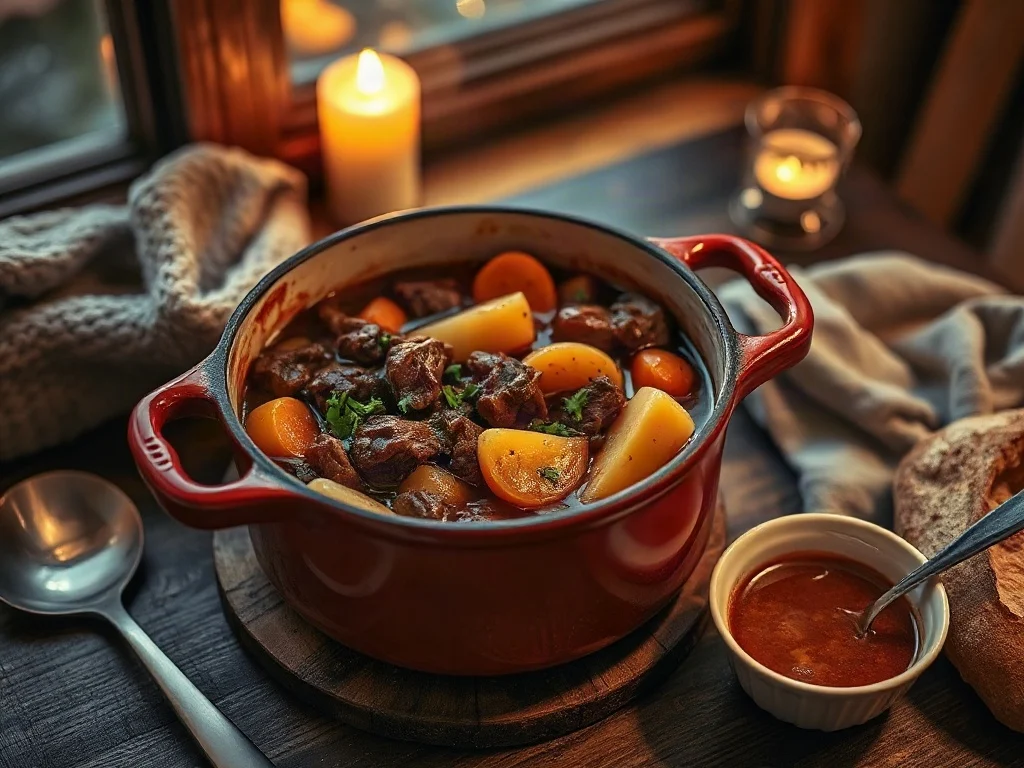
The first cold night of the year sends cooks to the same place: a heavy pot of beef stew recipes that promise warmth with little effort. Lists of twenty cozy options are plentiful, but they rarely explain why one stew succeeds and another turns out gray, watery, or tough. This analysis skips the ranking and looks at the mechanics, regional logic, and trade-offs behind the genre, so you can choose and cook any stew with more confidence.
What Is Beef Stew, Really?
A stew is a dish of solid ingredients cooked slowly in liquid, which then becomes the sauce. Most versions rely on braising: browning the meat first, then simmering it gently in a covered vessel. The difference between a good and a bad stew is mostly decided in the first fifteen minutes, before any liquid goes in.
The Science Behind a Cozy Beef Stew
Browning Builds Flavor
The Maillard reaction produces the roasted, savory compounds that boiled meat lacks. Crowding the pan is the most common mistake. Wet, steaming beef does not brown, so sear in batches, in a hot pan, with dry meat.
Why Tough Cuts Win
Lean steaks are the wrong choice. Cuts such as chuck, brisket, and oxtail are rich in connective tissue. Over long, gentle heat, collagen converts to gelatin, which gives the sauce body and the meat a silky texture. A rolling boil undermines this, because it tightens the muscle fibers and leaves the meat stringy. Keep the liquid at a bare simmer.
Layering Savory Depth
The foundation is usually a mirepoix of onion, carrot, and celery. Cooking tomato paste until it darkens, then adding it to the pot, intensifies umami. Anchovy, soy sauce, and Worcestershire are common tricks, though they are seasoning adjustments and not substitutes for proper browning.
Classic Styles Worth Knowing
Most cozy beef stew lists draw on a handful of traditions, and understanding them helps you pick by mood and pantry.
- Wine-based French stews: Beef bourguignon uses red wine for acidity and complexity. Its cousin, pot-au-feu, is a cleaner, broth-driven dish.
- Beer-based stews: Belgian carbonnade pairs beef with beer and onions. Stout versions made with Guinness add bitterness that needs balancing with something sweet.
- Paprika-forward stews: Goulash relies on paprika and onions for a sweeter, earthier profile.
- Hearty grain or root stews: Additions like barley make a pot that works as a complete meal.
Choosing a Cooking Method
A Dutch oven offers the best control. It sears on the stovetop and braises in the oven with even heat. A slow cooker trades flavor for convenience, because it cannot brown anything, so searing beforehand is essential. Pressure cooking shortens the process substantially, but the sauce tends to be thinner and less concentrated, so reduce it afterward.
| Method | Strength | Limitation |
|---|---|---|
| Dutch oven | Best browning and sauce reduction | Needs attention and time |
| Slow cooker | Hands-off convenience | Diluted flavor without pre-searing |
| Pressure cooker | Speed | Thin sauce, less depth |
Common Mistakes and How to Fix Them
- Adding vegetables too early. Potatoes and carrots turn to mush over a long braise. Add them for the final hour.
- Skipping the deglazing step. The browned residue in the pan is concentrated flavor. Dissolve it with wine, stock, or beer.
- Thickening carelessly. A roux or a light flour dusting on the beef works better than a last-minute slurry, which can taste raw.
- Under-seasoning. Season in layers, and finish with acid, such as vinegar or lemon, to brighten a heavy pot.
Stew also improves overnight, as flavors meld and fat is easy to skim once chilled. For storage and reheating guidance, consult the USDA Food Safety and Inspection Service.
Frequently Asked Questions
What is the best cut of beef for stew?
Chuck is the most reliable choice because of its balance of fat and connective tissue. Brisket and oxtail work well for richer results.
How long should beef stew cook?
Typically two to three hours at a low simmer, until the meat yields easily to a fork. Cooking time depends on the cut and piece size.
Can I make beef stew without wine or beer?
Yes. Beef stock with a splash of vinegar and some tomato paste replicates much of the acidity and depth.
The Real Test of a Cozy Stew
The most useful insight is that a stew’s quality depends less on its recipe than on three disciplines: aggressive browning, low and steady heat, and a final adjustment of salt and acid. Any list of twenty recipes is, in practice, variations on those fundamentals with different liquids and spices. Watch for how home cooks adapt the format, with more lighter, vegetable-heavy braises and faster pressure-cooker methods. The open question is whether convenience appliances can ever match the depth of a patient oven braise, or whether the best stews will remain the ones that demand the most time.
Frequently Asked Questions
Why does my beef stew meat turn out tough even after hours of cooking?
Most often the liquid boiled instead of barely simmering. A rolling boil tightens the muscle fibers and leaves the meat stringy. Using a lean cut can also cause it, since it lacks the collagen that turns into gelatin. Choose chuck, brisket, or oxtail and keep the heat low and gentle.
Is it worth searing the beef if I use a slow cooker?
Yes, it is essential. A slow cooker cannot brown anything, so skipping the sear leaves the stew pale with diluted flavor. Brown the dry meat in batches in a hot pan beforehand, then deglaze the pan and add those browned bits to the cooker.
How can I thicken stew without a raw flour taste?
Dust the beef lightly with flour before searing, or build a roux early in the process. Both methods give the starch time to cook through. A last-minute slurry is riskier because it can taste raw and does not integrate as smoothly into the sauce.
When should I add potatoes and carrots to the pot?
Add them for the final hour of cooking. Over a long braise, potatoes and carrots break down into mush. Adding them late lets them become tender while keeping their shape and texture, and they still absorb flavor from the sauce.
How do I fix a stew that tastes flat or heavy?
Season in layers during cooking, then finish with a splash of acid such as vinegar or lemon juice to brighten the pot. Anchovy, soy sauce, or Worcestershire can add depth, but they only adjust seasoning and cannot replace proper browning.
Does stew really taste better the next day?
Yes. Resting overnight lets the flavors meld, and chilling makes the solidified fat easy to skim off the surface. For safe storage and reheating, check guidance from the USDA Food Safety and Inspection Service.