
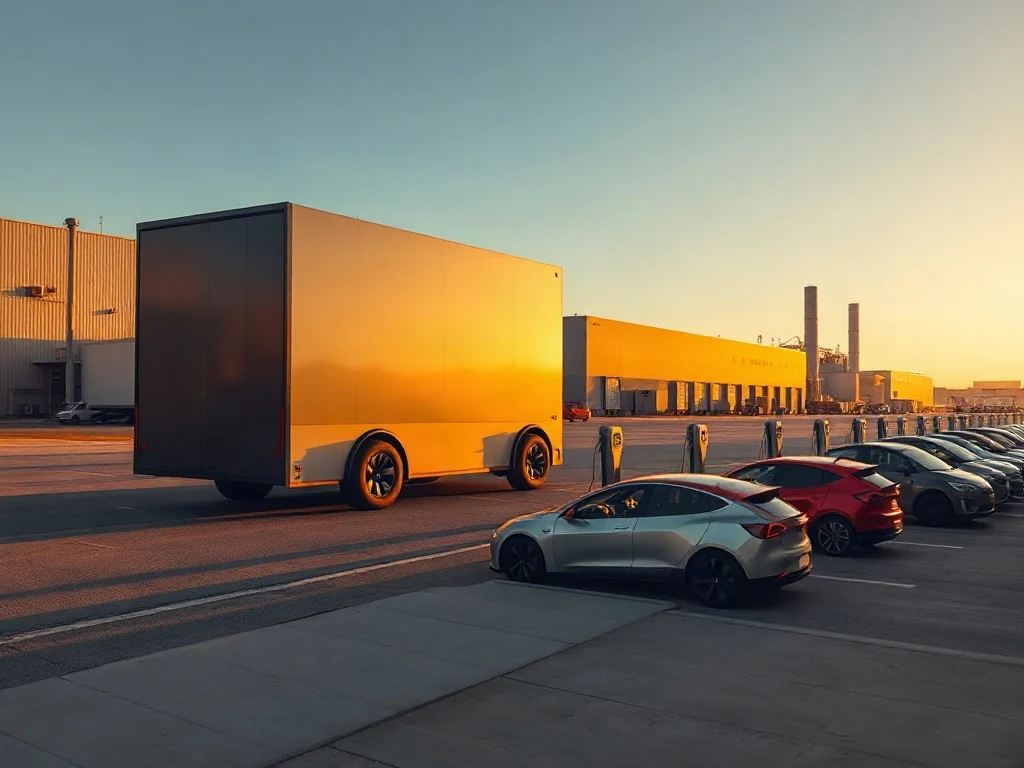
The reported Cybertruck discontinued story looks like a defeat for Tesla’s most polarizing product. Look past the headline, though, and it may be one of the healthier developments in the American electric vehicle market. According to the reporting this analysis builds on, Tesla’s angular stainless-steel pickup is the second oversized electric truck to be cut in roughly a year, while smaller, cheaper models multiply. That shift could matter a great deal for the US battery supply chain. This article explains why, what the evidence supports, and where the uncertainty lies.
One caveat first. Tesla and other automakers revise production plans often, and some details of the Cybertruck’s fate may change. The analysis below therefore separates what is well established from what is interpretation.
What the Cybertruck Was Supposed to Be
Elon Musk unveiled the Tesla Cybertruck in November 2019 with a headline starting price of $39,900. Deliveries only began in late 2023, and the trucks that reached customers cost far more than the 2019 figure suggested. The design was radical: an unpainted stainless-steel exoskeleton, flat panels and a polarizing silhouette. It was also hard to manufacture at scale, and the vehicle was subject to several recalls.
The Cybertruck was built at Gigafactory Texas and was meant to prove that an electric vehicle could win over the most culturally entrenched segment of the American car market, the full-size pickup truck. For Tesla, which built its fortune on the Model 3 and Model Y, it was a halo product as much as a volume play.
The Second Big Electric Truck to Disappear
The Cybertruck is not the first oversized electric truck to be pulled back. The Ford F-150 Lightning, launched in 2022 to great fanfare, was cancelled as a pure battery-electric truck when Ford announced a strategic reset in late 2025. Ford said it would shift toward an extended-range electric design and take a large financial charge on its EV program. Together, the two moves point to a pattern rather than an isolated failure.
Why Big Electric Trucks Struggle
Several structural reasons explain why large electric trucks keep underperforming:
- Battery cost and weight. A big truck needs a very large battery to deliver competitive range, and the pack can account for a large share of the vehicle’s cost. Towing and hauling cut range sharply, which undermines the pickup’s core purpose.
- High prices. Electric trucks have typically sold for far more than comparable gasoline models. Buyers in this segment tend to be price sensitive and loyal to established nameplates.
- Efficiency physics. Heavy, boxy vehicles have poor aerodynamic and weight efficiency, so they use more kilowatt-hours per mile than a compact car.
- Competition. The Rivian R1T, the GMC Hummer EV and the Chevrolet Silverado EV all chase a relatively narrow premium audience.
Why Smaller EVs Are Better for the Battery Supply Chain
The core argument of the original reporting is that the retreat from giant trucks is not bad for EVs but healthy for them. The reasoning is straightforward, and it holds up on the underlying economics.
Less Battery Per Vehicle Means More Vehicles Per Gigawatt-Hour
Battery factories are rated by annual capacity in gigawatt-hours. A truck with a very large pack consumes several times the cells needed by a compact hatchback. Every gigawatt-hour of US cell capacity can therefore electrify many more drivers if it goes into smaller vehicles. For a domestic supply chain still being built, that is a significant efficiency gain.
Cheaper Chemistry Fits Smaller Cars
Compact, lower-priced EVs increasingly use lithium iron phosphate (LFP) cells. Compared with nickel-rich designs, LFP avoids cobalt and nickel, generally costs less and tolerates frequent charging well. The trade-off is lower energy density, which is a problem for a three-ton truck but manageable in a light city car. Automakers including Ford and GM have publicly discussed building LFP capacity in the United States. Chinese firms dominate LFP today, so tariffs, licensing and technology-transfer rules will shape how quickly domestic output can scale.
A Broader Mix of Demand
A supply chain built around one segment is fragile. If demand were concentrated in a few expensive, high-capacity models, a single flop could strand billions of dollars of investment in lithium-ion battery plants. A wide range of affordable models spreads that risk and gives cell makers steadier, higher-volume orders.
Policy Whiplash and the Affordable EV Push
Policy has also changed the picture. The Inflation Reduction Act of 2022 offered consumer tax credits and manufacturing incentives that encouraged automakers and cell makers to build in North America. Subsequent legislation ended the federal consumer EV tax credit for vehicles acquired after September 30, 2025, according to widely reported legislative changes. With that subsidy gone, an expensive electric truck loses a significant part of its price advantage, and automakers must win buyers on sticker price and total cost of ownership.
That is why the industry is pivoting toward affordability. Examples include the return of the Chevrolet Bolt, the Nissan Leaf in its newer generation, the Chevrolet Equinox EV and the Ford Mustang Mach-E. Ford has also described a low-cost electric pickup platform aimed at much lower prices than the Lightning. Specific prices, dates and production locations in these plans can change, so treat them as stated intentions.
Competing Interpretations
Not every analyst agrees that the end of the Cybertruck is purely positive. Three viewpoints are worth weighing.
- The optimistic view: The market is correcting toward vehicles that people can afford, which uses scarce battery capacity more efficiently and builds a durable domestic industry.
- The cautious view: Retrenchment may signal weaker overall EV demand in the US, particularly after incentives expired. Fewer launches could mean slower innovation and less competitive pressure on pricing.
- The hybrid view: Extended-range designs and plug-in hybrids may suit trucks better than pure battery vehicles, because they need much smaller packs. If so, truck buyers might electrify partially rather than fully, and the supply chain would see smaller but broader demand.
The evidence does not yet settle the matter. Sales data, battery order books and automaker earnings over the next several quarters will show which view is closest to reality.
Practical Takeaways for Buyers, Fleets and Investors
For Car Buyers
If you are shopping for an EV, expect the new generation of compact and midsize models to offer more range per dollar than first-wave luxury trucks. Check the battery chemistry, since LFP packs tolerate regular full charges better, and compare real-world efficiency rather than headline range. Buyers of existing Cybertrucks should confirm warranty coverage and parts availability directly with Tesla.
For Fleet Managers
Fleets with predictable routes are well suited to smaller electric vans and cars. Heavy towing duties remain a weak point for current electric pickups, so analyze duty cycles before committing. Total cost of ownership, including charging infrastructure and downtime, should drive the decision more than brand excitement.
For Investors and Analysts
Watch utilization rates at US battery plants, announcements of LFP production lines and the pace of cost reductions per kilowatt-hour. Be wary of capacity announcements that are not backed by firm offtake agreements. Common mistakes include treating one model’s failure as proof that the whole market is failing, or assuming a product’s sales are a proxy for technology readiness.
Frequently Asked Questions
Is the Cybertruck really discontinued?
The report behind this analysis describes the Cybertruck as being cut. Automaker plans can change, so check Tesla’s official announcements for current production status and support details.
Why are big electric trucks failing?
The main reasons are high prices, heavy batteries, reduced range when towing and strong loyalty to gasoline and diesel trucks. Those factors make them a poor fit for the volume market, even though the technology works.
Does ending the Cybertruck hurt the EV market?
Not necessarily. Capital and battery cells can shift to cheaper, more efficient models that reach more buyers. The risk is that weak demand overall, rather than a product-mix correction, is the real driver.
What is the F-150 Lightning’s status?
Ford announced in late 2025 that it would move away from the all-electric version toward an extended-range approach. Confirm current availability with Ford.
Why does the US battery supply chain favor smaller EVs?
Smaller vehicles use fewer cells, so existing factory capacity can supply more cars. They also suit cheaper LFP chemistry, which US producers are working to localize.
What Comes After the Cybertruck Era
The most important insight is that the Cybertruck’s reported end is a market signal, not a verdict on electrification. The first wave of EVs was shaped by spectacle: huge batteries, huge price tags and huge expectations. The next wave is being shaped by manufacturing arithmetic, with the most valuable vehicles being those that make the most efficient use of each cell.
Readers should watch three things. First, whether US-built LFP cells reach scale at prices that rival imports. Second, whether truck buyers accept extended-range and hybrid-electric designs as a stepping stone. Third, whether the low-cost EVs now being planned arrive on time and at the prices promised. Those are forecasts and intentions, not guarantees.
A reasonable prediction is that the next truly successful electric pickup will not be the most dramatic one but the one that costs the least to build and own. The open question is whether American automakers can deliver that vehicle quickly enough to hold off foreign rivals who have already mastered cheap batteries.
Frequently Asked Questions
Why would the end of the Cybertruck be good news for electric vehicles?
The article argues that giant trucks need very large battery packs. Smaller, cheaper EVs use fewer cells, so each gigawatt-hour of US battery capacity can electrify many more drivers. This makes a domestic supply chain still under construction more efficient and helps EVs reach a broader market.
Is the Cybertruck the only large electric pickup being pulled back?
No. The Ford F-150 Lightning was cancelled as a pure battery-electric truck when Ford announced a strategic reset in late 2025. Ford plans an extended-range electric design instead and will take a large financial charge on its EV program. Together, the two moves suggest a pattern rather than an isolated failure.
Why do large electric trucks struggle to sell?
The article cites four structural reasons: big, costly and heavy batteries, prices well above comparable gasoline trucks, poor efficiency from heavy and boxy shapes, and towing that cuts range sharply. Pickup buyers also tend to be price sensitive and loyal to established nameplates, and rivals fight over a narrow premium audience.
What does LFP chemistry have to do with smaller EVs?
Lithium iron phosphate cells avoid cobalt and nickel, generally cost less and tolerate frequent charging well. Their lower energy density is a problem for a three-ton truck but manageable in a light city car. That makes LFP a natural fit for compact, cheaper EVs, and Ford and GM have discussed building US LFP capacity.
Is the Cybertruck's fate completely settled?
Not necessarily. The article warns that Tesla and other automakers revise production plans often, so some details may change. It also separates well-established facts from interpretation, and the argument builds on third-party reporting rather than a final, confirmed Tesla announcement.
How did the Cybertruck's real-world launch differ from its 2019 promise?
Musk unveiled it in November 2019 with a starting price of $39,900. Deliveries only began in late 2023, and the trucks that reached customers cost far more than that figure suggested. The stainless-steel exoskeleton was also hard to manufacture at scale, and the vehicle was subject to several recalls.