
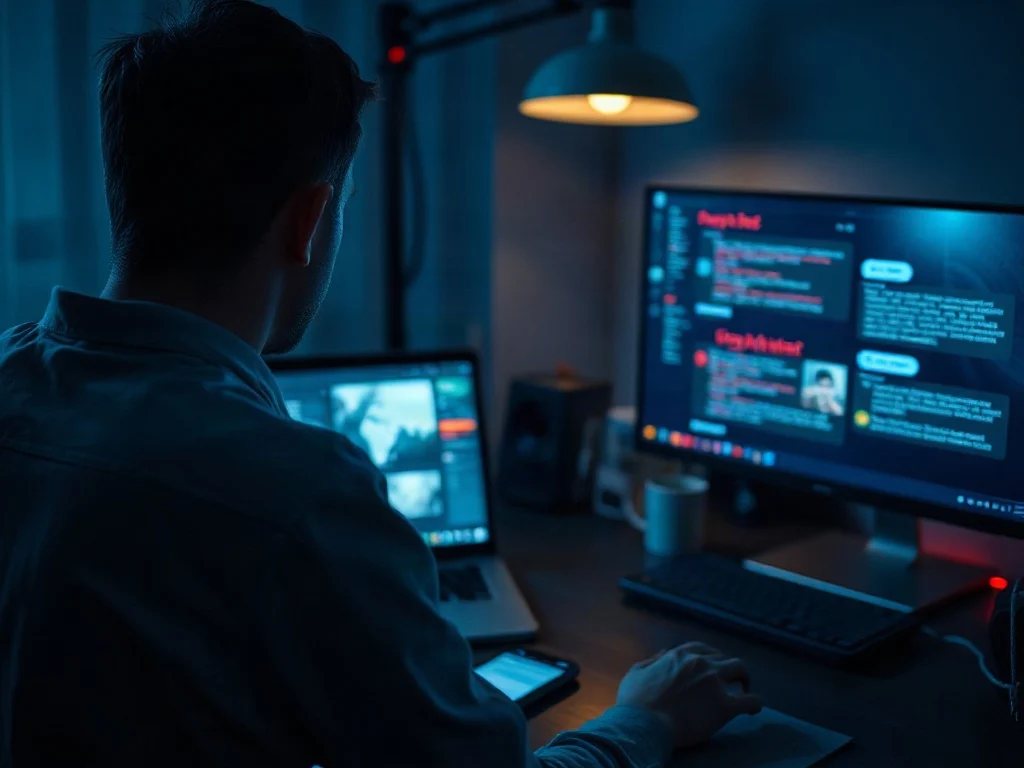
The newly uncovered Volta-Autodoxer malware shows what happens when two trends in cybercrime meet: commodity data theft and cheap, accessible artificial intelligence. According to the initial reporting, this infostealer does more than grab saved passwords. It uses AI tools to organize and interpret what it collects, from login credentials and credit card numbers to Discord sessions and even UberEats receipts. The result is a victim profile built automatically, a process the researchers call autodoxing. Public details are still thin, so this article separates what has been reported from what security professionals can reasonably infer, and explains what readers should do now.
What Is Volta-Autodoxer and Why Does It Matter?
Volta-Autodoxer is a data-stealing program, a category of malware designed to quietly harvest information from an infected computer and send it to an attacker. What sets it apart, based on the available description, is the way it combines that theft with AI-assisted analysis to produce a structured picture of a person rather than a pile of raw files.
The reported data types are telling:
- Login credentials for accounts across many services.
- Credit card numbers, which point to payment data stored in browsers or captured from autofill.
- Discord sessions, which can let an attacker act inside a victim’s account without a password.
- UberEats receipts, a detail that stands out because receipts reveal home addresses, routines, and household habits.
The receipts matter most. A password is a key to an account, but a delivery receipt is a window into someone’s life. When AI is used to sort and summarize that material, a criminal no longer needs time or skill to turn it into something actionable.
What Is Autodoxing? Understanding the Term
To understand what autodoxing is, start with doxing: researching and publishing, or threatening to publish, a person’s private information such as their home address, workplace, phone number, or family details. Traditionally, doxing was manual. Someone pieced together clues from social media, public records, and leaked databases.
Autodoxing automates that labor. The malware does not just exfiltrate data; it appears to use AI to extract the identifying details that matter and assemble them into a dossier. This turns an infection from a generic data grab into a targeted privacy violation that can feed harassment, extortion, identity theft, or highly personalized fraud.
Why automation changes the economics
Doxing used to require patience and investigation skills. Automation removes that barrier, which has two consequences. First, the number of people who can run a profiling operation grows. Second, the cost per victim falls, so attackers can profile large numbers of infected users instead of selecting a few high-value targets. Both effects are interpretation rather than reported fact, but they follow directly from how automation has affected other forms of cybercrime.
How Infostealer Malware Works: Background
Infostealers are one of the most common tools in the cybercrime ecosystem. Without describing Volta-Autodoxer’s specific internals, which have not been fully detailed publicly, the general pattern is well understood.
Typical infection and collection stages
- Delivery: The victim runs a malicious file, often disguised as pirated software, a game modification, a cracked tool, or an attachment sent through phishing or social engineering.
- Harvesting: The program searches browser profiles, application folders, and system data for credentials, autofill entries, payment details, and authentication artifacts.
- Exfiltration: The collected material is packaged and sent to infrastructure the attacker controls.
- Monetization: The stolen data is used directly or sold, often through marketplaces on the dark web.
Volta-Autodoxer seems to add a fifth stage between harvesting and monetization: AI-assisted analysis that converts raw loot into an organized profile.
Why session data is so dangerous
Reports specifically mention Discord sessions. Stolen session material relates to session hijacking, in which an attacker reuses an already authenticated state, often tied to an HTTP cookie or similar token. Because the service already considers the session trusted, the attacker may bypass the password prompt and, in some cases, multi-factor authentication. That is why changing a password alone may not fully lock an attacker out; the victim also needs to end active sessions. Platforms such as Discord offer ways to log out of devices and reset account security, though the exact steps change over time.
How AI Changes the Infostealer Threat
The core concern is not that AI makes the theft itself more sophisticated. Stealing browser data is old technology. The concern is what happens after the theft. This is an AI infostealer in the sense that artificial intelligence is applied to the data, not to the break-in.
Plausible roles for AI tools
The public description does not specify which models or services the malware uses, so the following are informed possibilities, not confirmed behavior. A large language model is well suited to tasks that would otherwise swamp a human operator:
- Reading unstructured text such as receipts, emails, and chat fragments and pulling out names, addresses, and routines.
- Linking accounts across services by matching usernames, email addresses, and phone numbers.
- Ranking victims by apparent financial value or vulnerability.
- Drafting convincing, personalized messages for follow-up scams.
Each of these tasks was previously feasible but time-consuming. Offloading them to artificial intelligence lets a low-skill operator achieve results once reserved for more experienced groups.
A caution on the hype
Not every claim about AI-powered malware holds up to scrutiny. Many tools labeled this way use AI in minor or experimental ways. Until independent researchers publish technical analysis of Volta-Autodoxer, the degree to which AI is essential, as opposed to a feature that improves convenience, remains an open question. Readers should treat the headline description as credible but incomplete.
Real-World Risks for Individuals and Organizations
Personal risks
For individuals, the most direct risks are credit card fraud, account takeover, and targeted harassment. The inclusion of food-delivery receipts suggests an additional physical-safety dimension: an address and a pattern of when someone is home are exactly what stalkers and harassers look for. Gamers, streamers, and community moderators, who are heavy Discord users, may face elevated risk.
Organizational risks
A compromised personal device used for work can expose corporate single sign-on sessions, internal chat tools, and cloud consoles. Profiling also helps attackers pick which employees to target for business email compromise. Organizations should treat unmanaged devices as part of their attack surface.
Regulatory and ethical considerations
Large-scale theft of personal information can constitute a data breach under many privacy laws, triggering notification duties for organizations that hold the affected data. There is also an ethical debate about publicly describing AI-assisted attack techniques: transparency helps defenders, but detailed write-ups can lower the bar for imitators.
Infostealer Malware Protection: Practical Steps
Defending against this kind of threat is mostly about reducing what an infostealer can find and limiting how long stolen data stays useful. If you are searching for how to protect against infostealer malware, these measures are the most effective.
For everyday users
- Avoid pirated and cracked software. This is a long-standing delivery route for stealers, and the risk is not worth the savings.
- Stop storing payment cards in the browser. Use virtual card numbers or a wallet that requires separate authentication where your bank supports them.
- Use a dedicated password manager with a strong master password instead of browser-saved credentials, and enable phishing-resistant authentication such as passkeys or hardware security keys when available.
- Keep software updated and use reputable endpoint protection.
- Check for exposure. A service such as Have I Been Pwned can show whether your email appears in known breaches.
If you suspect infection
- Disconnect the device from the network and run a full scan, or reinstall the operating system if the compromise is serious.
- From a clean device, change passwords and revoke all active sessions for important accounts, including Discord, email, and financial services.
- Contact your card issuer and replace affected cards.
- Enable or strengthen multi-factor authentication.
- Consider guidance from IdentityTheft.gov if personal identity data may be exposed, and review general cybersecurity advice from CISA.
For security teams
Organizations should deploy endpoint detection and response, shorten session lifetimes for sensitive applications, bind sessions to devices where possible, and monitor for impossible-travel or anomalous token use. Restricting credential storage in browsers through policy is a low-cost control with real impact. Also consider that a profile of an employee, not just their password, can be weaponized against the company in a social-engineering campaign.
Common mistakes to avoid
- Changing a password without ending existing sessions.
- Assuming multi-factor authentication makes stolen sessions harmless.
- Treating a single clean scan as proof of safety after a known infection.
- Ignoring the personal-safety side of exposed addresses and routines.
What Remains Unknown About Volta-Autodoxer
Several key questions are unanswered in the material available so far:
- How the malware is distributed and how many victims it has reached.
- Which AI tools it uses, whether local or cloud-based, and how its operators pay for them.
- Whether the profiling happens on the victim’s machine or on attacker infrastructure.
- Whether it is sold as a service or used by a single group.
These details determine how defenders can detect it. If the AI processing is done through external services, network indicators may be discoverable. If it is local, detection will rely on behavioral analysis. Until researchers publish indicators of compromise, defenders should rely on general infostealer controls.
Future Outlook: Where AI-Assisted Credential Theft Is Heading
Several developments seem reasonable to expect, though none is confirmed. First, more malware families are likely to add AI-based triage, because the cost is low and the benefit to criminals is high. Second, defenders will probably use similar techniques to spot anomalies and speed up incident response. Third, AI providers may face pressure to detect and block abuse of their services, which raises questions about terms of service enforcement and the balance between privacy and monitoring.
Authentication is also likely to evolve. Technologies that tie sessions to hardware, such as device-bound credentials, make stolen cookies less valuable. Adoption, however, is uneven, and attackers adapt to whatever defenders deploy.
Frequently Asked Questions
What is Volta-Autodoxer?
It is a recently uncovered infostealer that reportedly steals credentials, payment card numbers, Discord sessions, and food-delivery receipts, and uses AI tools to assemble that information into profiles of victims.
What does autodox mean?
To autodox is to automate doxing, the compilation of a person’s private identifying information, so that software rather than a human investigator builds the profile.
Can antivirus software stop this malware?
Reputable endpoint protection can block many known infostealers, but new variants can evade signature-based detection at first. Layered defenses, including safe download habits and strong authentication, matter more than any single product.
Does multi-factor authentication protect against stolen sessions?
Not always. If an attacker steals an already authenticated session, the service may not ask for a second factor. Revoking sessions and using device-bound or phishing-resistant authentication reduce the risk.
The Real Shift: From Stolen Data to Stolen Context
The most important lesson from Volta-Autodoxer is not that another infostealer exists. It is that the value of stolen data is moving from quantity to context. Passwords can be changed and cards can be reissued, but an address, a routine, and a social graph cannot be reset. If AI keeps lowering the cost of turning scattered records into coherent profiles, the harm from a single infection will grow, even if the infection technique stays ordinary.
The things to watch next are independent technical analyses of the malware, any evidence of how widely it is deployed, and whether copycats appear in underground markets. The unanswered question is whether platforms and defenders can make stolen sessions and saved data worthless faster than criminals can make them more insightful. For now, the safest assumption is that anything stored in a browser on an infected machine can be read, understood, and used against you.
Frequently Asked Questions
¿Qué diferencia a Volta-Autodoxer de un infostealer convencional?
Un infostealer clásico roba credenciales y datos de pago y los envía al atacante, que luego debe revisarlos. Según lo informado, Volta-Autodoxer añade una fase de análisis con IA que organiza el material robado y lo convierte en un perfil estructurado de la víctima, sin esfuerzo manual del delincuente.
¿Por qué los recibos de UberEats son tan sensibles si no contienen contraseñas?
Los recibos revelan direcciones de entrega, horarios, hábitos de consumo y datos del hogar. Esa información permite localizar a una persona y conocer su rutina. Con ayuda de IA, estos datos se pueden resumir y usar para acoso, extorsión o fraudes muy personalizados, aunque el atacante no tenga ninguna clave de acceso.
¿Cambiar mi contraseña basta si creo que estoy infectado?
No siempre. Si el malware robó sesiones de Discord u otros tokens de autenticación, el atacante puede seguir dentro de la cuenta aunque cambies la clave. Conviene primero limpiar el equipo, luego cerrar todas las sesiones activas, cambiar contraseñas desde un dispositivo limpio y activar la verificación en dos pasos.
¿Cómo suele infectarse un equipo con este tipo de malware?
El artículo no detalla el funcionamiento interno de Volta-Autodoxer, pero los infostealers suelen llegar mediante archivos maliciosos disfrazados de software pirata, mods de juegos, herramientas crackeadas o adjuntos de phishing. Evitar descargas de fuentes dudosas es una de las defensas más eficaces.
¿Qué parte de lo que se cuenta sobre el autodoxing está confirmada y cuál es interpretación?
Lo confirmado es que el malware roba credenciales, tarjetas, sesiones de Discord y recibos, y usa IA para elaborar perfiles. Que el autodoxing amplíe el número de atacantes y reduzca el coste por víctima es una inferencia razonable de expertos, no un hecho verificado, y los detalles técnicos siguen siendo escasos.
¿Quién corre más riesgo con el autodoxing automatizado?
Antes, el doxing exigía tiempo e investigación, así que solía dirigirse a pocos objetivos de alto valor. Al automatizarse, los atacantes pueden perfilar a muchos usuarios infectados a la vez. Esto implica que cualquier persona con datos almacenados en su navegador, no solo figuras públicas, podría convertirse en víctima.