
The Celebrity Traitors final closed the show’s second series on Friday after attracting 15 million viewers, according to the reported figures. That is a large audience for a single programme in a fragmented market, and it makes the show an important case study. This analysis does not recap who betrayed whom. It asks what the number means, why the format keeps working, and where the show’s success may be more fragile than it looks.
The second series of the hit series reached its climax on Friday after attracting 15 million viewers.
The source reporting is brief, and I have deliberately limited this piece to what it supports. Where a claim goes beyond it, the text says so.
What the Celebrity Traitors final tells us about a 15 million audience
A figure of 15 million is striking in the context of modern British television. Linear viewing has declined for years, and most programmes now rely on a mix of live audiences, catch-up viewing and clips shared on social platforms. A series finale that pulls this many people suggests the show still works as a shared event, not just as content to be consumed whenever convenient.
Reading the viewing figures carefully
The reported number needs context before it is compared with anything else. Television audiences can be quoted in several ways: overnight figures (people watching live or within hours), consolidated figures (which add several days of catch-up viewing), and series-wide averages or reach. The brief report does not specify which measure underlies the 15 million. Readers should therefore avoid treating it as a like-for-like comparison with other broadcasts.
In the UK, official audience measurement is carried out by the Broadcasters’ Audience Research Board, known as Barb. Its methodology determines what counts as a viewer and how streaming is folded in. Anyone judging the show’s success should check which Barb measure was used, and whether the quoted number includes BBC iPlayer viewing.
The Traitors format explained: how the game actually works
To understand why the Celebrity Traitors viewing figures are so high, start with the structure. The Traitors is a British adaptation of the Dutch format De Verraders. The format is an adaptation of the Mafia party game, a long-established example of a social deduction game.
The core mechanics
- Hidden roles: a small group of players are secretly designated Traitors, while the majority are Faithfuls.
- Elimination by vote: the group collectively banishes someone, hoping to remove a Traitor.
- Covert attrition: the Traitors remove a Faithful from the game, which forces the Faithfuls to guess who is responsible.
- Shared prize: the money is split among whoever remains at the end, which creates a built-in incentive problem.
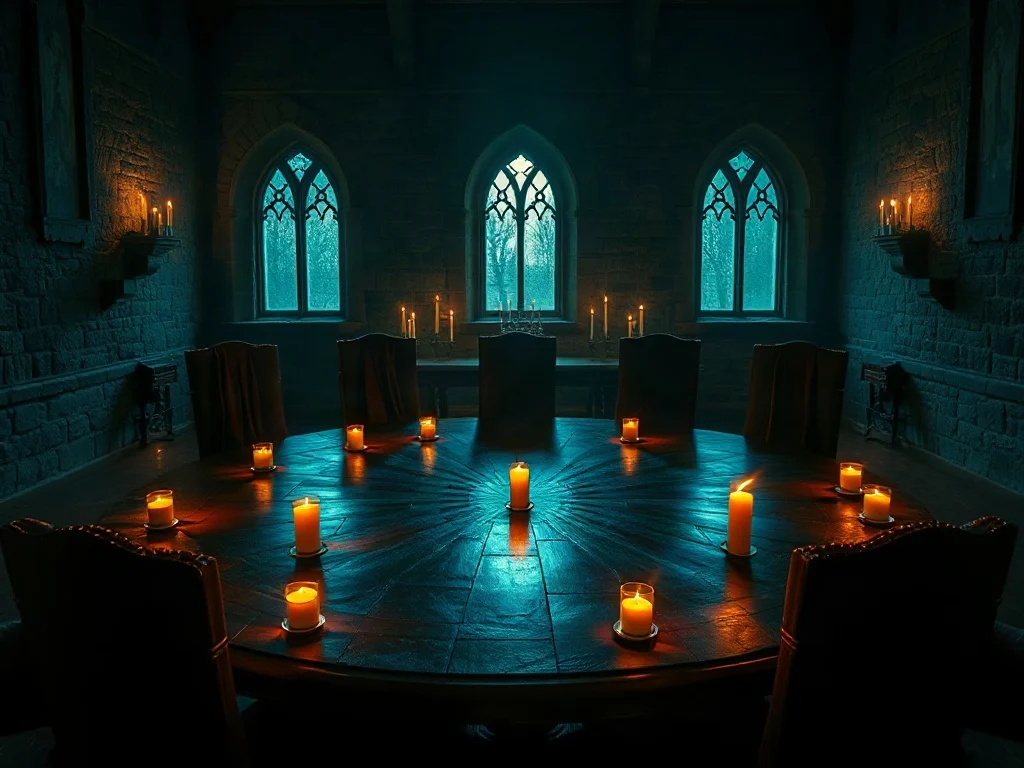
The show is hosted by Claudia Winkleman, and the British version is staged in a Scottish castle setting in the Scottish Highlands. The atmosphere does a lot of the work: the gothic location, the ritual round table and the host’s theatrical delivery all signal that this is a game with ceremony, not a quiz.
Why finals are structurally strong
The format’s design makes the finale its natural peak. By the endgame, few players remain, so every decision carries real weight. A single wrong vote can hand the prize to a deceiver or strip it from the honest. The final also resembles a prisoner’s dilemma, a classic problem in game theory: players must decide whether to trust people whose interests may directly conflict with their own. Viewers do not need to know the theory to feel the tension. The structure produces it by default.
Why the celebrity edition works, and where it strains
The celebrity version changes the show’s economics. In a conventional reality television series, the audience meets unknown contestants and builds attachments over weeks. With famous participants, the audience arrives with existing opinions. A well-known comedian, actor or presenter has a public persona, and viewers enjoy testing it against how that person behaves under pressure.
The strengths
- Pre-built interest: recognisable names lower the barrier to sampling the series.
- Persona versus behaviour: the pleasure of watching a likeable public figure lie convincingly is part of the draw.
- Skilled performers: many celebrities are comfortable on camera, which makes confrontations and confessionals more watchable.
The weaknesses
There are three structural problems, and they matter for a critical assessment.
- Stakes are ambiguous. Celebrity players may be motivated more by reputation than by money, and prize money in celebrity formats is often directed to charity. Reduced personal financial pressure can soften the cutthroat dynamics that make the standard version compelling. I cannot confirm from the source how prize money was handled in this series.
- Public image creates caution. Players with careers to protect may avoid the most ruthless play. That can dilute the drama, although the strongest players often seem to enjoy the opposite.
- Editing shapes perception. As with any produced game show, viewers see a curated version of events. Interpretations of player behaviour depend on what the edit emphasises, and that is an inherent limit on any armchair analysis.
Television viewing figures in a fragmented market
A 15 million audience also needs to be set against how people watch television now. Streaming has reshaped consumption, and platforms such as BBC One and on-demand services compete with streaming media from global providers. In that context, programmes that gather large simultaneous audiences are increasingly rare, and broadcasters value them because live attention is attractive to promoters and is a strong argument for public funding.
The Traitors format suits this environment for a specific reason: spoilers matter. Because the outcome depends on hidden information, viewers have a reason to watch on time or to avoid social media until they have caught up. That is a structural incentive toward shared viewing, and it is one reason a game-based format can outperform scripted drama in collective attention.
The social media amplifier
Group chats, online theories and clips amplify the effect. Each episode creates debate about who is lying, and that discussion extends the programme’s reach beyond its broadcast slot. However, I would be cautious about attributing the audience size primarily to social media. Without published data, the contribution of online conversation to the final audience is an interpretation, not an established fact.
Critical limits of the success story
It is tempting to treat a large finale as proof the format is invincible. The evidence does not support that conclusion.
- Finale peaks can mislead. Finals often draw the highest audience of a series, because people who dropped in and out return for the resolution. The figure may overstate the typical episode audience.
- Format fatigue is real. Hidden-role games rely on novelty in casting and in the host’s staging. A second series is a stronger test than a first, but repeated series eventually test whether the mechanics alone can sustain interest.
- Casting becomes the bottleneck. A celebrity edition needs participants who are famous enough to attract viewers and strategic enough to produce drama. That pool is finite.
- Ethical questions persist. The format rewards deception and then sometimes frames it as entertainment. Regulators such as Ofcom set standards for broadcast fairness and harm, and producers have a duty of care toward participants who face intense public scrutiny. The source does not report any specific concern about this series.
Practical lessons for broadcasters and marketers
The show’s performance carries lessons for anyone working in television or audience strategy, as long as they are applied with discipline.
- Design for participation. A format that invites viewers to form theories generates conversation without needing an extra campaign.
- Protect the reveal. The finale works because the outcome stays uncertain. Promotion that spoils the structure undermines the mechanism.
- Check the metric. Before benchmarking against a competitor, confirm whether figures are overnight, consolidated or cross-platform. Misreading this is the most common analytical mistake in coverage of ratings.
- Diversify the cast thoughtfully. Mix strong personalities with players who are strategically unpredictable. Fame alone does not guarantee a compelling game.
Frequently asked questions
How many people watched the Celebrity Traitors final?
The report states that the second series reached its climax on Friday after attracting 15 million viewers. It does not clarify whether that figure refers to the final episode alone, a consolidated audience or the series as a whole.
How does The Traitors work?
A group of contestants is secretly split into Traitors and Faithfuls. The Traitors eliminate players in secret, while the whole group votes to banish suspected Traitors. If any Traitor survives to the end, they can claim the prize, otherwise the Faithfuls share it.
Is The Traitors based on a real game?
Yes. The television format is derived from the Dutch programme De Verraders and the long-established Mafia party game, in which hidden roles drive suspicion and elimination.
Why is The Traitors so popular?
The likely reasons are its simple rules, high-stakes decisions, strong atmosphere and the viewer’s ability to play along. These are interpretations based on the format’s design, not findings from published audience research.
The real test comes after the 15 million
The most important insight is that the headline number measures a moment, not durability. A finale that attracts 15 million viewers proves the format can still create a shared event, and that is valuable in a market where such events are scarce. It does not prove the model can be repeated indefinitely, because every new series has to find fresh deceivers, fresh drama and fresh tension in a game whose rules audiences now know well.
Watch three things next. First, whether the broadcaster publishes consolidated and platform-level data that clarify what the 15 million represents. Second, whether the production keeps the celebrity and standard editions distinct enough to avoid cannibalising each other. Third, whether future casting prioritises strategic unpredictability over name recognition. My own reasoned prediction, which is an interpretation and not a fact, is that the format will remain strong for several more series, but that its next competitive threat will come from imitators who have learned its mechanics. The unanswered question is whether audiences are attached to the game itself or to the particular combination of host, setting and cast that has made it feel irreplaceable.
Frequently Asked Questions
Does the 15 million figure mean 15 million people watched the final live?
Not necessarily. The report does not say whether the number is an overnight figure, a consolidated figure including several days of catch-up, or a reach measure. Because of this, it should not be compared directly with other programmes until the measurement type is confirmed.
Who measures UK television audiences, and why does it matter here?
The Broadcasters' Audience Research Board, known as Barb, carries out official UK audience measurement. Its methodology decides what counts as a viewer and how streaming is included. Checking which Barb measure was used, and whether BBC iPlayer viewing is included, is essential for judging the show's success fairly.
Where does The Traitors format come from?
The British show adapts the Dutch format De Verraders, which itself builds on the Mafia party game, a well-known social deduction game. Players hold hidden roles as Traitors or Faithfuls, and the group votes to banish suspects while the Traitors secretly remove others.
Why is the final the strongest part of the format?
By the endgame few players remain, so every vote carries real consequences. One wrong decision can give the prize to a deceiver or take it from an honest player. The situation resembles a prisoner's dilemma, so tension arises from the structure itself, without viewers needing to know game theory.
How does having celebrities change the way viewers watch?
Viewers arrive with existing opinions about famous contestants, instead of getting to know unknowns over several weeks. They enjoy testing a public persona against how the person behaves under pressure. This changes the show's economics, though the article suggests it may also create strains.