
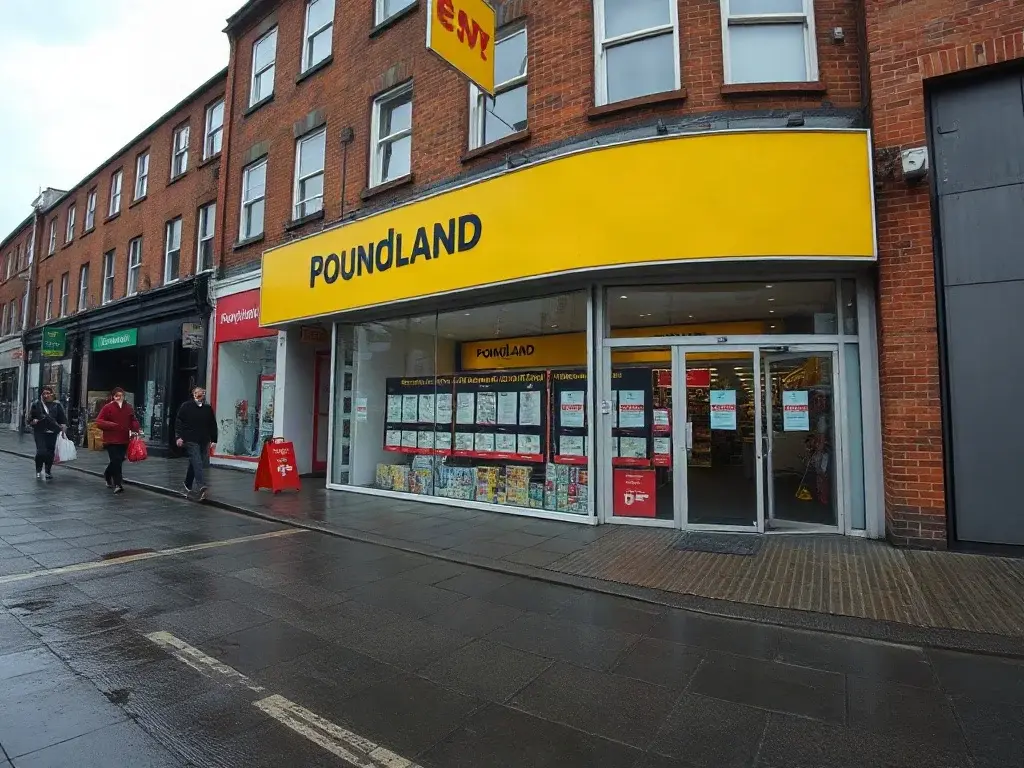
Poundland, one of the most recognisable discount variety retailers on the British high street, is facing a moment of existential uncertainty. The company’s bosses have filed a notice of intention to appoint administrators, a formal legal step that gives a struggling business a short window of protection from creditors while it explores a rescue, a restructuring, or a sale. For a chain that built its reputation on selling a wide range of goods at a single fixed price, the filing signals that the model is under severe financial strain. This analysis examines what the notice means in practice, how the business reached this point, which stakeholders are most exposed, and what the outcome could mean for shoppers, suppliers, and employees across the United Kingdom.
What a Notice of Intention to Appoint Administrators Actually Means
A notice of intention to appoint administrators is a procedure under UK insolvency law. It is filed at court by the company’s directors, typically when they believe the business is or is likely to become unable to pay its debts. The filing triggers a moratorium, sometimes described as a breathing space, that prevents creditors from enforcing claims or initiating legal action while the company seeks a solution. The moratorium usually lasts ten business days, though it can be extended in certain circumstances.
The procedure is not the same as an actual administration. It is a preliminary step. During this window, directors aim to find a licensed insolvency practitioner willing to take on the role of administrator, and to develop a credible plan for the business. Administration itself is a formal process in which an independent administrator takes control of the company’s affairs with the stated purpose of rescuing it as a going concern, achieving a better result for creditors than liquidation, or realising assets to repay creditors. The distinction matters because many companies that file a notice ultimately avoid administration altogether through refinancing, a company voluntary arrangement, or a pre-packaged sale.
The Role of the Moratorium
The moratorium is the most immediate protection the filing provides. Landlords cannot forfeit leases for non-payment, suppliers cannot demand payment on certain existing terms, and lenders cannot easily enforce security. For a retailer with hundreds of stores, this breathing space can be decisive, allowing management to keep trading while negotiating with creditors. However, the protection is temporary, and its effectiveness depends on whether the company can demonstrate a viable path forward within the available timeframe.
How Poundland Reached This Point
Poundland was founded in 1990 and built its business on a simple proposition: a broad range of household, grocery, and general merchandise sold for a standard price, originally one pound. The chain expanded rapidly and became a fixture of town centres and retail parks. Over time it moved beyond its original price point, but its identity remained rooted in value retail. Its ownership has changed several times, and in the years before the current crisis it was owned by a private equity-backed structure, a model that has drawn scrutiny across the retail sector because of the debt loads it can place on operating companies.
Several pressures have converged on discount variety retailers. Rising energy costs, higher wage bills driven by increases in the National Living Wage, business rates, and supply chain inflation have all raised operating costs. At the same time, consumers facing a cost-of-living squeeze have been more price-sensitive, which has helped discounters in some respects but has also intensified competition from supermarkets, online marketplaces, and rival discount chains. For a business with thin margins on each item, even modest deteriorations in sales volume or cost base can have outsized effects on profitability.
Debt and Capital Structure
Heavy borrowing is a recurring theme in retail distress. Companies that were acquired using significant leverage often carry interest obligations that absorb cash flow needed for store investment and inventory. When trading weakens, the gap between debt service and operating income can become unsustainable. Analysts frequently point to this dynamic as a structural vulnerability rather than a single-event failure. The precise balance between operational difficulties and financing decisions is a matter of ongoing debate, and public disclosures from the company and its creditors should be consulted for authoritative detail.
Who Is Most Exposed
The consequences of an insolvency process extend well beyond the company’s shareholders. Employees face uncertainty about jobs and pensions. Store staff, head office teams, and distribution workers are often the first to feel the impact of closures or restructuring. Landlords with shops on long leases may face void periods and difficulty re-letting premises. Suppliers, particularly smaller ones, can be significantly exposed if they are owed money on unsecured terms, since they typically rank behind secured lenders and insolvency costs in the repayment order.
Customers are also affected. Shoppers in towns where Poundland is a key anchor tenant may lose convenient access to low-cost goods, and local high streets can suffer knock-on effects when a large store closes. The degree of impact depends heavily on how many branches are ultimately affected and whether a buyer emerges willing to keep stores open.
Creditor Hierarchy and Recovery
In an insolvency, secured creditors with valid charges over assets are generally paid first from the proceeds of those assets. Preferential creditors, which include certain employee wage claims and some tax obligations, come next under current UK rules. Unsecured creditors, including many trade suppliers, are paid from what remains, and often recover only a fraction of what they are owed. Understanding this hierarchy helps explain why the outcome of the process can differ dramatically between stakeholder groups.
Possible Outcomes and Their Implications
Several scenarios are typically considered when a retailer enters this stage. A pre-pack administration, in which a buyer is identified and the sale is agreed before the administrator formally takes control, is one common route. It can preserve jobs and trading locations, but it has attracted criticism for limited transparency and for the speed at which decisions are made. A company voluntary arrangement, which involves a binding agreement with creditors to restructure debts while the company continues to trade, is another possibility. The least favourable outcome, liquidation, would result in the closure of stores and the sale of assets to repay creditors where possible.
The critical question is not whether the notice is filed, but whether the business has a viable operating model that can service its obligations once the immediate pressure is relieved.
Edge Cases and Exceptions
Not every notice leads to insolvency. Some companies use the protection to secure fresh funding from existing lenders or shareholders and emerge stronger. Others find that a portion of the estate is saleable while the remainder must close. The outcome can also vary by region, since store performance differs considerably between urban and rural locations and between prime and secondary sites. Predicting the final result therefore requires examining store-level economics rather than relying on headline figures alone.
Practical Considerations for Stakeholders
For employees, the most useful steps involve confirming their employment rights, understanding how redundancy pay and any outstanding wages would be protected, and monitoring official communications from the appointed insolvency practitioner. For suppliers, prompt submission of claims to the administrator, and careful review of any retention of title clauses in their contracts, can make a material difference to recovery. Landlords should assess lease terms, guarantees, and the likely demand for vacated units in their locality.
Shoppers and local authorities may wish to track which stores are confirmed to remain open. Common mistakes in these situations include assuming that all branches will close, or conversely assuming that the brand will survive intact. Both assumptions can lead to poor decisions. Reliable information should come from the insolvency practitioner’s statements and reputable business reporting rather than from speculation on social media.
Future Developments to Watch
The next few weeks will determine whether administrators are appointed, and if so, what route they pursue. Key indicators include whether a credible bidder emerges, the number of stores identified as viable, the treatment of the supply chain and distribution network, and the response of major landlords. Broader sector trends also matter. If discount variety retail continues to face cost pressures while consumer spending remains cautious, further consolidation or closures across the sector are plausible. Policy developments, including changes to business rates and minimum wage uplifts, may also shape the viability of similar operators.
It is reasonable to expect that any rescue, if one occurs, will involve a smaller estate than the business operated at its peak. What remains unclear is whether the value-retail format can be made profitable under current conditions, or whether it requires a fundamental redesign of range, store size, and sourcing. That unanswered question, more than the filing itself, will define whether Poundland’s name survives as a high street presence or becomes another casualty of a sector under sustained structural pressure.
Frequently Asked Questions
Does a notice of intention to appoint administrators mean Poundland will definitely close?
No. The notice is a preliminary step that gives directors about ten business days of legal protection from creditors while they look for a rescue, restructuring, or sale. Many companies that file a notice avoid administration entirely through refinancing or a company voluntary arrangement. Administration itself aims first to rescue the business as a going concern, so closure is one possible outcome rather than a certainty.
Will Poundland shops close immediately if the company enters administration?
Not necessarily. Administrators usually aim to keep trading while they assess options, because a business sold as a going concern generally fetches more than one whose stock is liquidated. Stores that are unprofitable may be closed, but profitable locations are often retained or sold to a buyer. The fate of individual branches depends on the sale process and how the administrator evaluates each site.
Can I still use my Poundland gift card or loyalty points if the chain collapses?
Gift cards are unsecured claims, so holders may be treated as ordinary creditors and could recover little or nothing if the business fails. If a buyer acquires the brand and trading continues, cards are sometimes honoured, but this is not guaranteed. Using any balance quickly is the safest step, and you can check the administrator's announcements for any statement on vouchers.
Who gets paid first if Poundland goes into administration?
Secured lenders with charges over company assets generally rank first, and the administrator's own costs are paid early in the process. Employees have certain priority claims for unpaid wages and some redundancy amounts up to statutory limits. Unsecured creditors, including many suppliers and some landlords, typically receive only what remains, which is often a small fraction of what they are owed.
Why do private equity-owned retailers like Poundland get into this kind of trouble?
Private equity ownership often involves borrowing against the company's assets or cash flows to fund the purchase, which adds interest payments and debt repayments on top of operating costs. Discount retailers already operate on thin margins, so these fixed financial obligations can leave little room to absorb rising costs or weaker sales. When trading softens, the debt burden can quickly become unsustainable.