
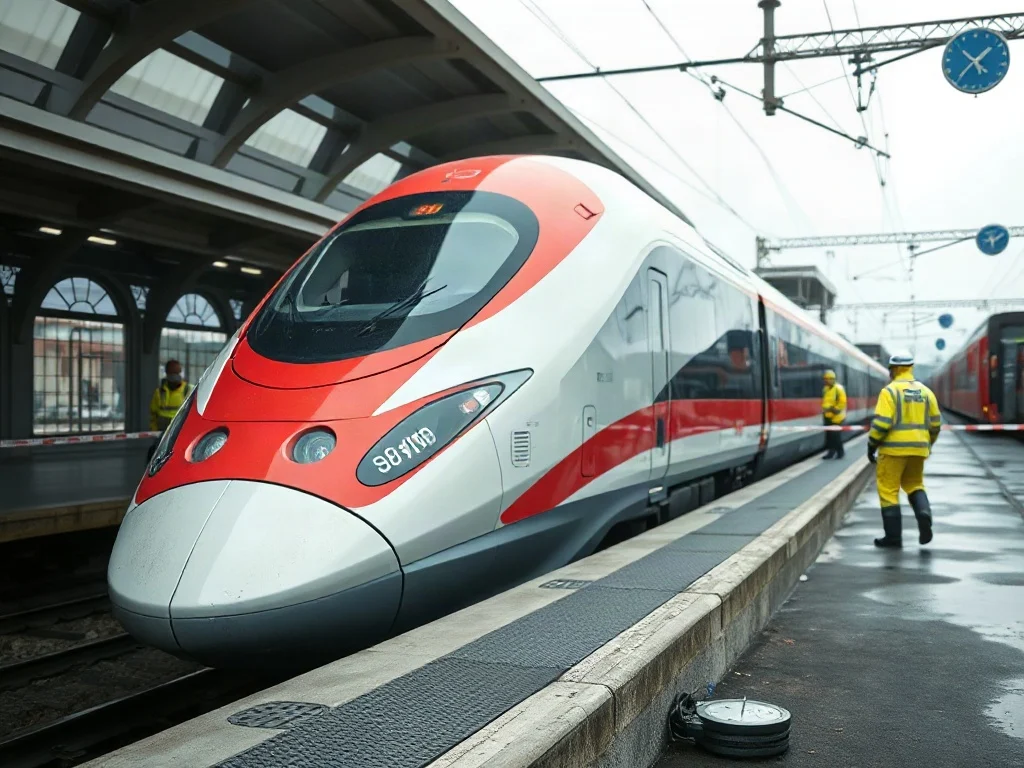
Questions about high-speed rail safety in Spain have intensified after a collision involving a high-speed train on Wednesday killed at least 68 people and wounded around 100 others. The crash is the country’s second fatal rail accident this year, a pattern that has prompted authorities to launch an official investigation into the cause and has put the reliability of one of Europe’s most extensive rail networks under close public scrutiny. Because Spain operates some of the largest high-speed rail systems in the world, the incident raises broader questions about how safety is engineered, monitored and enforced as networks expand and passenger numbers grow.
Why This Incident Matters Beyond Spain
High-speed rail is widely regarded as one of the safest forms of long-distance travel, and fatal accidents on modern lines are relatively rare by historical standards. That is precisely why a second deadly crash within a single year draws such intense attention. Transport safety analysts typically examine whether an incident reflects an isolated failure, a systemic weakness in infrastructure or operations, or a combination of human, mechanical and procedural factors. The answer determines whether the response should focus on specific equipment and staff training or on fundamental changes to maintenance, signalling and oversight. For passengers, regulators and rail operators across Europe, the outcome of this inquiry may shape expectations for years.
Background: Spain’s High-Speed Rail Network
Spain’s AVE high-speed network has grown rapidly since the first line opened in 1992, linking Madrid with Seville. Over the following decades, the network expanded into one of the longest in Europe, and it is operated alongside a broader system of conventional and regional railways. High-speed lines in Spain use a mix of dedicated tracks and upgraded corridors, with train operation governed by a combination of automatic train protection systems, signalling technology and human supervision. Understanding this layered architecture is essential, because a failure in any one layer, from the track geometry to the signalling logic to the driver’s actions, can contribute to an accident.
Key Terminology
Investigators and the public often encounter specialised terms in rail accident reporting. Automatic train protection refers to systems that enforce speed limits and can apply brakes when a driver fails to respond to signals. Track geometry describes the alignment, gauge and curvature of rails, which must be precisely maintained at high speeds. Rolling stock denotes the trains themselves, and signalling encompasses the systems that communicate movement authority to drivers and control centres.
Core Analysis: Possible Causes and Competing Explanations
At this stage of the investigation, the precise cause of the collision has not been established, and responsible analysis requires separating confirmed facts from speculation. Accident investigations in rail transport generally follow established methodologies, examining event data recorders, track inspection records, maintenance logs, communication recordings and the testimony of crew and witnesses. Competing explanations commonly considered in high-speed rail incidents include mechanical failure in the rolling stock, infrastructure defects, signalling or communication errors, excessive speed on a curve, and human error. Each hypothesis implies different corrective measures, which is why premature conclusions can be misleading.
Infrastructure Versus Operational Factors
A recurring debate in rail safety concerns whether accidents are better addressed through infrastructure investment or through operational discipline. Infrastructure upgrades, such as improved track monitoring and more robust signalling, reduce the probability of technical faults. Operational measures, including driver training, fatigue management and strict adherence to procedures, address the human dimension. Experts generally agree that the two are complementary rather than alternatives, and that the most resilient systems combine both. The challenge is that rapid network expansion can strain maintenance budgets and staffing, creating conditions in which existing safeguards are stretched thin.
The Role of Regulation and Oversight
Rail safety in Spain is overseen by national regulatory bodies that set standards, authorise operations and investigate incidents, in line with European Union directives. Regulatory frameworks across the continent have evolved to harmonise safety certification and interoperability, but critics argue that independent investigation and transparent reporting remain essential to maintaining public trust. Where accidents occur, the credibility of the investigative process depends on its independence from operators and the willingness to publish findings in full.
Practical Implications for Passengers and Operators
For travellers, a single accident does not necessarily change the statistical safety of high-speed rail, which remains comparatively low in risk per passenger kilometre. However, the incident highlights the value of staying informed about official advisories and of understanding that safety depends on continuous maintenance and vigilance. Rail operators, for their part, benefit from reviewing risk assessments, auditing maintenance regimes and ensuring that safety culture permeates every level of the organisation. Common mistakes include treating safety systems as sufficient on their own, underestimating the impact of workforce fatigue, and deferring maintenance during periods of high demand.
Future Developments and What to Watch
In the coming months, several developments will determine how this episode is remembered. The most significant will be the publication of the investigation’s findings, particularly whether they identify a single proximate cause or point to systemic shortcomings. Policymakers may respond with changes to inspection frequency, signalling upgrades or revised operator obligations, and European regulators may examine whether lessons apply to other networks. Technological trends, including predictive maintenance powered by sensor data and enhanced automatic train protection, are likely to receive renewed attention. Any predictions about regulatory outcomes should be treated cautiously until the evidence is established.
Frequently Asked Questions
Is high-speed rail still safe to travel?
Fatal accidents on high-speed rail are rare relative to the number of journeys made, and rail remains among the safest modes of long-distance travel. A single incident does not by itself alter this overall safety record, though investigations are important for identifying any emerging weaknesses.
What will the investigation examine?
Investigators typically review event data, track and maintenance records, signalling logs, communications and crew testimony to determine the sequence of events and the factors involved.
Will this lead to changes in rail regulation?
Outcomes depend on the investigation’s findings. Changes may involve inspection standards, signalling systems or operator obligations, but any specific measures should be assessed once the official conclusions are published.
The most important insight emerging from this tragedy is that high-speed rail safety is not a fixed achievement but an ongoing process that must keep pace with expansion. Whether the second crash of the year proves to be an isolated failure or a signal of deeper strain will depend less on the initial headlines than on the transparency and rigour of the inquiry that follows. Readers should watch for the published findings, for any regulatory response that targets root causes rather than symptoms, and for how operators balance growth against maintenance capacity. The unanswered question is whether Spain and its European partners can sustain public confidence in fast rail while the network continues to grow.
Frequently Asked Questions
¿Por qué se considera tan grave que se produzcan dos accidentes ferroviarios mortales en un mismo año en España?
Los trenes de alta velocidad son considerados uno de los medios de transporte más seguros, por lo que los accidentes mortales son poco frecuentes. Que se repita en un solo año sugiere que podría haber un problema sistémico y no un fallo aislado. Por eso los analistas investigan si la causa es técnica, de infraestructura u operativa, ya que cada posibilidad exige medidas correctivas distintas.
¿Qué es sistema de protección automática del tren y por qué es clave en este tipo de investigaciones?
Es un conjunto de sistemas que vigilan la velocidad del tren y la respuesta del conductor a las señales. Si detectan que el maquinista no reacciona o se supera el límite permitido, pueden aplicar los frenos automáticamente. Por ello, los investigadores revisan si estos mecanismos funcionaron correctamente, porque un fallo en esta capa puede contribuir decisivamente a un accidente.
¿Por qué no se puede determinar todavía la causa exacta del choque?
Las investigaciones ferroviarias requieren analizar registros de datos del tren, historiales de mantenimiento de la vía, grabaciones de comunicaciones y testimonios de testigos y tripulación. Este proceso lleva tiempo y debe separar los hechos confirmados de las especulaciones. Sacar conclusiones antes de completar esa revisión puede inducir a error sobre qué fallo realmente ocurrió.
¿Qué diferencia hay entre los fallos de infraestructura y los fallos operativos en un accidente ferroviario?
Los fallos de infraestructura afectan a la vía, la señalización o los equipos fijos, como un defecto en la geometría de los raíles. Los fallos operativos tienen que ver con las personas y los procedimientos, como la formación del conductor, la fatiga o el incumplimiento de normas. La mayoría de expertos coincide en que ambos aspectos están relacionados y deben atenderse conjuntamente para mejorar la seguridad.
¿Este accidente podría afectar a los viajeros de otros países europeos que usan trenes de alta velocidad?
Sí, indirectamente. Las conclusiones de la investigación pueden influir en normativas, estándares de mantenimiento y supervisión que los reguladores y operadores de toda Europa aplican. Además, la atención pública sobre la seguridad puede cambiar las expectativas de los pasajeros y llevar a revisar protocolos en otras redes de alta velocidad.