
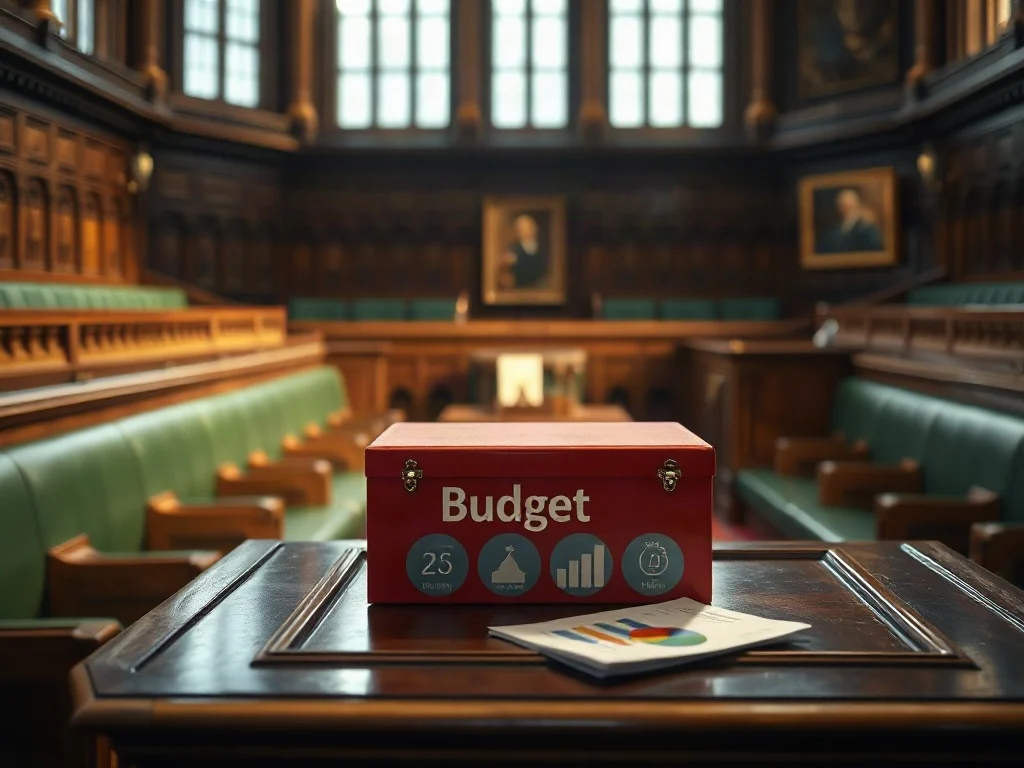
The first Budget delivered by a new chancellor is one of the most closely watched events in the British fiscal calendar. When John Healey sets out the government’s tax and spending plans, the decisions made at the dispatch box shape household finances, public services, business investment and the wider economic outlook. This budget key points overview distils the essentials of the statement, separating confirmed measures from speculation and explaining how each announcement is likely to be felt in practice. Because the full detail of a Budget often emerges over several days of official documents and parliamentary scrutiny, a clear summary of the headline decisions helps readers understand what has changed and what has not.
Background: What a UK Budget Is and Why It Matters
A UK Budget is the chancellor’s annual statement of the government’s revenue and expenditure for the coming fiscal year. It is presented to the House of Commons and sets out taxation levels, public spending allocations, borrowing forecasts and the government’s fiscal rules. The document is prepared with the assistance of the Office for Budget Responsibility, an independent body established in 2010 that produces the official economic and fiscal forecasts against which the government’s plans are judged.
The chancellor of the exchequer holds the principal responsibility for public finances in the United Kingdom, and a first Budget carries particular significance. It signals priorities, establishes credibility with financial markets and sets expectations for the remainder of the parliamentary term. Markets react to gilt yields, sterling and equity prices, while households and businesses assess the implications for income tax, national insurance, corporation tax, and the cost of borrowing.
The Headline Measures: A Structured Overview
Budget announcements typically fall into three categories: tax changes, spending commitments and borrowing or fiscal rule adjustments. Distinguishing between these categories is important, because a tax measure may take effect immediately, while a spending pledge may be phased in over several years and subject to departmental allocation.
Tax Changes
Tax measures announced in a Budget can range from adjustments to thresholds and allowances to new reliefs for particular sectors. Changes to income tax thresholds affect the bulk of earners, while revisions to national insurance rates alter employer and employee costs. Corporation tax, business rates and duties on fuel, alcohol and tobacco also feature regularly. Readers should check whether a given change applies from the date of announcement, from a future tax year, or only after legislation has passed through Parliament through a Finance Bill.
Spending Commitments
Spending decisions are usually expressed as departmental budgets, capital investment programmes and specific commitments to health, education, defence, housing or infrastructure. A useful test is to ask whether a stated figure represents new money, a reallocation within existing budgets, or a nominal increase that is smaller than inflation once price changes are taken into account. Real-terms analysis, which adjusts for inflation, is the more reliable basis for comparing spending across years.
Borrowing and Fiscal Rules
The government’s fiscal rules define the framework within which taxation and spending must operate, often specifying targets for debt as a share of gross domestic product and for current budget balance over a rolling period. The Office for Budget Responsibility assesses whether the government is on course to meet these rules. Headroom, the margin between forecast borrowing and the fiscal rule threshold, is a key indicator of how much fiscal flexibility remains.
Analysis: Competing Interpretations
Budgets are rarely interpreted neutrally. Government ministers emphasise the stability, fairness and growth-oriented aspects of their plans, while opposition parties focus on the distributional effects, the adequacy of public service funding and the risks of higher borrowing. Independent commentators from institutions such as the Institute for Fiscal Studies typically analyse the distribution of tax changes across income deciles and assess whether spending plans are sustainable.
Economists also debate the fiscal multiplier, which measures how much economic output changes in response to a change in government spending or taxation. The size of this effect depends on the state of the economy, monetary policy and the nature of the measure, so the growth impact of a Budget is uncertain and contested. Readers should treat headline growth forecasts as conditional estimates rather than certainties.
Exceptions and Edge Cases
Some measures affect only specific groups, such as self-employed workers, pensioners, landlords or small businesses. A change that appears modest in aggregate may be significant for a narrow segment. Similarly, freezes to thresholds produce a gradual effect known as fiscal drag, because rising wages move more people into higher tax bands over time without any explicit rate increase.
Practical Applications: What Households and Businesses Should Do
- Check your personal position using official calculators once the detailed rates are confirmed, rather than relying on headline summaries.
- Review pension and savings contributions in light of any changes to allowances, since tax relief rules can alter the net benefit of saving.
- Assess business exposure to corporation tax, employer national insurance and business rates, and model cash flow under the revised assumptions.
- Monitor implementation dates, because some measures take effect only after a Finance Bill receives Royal Assent.
- Consult professional advice for decisions with material financial consequences, particularly where reliefs or thresholds interact.
A common mistake is to act on an announcement before its legal basis is clear. Another is to assume that a spending pledge guarantees service improvements, when delivery depends on departmental plans, workforce availability and procurement timelines.
Future Developments: What to Watch Next
The immediate next steps are the publication of full Budget documents, the Office for Budget Responsibility’s economic and fiscal outlook, and the subsequent Finance Bill. Parliamentary amendments can alter measures during passage, so the final form of policy may differ from the initial announcement. Over the coming years, observers will track whether borrowing falls as forecast, whether real-terms public spending growth is sustained, and whether productivity improves enough to support revenue without further tax increases.
Reasonable predictions can be made about pressures on the public finances, including demographic demand for health and social care, debt interest costs and the need for infrastructure investment. However, the magnitude of these pressures and the government’s response remain uncertain. Confirmed information should be distinguished from projections, and forecasts should be revisited as new economic data becomes available.
Frequently Asked Questions
What are the key points of the Budget?
The key points cover tax changes, public spending allocations and the government’s borrowing and fiscal rule position. Readers should consult the official Budget documents for precise figures and effective dates.
When do Budget tax changes take effect?
Some changes apply immediately, while others require legislation through a Finance Bill or start at a future tax year. The effective date is specified in the official documentation for each measure.
Who is affected most by Budget decisions?
Impacts vary by income, household composition, employment status and business sector. Distributional analyses from independent bodies provide the most reliable assessment of who gains and who bears the cost.
Are Budget forecasts reliable?
Forecasts are inherently uncertain and depend on assumptions about growth, inflation and interest rates. They are best treated as central estimates within a range of possible outcomes.
The Question That Will Define This Budget
The most important insight from any first Budget is not the individual announcements but the coherence of the strategy behind them. Whether the measures credibly reconcile fiscal discipline with public service demands and investment needs will determine how the plans are judged once the initial headlines fade. Readers should watch the Office for Budget Responsibility’s assessment of headroom, the trajectory of debt interest costs and whether promised productivity gains materialise. The unresolved question is whether the growth assumptions underpinning the plan prove durable, because if they do not, the room for manoeuvre in future Budgets will narrow considerably.
Frequently Asked Questions
Do the tax changes in a Budget take effect immediately?
Not always. Some measures apply from the date of announcement, but many take effect from a future tax year or only after legislation passes through Parliament in a Finance Bill. Readers should check the official documents to see the start date for each specific change before assuming their finances will be affected straight away.
How can I tell whether a spending increase is genuinely larger than before?
Compare figures in real terms, adjusting for inflation, rather than relying on nominal headline numbers. A stated increase can look generous yet be smaller than price rises once inflation is taken into account. It is also worth asking whether the money is genuinely new or simply reallocated from existing departmental budgets.
What is fiscal headroom and why do analysts watch it?
Fiscal headroom is the gap between forecast borrowing and the threshold set by the government's fiscal rules. A larger margin means the government has more room to absorb unexpected shocks or fund new spending without breaching its own targets. Analysts track it as a signal of how much flexibility remains in future budgets.
Who checks whether the government's forecasts are reliable?
The Office for Budget Responsibility, an independent body created in 2010, produces the official economic and fiscal forecasts. It assesses whether the government is on course to meet its fiscal rules, so its published judgements provide the benchmark against which the chancellor's plans are measured.
Why might a Budget affect financial markets differently from households?
Markets respond quickly to signals about borrowing, gilt yields, sterling and equity prices, often within hours of the statement. Households and businesses typically feel the effects more gradually, through income tax, national insurance, corporation tax or changes in the cost of borrowing, which may only appear once measures are implemented.