
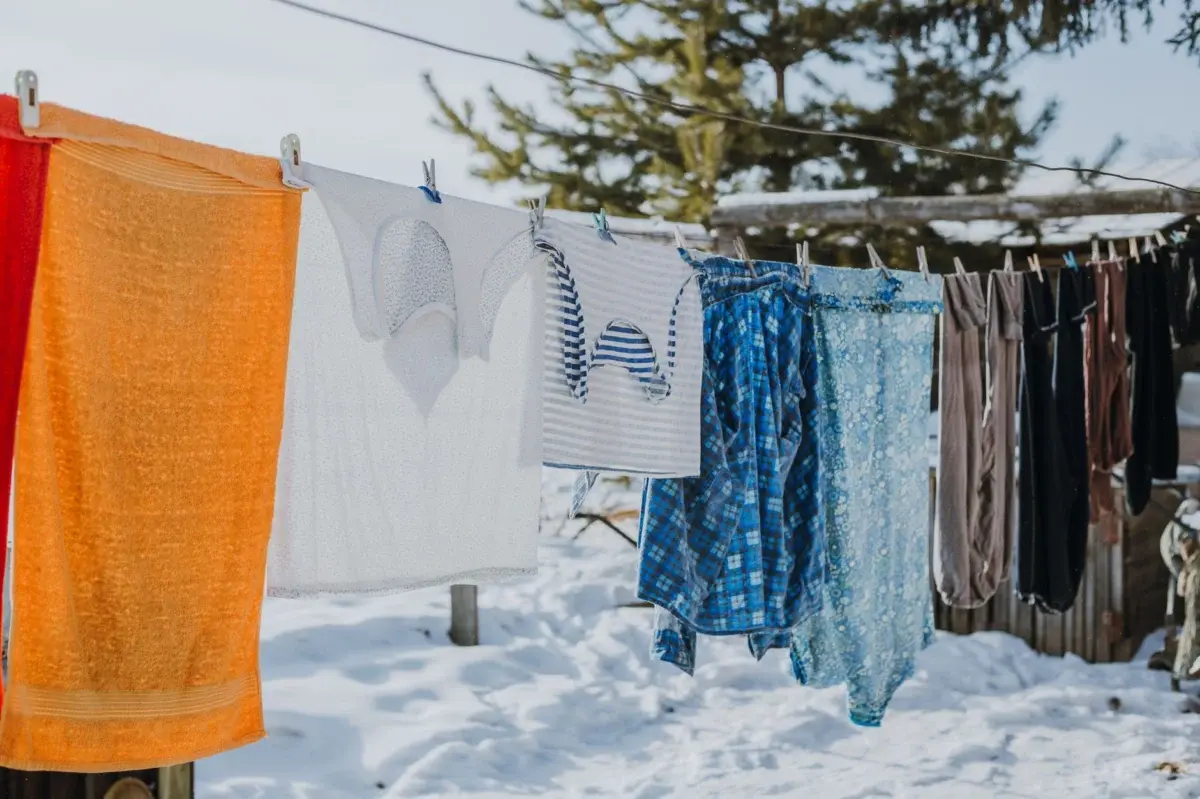
Saving money on laundry costs starts with a blunt reality: the tumble dryer is usually the most expensive part of the job, not the washing machine. A wet load of laundry still has to lose a lot of water before it is wearable, and that water does not disappear for free. Some consumer calculators estimate that a single drying cycle can cost up to 66p, although the exact figure depends on the appliance, tariff and load size. The precise number matters less than the direction of travel: if drying is treated as an automatic extra, the bill climbs quietly but consistently.
This winter, the practical question is not whether you can live without a dryer. It is how to cut laundry bills without creating damp rooms, stretched knits or extra hassle. The answer is a mix of fabric judgment, airflow and basic household physics. If you understand evaporation, relative humidity and condensation, you can usually keep clothes moving without paying a premium for every load.
How to save money on laundry costs without using the tumble dryer
The cheapest drying plan is not one single trick. It is a sequence: wash less often, remove more water before the drying stage and give moisture a place to go. That is basic energy conservation. Every litre of water you spin out mechanically is a litre the dryer, heater or dehumidifier does not need to deal with later.
The same logic explains why winter is not automatically a disaster. Cold weather can slow drying indoors because people close windows and rooms lose heat, but it also creates a stronger reason to use targeted drying methods rather than brute force. A full drying cycle in a machine may still be the costliest option in the household, while a well-managed clothes horse in a ventilated room may cost almost nothing to run directly.
1. Wash only what actually needs washing
Not every garment needs a full wash after one wear. A wool jumper, for example, often needs airing more than washing, while cotton socks and gym kit usually need a proper clean. If you wash fewer items, you create fewer wet items. That sounds obvious, but it is the cleanest way to cut laundry bills because it reduces both water use and drying time.
Read the care label rather than following habit. Some clothes can be refreshed with a short air-out, a brush or a targeted stain clean. Others, especially heavier pieces, should be washed less frequently but more carefully. The point is to match treatment to fabric rather than treating everything like a towel.
2. Use the fastest safe spin cycle
One of the most underrated laundry savings comes before drying begins. Spin-drying removes water mechanically, so a higher spin speed usually means less evaporation later. That does not mean every garment should be spun aggressively. Delicates, some synthetics and structured garments may lose shape or crease more badly under a hard spin. But for sturdy cottons, towels and everyday basics, a stronger spin can noticeably reduce the work left for air drying.
This is where many households leave money on the table. They think in terms of machine time, not moisture load. A few extra minutes in the washer can save a much longer drying stage, which is where the hidden cost lives.
3. Sort loads by weight and drying time
Thick cotton towels, jeans and hoodies behave very differently from lightweight shirts. Cotton holds water and dries slowly; lighter synthetics can dry much faster. If you hang a mixed load together, the fastest pieces are ready long before the densest ones, and the whole setup stays in the room longer than necessary.
A better approach is to group items by drying speed. Drying one small, coherent load is often more efficient than cramming a large mixed pile onto an airer. It also reduces the risk of damp pockets inside the pile, which slow the whole process and encourage stale smells.
4. Give the room airflow, not just warmth
The goal is not to heat the room like a sauna. It is to help moisture escape. A clothes line or airer works best when air can move around the fabric. That is why a sealed room with wet washing often becomes a problem: the water leaves the clothes, but it has nowhere useful to go.
Without ventilation, moisture accumulates until it settles on cold surfaces. That is the start of condensation, misted windows and, in the worst cases, mould growth. A cracked window, open door or extractor fan can make indoor drying far more effective than adding more heat alone.
5. Use a dehumidifier or heated airer selectively
A small dehumidifier can be a rational compromise when you need to dry clothes indoors for days at a time. It does not eliminate humidity for free, but it can reduce the strain on the room and often outperforms a full tumble-dryer cycle for modest loads. The same is true of a heated airer: it uses electricity, but it is usually more targeted than blasting a large drum with hot air.
The best way to judge whether this makes sense is to watch the room, not just the clothes. A simple hygrometer tells you whether humidity is climbing into uncomfortable territory. If the air is already damp, more fabric in the room is not a saving; it is a problem waiting to happen. If the room stays dry and the drying cycle finishes quickly, you have found a useful middle ground.
6. Stop treating radiators as default drying racks
Placing wet clothes directly on radiators is popular because it feels efficient, but it often works against the rest of the heating system. It blocks airflow, creates local moisture and can make a room feel clammy rather than warm. If the room already needs central heating, then drying there may still be acceptable, but the clothes should not smother the heat source.
This is where a thermostat becomes relevant. If you are heating a room only to dry laundry, the savings erode quickly. If the room was going to be warm anyway and you can dry garments without blocking airflow, the cost is easier to justify. The difference is not subtle; it is the difference between using incidental heat and creating a new energy load for the sake of convenience.
Which drying method is best value in practice?
There is no single best answer for every home. Space, ventilation, fabric type and winter humidity all matter. Still, the trade-offs are predictable enough to compare.
| Method | Direct cost | Speed | Main risk | Best use |
|---|---|---|---|---|
| Clothes horse in a ventilated room | Very low | Slow to moderate | Humidity build-up if the room is sealed | Light loads, shirts, delicates |
| Airer with dehumidifier | Low to moderate | Moderate | Upfront purchase and space use | Winter indoor drying when humidity is high |
| Heated airer | Moderate | Faster | Uses electricity | Small loads and flats without outdoor space |
| Tumble dryer | Highest | Fast | Highest energy use | Emergency loads, bulky bedding, very wet items |
The table makes the point plainly: the dryer is not the only option, but it is the least economical default. For many homes, the winning pattern is not complete abstinence from machines. It is a measured combination of better washing habits, stronger spinning and lower-energy drying.
Is air drying clothes cheaper than tumble drying?
Usually yes, but only if you do not create a new heating or moisture problem in the process. Air drying is cheap because it uses time and room conditions rather than direct electric heat. The catch is that the room must be able to handle the moisture. If it cannot, then you start paying in other ways: higher heating demand, stale air, or visible damp on walls and windows.
That is why the best answer is rarely just air dry more. It is: air dry better. Put the clothes where air can circulate, dry the lightest items first, separate dense fabrics from lighter ones and keep an eye on humidity. In other words, solve the water problem before it becomes an energy problem.
Common mistakes that erase the savings
- Overloading the airer. Clothes need gaps between them. If items touch, they dry slower and trap moisture.
- Drying in a sealed room. A closed room with no airflow turns laundry into a humidity source instead of a drying method.
- Using too much detergent. Excess detergent can leave residue that feels like dampness and encourages rewashing.
- Ignoring fabric type. Heavy cottons and towels need a different plan from wool or thin synthetics.
- Running the dryer for a few final items. That is often the most expensive way to finish a small load.
These mistakes are small individually, but they add up. The real economy comes from removing friction at every stage: fewer unnecessary washes, more water removed in the machine, and less moisture trapped in the room.
Questions people ask before ditching the dryer
Can I dry clothes on a radiator?
You can, but it is usually a poor default. It blocks heat, concentrates moisture and often creates a less comfortable room. If you must use a radiator, leave space around the clothes and do not let them sit there for hours as a routine habit.
What room is best for indoor drying?
The best room is the one with the best airflow and the least risk of condensation. That is often a spare room, utility space or well-ventilated living area rather than a small sealed bedroom. If you already heat one room for use, that may be the most practical place to dry laundry because the warmth is not being created solely for the clothes.
Do dehumidifiers really save enough money to matter?
They can, especially when compared with repeated tumble-dryer use. But they are not magic and they are not a licence to over-wash. Their value depends on how much laundry you dry indoors, how damp your home already is and whether the machine is replacing a dryer or just adding another appliance to the bill.
The bigger shift to watch this winter
The most important insight is that laundry saving is really moisture management. Once you see it that way, the whole household changes: you wash more deliberately, spin more aggressively, dry more selectively and stop paying a premium for convenience that only seems small in the moment. That is why a heat pump dryer, a better airer setup or a simple hygrometer can each make sense depending on the home. The question is not whether everyone should abandon machines forever. It is whether the machine should remain the default answer.
What to watch next is whether winter energy pressure pushes more households toward smarter indoor drying habits rather than simply higher electricity use. If people start treating laundry as a problem of airflow, humidity and fabric choice, the savings can persist well beyond this season. If they do not, the tumble dryer will keep winning by convenience, and convenience is exactly what gets expensive when weather, bills and poor ventilation all line up at once.
Frequently Asked Questions
Is it always cheaper to air-dry clothes instead of using a tumble dryer in winter?
Usually yes, but only if you manage moisture properly. Air-drying can be almost free, while a tumble dryer can add a noticeable amount to each load. The catch in winter is that indoor drying can be slow if rooms are cold and closed up, so the saving depends on using airflow, a good spin cycle and sensible load sizes.
Will drying clothes indoors make my home damp or cause mould?
It can if you dry large loads in a sealed room with poor ventilation. The moisture has to go somewhere, and if it cannot escape, it condenses on cold surfaces. To reduce the risk, dry in a room with airflow, avoid overcrowding the airer and do not leave wet laundry sitting for long periods in one place.
Does a higher spin speed really make much difference to drying costs?
Yes, because spin-drying removes water mechanically before drying starts. The less water left in the fabric, the less time and energy needed to dry it later. For sturdy items like towels, cottons and basics, a faster spin can save a surprising amount of drying time. Delicates still need a gentler setting.
What types of clothes are best left to air out instead of being washed straight away?
Items like wool jumpers, outer layers and lightly worn clothes often benefit from airing rather than immediate washing. Many of these fabrics do not need a full wash after every wear, especially if they are not visibly dirty. Refreshing them with fresh air can reduce both water use and the amount of laundry that needs drying.
Why should I sort laundry by drying time rather than just by colour or fabric care?
Because different fabrics hold water very differently. Heavy cottons, towels and jeans dry much more slowly than thin shirts or synthetics. If you hang them together, the slowest items keep the whole load in the room longer. Sorting by drying speed helps you avoid unnecessary damp time and makes air-drying more efficient.