
Family travel in Holland and Germany works best when it is treated as a logistics problem first and a postcard second. The stretch around Maastricht, the southern edge of the Netherlands, and the borderlands of Germany avoids the usual family-travel traps: long transfers, overbooked days, and cities that demand stamina before breakfast. The region is compact, calm, and unusually easy to navigate by bike or car. That is why a route through Vlodrop, De Meinweg National Park, and Maastricht can feel more ambitious than it is.
Why Family Travel in Holland and Germany Works So Well Around Maastricht
The geography behind the appeal
To understand the appeal, start with the map rather than the marketing. The term Holland is often used loosely for the whole country, but this itinerary is really about the south-eastern corner of the Netherlands, especially Limburg. This is where Dutch order, German proximity, and a more pastoral landscape meet. The Meuse runs through the wider region, and the cross-border character is reinforced by the Euroregion Meuse-Rhine, a working borderland rather than a hard edge.
That matters for families because every additional transfer has a cost: children lose patience, weather becomes more relevant, and a supposedly easy holiday starts to feel managed rather than lived. A route that links a rural base in Vlodrop with a city stop in Maastricht reduces that friction. It also gives the trip a clear shape: nature first, city second, border crossings as a bonus rather than a burden.
This is also where the region’s identity becomes more than scenery. South Limburg is not a generic Dutch landscape. It is hillier, greener, and more layered than the flat cliché many visitors carry into the country. The result is a trip that feels different without requiring a long-haul flight or a complicated itinerary. That combination is precisely why the area keeps appearing in family-travel coverage.
Why families keep choosing this route
The strongest argument for this kind of trip is not romance. It is efficiency. Families need three things to line up: short distances, low-stress activities, and enough variety to keep adults and children equally engaged. This region delivers all three when it is planned properly.
- Short transfers: A countryside base near De Meinweg can connect to Maastricht without turning the day into a car-bound exercise.
- Flexible activity levels: You can cycle, walk, swim, visit a city, or simply stay put without wasting time.
- Low friction: Accommodation, food, and outdoor access are all close enough together to prevent schedule drift.
- Genuine variety: Nature, heritage, and urban life are close enough to combine, but different enough to feel like separate experiences.
There is also a cultural advantage. In the Netherlands, especially in areas shaped by cycling in the Netherlands, infrastructure tends to assume that people will move by bike as well as by car. That does not make every route safe by default, but it does mean many everyday journeys are designed around predictable movement rather than aggressive traffic. For families, that is a meaningful difference.
In this borderland, the smartest travel choice is usually the one that removes decisions, not the one that adds more of them.
Vlodrop and De Meinweg: the quiet part that makes the trip work
The appeal of Vlodrop is easy to underestimate because it is not trying to compete with a major city. That is exactly its strength. A village setting near De Meinweg National Park gives the trip a soft landing. It also explains why family-focused accommodation such as Huttopia-style camping or glamping works here better than in a dense urban centre: the environment is already built for slower rhythms.
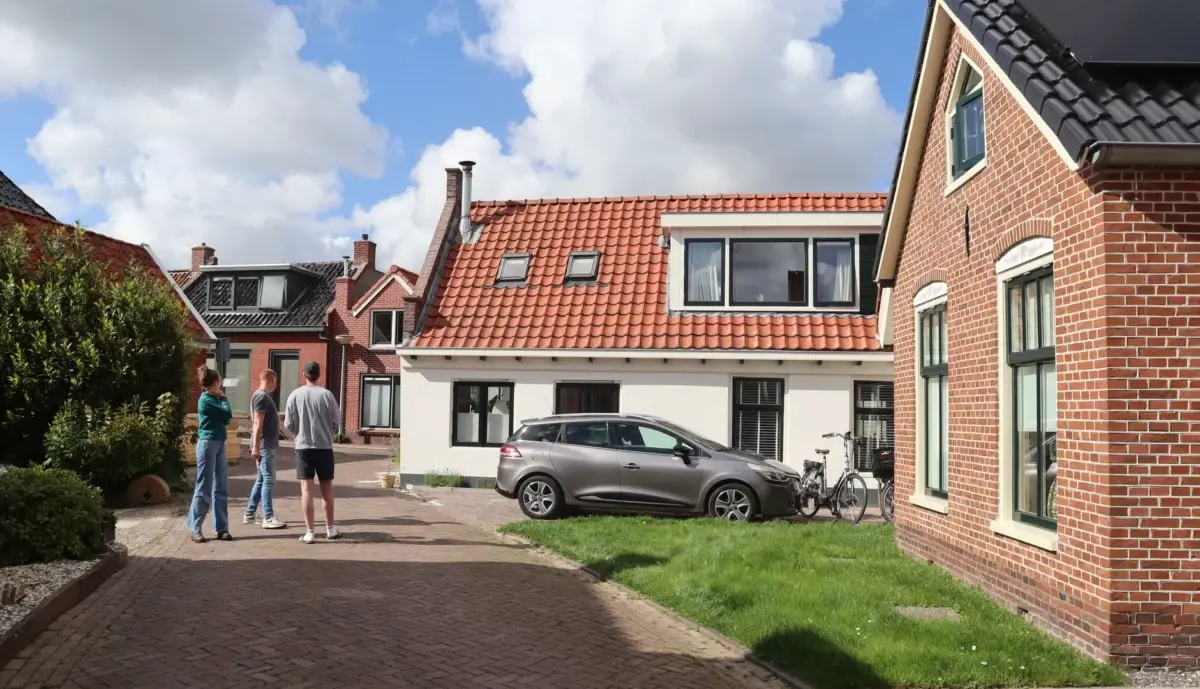
Visually, the area delivers the fairytale tone that family travel stories love to use, but the reality is more practical than magical. Wooden houses, flower gardens, and quiet roads are not set dressing; they are the consequence of a landscape where traffic pressure is lower and public space is used with restraint. That is the difference between a travel cliché and a genuinely functional base.
What the rural base does well
A countryside stay near De Meinweg gives children room to move, makes early starts less punitive, and keeps the day from becoming fully scheduled. It also creates a more realistic version of adventure travel. The point is not to be constantly active. The point is to have easy access to nature, then choose when to do more.
What it does poorly
The trade-off is obvious. You give up nightlife, dense restaurant choice, and the convenience of stepping out into a big city. If your family needs constant stimulation, a rural base may frustrate you. If your priority is sleep, outdoor air, and a lower level of background noise, it is the better option. The mistake many travellers make is assuming all family holidays need the same intensity curve. This one works because it does not.
Maastricht is the urban counterweight
Where the countryside slows the tempo, Maastricht adds texture. It is one of the Netherlands’ most distinctive cities, and for family travel its main value is not spectacle but scale. Maastricht is walkable, historically layered, and easy to sample without committing to a long museum crawl. That matters because many cities become exhausting once you have children in tow. Maastricht is more forgiving.
The city’s relationship to the Meuse shapes how visitors experience it. Instead of feeling trapped inside a single historic core, you can move between riverfront, squares, and side streets with relatively little pressure. For families, that means shorter attention spans are not a problem; they are part of the design. You do not need to turn every visit into a formal lesson in history. Sometimes a good lunch, a relaxed walk, and a manageable distance between stops are enough.
Maastricht also gives the trip a stronger regional identity. A day here says more about South Limburg than any generic Netherlands city break could. It is a place where the border feels present without becoming dramatic. That subtlety is what many family itineraries miss when they chase destinations instead of regions.
Cycling is the actual infrastructure, not the marketing slogan
Many travel pieces treat biking as an optional activity. In this part of Europe, especially in the context of Dutch cycling culture, it is closer to a transport system. That distinction matters. If a route is built for bicycles, then families can move at child pace, stop often, and still cover enough ground to feel they have done something.
That does not mean every trip should be treated as a cycling holiday. Some families will want only one or two short rides. Others will bring child seats, trailers, or a cargo bike. The right choice depends on age, confidence, and weather. But the broader point remains: the region is easier to inhabit because the bike is normal, not niche.
There is also a cautionary note here. Families sometimes assume that a place famous for bikes is automatically simple. It is not. Wind, rain, route choice, and traffic still matter. Parents should still check surfaces, avoid overambitious loops, and remember that a scenic route is not always the safest route. The infrastructure is strong, but judgment still matters.
| Itinerary choice | Best for | Weak point |
|---|---|---|
| Rural base near De Meinweg | Quiet mornings, outdoor time, flexible pacing | Fewer dining and entertainment options |
| Maastricht city base | Walkability, food, easy sightseeing | More traffic and parking friction |
| Hybrid stay | Families who want both nature and culture | Requires one additional transfer |
How to plan the trip without turning it into a chore
The smartest version of this trip is not the one with the most stops. It is the one with the fewest unnecessary transitions. The practical goal is to build a week around one rural base and one city segment, rather than bouncing between too many towns. The more often you pack and unpack, the more likely the trip becomes a test of endurance instead of a holiday.
That is why accommodation choice matters so much. A family-friendly campsite, holiday park, or glamping site near De Meinweg can work because it provides outdoor access and enough comfort to avoid the harsh edges of camping. Huttopia De Meinweg is a useful example of the model: a softer, more design-conscious way of staying close to nature without fully abandoning convenience.
Use the following priorities when you book:
- Check the base first. If the accommodation is poor, the whole trip suffers.
- Keep drives short. A good family day is usually one with minimal transfer fatigue.
- Plan one anchor activity per day. Everything else should be optional.
- Leave weather slack. The region is forgiving, but not weather-proof.
- Protect the rhythm. A slow breakfast and an early evening often do more for family morale than another attraction.
One more practical point: if you are entering the region through an airport, Maastricht Aachen Airport is part of the local travel ecosystem, but many families will still find a car or rail combination more useful for the final stretch. The reason is simple: this itinerary is not about maximum speed. It is about controlled movement and low stress.
FAQ: family travel in Holland and Germany
Is Maastricht a good base for a family trip?
Yes, if you want a compact city with walkable streets and easy access to the surrounding region. Maastricht is strong as a one- or two-night stop, or as part of a hybrid itinerary that also includes countryside time.
How many nights should families stay near De Meinweg?
Two to four nights is often enough for a rural base if you also plan a Maastricht segment. Longer stays can work, but only if your family values quiet time and outdoor routines more than constant sightseeing.
Do you need to cycle to enjoy the region?
No. Cycling helps you understand the place more fully, but it is not mandatory. Families who prefer walking or driving can still get the same basic benefit: short distances, nature access, and an easy link between village and city.
What makes this different from a generic Netherlands trip?
The southern borderland has a different feel from the image many travellers have of the Netherlands. The landscape is less flat, the border presence is stronger, and Maastricht gives the region a cultural depth that is easy to overlook if you only think in terms of Amsterdam or the western provinces.
Is this better for summer than for winter?
Summer is the more obvious choice because cycling and outdoor stays become easier. But the core logic of the trip still works in cooler seasons if you adjust expectations, choose warmer accommodation, and rely more on city time than long outdoor loops.
The unresolved question: can the region stay calm if more families discover it?
The most interesting thing about this itinerary is not that it looks beautiful. It is that it remains functional. Many destinations are attractive until they become crowded, over-programmed, and over-marketed. This border region currently avoids that trap because it is distributed across small settlements, modest cities, and protected landscapes such as De Meinweg National Park. But popularity changes behaviour. More family demand means more pressure on accommodation, more cars at the edge of parks, and more competition for the quiet that makes the area appealing in the first place.
The likely future is not a radical reinvention. It is a gradual shift toward slower, low-emission trips with stronger emphasis on one-base stays, cycling loops, and mixed nature-city itineraries. That is good news if the region manages growth carefully. It is bad news if tourism starts selling the fairytale while eroding the conditions that make the fairytale believable. The central question, then, is not whether families will keep coming. They will. The real question is whether the Netherlands-Germany borderland can scale its popularity without losing the ease that made it compelling in the first place.
SEO DATA
Primary Focus Keyphrase: family travel in Holland and Germany
Related Keyphrase 2: Maastricht with kids
Related Keyphrase 3: De Meinweg National Park family activities
Related Keyphrase 4: how to plan a family road trip through the Netherlands and Germany
Related Keyphrase 5: family-friendly glamping in the Netherlands
Primary Keyphrase Synonyms: family trip through Holland and Germany, Dutch family getaway, cross-border family road trip, family travel in the Netherlands, European family adventure
SEO Title: Family Travel in Holland and Germany: Why Maastricht and De Meinweg Work
Meta Description: Family travel in Holland and Germany works best near Maastricht, where cycling, nature, and short transfers make the trip feel calm, flexible, and easy.
URL Slug: family-travel-holland-germany-maastricht
Image Filename: family-travel-holland-germany-maastricht.jpg
Image ALT Text: Family cycling past wooden houses and flower gardens in a Dutch village near Vlodrop
Image Title: Family cycling in a Dutch village near Vlodrop
Image Caption: A quiet village stop near De Meinweg shows why this border region suits family travel.
Search Intent: Informational
Frequently Asked Questions
Why is this route better for families than staying in a bigger Dutch city the whole time?
Because it reduces the two things that usually wear families out: transfers and decision fatigue. A base near Vlodrop keeps nature, food, and accommodation close together, while Maastricht adds a city experience without forcing a full-time urban schedule. You get variety, but not the constant logistics pressure that can make family travel feel exhausting.
Is De Meinweg National Park suitable for young children, or is it more for serious hikers?
It works well for children because it does not need to be treated like a demanding hike destination. Families can choose shorter walks, cycle-friendly routes, or simply use the park as a place to slow down. The real advantage is that it offers outdoor space without requiring a highly structured, all-day outing.
Do you need a car to make this itinerary practical?
A car helps, but the point of the region is that distances stay manageable. Many families use a car for the base-to-city connection, then rely on bikes or walking for local exploring. If you plan carefully, you can keep driving to a minimum, but having a car does make the route much easier with children and luggage.
What makes Vlodrop a smarter base than Maastricht itself?
Vlodrop gives you a quieter setting and easier access to De Meinweg, which means less noise, less traffic pressure, and a calmer daily rhythm. Maastricht is better as a stop than a base if you want the trip to stay balanced. Starting in Vlodrop helps the holiday feel restful rather than city-centered from the beginning.
How does the border location with Germany actually improve the trip for families?
The borderland character adds options without adding much complexity. You can cross into Germany for a different landscape or activity, but the region still functions as one connected travel area. That makes it easier to vary the itinerary without committing to long drives or major planning changes, which is especially useful when traveling with children.