
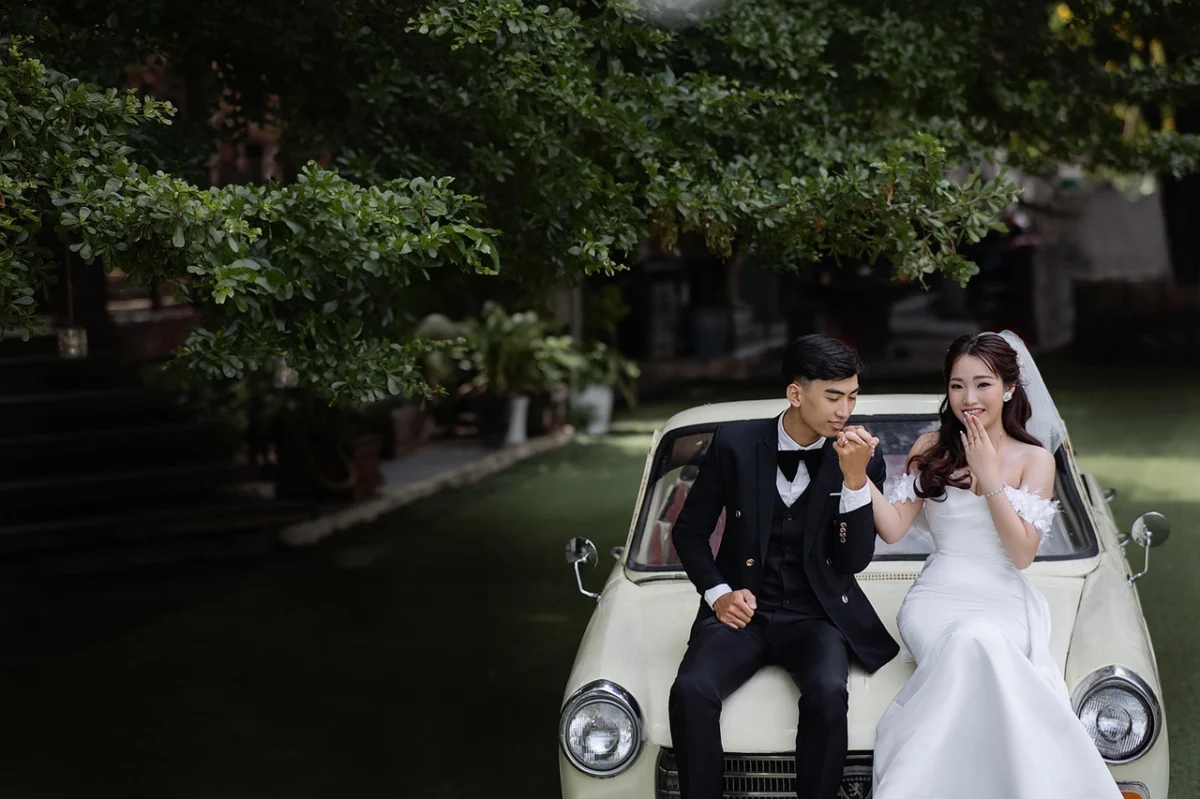
Romantic period movies are not just romances in old clothes. In the strongest examples, history acts as a pressure chamber: class, inheritance, gender, war, and etiquette turn attraction into risk. That is why films from The Notebook to Pride & Prejudice still draw audiences. They do not merely decorate desire with satin and candlelight; they test whether desire can survive the rules of its time.
The labels period drama, costume drama, and historical romance overlap, but they are not interchangeable. A period romance becomes worth watching when the setting is not decorative, but causal. The world must shape the lovers. If the story could be lifted into the present with no loss of force, it is probably not doing the job.
What a romantic period movie actually is
At its core, a romantic period movie is a romantic drama film in which the past is not a backdrop but a governing system. The best films in the genre turn social conventions into narrative obstacles. Letters arrive late. Marriages are economic decisions. Women are evaluated as property, men as heirs, love as scandal, and privacy as a luxury.
This is why the genre can feel so immediate even when it is set centuries away. The audience is not watching history for trivia. It is watching human beings negotiate constraint. That is the real engine behind the appeal of Sense and Sensibility, Jane Eyre, Far from the Madding Crowd, and Rebecca. The emotional stakes are high because the social penalties are real.
The setting has to function like an antagonist
A weak period romance uses history as wallpaper. A strong one uses history as opposition. In Pride & Prejudice, the central conflict is not simply whether Elizabeth and Darcy like each other. It is whether class prejudice, pride, and a rigid marriage market can be overcome before they harden into fate. In The Age of Innocence, the social code is so severe that desire becomes almost criminal.
The period romance works when the past does not merely frame the lovers. It determines the cost of every glance, pause, and choice.
Why the genre keeps working
Romantic period movies endure because they combine two kinds of pleasure that rarely coexist cleanly elsewhere: emotional intensity and formal restraint. Viewers are invited to read gesture, silence, and costume as evidence. A hand on a sleeve matters. A delayed reply matters. A missed train, a forbidden letter, or a glance across a ballroom can carry more narrative weight than a long speech in a contemporary romance.
That is also why the genre can be abused so easily. When filmmakers mistake surface polish for drama, the result is expensive but shallow. The audience notices. Rich fabrics, manor houses, and candlelight do not create chemistry. They only make the absence of chemistry more visible.
Memory, regret, and the romance of irreversibility
Some of the most successful period romances are actually films about memory. The Notebook uses a retrospective frame to turn love into endurance, while Atonement makes romance inseparable from guilt, misreading, and irreversible consequence. Titanic is often remembered as a disaster film, but it works so powerfully because the disaster is emotional before it is physical: the lovers are already trapped by class and time before the ship sinks.
These films exploit a simple fact. People do not only respond to what love is. They respond to what love costs when time is unforgiving.
Visual style is not the same as substance
Production design matters, but not because it creates nostalgia on demand. It matters because it clarifies social hierarchy. Clothing in a period romance is never just costume; it is status, restraint, and often surveillance. The camera can show who is allowed to move freely and who is being watched. That is one reason films like Little Women and Emma feel modern without abandoning their settings. They use style to expose character, not to anesthetize history.
When the visual design is intelligent, it does more than please the eye. It reveals who has power, who performs refinement, and who is trying to look acceptable inside a system built to exclude them.
A practical reading of the strongest examples
The best way to judge romantic period movies is not by ranking them as if they were interchangeable. They succeed through different mechanisms. Some depend on wit. Some on tragedy. Some on sexual repression. Others on landscape, migration, or social exclusion. A useful critique asks what kind of longing each film stages, and what the period setting makes impossible.
| Film | Romantic mechanism | What the period setting adds |
|---|---|---|
| The Notebook | Memory and endurance | Turns love into a test of time and recollection |
| Pride & Prejudice | Recognition through wit | Makes class manners part of the emotional plot |
| Sense and Sensibility | Restraint versus feeling | Shows how female prudence is forced by economics |
| Titanic | Doomed timing | Joins class division to catastrophe |
| Atonement | Misreading and regret | Makes narrative guilt central to the romance |
| The Age of Innocence | Suppressed desire | Turns social etiquette into emotional imprisonment |
| Out of Africa | Incompatibility and distance | Uses landscape and colonial tension to reshape intimacy |
| Brooklyn | Identity split by migration | Makes romance compete with belonging and selfhood |
That pattern is the real evidence that the genre works. Bright Star turns literary devotion into melancholy precision. Belle adds race, law, and inheritance to the emotional equation. Gone with the Wind remains culturally important as a spectacle of romantic myth, but it is also a warning: a lush period canvas can glorify a past that should be examined, not romanticized.
Where romantic period films often fail
The genre fails when it confuses historical distance with emotional depth. That usually happens in three ways. First, the film treats the setting as a luxury brand. Second, it gives the lovers contemporary psychology while stripping away the actual pressures of the era. Third, it sanitizes the social order, especially around labor, race, empire, and gender.
- Decorative authenticity: exquisite costumes but no real social conflict.
- Anachronistic behavior: characters who think and speak like modern people without consequence.
- Historical amnesia: estates, colonies, and wealth appear detached from exploitation.
- Flat chemistry: the leads are photographed beautifully but never feel magnetically linked.
Some films recover from one of these problems by excelling elsewhere. Rebecca survives partly because atmosphere is the point. Some do not. Out of Africa remains visually commanding, but it also exposes how period romance can soften colonial realities if the script is too eager to preserve elegance. That tension is the genre’s permanent risk.
What modern audiences are actually asking for
Viewers do not ask period romances for pure escapism. They ask for clarity. They want to see desire under pressure, and they want the film to understand that the past was not prettier, only different. The current audience is also more alert to power imbalances, which means the genre has to work harder. A romance set in the past cannot rely on old assumptions about class privilege, gender roles, or empire and expect the audience to cooperate.
That is why the most durable future for the genre probably lies in expansion, not repetition. The field cannot live forever on the same Austen-era estates. It needs more geographic range, more class range, and more racial and sexual diversity. The logic of the genre is universal; the inherited visual grammar is not.
The market problem is not audience interest
The market problem is financing. Big-screen period romance is expensive because it requires costumes, sets, and careful production design, yet it is often sold as niche. Streaming has made it easier to fund prestige romance, but it has also encouraged algorithm-friendly sameness. That is a real danger. A genre that survives by imitation eventually becomes ornamental repetition.
The stronger path is to keep the historical constraint but vary the historical world. A future romantic period film can be intimate and radical at the same time if it understands that the past contains many kinds of love stories, not just the familiar ones.
FAQ
What makes a period romance different from a historical drama?
A historical drama may center politics, war, or biography. A period romance makes the romantic relationship the main engine of the story, and it uses the era to create obstacles, pressure, and emotional meaning.
Are period romances supposed to be historically accurate?
They should be credible, not necessarily documentary-precise. Costumes and manners matter, but the larger test is whether the film understands the social logic of its world. Accuracy without dramatic intelligence is just museum display.
Why do audiences keep returning to Jane Austen adaptations?
Because Jane Austen built romantic conflict out of economics, manners, and self-knowledge. The stories are elegant, but the emotional structure is hard-edged. That combination still feels modern.
The real test of the genre is whether the past changes the lovers
The most important insight is simple: romantic period movies are strongest when history is not a costume layer but a force that changes what love can mean. That is why the genre still works after so many variations. The best films do not ask whether two people are attracted. They ask what the world will cost them if they act on it.
What to watch next is whether filmmakers keep pushing beyond safe heritage imagery. The next wave of period romance will likely be judged less by how glossy it looks and more by how honestly it treats inequality, migration, race, and female agency. If the genre evolves, it will not be because it found prettier dresses. It will be because it found sharper conflicts. The unanswered question is whether studios are willing to fund that kind of complexity, or whether they will keep mistaking nostalgia for depth.
Frequently Asked Questions
What is the real difference between a period romance and a costume drama?
A period romance uses the historical setting to create conflict, shape decisions, and raise the cost of love. A costume drama may look historical but keep the setting mostly decorative. If the past does not change how the characters can act, choose, or suffer, then it is likely costume first, romance second.
Why do romantic period movies still feel relevant to modern audiences?
Because they turn universal feelings into visible pressure. Modern viewers may not face strict class rules or marriage markets, but they understand longing, missed chances, and social judgment. The historical distance makes those emotions sharper, not weaker, because love has to survive more obstacles and cannot rely on easy freedom.
Can a period romance work even if the audience knows the ending?
Yes, because the appeal is often not suspense over who ends up together, but how love is tested along the way. In strong period romances, the emotional tension comes from delay, restraint, sacrifice, and the possibility that the characters may be forced apart by society, duty, or time before they fully unite.
Why do some period films feel emotionally flat despite beautiful visuals?
Because visual richness is not the same as dramatic pressure. Lavish costumes, grand houses, and candlelight can create atmosphere, but they do not create stakes on their own. If the setting does not shape class, reputation, inheritance, or freedom, then the film may look authentic while feeling emotionally weightless.
How does costume or production design actually affect the story in a good period romance?
In the best films, design reveals social power. Clothing shows status, restraint, surveillance, or rebellion; interiors show who has control and who is confined. The visuals are not just there to recreate an era. They help the audience understand the rules that govern desire and the risks attached to breaking them.