
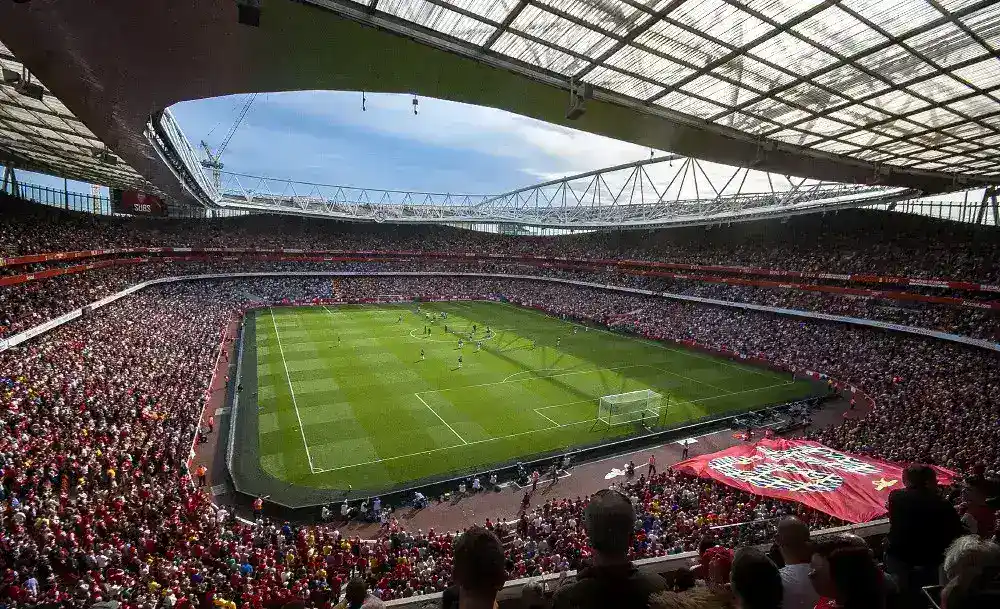
Tuesday night’s Champions League results felt like a compact map of European football’s power lines: Arsenal’s ruthless efficiency, Atlético Madrid’s control, and Bayern Munich’s warning sign in Norway. In one vivid slate of matches, Arsenal F.C. punished Lille OSC 3-0, Atlético Madrid beat Manchester United F.C. 2-0, and Bayern Munich were dragged into a 3-3 draw by Viking FK after Michael Olise was sent off. The results were not just scorelines; they were reminders that UEFA Champions League nights often turn on tempo, discipline, and one decisive spell.
Arsenal’s seven-minute burst changed the tone of the evening
Arsenal did not simply win; they imposed themselves. Three second-half goals in seven minutes can feel sudden from the stands, but in tactical terms it is usually the outcome of a slow squeeze. Under Mikel Arteta, Arsenal have built a side that can press, recycle possession, and punish hesitation. In the language of association football tactics, that means forcing Lille to defend larger spaces than they wanted, then striking when their shape cracked.
The key was not chaos but control. Once pressing pinched away Lille’s exits, Arsenal were free to turn pressure into territory, and territory into chances. That is why a rapid scoring run often looks inevitable only in hindsight: the real damage happens in the minutes before the goals, when the opponent’s confidence and distances begin to unravel. For a side like Lille, whose best responses usually depend on compactness and counterattack, the loss of rhythm is fatal.
Why this kind of win matters
In a group stage, margins matter as much as momentum. A 3-0 scoreline improves the psychological picture, but it also strengthens the practical one: goal difference, confidence, and the ability to rest players without losing control. That is the hidden value of a clean, emphatic European night.
Atlético Madrid showed why they remain such a difficult opponent
If Arsenal’s win was about acceleration, Atlético’s was about restraint. Diego Simeone‘s teams are rarely the prettiest, but they are often among the hardest to dislodge because they understand the emotional rhythm of a match. Against United, Atlético found a way to stay organized, wait for openings, and punish hesitation at the right moments.
That is what makes the pressure on Michael Carrick so intense in defeat. Against a disciplined opponent, a team must show not only talent but structure: when to build slowly, when to speed up, and how to survive transitions. Without those details, possession becomes decoration rather than control. Atlético know how to force that uncomfortable question on even experienced clubs like Manchester United.
What United’s defeat really exposes
Defeats in Europe are rarely about one bad pass alone. They are often about recurring patterns: poor spacing, delayed reactions, and a lack of conviction in both boxes. When Atlético can control the game’s emotional temperature, the contest becomes less about possession and more about who can stay calm under stress.
Bayern’s draw in Norway was a warning, not just a surprise
A 3-3 draw away to a spirited Viking FK side would already sting for Bayern Munich; the red card for Michael Olise made it worse. Once a team goes down a man, every line of the pitch changes. The distances widen, the pressing triggers become riskier, and the game can flip from control to survival in minutes.
That is why red cards carry such tactical weight in elite football. They do not merely remove a player; they alter the geometry of the match. Bayern’s inability to close the game after the dismissal suggests a fragility that opponents in the knockout stage will study closely.
What this night says about the modern Champions League
This round of fixtures highlighted three truths. First, European football is still governed by small margins and rapid swings. Second, the best teams are not always the most flamboyant; they are often the ones that can turn a five-minute edge into a finished result. Third, discipline remains the silent currency of elite competition. The official UEFA Champions League hub will show the standings, but the deeper story is how these teams are trying to win the control war before the table ever updates.
In elite European football, the match is often won long before the final whistle: in the press, in the spacing, and in the discipline to keep making the right decision after the first breakthrough.
That is why analysts love nights like this. They are not random fireworks. They are evidence. Arsenal’s burst shows what precision looks like when confidence arrives at full speed. Atlético’s win shows how structural patience can suffocate a bigger-name opponent. Bayern’s draw shows how a single dismissal can expose a champion’s soft underbelly.
| Match | Turning Point | Tactical Lesson |
|---|---|---|
| Arsenal 3-0 Lille | Three goals in seven second-half minutes | Pressing and patience can break compact defenses |
| Atlético Madrid 2-0 Manchester United | Atlético controlled the game’s tempo | Structure beats urgency when a team stays disciplined |
| Bayern Munich 3-3 Viking FK | Michael Olise’s red card | Numerical disadvantage can erase control in a hurry |
FAQ
Why did Arsenal’s win feel so decisive?
Because the scoreline came from a short, ruthless spell rather than a messy contest. In association football, that kind of burst usually means the opponent’s structure has finally broken.
How damaging is a red card in a match like Bayern’s?
Very damaging. A dismissal forces immediate tactical adjustments, often reducing pressing intensity and leaving more space behind the ball. In a high-level game, that is enough to change the result.
What should fans watch next?
Watch whether Arsenal can keep that attacking control, whether Manchester United can answer tactical pressure, and whether Bayern’s response to setbacks is as sharp as their talent suggests.
What to watch next
The most important insight from this night is that Champions League results rarely tell the whole story on their own. The real story is whether a team can impose its rhythm before the match becomes volatile. Arsenal looked capable of that. Atlético have built their identity on it. Bayern, for one stormy evening, lost it. Over the next rounds, the question is not simply who scores, but who can keep control when the game begins to wobble.
That is the enduring tension of the competition: in Europe, the next decisive shift can arrive from a press, a card, a half-space run, or a single lapse in concentration. The teams that survive are the ones that treat every minute as if it might decide the table, the tie, or the season.
Frequently Asked Questions
Why does Arsenal’s three-goal burst in seven minutes matter beyond the scoreline?
Because the burst was the visible outcome of a longer tactical squeeze. Arsenal’s pressing narrowed Lille’s passing options, forced rushed clearances, and gradually broke their defensive shape. Once that structure cracked, the goals came quickly. In other words, the decisive work happened before the first goal, when Arsenal were already controlling space and momentum.
What makes Atlético Madrid so difficult to play against even when they don’t dominate possession?
Atlético often win by controlling the emotional and tactical rhythm of the match rather than the ball itself. They stay compact, manage transitions well, and punish hesitation at key moments. That forces opponents to attack in an uncomfortable way, where possession can become sterile and mistakes in both boxes become more costly.
Why is a red card so damaging in a match like Bayern’s draw in Norway?
A red card changes the geometry of the game. The team with ten players has to cover more space, press less aggressively, and make more compromises in midfield and defense. That makes it much harder to control tempo or protect a lead, which is why Bayern’s dismissal turned a difficult away match into a real warning sign.
Does a 3-0 or 2-0 result tell us more than just who was better on the night?
Yes. In the Champions League, the margin affects confidence, goal difference, and how much risk a team can take later in the group stage. A clean win also suggests control over the game’s rhythms, not just finishing quality. That matters because it reduces pressure in future matches and rewards tactical discipline.
What is the biggest concern Bayern should take from the 3-3 draw, besides the dropped points?
The main concern is not only that Bayern failed to close the match, but that they looked vulnerable once reduced to ten men. Opponents will notice any difficulty in protecting space, managing transitions, or surviving pressure after a setback. In knockout football, those weaknesses are often targeted immediately.