
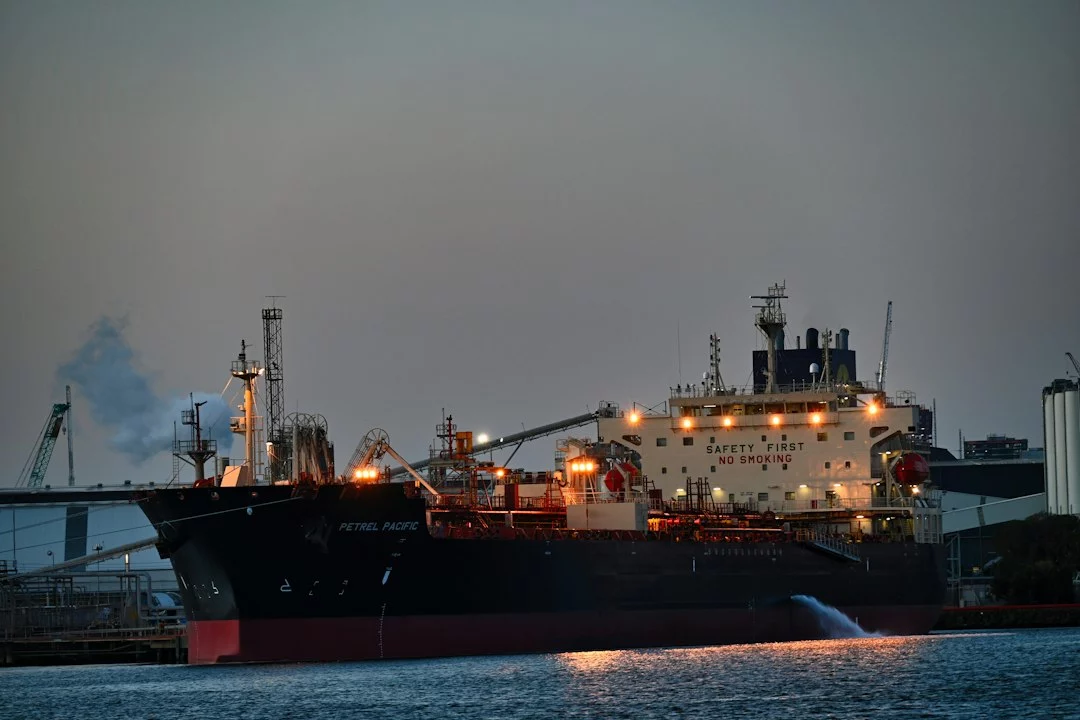
Oil prices jump when traders see a credible threat to supply, not because of one headline alone. A 5% rise in Brent crude reflects a market repricing of risk: fears about Middle East tensions, the possibility of disruption around Iran, and the chance that a hurricane could interrupt output or refining along the US coast. The move is best read as a premium for uncertainty, not proof that barrels have already disappeared.
Why the market reacts before the supply shock arrives
In crude oil, price discovery happens through futures contracts, so expectations can shift faster than physical flows. That is why a geopolitical headline or a storm forecast can move commodity markets long before tankers reroute or rigs shut in. Traders are not simply guessing direction; they are pricing probability, duration, and severity. A small chance of a large disruption can justify a large intraday move if the market believes the downside is asymmetric.
The benchmark matters too. West Texas Intermediate and Brent often move together, but Brent carries more global signaling power because it reflects seaborne supply and international trade conditions. When Brent jumps, the message is usually about the world oil balance, not just US domestic conditions.
The Middle East risk premium is about routes, not rhetoric
The most important strategic question is whether tension can translate into interrupted shipping or lost production. That is where the Strait of Hormuz matters. Even without a formal blockade, the mere possibility of interference can lift freight rates, insurance costs, and trader anxiety. Markets also watch the behavior of OPEC members, especially when spare capacity is thin and spare barrels are concentrated in a few states.
This is the difference between geopolitical noise and geopolitical damage. A statement from officials may create a short-lived spike; a sustained threat to transport corridors, storage terminals, or export facilities changes the supply equation. Energy security is not abstract in this context. It is the difference between a nervous market and a constrained one.
What traders are really watching
- Whether tanker routes are delayed or diverted.
- Whether any production, storage, or export infrastructure is physically affected.
- Whether the United States or allies signal reserve releases or military escalation.
- Whether shipping and insurance costs rise enough to alter trade flows.
The market often overreacts to headlines and then underreacts to slow-moving structural risk. That is why analysts focus less on speeches and more on logistics.
Hurricane threat adds a second, more mechanical shock
The hurricane factor is different from Middle East tension because it is operational, not political. A strong storm in the Gulf of Mexico can disrupt offshore production, shut ports, and force refineries to idle. The immediate effect is not always a shortage of crude. Often the bottleneck is refining and distribution, which can tighten gasoline and diesel markets even if global supply remains intact.
That is why the National Hurricane Center and the US Energy Information Administration matter so much to energy traders. Storm tracks, evacuation orders, and inventory levels can move prices as quickly as diplomacy. For context on broader supply balances, the International Energy Agency remains a key reference point for demand growth and strategic stock coverage.
Hurricane risk also exposes a recurring market flaw: participants often focus on crude output but underestimate downstream refining vulnerability. A refinery outage can be more inflationary than a small decline in extraction because it affects the finished products that consumers actually buy.
Why oil strength hits bonds and stocks at the same time
When energy prices rise quickly, the pressure travels into inflation expectations. That is bad for bond markets because higher expected inflation usually means higher yields. It is also bad for the stock market because expensive fuel reduces consumer spending power and raises costs for transport, manufacturing, and chemicals.
Central banks are especially sensitive to this kind of shock. A short oil spike may be tolerable; a persistent one complicates the policy path because it can keep headline inflation elevated even if underlying demand is slowing. That is the problem with energy shocks: they are supply-driven, but their consequences are monetary and financial.
Not every sector loses. Energy producers, pipeline operators, and some service companies can benefit from stronger prices. Airlines, logistics firms, and consumer discretionary names usually do not. The market therefore does not move in one direction; it rotates from one balance sheet to another.
What should be monitored next
Investors and policymakers should watch four things with discipline rather than emotion:
- Physical disruption: whether any barrels are actually removed from the market.
- Duration: whether the hurricane threat or geopolitical tension lasts long enough to affect inventories.
- Official response: whether reserves, sanctions policy, or military posture changes.
- Second-round effects: whether shipping, insurance, and refining costs keep rising after the initial spike.
The most useful reading here is not the price level itself but the shape of the curve. If near-term contracts rise much faster than later-dated ones, the market is signaling an immediate shortage risk. If the curve normalizes quickly, the shock was mostly psychological.
FAQ
Why do oil prices move before production is actually hit?
Because commodity markets price expectations. Traders buy protection against possible shortages, so prices can jump even when no physical disruption has occurred.
Is Brent always more important than WTI?
Not always, but Brent is usually the better gauge of global supply risk, while WTI is more tied to the US market. In an international shock, Brent typically leads the signal.
Can strategic reserves calm the market?
They can help if the disruption is real and large enough to justify a release. But reserves are a cushion, not a permanent fix. They cannot substitute for lost production over a long period.
The real test is whether this becomes a temporary premium or a new baseline
The most important insight is that oil markets are not just reacting to barrel counts; they are reacting to the fragility of the system that moves those barrels. A storm forecast can tighten prices because the Gulf Coast is a refining hub. A geopolitical flare-up can tighten prices because routes like the Strait of Hormuz sit at the center of global flows. The market is effectively asking whether current supply chains are resilient enough to absorb another shock.
What happens next depends on whether the risk remains symbolic or turns physical. If tensions cool and the hurricane threat passes, the premium may fade quickly. If a real outage appears, the move can become a template for broader inflation, higher yields, and more defensive positioning. The unanswered question is not whether oil can spike again; it is how much stress the global energy system can absorb before volatility becomes the normal state rather than the exception.
Frequently Asked Questions
Does a 5% jump in Brent mean oil supplies have already been disrupted?
Not necessarily. A sharp move like that usually reflects a risk premium, meaning traders are repricing the chance of disruption rather than confirming that barrels are missing. Prices can rise before any physical shortage appears because futures markets react to probabilities, not just current flows.
Why does Brent often react more strongly than WTI to Middle East tensions?
Brent is the more global benchmark, so it reflects seaborne supply, shipping routes, and international trade conditions. WTI is more tied to US inland supply and logistics. When the issue is geopolitical risk in a major export region, Brent usually sends the clearest signal to the market.
If a hurricane hits the US Gulf Coast, why can fuel prices rise even when crude output is only partly affected?
Because the biggest vulnerability is often refining and distribution, not just crude extraction. A storm can shut refineries, ports, and pipelines, tightening gasoline and diesel supplies even if global crude production stays relatively stable. Consumers feel that downstream bottleneck faster than any change in oil output.
What would turn a short-lived headline spike into a longer-lasting oil rally?
The key is whether tension becomes a real logistics problem. Persistent delays to tanker routes, damage to export terminals, production outages, or a rise in shipping and insurance costs can sustain higher prices. If the market sees no physical disruption, the move often fades once the initial fear passes.
Why can higher oil prices hurt bonds and stocks at the same time?
Oil spikes feed inflation expectations, which can push bond yields higher and weigh on bond prices. At the same time, more expensive energy raises costs for businesses and consumers, squeezing profit margins and spending power. That combination often creates pressure across both fixed income and equities.