
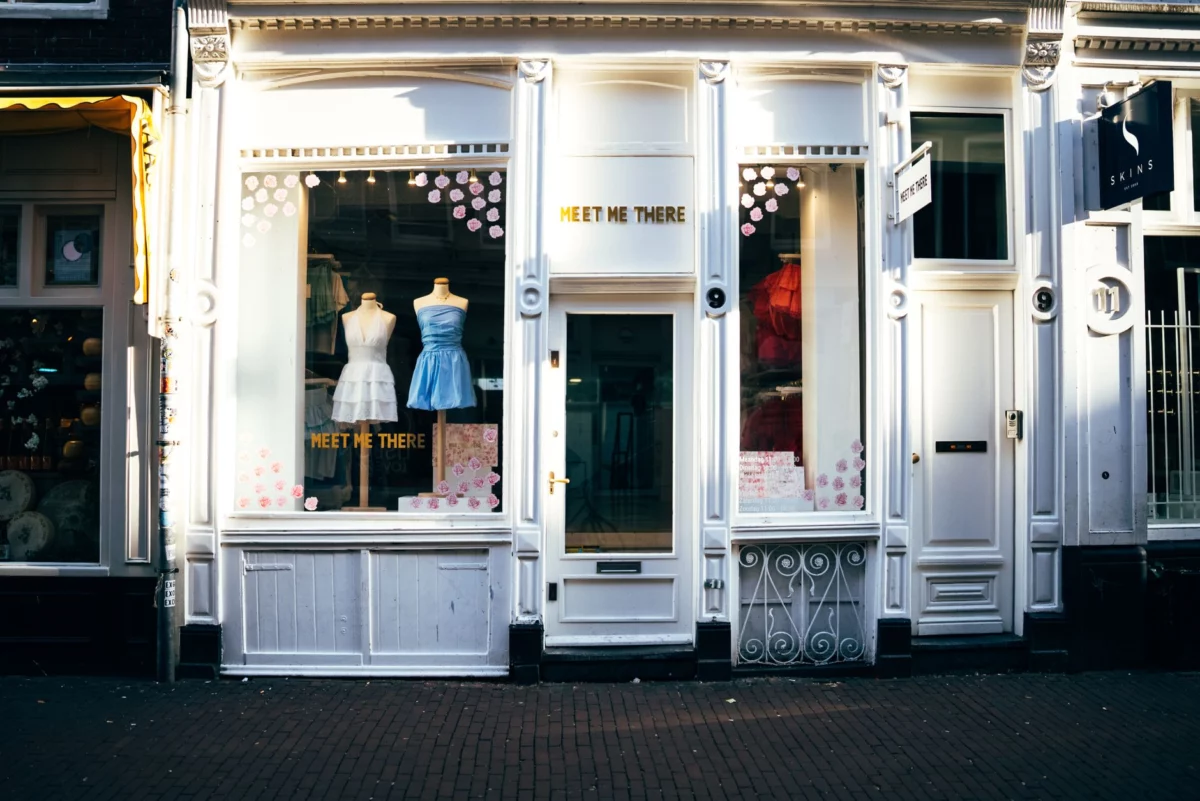
Brandy Melville’s closure of its smallest UK store on Hampstead High Street looks minor until you read it as a retail signal instead of a local anecdote. The handwritten sign in the window, saying ‘We will miss you’, softens the blow, but it does not change the underlying logic: a shop can be liked, recognisable, and even emotionally important while still failing the economics of modern fashion retail. In the case of Brandy Melville, the closure belongs in the wider story of brick-and-mortar pressure, high street change, and the shrinking role of small physical shops in a brand built for social visibility.
Why the Brandy Melville smallest UK store closure matters
The report makes the closure sound sentimental, but sentiment is not the same as strategy. A tiny store can be a useful local touchpoint, yet it can also become a weak link if rents, staffing, or sales density stop justifying the floor space. The crucial point is that the article did not publish lease terms, traffic figures, or revenue data, so it would be irresponsible to claim a single cause. What can be said is more precise: when a retailer closes a small branch, it is usually making a portfolio decision, not a symbolic surrender.
That distinction matters because people still tend to read closures through the lens of retail apocalypse narratives. Those narratives are often too blunt. The modern high street is not simply collapsing; it is being reorganised by cost pressure, online substitution, and sharper store selection. For a label like Brandy Melville, which has always depended on a very specific image, the loss of one compact site is more likely to reflect optimisation than existential decline.
‘We will miss you’ is effective retail language because it frames closure as a farewell, not a failure. That is good public relations. It is not, however, evidence that the site still made commercial sense.
Brandy Melville’s store model depends on image before inventory
Fast fashion brands usually rely on speed, turnover, and a constant refresh cycle. Brandy Melville is different in presentation, but not in the basic retail challenge: its stores are part showroom, part brand stage. In fashion industry terms, the physical shop is doing several jobs at once. It sells product, but it also communicates aesthetic identity, narrow taste, and social belonging. That is why visual merchandising matters so much in small fashion shops. The fixtures, the spacing, the window display, and the density of stock all signal what kind of brand the customer is walking into.
Small stores are useful when the goal is controlled exposure. They are less useful when they cannot carry enough stock, when footfall is inconsistent, or when a customer can get the same product faster online. This is where chain store economics become unforgiving. A unit can be popular and still underperform if it cannot absorb its fixed costs. In other words, a store can contribute to brand presence while failing as a profit centre.
That is one reason the closure should be read through the lens of omnichannel retail. Physical shops are increasingly judged not just on direct sales, but on how they support search, social media, and online conversion. If a store cannot do that efficiently, a retailer may decide that the floor space is better redeployed elsewhere. For brands shaped by visual culture, the store is no longer the only shop window; it is one node in a larger digital system that also includes e-commerce.
Why Hampstead is a difficult site for a small fashion format
Hampstead is not a generic retail location. It is a local high street with a particular mix of residents, visitors, and independent stores, shaped by the geography and economics of north London. The surrounding London Borough of Camden includes some of the city’s most commercially intense districts, but Hampstead itself trades on an older, more selective image. That can help a fashion retailer build cachet. It can also make a small store harder to justify if the site depends on casual walk-in traffic rather than destination shopping.
The phrase high street still carries emotional weight in the UK because it suggests local life, routine, and physical presence. Yet a high street is also a hard cost structure. Rents, staffing, insurance, business rates, and refurbishment costs do not become cheaper because the store is charming. That is why closures often track what economists would call a mismatch between location and function. A shop that is useful for branding may still be inefficient for sales.
Gentrification complicates the picture further. Affluent areas can support premium retail, but they also attract expensive leases and more selective customers. A teen-fashion label aimed at a narrow aesthetic can struggle to balance local relevance with broad enough traffic. The result is that a tiny site in a desirable area may look strong from the outside while producing weak commercial returns inside. In the language of shopping behaviour, there is a difference between being noticed and being purchased.
What the closure says about the wider UK retail market
The mistake would be to treat this as a uniquely Brandy Melville story. It is also a story about retailing under pressure. Small branches are often the first to go when a brand rationalises its estate because they offer the least scale benefit. That is not the same as saying physical retail is dead. It is saying that the market increasingly rewards precision over footprint.
This is where a lot of commentary about the fashion industry becomes too dramatic. The question is not whether stores survive at all, but which type of store survives. The answer is usually the one with a clear role: a flagship store for image, a convenience format for speed, a showroom for discovery, or a local branch that can pull more than its weight in sales. Everything else is vulnerable.
| Pressure | Why it matters | Effect on a tiny store |
|---|---|---|
| Rent and fixed costs | Overheads rise whether the shop is full or empty | Small units can still be expensive if conversion is weak |
| Footfall | Fashion stores depend on impulse visits | Lower traffic quickly reduces sales potential |
| Inventory depth | Customers expect choice, size range, and fresh stock | A small site cannot carry enough depth to satisfy demand |
| Digital substitution | Customers can buy without visiting the store | The shop becomes a brand symbol rather than the main sales channel |
Seen this way, the closure fits a familiar pattern in modern consumer culture. People mourn the disappearance of a physical place, but businesses are increasingly judged by performance rather than attachment. That tension is one of the defining features of current retail, and it is why emotionally charged closure notices can coexist with rational estate management.
It also explains why retailers keep experimenting with small-format, short-term, and event-driven concepts such as pop-up retail. When a permanent shop becomes too rigid, brands often look for lighter, cheaper forms of presence. The logic is simple: lower commitment, faster testing, and a better match between demand and cost. The broader debate is not about whether store space still matters. It is about which form of store space can survive the new economics of sustainability, labour cost, and demand volatility.
What retailers should learn from the closure
For retailers, the lesson is not to romanticise small stores. It is to define their job clearly. A store that is mainly a brand billboard should be evaluated differently from one that is expected to carry serious sales volume. Confusing those roles is a common mistake.
- Measure store role, not just store revenue. A small branch may be useful for discovery, but only if it drives measurable traffic or conversion.
- Match format to location. A compact site in a premium district must earn its keep through brand value, not nostalgia.
- Use digital and physical channels together. In an omnichannel model, stores should support the website, not compete with it.
- Do not confuse affection with viability. A loyal customer base does not automatically produce a profitable lease.
- Keep visual standards tight. If the shop is part of the brand story, visual merchandising must remain disciplined even in a small footprint.
For observers of the high street, the smarter question is not whether one store vanished. It is whether the local retail mix is still able to support fashion branches that rely on discretionary spending. That depends on rent levels, pedestrian flow, local demographics, and the strength of online substitution. When any of those variables weakens, even a beloved site can disappear.
FAQ about the Brandy Melville Hampstead store closure
Why did Brandy Melville close its Hampstead store?
The report did not give a detailed reason. The most responsible answer is that the company likely made a commercial decision based on site performance, lease economics, or wider portfolio planning. Without official figures, any single-cause explanation would be speculation.
Does the closure mean Brandy Melville is leaving the UK?
Not necessarily. One closure, even of the smallest UK store, does not prove a wider withdrawal. It may simply mean the brand is trimming weaker locations while keeping stronger ones open. That is a common move in brick-and-mortar retail.
Why do brands close their smallest stores first?
Small stores often have the least room to absorb overheads and the least inventory depth. They can be valuable for brand presence, but if sales fall below the level needed to justify rent and staffing, they become the easiest sites to cut.
What does this tell us about high street fashion retail?
It shows that fashion stores increasingly need a clear function. A shop that is only slightly useful on several fronts can still lose to one that is excellent on one front. The market now rewards sharper roles, not sentimental permanence.
What to watch next on the UK high street
The key question is whether this closure is an isolated pruning decision or part of a deeper rethinking of Brandy Melville’s physical footprint. If more small branches disappear, the pattern would suggest a brand moving toward fewer, more selective sites with stronger brand impact. If not, then Hampstead may simply be a one-off correction in a tighter property market.
The larger unresolved issue is how many fashion brands can still afford to treat the high street as a place for discovery rather than just fulfilment. My view is that the next few years will favour retailers that can separate emotional presence from operational waste. The winners will not be the chains with the most stores, but the ones that know exactly why each store exists. That is the real lesson in a handwritten goodbye: sentiment lasts for a day, but the economics of retail decide the rest.
Frequently Asked Questions
Does the closure of Brandy Melville’s Hampstead store mean the brand is in decline in the UK?
Not necessarily. The article suggests the closure is more likely a portfolio decision than a sign of collapse. A small shop can be well liked and still underperform if its rent, staffing costs, or sales density no longer make sense. One store closing says more about optimisation than about the health of the whole brand.
Why can a store that feels popular still be closed?
Because popularity and profitability are not the same thing. A fashion shop may attract attention, support the brand image, and still fail to generate enough revenue to justify its fixed costs. Small stores are especially vulnerable when they cannot carry enough stock or when customers can buy the same items more conveniently online.
What makes Hampstead a more difficult location for a small fashion retailer than it may first appear?
Hampstead has a strong local identity and can provide prestige, but it is not a high-footfall, mass-market shopping zone. That means a small fashion format may gain cachet without necessarily getting the traffic needed for strong sales. In a selective, high-cost area, a compact store can become harder to justify economically.
Why does the article say the closure should be read as an omnichannel decision rather than just a local one?
Because modern retailers judge physical shops by more than in-store sales. A branch may still matter if it supports brand visibility, social media, and online buying behaviour. If a small store does not contribute enough to that wider system, closing it can be a rational move even if the shop had local recognition.
Should readers trust the ‘We will miss you’ sign as evidence that the store was successful?
No. It is effective retail language because it softens the closure and protects the brand’s image, but it does not prove the site was commercially viable. The article notes that no lease, revenue, or footfall data were published, so the real reason for closure cannot be confirmed from the sign alone.