
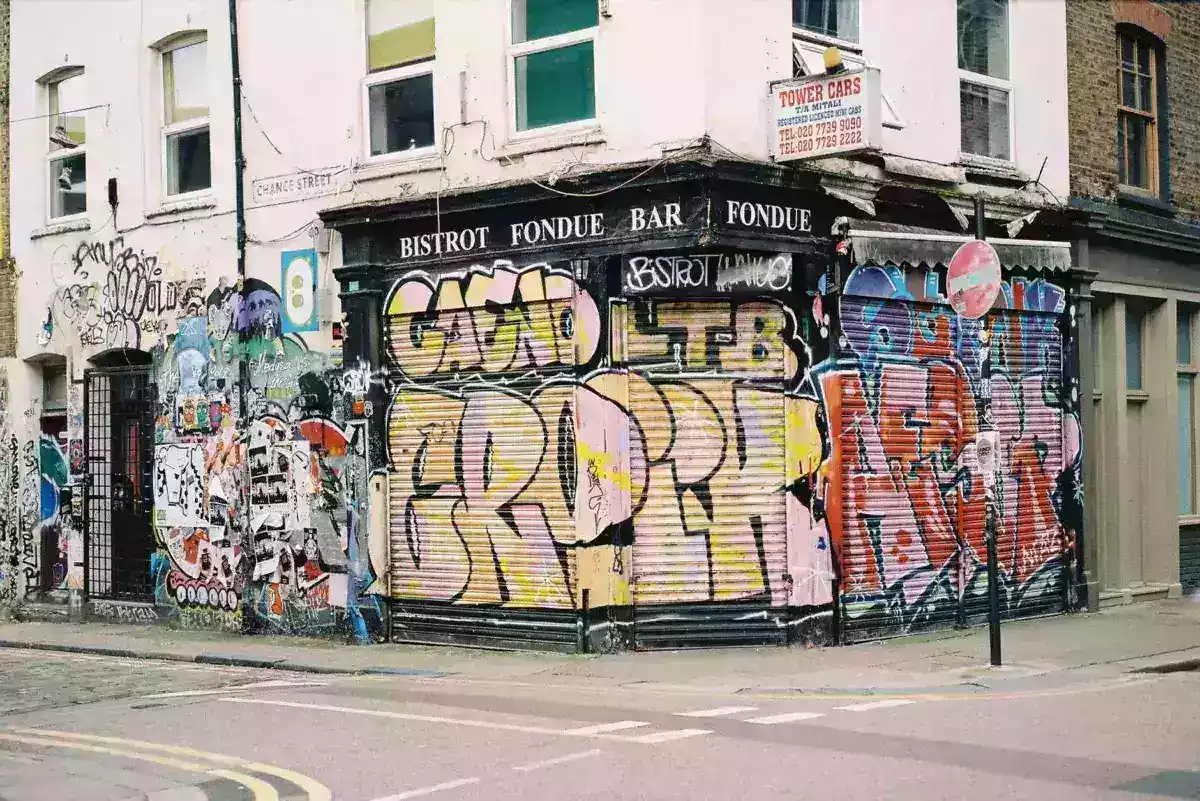
The closure of the Greggs branch on Clapham High Street is not a trivial local inconvenience. It is a compact example of how a strong national brand can still withdraw from a location when the numbers stop working. In a district shaped by commuter flows, local regulars, rent pressure and shifting shopping habits, the Greggs Clapham High Street closure says less about one bakery and more about the economics of the modern high street.
That is why the reaction matters. A shopper calling it a sad state of affairs
is expressing more than disappointment about lost pastries and coffee. The comment captures a wider fear: that familiar shops are leaving the places that once anchored daily life. To understand that fear properly, it helps to look at Greggs, Clapham, London, and the commercial logic that now governs retail rather than nostalgia alone.
Why this closure matters beyond one storefront
Greggs is not a marginal player. As a national bakery chain, it has built its model around volume, convenience and repeat custom. That makes every branch look ordinary from the pavement and highly calculated in the accounts. A store can be busy and still fail the basic test: does it deliver enough contribution after rent, labour, rates and overheads?
That is the useful lesson here. Closures on busy streets are often misread as simple signs of decline. In reality, they can be rational decisions made by healthy firms. The economics of a chain store network are brutally selective. A location that once made sense may stop working if the lease is renewed on worse terms, if customer patterns shift, or if nearby branches absorb demand more efficiently.
A closed shopfront is not always evidence of a failing brand. Often it is evidence of a retailer refusing to subsidise an underperforming location.
That distinction matters because public debate too often collapses all closures into one story. Some are driven by weak demand. Some are the result of portfolio pruning. Others reflect a landlord-retailer stand-off inside the market for commercial property. The street sees a shutter; the balance sheet sees a decision point.
The economics behind high street store closures
There is no single cause behind high street store closures. Retail failure is usually cumulative. Small pressures build until a branch is no longer worth the fixed cost of keeping open. The visible closure then looks sudden only because the arithmetic was hidden from customers.
| Pressure | What it means | Why it can trigger closure |
|---|---|---|
| Rent and business rates | Fixed property costs rise faster than sales in weaker locations | A shop can trade well and still fail to generate enough profit after occupancy costs |
| Footfall quality | Not all passing trade converts into purchases | Busy streets can still produce poor basket values or uneven trading patterns |
| Labour and opening hours | Staffing costs must cover long opening windows | Low-margin formats are sensitive to even modest cost inflation |
| Lease renewal risk | Landlords may ask for higher terms at renewal | Retailers sometimes walk away rather than absorb a weaker deal |
| Local overlap | Nearby branches can cannibalise each other | Chains may close one site to protect the wider network |
Those pressures are not hypothetical. They are embedded in the everyday mechanics of retailing. The question is not whether a branch has customers; it is whether those customers are enough to justify the total cost of staying. In a premium London location, the answer can shift quickly once a lease turns, traffic changes or operating costs rise.
The same logic explains why a closure can happen even when a district still looks busy. A street full of people is not the same as a street full of profitable transactions. Retail managers care about conversion, average spend and the timing of demand, not just the number of pedestrians. That is why the local image of health can diverge from the internal scorecard.
Greggs can be strong and still close stores
Greggs has one of the most recognisable profiles in British everyday consumption. It sells low-cost convenience, fast service and broad familiarity. That is a durable proposition, but it is not immunity. In a competitive retailing environment, even the best-known brands must constantly rebalance their estate.
The company’s strength actually makes its closures easier to understand. A weak brand may cling to every shop it can. A stronger one can be more disciplined. Closing a marginal branch can protect the overall economics of the network, especially if nearby stores can absorb sales with lower overlap. In other words, a closure can be a sign of strategic control rather than distress.
What Greggs sells, and why location still matters
Greggs works because it sits at the intersection of value and habit. People buy from it on the way to work, at lunch and during short shopping trips. That makes location critical. A branch on a street with the wrong mix of office workers, residents, tourists and transport users may underperform even if the brand remains strong nationally.
This is where consumer behaviour matters. Shopping is no longer just about destination trips. It is fragmented across delivery apps, supermarkets, convenience formats and online ordering. A bakery chain cannot assume that high visibility automatically equals high conversion. The old rule that every prominent unit will pay for itself no longer holds.
Clapham and the changing logic of London high streets
London high streets are not dying in a single uniform way. They are sorting themselves into winners and losers, and Clapham sits in that messy middle. It has strong transport access, active daytime and evening trade, and a mixed residential base. Those are advantages, but they also attract competition from every other convenience-led operator that wants the same footfall.
That matters because the modern high street is less a single shopping destination than a layered urban corridor. Cafes, discounters, pharmacies, delivery kitchens, chain stores and independent operators all compete for a finite number of transactions. The result is not simple collapse. It is pressure to specialise. Streets that cannot support the right blend of uses become thinner, more seasonal or more dependent on chains with narrow margins.
Clapham is also useful as a case study because it shows that prosperity does not guarantee retail stability. Local spending power can coexist with high rents, landlord expectations and intense churn. In some areas, gentrification strengthens demand; in others, it raises the cost of serving that demand beyond what a basic food-to-go operator can comfortably absorb. The result is not always empty streets, but more selective ones.
That is why the closure should not be read as proof of broad collapse. It is more precise to say that the street is being re-priced. In a city as large as London, retail space is constantly renegotiated. The survival of a shop depends on whether its function still matches the local market, not whether the area looks lively at first glance.
How retailers decide which stores survive
Inside a chain, store closure decisions are usually made through a hard set of measures. The public sees a community amenity. The operator sees a site in a network. That network has to deliver margin, not sentiment.
The metrics behind the curtain
Contribution after occupancy costs
The first question is simple: after rent, rates, staffing and operating costs, how much value does the branch actually add?
Catchment overlap
If another Greggs can serve the same customers from a better location, one site may become redundant even if it is still trading.
Peak trading windows
Food-to-go retailers often depend on short bursts of demand. If the peak is too narrow, the shop can look busy while still failing to cover its full cost base.
Lease terms and renewal risk
A lease can turn a merely acceptable location into an uneconomic one. Retailers may exit before signing on worse terms.
This is where the market for commercial property exerts real power over everyday life. The local retailer is not only responding to customers; it is responding to landlords, contract dates and the logic of property investment. The result is a street that reflects not just consumer demand but also the negotiating position of property owners.
Urban policy matters too. Good urban planning can support a balanced mix of uses, but it cannot force a shop to stay open if the economics fail. Nor can it easily prevent the slow accumulation of urban decay effects that follow repeated vacancies: less confidence, less passing trade, more discounting, weaker tenant interest.
What customers lose when a familiar branch closes
It is easy to dismiss this as sentimental. Yet the social cost is real, even when the economic logic is sound. A bakery branch is not just a place to buy food. It is a routine marker: a breakfast stop, a lunch backup, a meeting point, a known place in an otherwise changing street.
When that disappears, shoppers have to adjust. Some simply walk a little further. Others switch to a supermarket, a cafe or an app. But the removal of a reliable, low-cost option changes the texture of the street. That is especially important for people who value predictability over choice, or who depend on short, affordable purchases during a commute.
The closure also has a signalling effect. One empty unit can make nearby units look less stable, even if the area remains commercially healthy. That is a subtle but powerful dynamic in urban retail. The immediate loss is a shop; the secondary loss is confidence.
A vacant shopfront does not just remove sales. It changes how people read the street around it.
That is why the debate around closures should be more exact. The issue is not whether every branch should be preserved. It is whether the local environment is still capable of supporting the kind of everyday retail that makes a high street feel useful rather than merely passable.
FAQ on the Greggs branch closure
Why are high street shops closing even when streets look busy?
Because busyness is not the same as profitability. A shop can have steady traffic and still fail to cover rent, staffing and other fixed costs. That is the central issue behind many high street store closures.
Does a Greggs closure mean the brand is struggling?
Not necessarily. A single branch can close because of local economics, a lease decision or overlap with nearby stores. A strong chain may still prune underperforming locations to protect the wider network.
Is this specific closure about Clapham or about Greggs?
It is about both. Clapham shows how a busy urban street can still be a difficult trading environment, while Greggs shows how even resilient operators must manage their store estate carefully.
Why are high street shops closing?
Usually because the combination of rent, rates, staffing costs, changing customer behaviour and property pressure no longer produces enough return. The answer is rarely one factor. It is usually a stack of them.
What to watch next in the high street shake-out
The next phase is unlikely to be a dramatic collapse. It is more likely to be a selective reshaping. Chains will keep closing weak sites while protecting locations that sit on transport routes, in stronger convenience corridors or inside newer mixed-use developments. More branches may migrate toward formats that are smaller, more flexible and easier to staff.
For landlords, that means a harder conversation about rent levels and tenant mix. For councils, it means recognising that a high street cannot be managed as a museum piece. For retailers, it means accepting that the old assumption of permanent prominence no longer applies. The street rewards adaptability, not entitlement.
The unresolved question is blunt: will the economics of local retail be adjusted quickly enough to keep ordinary shops in ordinary places, or will those places keep losing the daily-use businesses that made them feel stable in the first place? The answer will decide whether closures like the Greggs Clapham High Street case remain isolated adjustments or become the new normal for Britain’s high streets.
Frequently Asked Questions
Why would a busy Greggs branch close if there still seem to be plenty of customers on Clapham High Street?
Because footfall alone does not guarantee profit. A branch can look busy yet still fail once rent, business rates, staffing and other fixed costs are added up. Retailers care about conversion, basket value and overall contribution, not just how many people pass by the door.
Does this closure mean Greggs is struggling as a company?
Not necessarily. A chain can close one site for strategic reasons while remaining financially strong overall. National retailers often prune locations that no longer fit their lease terms or trading model. In that sense, a closure can reflect disciplined portfolio management rather than brand weakness.
What does this say about the wider pressure on UK high streets?
It shows that high streets can still feel active while individual shops become uneconomic. Rising occupancy costs, changing shopping habits and uneven local demand make some locations harder to sustain. The result is that familiar brands may leave even in places that still appear commercially lively.
Could nearby Greggs branches have affected the decision to close this one?
Yes. Chain stores sometimes overlap in trade areas, especially in dense urban districts. If another branch nearby captures enough of the same customer base, the company may choose to close one site to protect profitability across the network rather than keep two locations that compete for the same demand.
Is rent the main reason shops disappear from high streets like Clapham?
Rent is often a major factor, but rarely the only one. Business rates, wages, lease renewal terms, and reduced spending from shoppers all matter too. Closures usually happen when several pressures combine, making a store less viable even if it still attracts steady customer traffic.
What is the key lesson shoppers should take from this closure?
The main lesson is that a shuttered shopfront does not always mean a brand is failing or a street is dead. It can simply mean the economics no longer work at that specific site. High street retail is now shaped as much by profitability calculations as by local loyalty.