
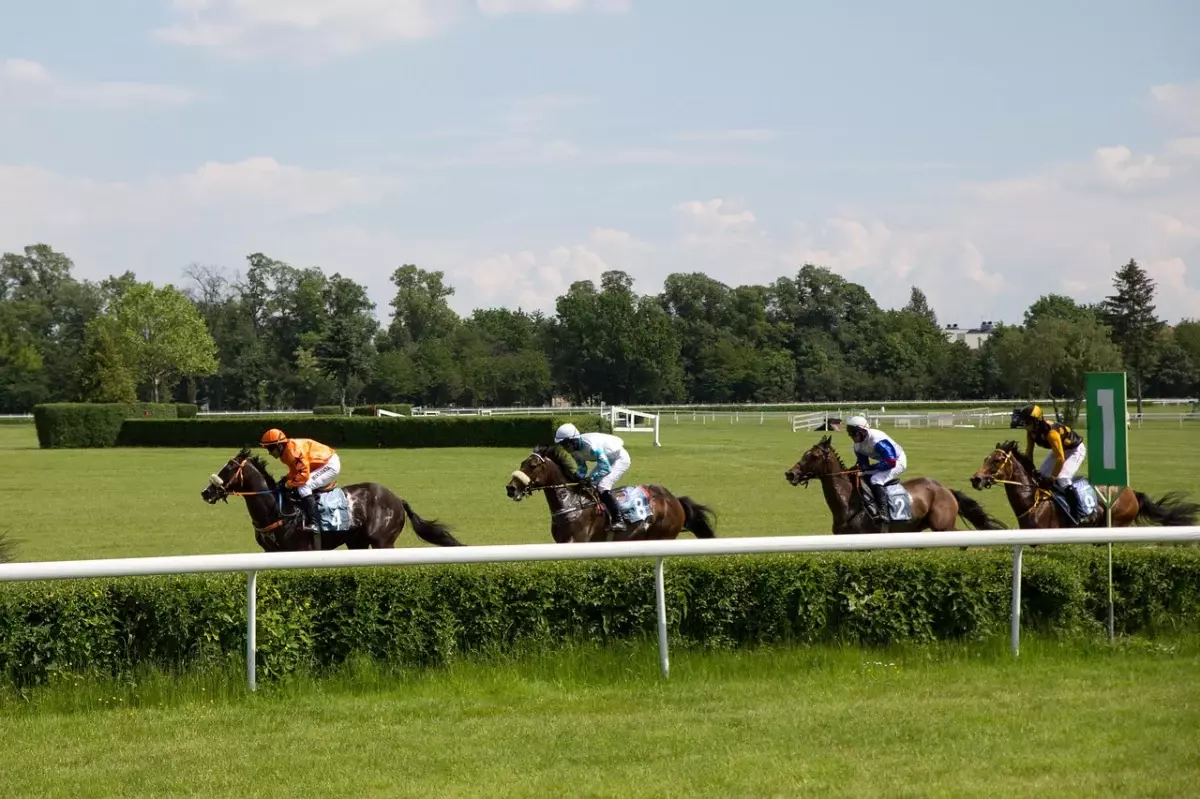
Horse racing tips are not forecasts in the abstract; they are arguments about probability, price, and timing. That matters in a race-day column such as Templegate’s Wednesday NAP, especially when the comment says the race is tougher but the form is working out. In horse racing, the difference between a useful opinion and a losing bet is rarely the horse alone. It is usually the relationship between the horse, the race shape, and the odds offered by the market.
The point is simple. A selection can be perfectly reasonable and still be a bad wager if the price is too short. That is why serious analysis treats betting as a problem of value, not prediction. When a tipster says a line of form is ‘working out’, the useful question is not whether the horse won once. It is whether the race around it is producing evidence that the earlier result had substance.
A strong tip is not a promise of victory; it is a priced argument that the market has overlooked something measurable.
What a NAP bet actually tells you
The NAP is the tipster’s strongest selection of the day. In newspaper columns and modern racing media, it is a signal of conviction rather than a guarantee of success. That distinction matters because many readers treat a NAP as if it were an inside line. It is not. It is a hierarchy decision: this is the runner the tipster wants to stand behind most strongly.
That convention grew inside racing journalism and remains central to the culture of the Racing Post and similar tipster formats. It is useful only when the reasoning is clear. If the case rests on a debut win, a forgiving trip, or a race that has since thrown up winners, the tip has a foundation. If it rests on enthusiasm alone, the label adds nothing. In other words, the word NAP changes nothing about the mathematics. It changes only the confidence level of the selection.
The commercial layer also matters. Bookmakers shape the market through margins, and a tip that becomes popular can shorten quickly, especially in starting price terms. That is why the informed punter compares the early price with a private estimate rather than simply following the headline. A horse can be the best pick in the race and still be a poor bet if the bookmaker has already removed the edge.
Reading the form line instead of the result
Horse race analysis is often weakened by result worship. A win is treated as proof, and a defeat is treated as failure. That is crude. The better approach is to read the performance in context: the class of race, the pace, the draw, the distance, and the quality of the opposition. A strong run in defeat can be more informative than a soft victory in a weak field. This is especially true in Thoroughbred racing, where a horse’s ability is often masked by tactical circumstances.
That is why analysts care about collateral form. If the horses around a debut winner go on to run well, the original performance gains credibility. If the race collapses under scrutiny, the value of the win falls. A sharp tipster is not asking only whether the horse won; they are asking whether the form line can be trusted. The same logic applies to a horse ridden by a strong jockey or placed by an in-form trainer: the headline matters less than the quality of the evidence behind it.
Why a debut win can be misleading
| Signal | What it can mean | What to verify |
|---|---|---|
| Easy debut win | The horse may be above average | Race depth, time figure, and what the runner-up did next |
| Close second in a stronger race | The horse may have run to a higher level than the result suggests | Pace bias, trouble in running, and step-up suitability |
| Form suddenly improves | The stable may have found the right conditions | Going, distance, and whether the horse has progressed physically |
| Form looks ordinary on paper | The race may have been stronger than it appeared | Subsequent winners and the overall class of the contest |
This is where flat racing punters often misread the evidence. They see a simple finishing position but ignore how the race was run. A horse that travelled well into a bad pace scenario can be more reliable next time than a winner that inherited everything. That same point applies in a handicap race, where a small tactical error can distort the result. The analyst who notices the distortion usually has the better long-term angle.
Why Goodwood changes the calculation
Goodwood Racecourse is one of the most distinctive tracks in Britain, and that is exactly why opinions there can be fragile. It is not a neutral stage. It is a racecourse that rewards balance, positioning, and the ability to handle undulations and turning sections without losing rhythm. On such a track, a horse that looks mechanically superior on paper can still be beaten by one with better trackcraft.
The race type also matters. In straightforward terms, Goodwood is a place where flat racing becomes tactical rather than purely athletic. Draw, pace, and track position can matter more than raw ability if the early fractions are wrong. That is why tips that look obvious in advance become more complicated once the field is declared. The best race-reader is not just asking who is best on ability; they are asking who is best placed to use that ability in this exact shape of race.
The official racecourse pages from Goodwood are worth checking alongside the racecard, while the British Horseracing Authority provides the regulatory framework and official race information. That does not make the tip more profitable by itself, but it reduces one of the common mistakes: betting from a headline rather than from the actual conditions of the contest.
What Goodwood punishes
Goodwood punishes one-dimensional horses. It is not enough to be fast. A horse also needs to handle the track, travel with efficiency, and respond when the race changes shape. If the pace is muddling, hold-up horses can be stranded. If the pace is fierce, prominent racers can burn too much energy. The betting edge often lies in recognising which style fits the day better than the market expects.
That is why an apparently confident selection can still be a tougher betting proposition than the label suggests. A horse may have the best recent figure in the race, but if the track asks different questions, the edge narrows. The line ‘this form is working out’ becomes meaningful only if the runner’s prior evidence survives that extra layer of scrutiny.
When expert tips are strongest, and when they are weak
A good racing tip does three things at once. It identifies the most likely contender, it explains why the price is fair, and it shows where the market may have overreacted. The best analysts do not just pick winners; they identify mispriced runners. That is a more demanding task than it sounds. In sports betting, selection quality matters, but so does price discipline. A tip that wins at 5/1 can be a bad bet if it was only worth 3/1.
Different experts place the emphasis in different places. Some lean on stable form and trainer intent. Others trust pace maps, sectional analysis, or the idea that a horse is simply better than the result line suggests. All of them can be right in isolation and wrong in combination. Markets are efficient enough to punish lazy reasoning but not so efficient that value disappears completely. That is why disagreement persists.
The real weakness in tipster culture is not opinion; it is overconfidence. The market can move sharply, public sentiment can distort a price, and a horse can become overbet because the narrative is tidy. If the starting price collapses, the edge may vanish even when the selection itself remains logical. That is why a disciplined bettor separates the horse’s chance from the price paid for that chance.
The race is not won on the page. It is won when the market has priced the page badly.
A practical filter before you follow any racing tip
Before backing any horse, especially a headline NAP, use a narrow checklist. If the answer to several of these questions is weak, the bet is weak even if the horse looks attractive in isolation.
- Does the horse already handle today’s going and track configuration?
- Was the last run a genuine step forward, or did the race merely fall apart in its favour?
- Is the current price better than your own fair price estimate?
- Does the pace setup suit the horse’s run style?
- Has the trainer shown intent with this type of placement before?
- Are there obvious risks such as a class rise, a distance change, or an unsuitable draw?
If you cannot answer those questions with confidence, the correct action is often to pass. That is not caution for its own sake. It is the only rational response when the market has not granted enough value. Race-to-race discipline matters more than trying to be involved in every selection a column produces.
What changes next: data, sectionals, and sharper pricing
The next phase of racing analysis is already visible. Odds are increasingly shaped by faster information flows, while sectional timing and pace data are making form study more granular. The advantage now belongs to readers who can combine objective data with the old skills of race reading. Pure instinct is not enough; pure model output is not enough either.
That creates a real challenge for racing columns. The more the market absorbs common signals, the less profitable obvious angles become. The upside is that nuance still exists. A horse can be better than the bare result, a track can reward a specific style, and a trainer can target a race more carefully than the average punter notices. But the burden of proof has shifted. A tip now has to earn its price, not just its headline.
The likely future is a hybrid model: human judgment for context, data for verification, and stricter price control for execution. The winners will not be the readers who find the most tips. They will be the readers who understand which types of race are still mispriced and which are already solved by the market.
Frequently asked questions about horse racing tips
What does NAP mean in horse racing?
NAP is a tipster’s strongest selection of the day. It signals conviction, not certainty. A NAP can still be a poor bet if the price is too short.
Are horse racing tips reliable?
They can be useful if the reasoning is sound and the price is fair. They are unreliable when they are based on enthusiasm alone or when the market has already corrected the angle.
Why is Goodwood harder to assess than some other tracks?
Because its layout rewards balance, positioning, and adaptability. A horse can be very good and still be poorly suited to the way a Goodwood race unfolds.
Should I always back a tipster’s NAP?
No. The label does not create value. If the price does not match your view of the horse’s true chance, the smart move is to pass.
Where the real edge now lives
The most important insight is not that Templegate’s Wednesday NAP is right or wrong; it is that race-day tipping only works when conviction survives contact with conditions, pace, and price. The strongest selections are rarely the most obvious. They are the ones where form, track, and market still disagree enough to create value.
What readers should watch next is the gap between the narrative and the price. If the form keeps franked by later runs, the case strengthens. If Goodwood continues to reward position and track sense over raw reputation, the market will keep mispricing certain styles of horse. And if data tools keep improving, the old edge will not disappear; it will simply move further into the small gaps where judgment still matters more than noise.
SEO Data
- Primary Focus Keyphrase: horse racing tips
- Related Keyphrase 2: horse racing nap bet
- Related Keyphrase 3: best horse racing tips for Goodwood
- Related Keyphrase 4: how do horse racing tips work
- Related Keyphrase 5: horse racing form analysis
- Primary Keyphrase Synonyms: racing tips, race picks, betting selections, tipster selections, form study
- SEO Title: Horse Racing Tips and NAP Betting: How to Read Form and Find Value
- Meta Description: Horse racing tips explained: learn how NAP bets, form, Goodwood tactics and odds analysis turn a selection into real betting value.
- URL Slug: horse-racing-tips-nap-betting-goodwood
- Image Filename: horse-racing-tipster-goodwood-form-analysis.jpg
- Image ALT Text: Horse racing tipster studying a racecard at Goodwood with runners on the track in the background
- Image Title: Horse racing tipster analysing racecard at Goodwood
- Image Caption: Good form matters, but price and track conditions decide whether a tip is worth backing.
- Search Intent: Mixed informational and commercial investigation
Frequently Asked Questions
What does a NAP really mean in horse racing tips?
A NAP is the tipster’s strongest selection of the day, not a guarantee of winning. It signals the horse the writer has most confidence in based on the available evidence. The important point is that the label reflects conviction, while the actual betting decision should still depend on whether the odds offer value.
Why is a horse winning once not always enough to trust the form?
A single win can be misleading if the race was weak, the pace suited perfectly, or the horse got an easy lead. Good form reading looks beyond the result and checks who the horse beat, what the race shape was like, and whether the opposition has since performed well to confirm the merit of the run.
How do I know if a short-priced tip is still a good bet?
A short price can still be a poor bet if the market has already removed most of the edge. The key is comparing the odds with your own estimate of the horse’s true chance. If the horse is the likeliest winner but the price is too short, it may be a pass rather than a bet.
What does it mean when a tipster says a race is ‘working out’?
It means the form line is being supported by later evidence. If horses from the same race go on to win or run well, the original performance becomes more trustworthy. That helps you judge whether the race was genuinely strong or whether the result only looked impressive on the day.
Why can a debut win be a warning sign instead of a positive one?
A debut win can flatter a horse if the race was weak, the field was badly matched, or the pace made things easy. To assess it properly, you need to check the time figure, the depth of the field, and what the placed horses did next. A good debut is evidence, not proof.