
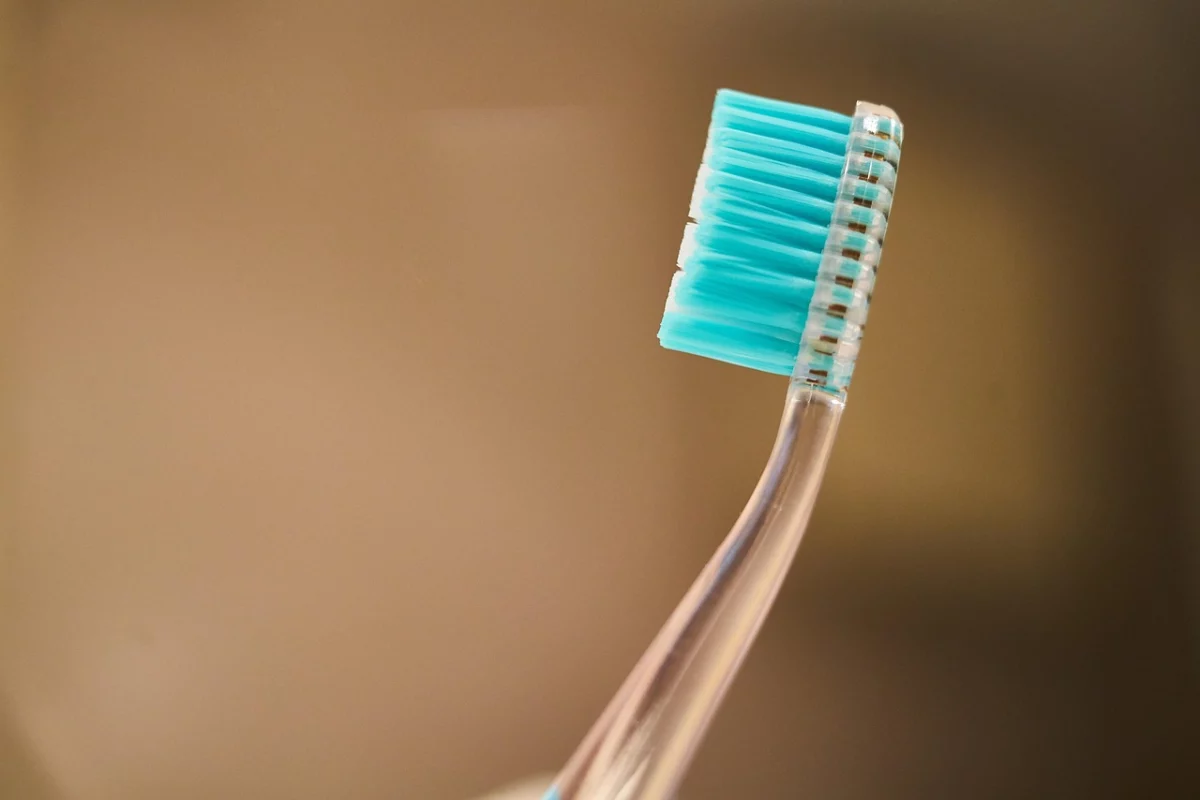
The Dyson CameraJet toothbrush recall story is really a story about transparency. According to the reporting, Dyson has admitted to a component issue in its expensive, AI-enabled toothbrush but has not said what failed, how many units are affected, which countries are involved, or why it has not moved to a formal recall. For a premium product in the world of electric toothbrushes and artificial intelligence, that silence matters because buyers are not only paying for features. They are paying for confidence that a daily-use device is safe, durable, and properly supported.
That is why this case deserves more than a headline read-through. It sits at the intersection of Dyson‘s brand identity, the expectations that come with a smart toothbrush, and the practical realities of oral hygiene. When a company sells a connected household device at a luxury price, its communication strategy becomes part of the product itself.
What Dyson has said about the CameraJet toothbrush
Based on the report, Dyson has acknowledged a component issue but has not published enough detail for customers to understand the scope of the problem. That is unusual, especially when a company may eventually need to decide whether a product recall is appropriate. In consumer safety, vague acknowledgments are often a temporary stage while engineers trace a root cause, but they can also become a reputational risk if they last too long.
Companies usually limit early disclosure when they are still verifying serial numbers, manufacturing batches, distribution channels, and whether the issue rises to the level of a reportable hazard. In the United States, the Consumer Product Safety Commission is the key federal watchdog for many consumer goods, and recall language is often shaped by coordination with regulators, lawyers, and quality teams. Still, a delay in explanation can look like a choice to protect the brand before the buyer.
That tension is familiar in consumer protection law and in ordinary warranty practice. The more premium the product, the less tolerant buyers tend to be of silence. A customer who spends hundreds of dollars on a toothbrush is not shopping for disposable convenience; they expect a polished experience, responsive customer service, and a clear explanation when something goes wrong.
Why a component issue matters in a premium toothbrush
A toothbrush is a simple object at heart, but a modern smart brush combines motors, seals, batteries, sensors, firmware, charging hardware, and app connectivity. That turns even a small hardware flaw into a potential systems problem. In an ordinary brush, a weak part may mean reduced performance. In a connected model, the same flaw can affect charging, vibration consistency, app synchronization, or long-term safety. If the CameraJet is truly an AI-assisted device, then the problem may sit not only in the brush head or handle but in the way the product measures, stores, or interprets data.
This is why product teams obsess over quality assurance and software bug detection long before launch. A defect discovered after release can be manageable, but only if the company knows whether it is a cosmetic annoyance, a performance failure, or a safety issue. The difference matters because not every defect deserves the same remedy. Some problems call for a firmware patch; others require a replacement; the most serious require a full recall.
Premium appliances also sit at the boundary of design and daily behavior. The kind of elegant industrial design that makes a product feel futuristic can also make it harder to inspect, repair, or diagnose. That matters in a wet bathroom environment where seals, charging contacts, and moisture resistance become essential. From a human factors and ergonomics perspective, the best products are not only beautiful; they are predictable, easy to understand, and resilient when real people use them under messy conditions.
Hardware, software, and the connected-home problem
Connected personal-care devices increasingly behave like Internet of things products: they gather usage data, sync with apps, and depend on both hardware and software being correct at the same time. That makes defect handling more complicated than it used to be. If the problem is purely physical, the fix might involve a part swap. If the issue is embedded in firmware, the company may be able to update the device remotely. But if the fault affects the product’s safety envelope or core function, even a smart patch may not be enough.
That complexity is one reason the market now treats many connected consumer goods as a category of consumer electronics rather than just household tools. Once a toothbrush behaves like a mini computer, buyers expect the company to manage it like one: with logging, diagnostics, version control, and clear support paths. If those systems are missing, the cost of innovation is a credibility gap.
Recall, repair, or silence: how companies choose the response
There is a reason companies sometimes hesitate before choosing a recall. A recall can be expensive, logistically difficult, and brand-damaging. But it is not the only option. In many cases, firms first test whether a product can be repaired, replaced, or updated quietly. The right path depends on the severity of the defect, the likelihood of harm, and the resources needed to reduce risk quickly.
The table below shows how those options usually differ in practice.
| Response | When it is used | What consumers receive | Main trade-off |
|---|---|---|---|
| Recall | When the defect may create a material safety risk or widespread failure | Refund, repair, or replacement under a formal program | Costly and highly visible |
| Repair or replacement | When the issue is limited and parts can be swapped efficiently | Fixed hardware or a new unit | Can be slower to organize at scale |
| Software or firmware update | When the underlying problem is digital rather than physical | Remote correction or improved behavior | Works only if hardware is sound |
| Limited disclosure | When investigation is ongoing and the company wants to avoid premature statements | Minimal immediate action | Creates uncertainty and trust risk |
From a product liability standpoint, companies do not choose silence simply because they can. They choose it because they believe the issue is still being characterized, because they fear misstatements, or because they are trying to align a technical response with risk management and legal review. The trouble is that consumers often interpret silence as a warning sign even when the underlying flaw may be narrow.
That is why recall communication is so important. An honest, bounded explanation can protect a brand even when the defect itself is embarrassing. In contrast, a carefully worded non-answer can make a minor issue feel like a major one.
What consumers should do right now
If you own the reported product, the best response is not panic. It is documentation. Check the serial number, keep your receipt, save packaging if you still have it, and monitor official notices from the company and from the CPSC recalls database. If Dyson later publishes a affected-batch list, you will want to know exactly which unit you have and when you bought it.
It is also smart to pay attention to performance changes. A device that overheats, stops charging, behaves erratically, or produces unusual noise should not be dismissed as a nuisance. In a daily-use product, those symptoms can be early warnings of a deeper defect. Even if the issue turns out not to be dangerous, the point of a premium product is that the owner should not need to guess.
For households that share devices, the presence of a potential defect raises an extra question: whether everyone is using the same brush head, charger, and app profile. That matters because problems in connected products can sometimes be tied to accessories, not just the main unit. In other words, a complete check is safer than focusing on one obvious part.
- Verify the model and serial number.
- Watch for official company notices and regulator updates.
- Stop using any unit that shows heat, charging, or electrical irregularities.
- Document photos, purchase date, and any support chat transcripts.
- Do not assume a silent update means the problem is fixed.
The broader business lesson for connected oral care
One reason this story resonates beyond a single product is that connected oral-care devices are part of a larger shift in oral hygiene. A basic brush is judged by bristles and durability; a smart brush is judged by its sensors, app features, data handling, and support model. That means companies are no longer selling only a mechanical tool. They are selling a promise that hardware, software, and service will remain aligned over time.
That promise can be hard to keep when supply chains are stressed, component quality varies, or a design that looked elegant in a lab turns out to be fragile in the field. A global supply chain can amplify a small flaw into a large recall, especially when the problem comes from a single subcomponent used across multiple regions. The worst-case scenario is not just a broken brush; it is a mismatch between what the marketing says and what the customer experiences.
This is where connected-device brands can learn from the broader history of quality assurance and consumer protection. Buyers are often forgiving when a company is specific, timely, and practical. They are much less forgiving when the company speaks in generalities while refusing to answer the obvious questions: What failed? Who is affected? What should I do?
Transparency can be a competitive advantage
The interesting strategic question is whether Dyson sees disclosure as a liability or as a differentiator. In the short term, detailed disclosure can expose a brand to criticism. In the long term, it can protect the very trust that premium pricing depends on. That is especially true in categories that blend artificial intelligence, smart device features, and daily personal use. A company that explains the problem early can often shape the conversation; a company that waits may lose control of it entirely.
There is also a practical point for investors and industry observers: recurring silence around a component issue can signal a deeper internal challenge, whether in supplier oversight, test coverage, or launch readiness. None of those are simple problems. All of them are solvable. But they are expensive to fix after the fact, which is why warranty teams and engineering teams should be treated as strategic partners, not cleanup crews.
FAQ: the questions readers are asking now
Is the Dyson CameraJet toothbrush safe to use?
Without a public explanation of the defect, there is no responsible way to declare every unit safe or unsafe. If you own one, the best approach is to monitor official notices, check your serial number, and avoid using the device if you notice abnormal heat, charging problems, or other failures.
Why would a company avoid a recall if there is a defect?
A company may still be investigating the cause, may believe the issue is limited, or may be coordinating with regulators and suppliers before publishing a remedy. In some cases, the problem is fixable without a recall. But if the issue affects safety, a formal recall is often the clearest and most trustworthy response.
How can I check whether my product is affected?
Start with the manufacturer’s support channels, then review the official CPSC recall listing. Keep your purchase record and serial number handy. If the company later announces affected batches, those details will help you confirm whether your unit is included.
What should I look for in a premium toothbrush?
Look beyond app features and battery life. Pay attention to support quality, repair options, published safety information, replacement part availability, and how clearly the company explains defects. Premium should mean better engineering and better accountability, not just a higher price.
What to watch next as Dyson decides how much to reveal
The most important insight in this story is that a component issue is never only a technical problem. In a connected personal-care product, it is also a communication test. If Dyson eventually explains the defect, identifies affected units, and offers a concrete remedy, the company can probably contain the damage. If it continues to withhold specifics, the unanswered questions will become the story.
What happens next will tell us a lot about the future of premium consumer hardware. More products will combine sensors, software, and daily bodily routines, which means the line between an appliance and a smart device will keep getting thinner. The unanswered question is whether brands will match that complexity with equally mature disclosure. In other words, the real competition may no longer be about who builds the sleekest brush, but who proves they can be trusted when the brush is not perfect.
Frequently Asked Questions
Why would Dyson mention a component issue without naming the part that failed?
In early stages of an investigation, companies often confirm that a problem exists before they can safely identify the exact component. They may still be testing batches, tracing supply chains, and checking whether the failure is isolated or systemic. That said, a vague statement can frustrate customers because it prevents them from judging the seriousness of the issue.
Does a component issue in a smart toothbrush always mean there should be a recall?
Not necessarily. Some defects can be fixed with a firmware update, a replacement part, or a service bulletin if the risk is limited. A formal recall is usually reserved for issues that affect safety, compliance, or a large number of units. The key question is whether the defect creates a real hazard or just affects performance.
What should owners of the CameraJet toothbrush do while Dyson is still silent?
Owners should keep the product’s serial number, monitor official Dyson updates, and stop using the brush if they notice overheating, charging problems, unusual vibrations, or damage to the handle or charger. It is also wise to register the product if available, since that can help the company contact affected customers quickly if a remedy is announced.
Why is the lack of detail more serious for a premium connected toothbrush than for a basic model?
Because buyers of premium smart devices are paying for more than function. They expect safety, durability, and support, plus confidence that software, sensors, and charging systems have been thoroughly tested. When a luxury connected product goes quiet about a defect, the silence can damage trust more than the technical issue itself.
Could a problem in the brush’s hardware also affect the app or AI features?
Yes. In a connected device, hardware and software are often tightly linked. A fault in the handle, battery, sensor, or charging system can also disrupt data capture, app syncing, or any AI-based tracking functions. That is why even a small component failure can become a broader product reliability issue.