
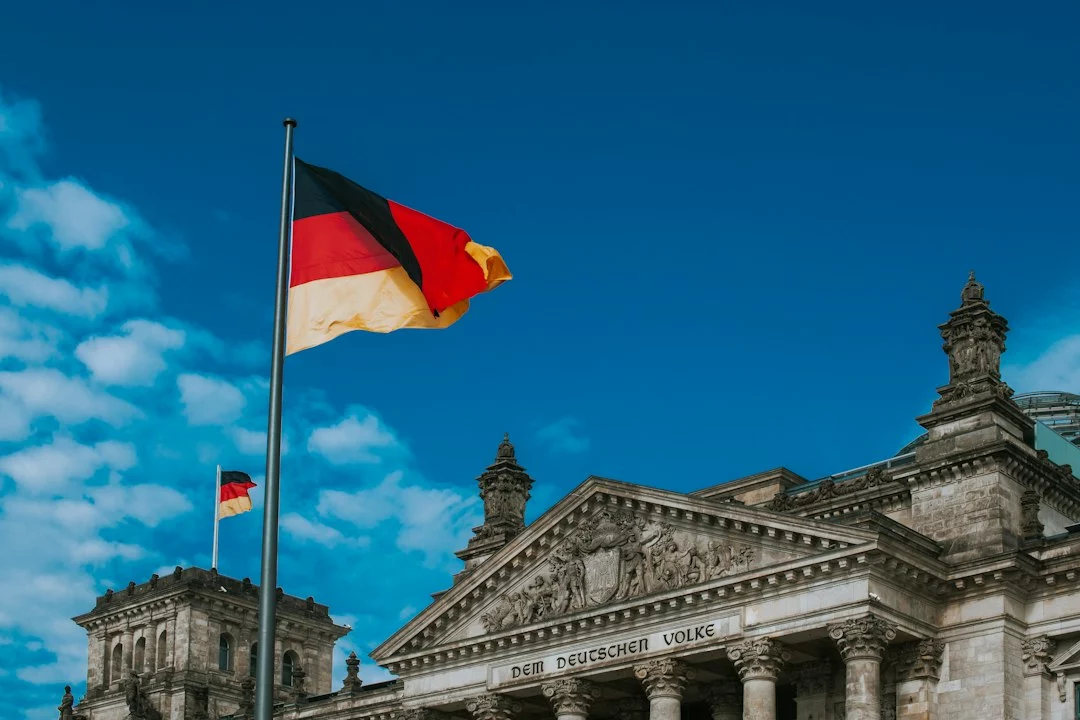
Friedrich Merz election setback is the right lens for the latest regional result: it is not merely a bad night for the Christian Democratic Union, but a signal that the chancellor is being squeezed from both directions by the Alternative for Germany and The Left. Merz has chosen to stay in office and call the result a disaster, which is a blunt but politically sensible response. Resigning would not solve the problem; it would only confirm that the government has lost control of the narrative.
In German politics, the line between local and national is thinner than it looks. Because the country’s federalism gives the states real constitutional weight, Landtag elections often become a verdict on the federal chancellery. Voters may be reacting to a school system, housing shortages, migration policy or industrial decline, but the result is read in Berlin as a judgment on competence.
Regional elections rarely stay regional when the governing party looks vulnerable. They become a shorthand for trust, fatigue and the gap between promises and delivery.
The double squeeze from the far left and far right
The unusual part of this result is not only that Merz lost ground. It is that the gains were split between two ideologically opposite forces. That is a sign of fragmentation, not convergence. The far right appeals to voters angry about immigration, security and cultural status. The far left attracts voters who feel abandoned by market discipline, rent pressure and an economy that seems to reward capital more reliably than labor. These are different electorates, but they can draw strength from the same broad complaint: the mainstream appears tired, managerial and defensive.
Why the far right benefits first
The Alternative for Germany has made a career out of turning frustration into identity politics. It does not need to solve problems to gain ground; it only needs to persuade voters that the system is broken beyond repair. In moments of uncertainty, that message can outperform policy detail. Merz now has to prove that state capacity still exists, not just insist that extremism is dangerous.
Why the far left still finds an audience
The Left remains a different kind of protest vehicle. It is strongest where voters want redistribution, social protection and a harder critique of inequality. In parts of the former East Germany, that message still resonates because the democratic and economic settlement after German reunification never felt equally beneficial to everyone. The result is a politics of grievance that can pull from both edges without ever producing a stable majority.
This dynamic is especially visible in places such as Saxony, Thuringia and Saxony-Anhalt, where long-running economic and demographic pressures have made volatility normal rather than exceptional. If those states are the stage, then the issue is not a single campaign error. It is a structural exhaustion of trust.
The CDU’s strategic trap
The CDU now faces the same problem that has punished many mainstream parties across Europe: it must look decisive without appearing radical, and reassuring without sounding inert. Under Angela Merkel, the party often held together by occupying the center and draining oxygen from opponents. Merz is trying a more explicit, more impatient style. That can project decisiveness, but it also narrows room for ambiguity. If he moves too far right in response to the latest setback, he risks validating the agenda of his rivals. If he stays too close to the center, he risks looking bland, managerial and easily ignored.
The governing arithmetic matters too. In a coalition government, a chancellor cannot simply declare the problem solved and move on. He needs partners, discipline and visible delivery. If the arrangement is broad enough to resemble a grand coalition, then every compromise becomes more visible and every compromise can be framed as weakness. The Social Democratic Party of Germany will also be wary of looking like a passenger on a Merz project that is losing support at the regional level.
That pressure feeds back into the Bundestag. Regional losses do not automatically alter parliamentary numbers, but they do alter the tone of debate. A chancellor who looks cornered in the states will be treated as vulnerable in Berlin, even if the formal majority still stands.
What the political damage looks like in practice
| Force | What the gain means | Why Merz should care |
|---|---|---|
| CDU | Centre-right voters are not fully consolidated | The party cannot assume competence alone will hold the middle |
| AfD | Protest and identity politics are converting into votes | Every loss to the right sharpens the legitimacy problem |
| The Left | Economic discontent still has a home on the left | Merz cannot treat the challenge as only a far-right story |
Why Merz says he will stay in office
Staying in office is the least surprising part of the story. A chancellor who quits after one damaging regional cycle would create a leadership vacuum and invite a wider panic. Merz is trying to contain the damage by projecting continuity. That is rational. The danger is that continuity without correction looks like denial.
The real test is whether the government can show that it understands why voters are drifting. That means more than repeating the usual lines about order and responsibility. It means proving that public services, migration management, industrial strategy and housing policy are not slogans but working institutions. If those areas remain weak, the election result will look less like a one-off and more like the start of a pattern.
Two readings of the result, and why both matter
The protest-vote reading
One interpretation is that voters were simply venting frustration. On this reading, Merz still has time to recover if he can deliver visibly and quickly. This is the more forgiving interpretation, and it is plausible whenever turnout is uneven and local issues dominate.
The structural-shift reading
The harsher interpretation is that Germany’s party system is entering a more durable phase of fragmentation. If that is true, the problem is not a single policy package but a long-term erosion of trust in the political system itself. In that scenario, every future election becomes a referendum on whether mainstream parties can still produce stability without dullness.
What to watch next
- Whether Merz changes his cabinet team or his public tone.
- Whether the CDU sharpens its line on migration, security and economic delivery without sounding reactive.
- Whether the AfD and The Left keep converting frustration into state-level gains.
- Whether the next round of polling confirms that the chancellor’s problem is national, not just regional.
- Whether the SPD and other coalition partners decide to distance themselves or double down on the government’s course.
FAQ
Why do state election results matter so much in Germany?
Because Germany is a federal system. State votes shape the political mood, influence coalition thinking and often signal whether the federal government still has public confidence. They are local contests, but they rarely stay local.
Can Merz recover from this setback?
Yes, if he can show concrete progress rather than only stronger messaging. Recovery depends less on defending the result than on reducing the sense that the government is reacting late to events it should have anticipated.
Why are far-left and far-right parties both gaining?
They are feeding on different grievances, but the underlying pattern is similar: distrust of institutions, anger at mainstream parties and a belief that the political center is too slow to solve everyday problems.
The next question is whether moderation can still look powerful
The most important insight is that Merz is not being challenged by one opponent but by the collapse of confidence around him. The far right and far left do not need to agree on ideology to expose the same weakness: when the center looks uncertain, voters start testing the edges. What happens next will depend on whether Merz can convert a defensive response into visible competence. If he cannot, each regional loss will be read not as a local anomaly but as evidence that Germany’s mainstream parties are losing the ability to define the national mood. The unresolved question is simple and uncomfortable: can a centrist government still look like a force, or will it be remembered only as the thing voters turned away from?
Frequently Asked Questions
Why is a regional election being treated as a national setback for Friedrich Merz?
Because in Germany, Landtag elections are often read as a proxy for the federal mood. Voters may be responding to local issues, but the result signals whether they still trust the governing party to manage bigger problems. When the CDU underperforms regionally, it is usually interpreted in Berlin as a broader judgment on competence and direction.
How can both the far right and the far left gain from the same election result?
They are drawing support from different grievances, but both feed on dissatisfaction with the mainstream. The AfD benefits from anger over migration, security and cultural change, while The Left attracts voters frustrated by inequality, rent pressure and weak social protection. The common thread is not ideology, but a belief that established parties are failing to deliver.
Why does staying in office make sense for Merz after a setback?
Resigning would not address the underlying political problem and could instead reinforce the image of a government in retreat. By staying, Merz signals that he still intends to govern and shape the narrative. In a polarized environment, abrupt resignation can look like confirmation of weakness rather than accountability.
Why are Saxony, Thuringia and Saxony-Anhalt mentioned as especially unstable politically?
These states have faced long-term economic, demographic and social pressures that make politics more volatile. Population decline, lower investment and uneven development have weakened trust in institutions over time. That creates a setting where protest voting becomes more normal, and where both anti-establishment right-wing and left-wing messages can find an audience.
What is the strategic dilemma for the CDU after this result?
The CDU must appear firm without sliding into the positions of its rivals. If it reacts too aggressively to the right-wing challenge, it risks legitimizing the AfD’s themes. If it stays too centrist and cautious, it may look disconnected and uninspiring. That leaves the party trapped between sounding too hard and sounding too bland.