
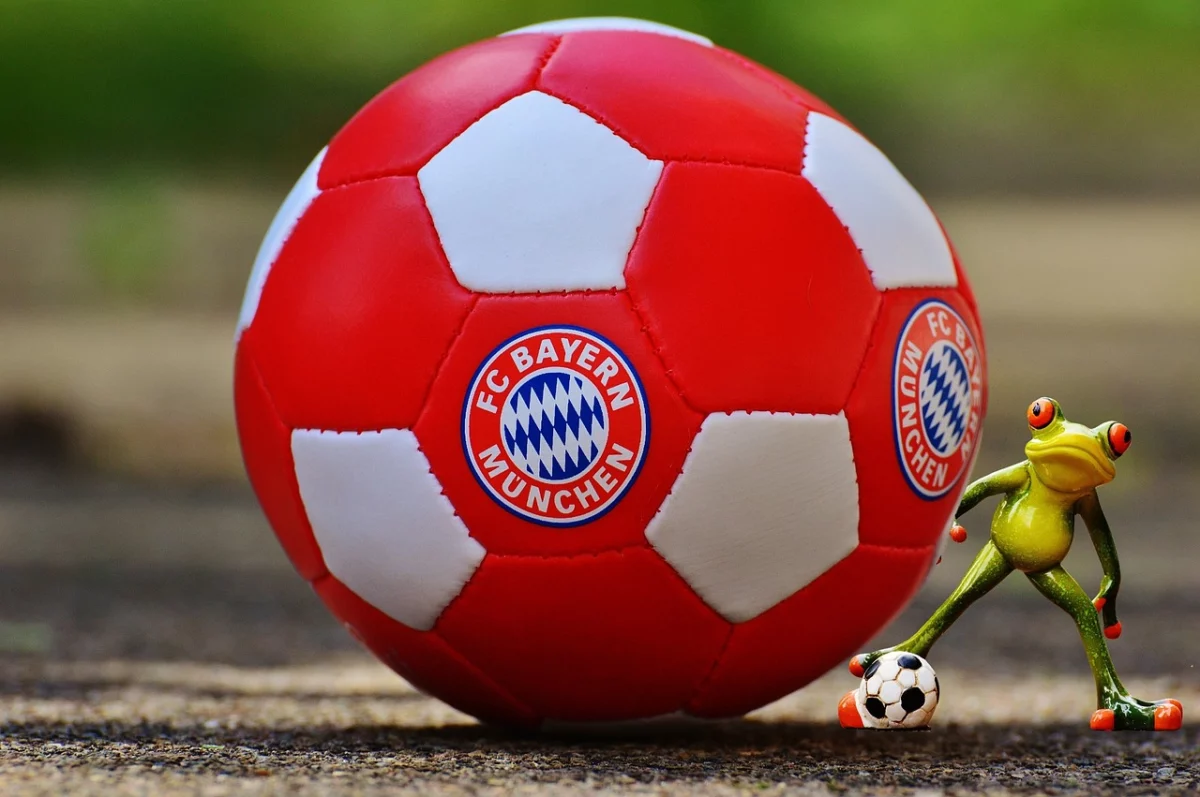
Harry Kane’s Ballon d’Or 2026 prospects have become a major talking point after a report placed the Bayern Munich striker on a shortlist alongside England teammates Jude Bellingham and Declan Rice. The claim immediately invites two questions: does Kane have the strongest individual case, and what would he need to achieve before voting takes place? Any reported 2026 nomination should be treated as provisional until the official candidates are published by the award’s organizers, but the comparison is already meaningful because the three players represent distinct forms of elite influence: scoring, creative control and midfield leadership.
Kane’s candidacy rests on an unusually clear proposition. He is one of football’s most complete centre-forwards, combining high-volume finishing with passing, chance creation and intelligent movement away from the penalty area. Bellingham offers a broader midfield profile and the prestige attached to decisive performances for Real Madrid, while Rice contributes control, ball recovery and tactical stability for Arsenal. Their competing claims show why the Ballon d’Or cannot be reduced to a goals table: voters assess individual excellence within the context of team success, major matches and the season’s defining narrative.
What the reported Ballon d’Or shortlist means
A shortlist mention is not the same as a confirmed nomination, and a nomination is not evidence that a player is the favorite. The official Ballon d’Or process is administered through France Football, with voting conducted by selected journalists under the rules established for the relevant edition. Eligibility periods, award categories and voting criteria can change, so claims about a 2026 list should be checked against an official announcement rather than inferred from speculation, betting markets or social media.
The useful part of the report is its identification of three plausible English contenders. Harry Kane, Jude Bellingham and Declan Rice occupy different roles, play for clubs expected to challenge for major honors and carry substantial responsibility for the England national team. Their final standing will depend less on an early label than on what happens in domestic title races, European knockout rounds and international competition.
A credible Ballon d’Or assessment must separate confirmed nominations from early predictions and evaluate performance in context rather than relying on reputation alone.
Why Harry Kane has a compelling Ballon d’Or 2026 case
Elite scoring with playmaking value
Kane’s principal advantage is measurable and highly visible: goals decide matches. Yet describing him only as a goalscorer understates his influence. He frequently drops between midfield and defense, receives under pressure and plays forward passes for runners attacking the space he has vacated. This ability can make him both the finishing point and the creative starting point of an attack.
That dual role matters in individual-award voting. A striker who scores consistently while improving the output of nearby attackers can build a more persuasive case than one whose contribution is limited to penalty-area touches. Kane’s technique also gives him multiple routes to goal, including first-time finishes, headers, penalties and shots taken after moving away from a marker. Defenders cannot simply protect one zone or force him onto an obviously weaker action.
The Bayern Munich platform
Playing for Bayern Munich provides Kane with a global stage and an expectation of trophies. Bayern are judged not only by their position in the Bundesliga, but also by their progress in the UEFA Champions League. For Kane, European knockout matches are especially important because they offer opportunities to deliver against other leading candidates and elite defenses.
The same environment creates pressure. Dominant clubs are expected to win, so domestic goals may be treated as necessary rather than extraordinary. If Bayern fall short in decisive competitions, voters may question whether Kane’s individual production translated into collective success. Conversely, leading the club to major silverware—particularly through decisive goals in semifinals or finals—would address one of the recurring criticisms directed at his career.
The trophy narrative
Individual awards are officially about individual performance, but team achievements inevitably shape how performances are remembered. Kane’s pursuit of major club trophies gives his campaign an unusually powerful narrative. If he combines elite output with a landmark title, voters may view that success as the culmination of sustained excellence rather than a single productive season.
That narrative can help, but it should not replace analysis. A trophy won despite quiet performances in critical matches should not automatically outweigh consistent excellence elsewhere. The strongest Harry Kane Ballon d’Or 2026 argument would combine four elements: outstanding production, creative influence, availability and decisive contributions when Bayern or England face elimination.
Kane vs Bellingham vs Rice
| Player | Primary role | Strongest argument | Potential obstacle |
|---|---|---|---|
| Harry Kane | Centre-forward | Goals, link play and match-winning output | Dependence on major team success |
| Jude Bellingham | All-action attacking midfielder | Versatility, carrying, goals and influence in major matches | Role changes can reduce headline statistics |
| Declan Rice | Central or defensive midfielder | Control, defensive coverage and tactical consistency | Subtle contributions receive less attention than goals |
Jude Bellingham: prestige and complete midfield influence
Bellingham’s case is strengthened by the visibility and competitive demands of Real Madrid. His game can include progressive carrying, late runs into the box, combination play, pressing and recovery work. Because he can influence several phases, he may remain important even when he does not score.
The challenge is that tactical versatility can obscure individual evaluation. A deeper role may improve the team while reducing goals and assists, whereas a more advanced role can produce eye-catching numbers without showing the full breadth of his midfield ability. Voters will need to judge what his coach asks him to do, not merely compare his statistics with a striker’s.
Declan Rice: the value of control
Rice’s candidacy highlights a persistent Ballon d’Or difficulty: defensive and controlling midfielders rarely receive the same recognition as prolific forwards. At Arsenal, his value can appear through positioning, interceptions, duels, set-piece delivery and the ability to carry possession through pressure. These actions may determine whether a team can sustain attacks without exposing itself to counterattacks.
A strong Declan Rice Ballon d’Or nomination argument would therefore require context-rich evidence. Analysts should examine his influence on territory, transitions and difficult away matches rather than focusing only on goals. A Premier League or Champions League triumph in which Rice is recognized as Arsenal’s tactical foundation could elevate him significantly, particularly if he also excels for England.
How Ballon d’Or voting should be evaluated
The award has historically generated debate because voters must compare players in radically different positions and competitive environments. A forward may have direct output, while a defensive midfielder prevents opportunities before they become visible chances. Goalkeepers and defenders face an even greater recognition gap. The process is therefore partly empirical and partly interpretive.
A rigorous assessment of the 2026 Ballon d’Or favorites should consider:
- Individual performance: technical quality, consistency, efficiency and responsibility within the team.
- Decisive influence: contributions in title races, knockout ties and matches against elite opposition.
- Team achievements: trophies and progress, interpreted alongside the player’s actual role in obtaining them.
- Availability: minutes played, injury absences and the ability to sustain form.
- Positional context: whether metrics accurately reflect the player’s tactical duties.
- Sportsmanship and conduct: behavior consistent with the award’s published criteria for the relevant edition.
Statistics can improve the comparison but cannot settle it by themselves. Goals excluding penalties, expected goals, shot quality, chance creation and possession losses may illuminate Kane’s performance. Progressive carries, passes into dangerous areas and pressures can help evaluate Bellingham. Ball recoveries, duel success, interceptions and resistance to pressing may clarify Rice’s value. Each measure requires tactical and competition-level context.
What Kane needs to do to win
- Maintain elite production. A prolonged scoring slump would weaken the clearest part of his case, while consistent goals keep him prominent throughout the campaign.
- Deliver in Champions League knockout matches. Performances against leading European clubs often become reference points when ballots are cast.
- Convert output into trophies. A major title would strengthen the connection between Kane’s numbers and Bayern’s success.
- Remain influential beyond scoring. Assists, buildup play, pressing decisions and leadership can distinguish him from other high-scoring forwards.
- Excel for England. International performances can reshape the race quickly, particularly during a major tournament or decisive qualifying period.
The most common analytical mistake is to treat every goal equally. A hat-trick in a comfortable league victory and a late winner in a finely balanced semifinal both affect the score sheet, but they do not carry the same competitive significance. A better evaluation combines total output with match state, opponent quality and the consequences of the result.
Risks that could change the race
Injury is the most obvious risk because individual awards reward sustained visibility. Tactical changes can also alter the hierarchy. If Bayern become less effective at creating central chances, Kane may be forced to spend more time facilitating others. If Bellingham moves into a more productive attacking position, his statistical case could strengthen. If Arsenal win major honors through defensive control, Rice’s less glamorous work may receive greater recognition.
There is also competition beyond the three English players. The final field is likely to include attackers, midfielders, defenders and goalkeepers from other leading clubs and national teams. It would therefore be premature to frame the vote as an England-only contest. Club trophies, international results and individual peaks elsewhere could transform the picture before an official shortlist is released.
How to verify Ballon d’Or shortlist news
Readers asking who is nominated for the 2026 Ballon d’Or should prioritize the official Ballon d’Or and France Football channels, followed by UEFA communications and established news organizations that identify their sources. A graphic without a publication date or direct citation is not reliable confirmation.
Before sharing a shortlist claim, check:
- Whether the organizers have announced nominations for that edition.
- Whether the report distinguishes predictions, rankings and confirmed nominees.
- Whether the eligibility period and ceremony date are clearly stated.
- Whether multiple reputable outlets link to the same primary announcement.
- Whether names, clubs and award categories match the official material.
For related coverage, publishers can add internal links to a guide to Ballon d’Or voting, a Harry Kane tactical analysis and an updated ranking of 2026 Ballon d’Or contenders. Those pages should be updated when official information replaces early reporting.
Frequently asked questions
Is Harry Kane officially nominated for the 2026 Ballon d’Or?
The supplied report says Kane has been shortlisted, but official confirmation should come from the award’s organizers. Until a primary announcement is available, the claim is best described as reported rather than definitively confirmed.
Can Harry Kane win the Ballon d’Or?
Yes. His goals, playmaking and leadership give him a credible profile. His chances would improve substantially if those performances help Bayern Munich or England win a major competition.
Who is Kane’s strongest English rival?
Bellingham may have the most immediately comparable case because of his attacking output, midfield range and platform at Real Madrid. Rice could become a serious challenger if his controlling influence underpins major success for Arsenal and England.
Why do trophies matter in an individual award?
Trophies provide evidence that performances affected the highest-stakes competitions, but they should not be treated as proof of individual superiority. The player’s contribution to winning them remains essential.
The moments that will decide Kane’s place
The central insight is that Kane does not need to become a different kind of player to build a winning case. He needs the qualities he already possesses—finishing, vision, movement and leadership—to converge in the matches that define Bayern Munich’s and England’s seasons. If that happens alongside major silverware, his argument will be difficult to dismiss.
What matters next is not an early
Frequently Asked Questions
Does Harry Kane need to win the Champions League to secure the 2026 Ballon d'Or?
Winning the Champions League is not an absolute requirement, but it would significantly strengthen Kane’s case. Bayern Munich’s domestic success is often expected, so decisive goals in European knockout matches would carry extra weight. Without that trophy, Kane would probably need exceptional scoring numbers, strong international performances and memorable displays against elite opponents.
Could Jude Bellingham rank above Kane even if he scores fewer goals?
Yes. Ballon d'Or voting considers overall influence, major trophies and decisive performances rather than goals alone. Bellingham can build his case through midfield control, creativity, defensive work and important moments for Real Madrid and England. If he leads successful campaigns in major competitions, his broader role could outweigh Kane’s statistical advantage.
Why is Declan Rice a credible contender when defensive midfielders rarely win the award?
Rice faces a positional disadvantage because ball recovery, tactical discipline and match control are less visible than goals. However, he could become a serious contender if Arsenal win major trophies and he delivers defining performances in title-deciding or European matches. A strong England campaign would also help voters recognize his leadership and two-way influence.
Would goals from penalties weaken Kane’s Ballon d'Or case?
Penalty goals still count, especially when converted under pressure, but voters may examine the wider composition of Kane’s record. Open-play goals, assists, chance creation and decisive contributions in major matches would make his totals more persuasive. His candidacy is strongest when the scoring numbers reflect a complete attacking role rather than reliance on penalties alone.
How important are England performances in comparing Kane, Bellingham and Rice?
International performances can be decisive because all three players share the same national-team results. Their ranking may therefore depend on individual influence within England’s campaign: Kane’s goals and leadership, Bellingham’s creativity and match-winning moments, or Rice’s midfield control. Success in a major tournament would amplify whichever player appears most central to it.
When should reports of a 2026 Ballon d'Or shortlist be considered reliable?
A reported shortlist should be treated as prediction or speculation until France Football or the award’s official channels publish the candidates. Betting odds, media reports and social posts can indicate public momentum but do not confirm nomination. Readers should also check the edition’s eligibility period and voting rules, as these may differ from previous years.