
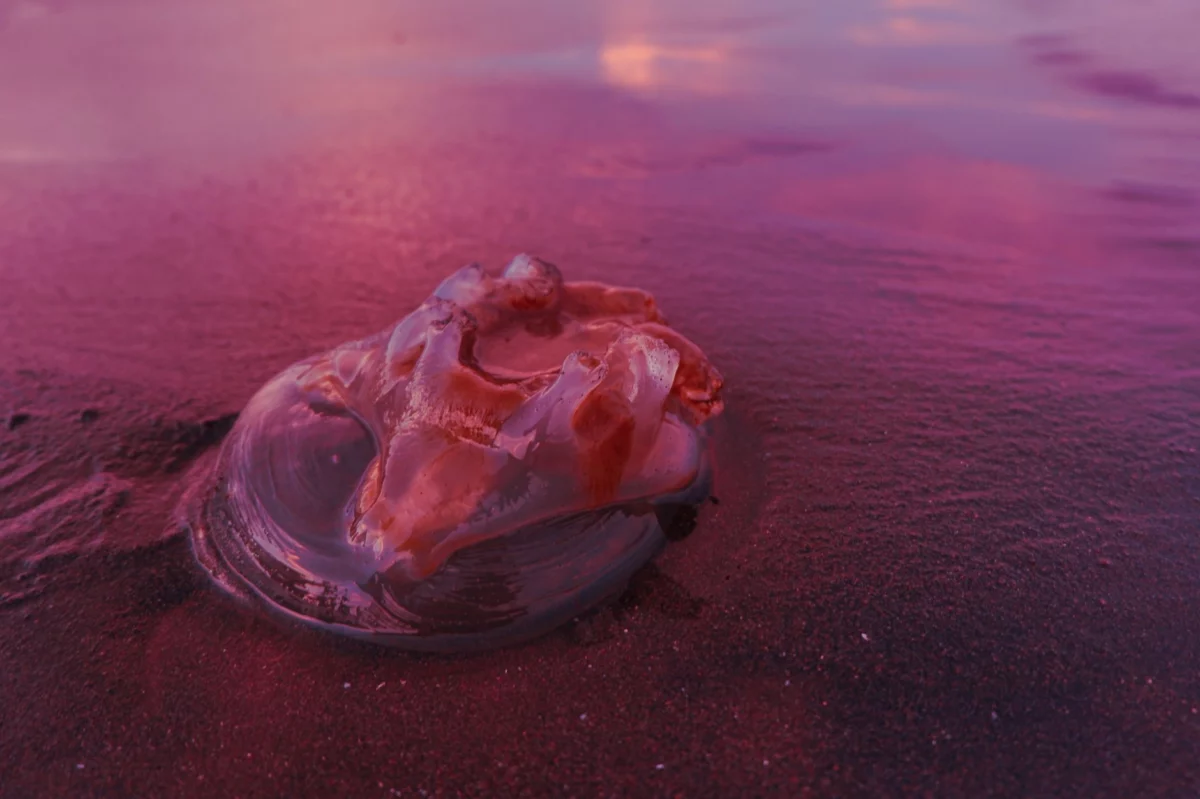
A recent sighting of a lion’s mane jellyfish off the UK coast is attention-grabbing for a reason: it combines an animal that looks unreal, a sting that can be seriously painful, and a headline that tends to outrun the science. The species, known as Cyanea capillata, is one of the largest jellyfish in the world, but size alone does not explain the public reaction. The real issue is what the sighting tells us about local waters, coastal risk, and how quickly sensational reporting can distort a routine marine event.
Footage from Pembrokeshire may show an animal that appears bus-length at first glance, but visual estimates in open water are notoriously unreliable. A jellyfish can be partially collapsed, stretched by ocean currents, or tangled with weed and debris. That matters because the public tends to remember the headline length rather than the biological reality: this is a cold-water species whose long tentacles make it look far more monstrous than its central bell suggests.
What was actually seen off the Welsh coast?
The animal in question belongs to the phylum Cnidaria and the class Scyphozoa, the so-called true jellyfish. In its free-swimming medusa phase, the bell is only the visible core. The long trailing tentacles and oral arms do most of the work, both in feeding and in stinging. The species is often called the lion’s mane jellyfish because its radiating strands resemble a dense mass of hair rather than the cleaner bell shapes people associate with smaller coastal jellyfish.
| Feature | What it means | Why it matters |
|---|---|---|
| Long tentacles | The visible span usually comes from trailing tentacles, not the bell itself. | Distance estimates are often exaggerated, especially from boats or cliffs. |
| Cold-water preference | The species is adapted to cooler North Atlantic waters. | A Welsh sighting is notable, but not biologically surprising. |
| Stinging cells | It carries nematocysts that fire on contact. | Even a brief brush can produce a severe burn-like sting. |
That distinction between appearance and anatomy is not cosmetic. In marine reporting, the phrase
Frequently Asked Questions
Why are lion's mane jellyfish sightings off the UK coast noteworthy if the species is a cold-water animal anyway?
They are noteworthy because they can indicate seasonal shifts, drifting currents, or changes in local conditions, but not necessarily a dangerous invasion. Lion's mane jellyfish naturally occur in cooler North Atlantic waters, so a sighting off Wales is biologically plausible. The key point is that a rare-looking animal does not automatically mean unusual ecological danger.
How can a jellyfish be described as bus-length if that size is often exaggerated?
That impression usually comes from the tentacles and oral arms, not the central bell. In open water, those long strands can spread out, tangle, or stretch with currents, making the animal seem much larger than it really is. Photos and videos also distort scale, especially when there is no fixed object nearby for comparison.
Is the sting of a lion's mane jellyfish actually dangerous, or just very painful?
It can be both. The sting is often described as severe, burn-like pain because the tentacles carry nematocysts that fire on contact. While it is not usually life-threatening for most people, it can cause significant discomfort, skin irritation, and in some cases a stronger reaction, especially with prolonged contact or sensitive individuals.
If someone is stung, should they rinse the area with fresh water or seawater?
The article implies caution because even a brief brush can trigger a powerful sting, so immediate first aid matters. In general, fresh water can worsen some jellyfish stings by causing unfired stinging cells to release more venom. The safer approach is to avoid rubbing the area and follow local marine safety advice or seek medical help if symptoms are severe.
Does a large lion's mane jellyfish sighting mean the beach is unsafe for everyone?
Not necessarily. A sighting means there may be a localized stinging risk in the water, especially if tentacles are drifting near shore, but it does not make the entire coastline off-limits. Risk depends on where the animal is, whether fragments are present, and how much swell or current is moving them around.
Why does the article emphasize sensational reporting if the jellyfish itself is real?
Because the main risk is not the existence of the animal but the way headlines can turn a routine marine sighting into a scare story. Readers may remember an exaggerated size estimate or a dramatic image and overlook the biology. The article argues for caution based on evidence, not panic based on appearance.