
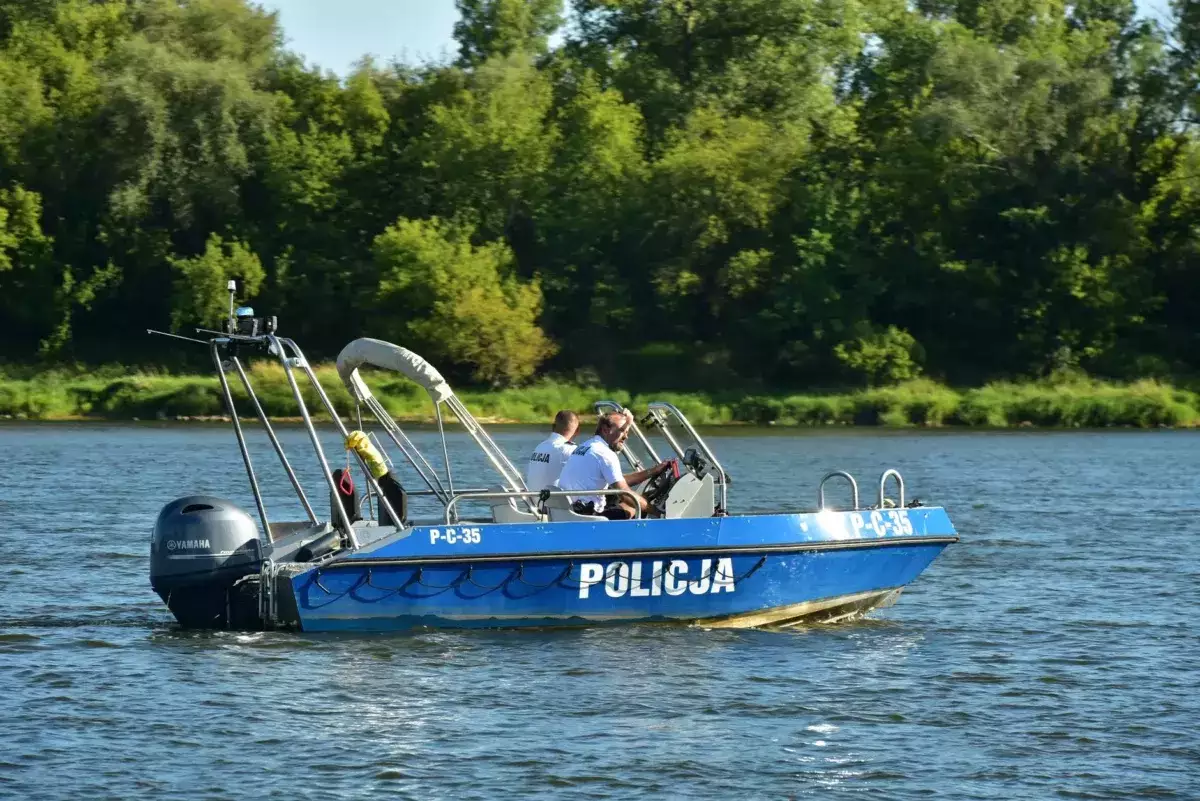
A shoreline baby death investigation is not a story that can be solved by instinct or outrage. It is a test of method. When police in North Wales said a newborn girl found near the Menai Strait may have been in the water for weeks, they were doing what disciplined investigators do: separating a working estimate from a settled fact. The distance between those two things is where public speculation usually goes wrong.
Shoreline Baby Death Investigation: How Police, Forensics and Tides Work Together
The location matters. The waters around Bangor, Gwynedd and the broader coast of Wales are not a neutral backdrop. They are dynamic, cold, and tidal. In a place shaped by moving water, the condition of a newborn recovered near the shore cannot be read like a static crime scene. It has to be reconstructed from fragments: the body, the shoreline, the weather, the current, the medical findings, and the search history.
Why the shoreline changes the meaning of the evidence
In ordinary land-based cases, investigators can often preserve a scene, map footprints, and control access within hours. A coastal case is different. The sea erodes trace evidence, moves objects, and changes the scene before the first officers arrive. That is why shoreline cases often require coordination between police, marine specialists, and search and rescue teams. The first job is not to explain the tragedy. It is to prevent the evidence from becoming less legible.
The Menai Strait is especially important because it is not simply a body of water; it is a tidal channel with strong movement. That means investigators must consider whether remains drifted, were carried, or were deposited closer to the recovery point than the public assumes. A recovery site is not automatically a death site. In coastal investigations, that distinction is fundamental.
It is also why a body found near water cannot be treated as proof of a single cause. A shoreline recovery can be consistent with drowning, post-mortem movement, abandonment, or other scenarios. A criminal investigation has to keep multiple possibilities open until the evidence narrows them.
What ‘may have been in the water for weeks’ actually means
When police say a body may have been in the water for weeks, they are describing an estimate based on the condition of the remains, not a precise clock. That estimate can come from visible tissue change, waterlogging, animal activity, and other indicators studied in forensic pathology. It may later be adjusted after a post-mortem examination.
The phrase may have been in the water for weeks is a forensic estimate, not a verdict. The sea changes bodies, injuries, and trace evidence on different timelines, so precision is often impossible until the medical and scene evidence are compared.
That uncertainty is not a weakness. It is the honest boundary of science. In a water environment, decomposition can accelerate in one respect and obscure in another. Soft tissue may degrade, but water can also delay some visible stages compared with an exposed land environment. Clothing, wrapping materials, and the water temperature all matter. So do currents, salinity, and the time between death and recovery.
For a forensic anthropology team, the key question is not only how long the body was in water, but whether the body was intact enough for age assessment, injury review, and identification work. In infant cases, tiny differences can matter. The challenge is that water removes the exact details investigators most want to preserve.
The practical sequence investigators usually follow
In a case like this, the process usually follows a disciplined order. First comes scene control and recovery. Then comes documentation. Then comes medical examination. Only after that do police move toward identity work and the wider family search. The public often wants the reverse order, but that is not how reliable investigations work.
| Evidence area | What it may establish | What it cannot reliably prove on its own |
|---|---|---|
| Recovery location | Where the body was found and whether tides could have moved it | Exact place of death |
| Medical examination | Approximate age, signs of live birth, injury patterns, and physical condition | Intent or motive |
| DNA profiling | Identity, biological family links, and possible matches with records | How the baby died |
| missing-person checks | Whether any family reports or birth-related alerts align with the case | Proof of criminal liability |
| Coroner review | Formal legal classification and inquest direction | Instant answers |
That is the logic behind the involvement of a coroner in England and Wales. The coroner’s role is not to satisfy public curiosity. It is to establish identity, cause of death where possible, and whether further inquiry is needed. The legal process is deliberate because premature certainty is one of the fastest ways to corrupt a difficult case.
There is also a technical reason investigators move cautiously. A baby recovered from water can be subject to limited external examination before deeper testing. The body must be handled in ways that preserve trace evidence, DNA, and any textile or biological material that could later matter. If the scene is contaminated by weather or public access, the forensic cost is immediate.
Why police do not jump straight to a theory
Public discussion often leaps toward labels such as homicide, infanticide, or neonaticide. Those are real legal and investigative categories, but they are not starting points for evidence. They are possible endpoints if the facts support them. A disciplined police response does not begin with a narrative and search for confirmation. It begins with the narrowest provable facts and expands outward.
That matters because the social reaction to infant deaths is intense and often immediate. People want a culprit, a timeline, and a motive. Yet many shoreline cases do not present a clean story. The baby may have been in the water longer than the current public estimate. The birth may have happened outside a hospital. The identity may be unknown. And even if the infant is identified, the cause and manner of death may remain medically complex.
In that context, the role of evidence is to slow the story down. Not every unexplained infant death is a criminal one, and not every criminal case is obvious from the first day. The only responsible position is to let the evidence decide how serious the case is, not the other way around.
How identification usually happens when a newborn has no obvious name
Identification in these cases is often the hardest task. A newborn does not carry documents, and a shoreline recovery may not include obvious personal effects. That leaves investigators with a small number of tools: medical assessment, local enquiries, hospital and maternity checks, public appeals, and DNA comparison. If necessary, a profile can be compared against known relatives, historical records, or family submissions.
In some jurisdictions, even advanced methods such as genetic genealogy have become part of the broader conversation about identification. But this is not a magic solution. It is a tool with limits, especially where legal authority, privacy, and sample quality constrain what can be done. The important point is that identification is usually a multi-step process, not a single test.
For readers expecting a dramatic reveal, the reality is less cinematic. The first useful answer is often not who did it. It is who the baby was. That answer matters because it changes the scope of the inquiry, the family search, and the legal responsibilities of the authorities.
What the wider system is actually being tested on
Cases like this expose a broader institutional question: how well do police, healthcare systems, and public agencies respond when a newborn dies outside a hospital setting and the evidence is degraded by the environment? The answer depends on local capacity, inter-agency coordination, and how quickly relevant records are checked. In an ideal system, a shoreline recovery triggers rapid scene control, coroner notification, medical review, and a careful family search rather than a media-led rush to judgment.
That is why the technical language matters. Investigators and pathologists rely on exact terms because vague language invites bad conclusions. A body recovered from water is not the same thing as a drowning case. A newborn is not automatically evidence of abandonment. And a delayed recovery does not tell you the full story of death, only the state of the evidence after the environment has done its work.
Professionally, the best practice is restraint. Publicly, that restraint can be frustrating. But in forensic work, frustration is usually a sign that the investigation is still honest.
Frequently asked questions
Why can police only say a body may have been in the water for weeks?
Because the estimate comes from external condition, decomposition patterns, and scene context rather than a single measurable timestamp. Water changes remains unevenly, so investigators often need the medical examination to narrow the range.
How do investigators identify a newborn found near water?
They use a combination of post-mortem examination, DNA profiling, record checks, and family tracing. If the body is badly degraded, identification can take longer and require specialist analysis.
Why is the coroner involved if police are already investigating?
The police handle the criminal or unexplained-death inquiry, while the coroner oversees the legal process around identity, cause of death, and whether an inquest or further action is needed.
Does a body found near the sea mean the death happened there?
No. The sea can move remains over time, especially in a tidal system such as the tides around the Menai Strait. Recovery site and death site are related, but they are not automatically the same.
What investigators will probably watch next
The next significant step is likely to be identification, not explanation. That is because identity can unlock everything else: family history, missing reports, medical background, and the legal framework around the death. If the baby is identified, the case becomes less anonymous and more traceable. If the identity remains unknown, the investigation will depend even more heavily on forensic persistence and public appeals.
The deeper trend is clear. Modern investigations are slowly gaining stronger tools, from better DNA extraction to improved scene modelling and more precise family matching. But every advance still runs into the same hard limit: water is an evidence-hostile environment. It can carry a body, erase surface detail, and delay answers long enough for certainty to become difficult. That is why this kind of case should not be judged by what it seems to suggest on day one. It should be judged by what the evidence can still prove after the sea has done its work.
The most important question is not whether the public can imagine a story. It is whether investigators can recover enough truth before the shoreline, the tide, and time remove the last reliable traces. In a case like this, that is the real race.
Frequently Asked Questions
Why can’t investigators assume the baby died where the body was found?
Because in a tidal coastal area, the recovery point may be far from the actual death site. Currents, tides, and wind can move a body or objects after death. Investigators must reconstruct the likely path using water movement, shoreline conditions, and forensic findings before drawing any conclusion about where the death occurred.
What does it really mean when police say the baby may have been in the water for weeks?
It is an estimate, not a precise timeline. Forensic specialists infer a likely range from changes to the body, such as tissue breakdown, water exposure, and other post-mortem indicators. That estimate can change after a post-mortem examination and comparison with scene information, so it should not be treated as a confirmed fact.
Why are infant shoreline cases harder to investigate than land-based cases?
Water quickly alters or destroys evidence that would normally help investigators, such as trace materials, footprints, and clear injury patterns. In infant cases, the body is also smaller and more vulnerable to rapid change, which can make age assessment, injury interpretation, and identification more difficult. That is why multiple specialists usually work together.
Can forensic experts tell whether the baby died from drowning just by finding the body near water?
No. A body near water does not by itself prove drowning. The case could involve drowning, post-mortem movement, abandonment, or another scenario. Only the combined results of the post-mortem, scene analysis, and any available contextual evidence can help determine whether water was involved in the death or only in the body’s movement.
Why do police and search teams need to work with tides and marine specialists in these cases?
Because tides and currents can change where evidence ends up and can also affect how long it remains detectable. Marine specialists help estimate movement patterns, recovery conditions, and likely drift paths. That information can prevent investigators from making incorrect assumptions about timing, location, or whether evidence was displaced after death.