
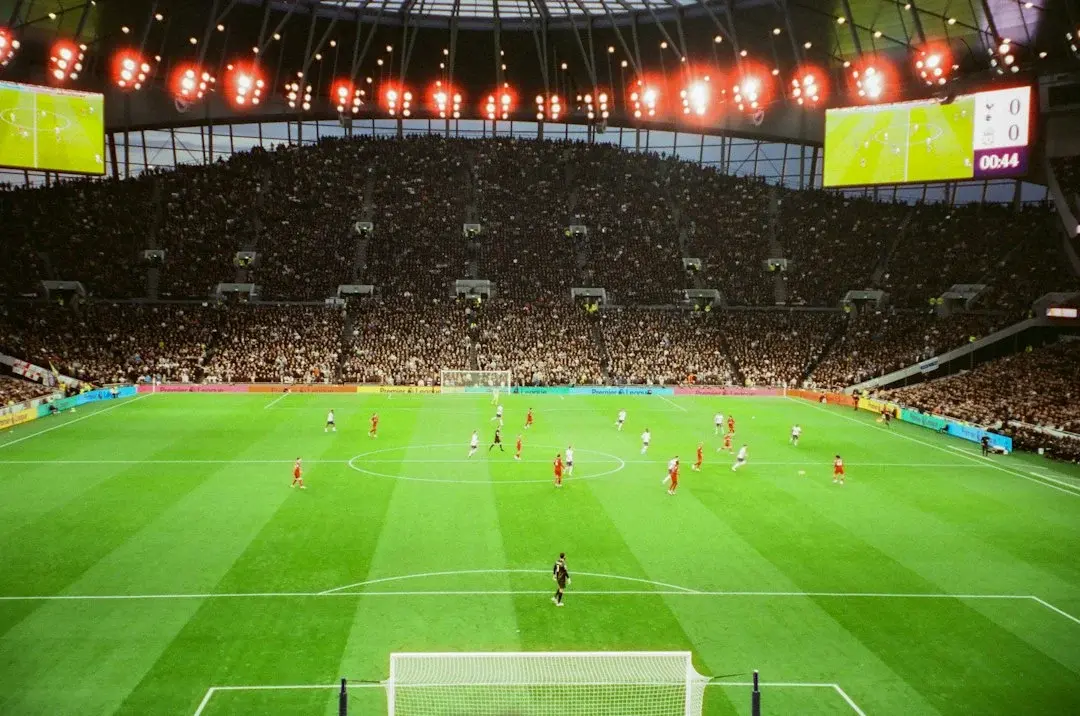
Liverpool vs Chelsea Carabao Cup preview is a useful test case for modern football analysis because the fixture invites lazy assumptions that do not survive scrutiny. At Anfield, a meeting between Liverpool F.C. and Chelsea F.C. is never just a brand-name event. It is a contest between pressing structures, rotation decisions, and the capacity to manage a knockout game where one mistake can change everything.
The headline reference to Xabi Alonso is a reminder that football coverage often leans on memory and symbolism. But in a serious Carabao Cup predictions piece, nostalgia is secondary. The real questions are practical: who controls the middle third, which side protects transitions better, and whether the market has overvalued reputation relative to team selection. That is where serious betting analysis starts.
Why this tie matters beyond the round
The EFL Cup is not the league, and that distinction matters. In the Premier League, a side can repair one bad evening over the course of a long season. In cup football, the margin for error collapses. The match therefore becomes less about accumulated quality and more about whether each team can impose a workable game state for 90 minutes.
That is especially true at a venue like Anfield, where atmosphere, tempo, and territorial pressure amplify every phase of play. The modern identity of Liverpool was heavily shaped during the Jürgen Klopp era, when intensity became a tactical weapon rather than a mood. Even when managers change, the expectation remains: Liverpool should seize territory early, move the ball quickly, and force the opponent to defend in awkward positions.
For Chelsea, the logic is different. The club has often been at its best when it can absorb pressure, survive the first wave, and then attack open space. That is a classic counter-attack profile, and it is one reason cup ties can suit them better than slow, possession-heavy matches. But it only works if the first pass out of pressure is clean and the defensive spacing is disciplined.
The competition framework itself is straightforward. The official EFL Carabao Cup rules set the structure, and that structure encourages risk management, especially in the early rounds. Managers know that a knockout tie can punish overcommitment. As a result, the match often turns into a study in calculated restraint rather than full-blooded chaos.
How the match is likely to be played
Liverpool’s control points
Liverpool’s strongest route through the game is usually clear: compress the pitch, push Chelsea backward, and force the first line of pressure to make hurried decisions. That approach is rooted in pressing in association football and depends on coordinated movement rather than isolated effort. If the first press is beaten, the next line must close space immediately, or the match opens up in ways that favour the away side.
In practical terms, Liverpool want high recoveries, fast regains, and early attacks before Chelsea can reset their defensive shape. The team can do that through full-back aggression, midfield occupation, and wide overloads that stretch the back line. Their ceiling rises further if they establish control over set pieces, because cup ties are often decided by one dead-ball moment rather than sustained dominance.
Players associated with Liverpool’s elite standard, such as Mohamed Salah and Virgil van Dijk, represent two of the game’s most valuable outcomes: direct threat and defensive authority. In a knockout setting, those qualities matter even more than they do in a routine league fixture. If Liverpool can make the game feel predictable in those zones, they improve both their winning chance and their value in the betting market.
Chelsea’s route to disruption
Chelsea’s best reply is not to chase possession for its own sake. It is to make Liverpool’s pressure expensive. That means compact distances between the lines, a willingness to play through or around the first wave, and enough discipline to resist turning the game into a transition contest on Liverpool’s terms. In a tactical sense, this is where association football tactics become more important than raw talent.
The problem for Chelsea is that a counter-punching plan requires precision. If the first outlet pass is delayed, the attack dies. If the defensive line steps too deep, Liverpool can camp in the final third. If midfield distances grow, the game becomes stretched and chaotic. That is exactly what the home side wants. The away team therefore has to be excellent at game management, not merely energetic.
Chelsea’s broader identity has long been shaped by the demands of high-level matches away from Stamford Bridge. When they are at their best, they do not need to dominate the ball to dominate the result. But that style carries a trade-off: it can look passive until the moment it suddenly becomes dangerous. For bettors, that creates a difficult market because the match can be slow for long spells and still produce sharp late swings.
The market does not bet on history alone; it bets on the lineup, the timing of rotation, and the probability that one moment changes the whole tie.
Where betting value can disappear
The most common mistake in football betting tips for a tie like this is to assume that the better-known side is automatically the better price. That is a shallow approach. In cup football, reputation is only one input. Others matter just as much: rotation, fatigue, bench depth, tactical compatibility, and the likelihood that the match state forces one team to deviate from plan.
That is why the smartest betting breakdown usually begins with uncertainty rather than certainty. Will the stronger side name its first-choice front line? Will the underdog field a conservative midfield block or try to press higher than expected? Are the full-backs available? How much risk is each manager prepared to take ahead of the weekend? Without those answers, pre-match pricing can be misleading.
| Factor | What the market often assumes | What actually matters |
|---|---|---|
| Home advantage | Anfield automatically lifts Liverpool | True, but only if Liverpool use early pressure to force the tempo |
| Rotation risk | Squad depth makes selection less important | Rotation can break pressing cohesion and weaken chance creation |
| First goal | A minor detail | It changes defensive posture and often the entire betting picture |
| Set pieces | Secondary market factor | Often decisive in tight cup matches with fewer open-play chances |
| Game state | Static pre-match assumption | Changes rapidly when one side is forced to chase or protect |
The other trap is promotional thinking. Many previews lean heavily on free-bet offers and sign-up bonuses, but the offer is only useful if the underlying selection has value. A poor price remains a poor price even with a headline bonus attached. Better bettors treat promotions as a secondary tool, not the reason to place the wager.
That distinction matters because knockout football increases variance. If a market looks efficient before team news, it can shift sharply once the starting XI is confirmed. The best approach is often patience: wait, compare, and only then decide whether the edge still exists. In a volatile cup tie, timing can be more valuable than bravado.
Practical angles for readers evaluating the game
If you are looking for the best bets for Liverpool vs Chelsea at Anfield, the right answer is not a fixed pick but a sequence of filters. First, check whether Liverpool are fielding enough attacking control to justify a home win price. Second, test whether Chelsea’s shape suggests a low-event match or an open one. Third, decide whether the odds compensate for the possibility of late volatility.
- Back Liverpool only if the team selection supports pressure. The home side is strongest when its structure is close to full strength.
- Look for under-goals angles if Chelsea sit deep. A compact away block can slow the tempo and reduce open-play volume.
- Consider draw-related insurance when lineups are mixed. Cup ties with rotation often compress the difference between clubs.
- Do not overrate brand value. A famous crest does not guarantee efficient pricing.
- Use betting offers selectively. A free bet should refine a good position, not rescue a weak one.
This is also where the more advanced bettor separates sentiment from pricing. A Liverpool side that dominates territory but lacks finishing precision can still be a poor bet if the market has overcorrected for venue and reputation. Likewise, a Chelsea side that looks under pressure on paper may be more attractive if the match plan is designed to frustrate and counter.
What the market may misread
One persistent error is to assume that a high-profile fixture between elite clubs must be an open, high-scoring contest. That assumption is often wrong in cup football. Big matches can become cautious once managers recognise the cost of early concession. As a result, the game can narrow into a technical contest rather than a shootout. That is especially true when each side respects the other’s transition threat.
Another error is to treat historical prestige as a forecast. The legacy of Liverpool and Chelsea is real, but it does not create chances by itself. What matters is the practical interaction of pressing triggers, passing lanes, and defensive spacing. That is why analysts who focus only on brand prestige usually miss the better betting opportunities. They are watching the badge, not the structure.
There is also a psychological factor. At a ground like Anfield, momentum can appear to be a mystical force, but it is better understood as a tactical amplifier. The crowd rewards aggressive recovery, quick combinations, and visible intensity. If Liverpool produce those things, the atmosphere helps. If they do not, the noise alone does not win the game. That is an important distinction for anyone trying to price the match intelligently.
FAQ: Liverpool vs Chelsea betting questions
Who will win Liverpool vs Chelsea at Anfield?
There is no honest way to answer that before team news. Liverpool usually deserve respect at Anfield, but the better prediction depends on rotation, fitness, and whether Chelsea can keep the match compact. If Liverpool select a strong front line and midfield, the home side is usually the cleaner side of the market.
Is a cup tie like this better for under-goals bets?
It can be, but only if the tactical setup supports it. If Chelsea defend deep and Liverpool are cautious with risk, the match can become low-event for long spells. If either side opens up early, the under loses value quickly.
Should free bets influence the selection?
No. A free bet should be used after the football logic is sound. The offer is useful only if the underlying wager is efficient. If the price is weak, the promotion does not fix it.
What should bettors watch before kick-off?
Lineups, bench strength, defensive absences, and whether either manager signals rotation. In a match like this, those details are usually more important than pre-match reputation.
The next edge belongs to the teamsheet
The central lesson of this fixture is simple: in cup football, the gap between story and reality is often wide. A Liverpool vs Chelsea match can be sold as a glamour tie, but the real edge emerges in the details that do not look glamorous at all: spacing between lines, pressing coordination, substitution timing, and the willingness to protect risk.
That is why the most useful prediction is also the most modest one. Wait for the teamsheet, reassess the price, and then decide whether the market has still left room for value. Over the next few seasons, as fixture congestion grows and rotation becomes even more normal, that method will matter more, not less. The unanswered question is whether bettors will keep paying for club names long after the market has learned to price the squad behind them.
Frequently Asked Questions
Why does this Carabao Cup tie matter more tactically than a normal league meeting?
Because knockout football reduces the room for error. In a league match, a team can recover from one poor spell later in the season, but in the Carabao Cup a single breakdown can decide the result. That makes game-state control, rotation choices, and transition defence far more important than overall reputation or long-term form.
What is the biggest betting mistake readers might make with a match like Liverpool vs Chelsea?
The most common mistake is overrating the badge names and ignoring selection. Cup ties often feature rotation, altered pressing intensity, and conservative risk management. That can make the market too confident about a favorite or too optimistic about goals. The starting XI and tactical priorities matter more than historical head-to-head narratives.
Why could Anfield be especially significant in a cup game rather than just a league fixture?
Anfield’s effect is not only emotional; it changes how the game flows. The crowd can accelerate Liverpool’s pressing, increase territorial pressure, and make Chelsea’s first pass out of defence more difficult. In a cup tie, that kind of momentum matters more because there is less time to correct a bad stretch of play.
What is Chelsea’s most realistic path to making Liverpool uncomfortable?
Chelsea are unlikely to benefit from a pure possession battle. Their best route is to stay compact, survive the first press, and attack the space that opens once Liverpool commit numbers forward. If they can break pressure cleanly and keep their defensive spacing intact, they can turn the match into a transition game rather than a territorial one.
Which match detail is most likely to decide the result if open play is balanced?
Set pieces and second balls could be decisive. Cup ties often narrow into small margins, and both teams have enough quality to punish a single lapse. If Liverpool gain control of dead-ball situations, or Chelsea create danger from the moments immediately after defending pressure, that may matter more than long spells of possession.