
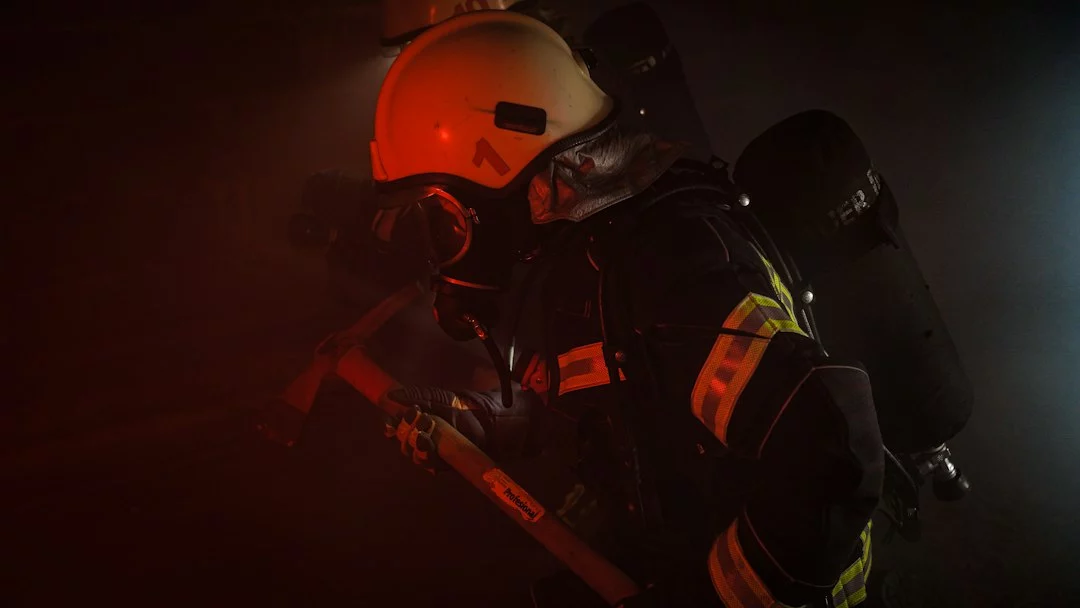
K2 climbing ethics are not an abstract debate when footage appears to show a team finding a dying guide in the dark and continuing toward a record. On K2, the second-highest mountain on Earth in the Karakoram, the line between judgment and survival can disappear inside the death zone. But the harder question is not whether the mountain is brutal. It is whether ambition changes what climbers owe to the person in front of them when that person is no longer part of the success story.
That is why this story matters beyond one expedition. The footage described in reporting about Kristin Harila’s K2 attempt is not only about one decision in one storm. It exposes the logic of mountaineering at its most extreme: oxygen debt, temperature, speed, status, and the narrow window in which help is physically possible. It is also a case study in a broader moral dilemma: when rescue is both urgently needed and almost impossible, what does responsibility actually mean?
What the footage changes is not the accident, but the framing
The public often treats high-altitude tragedy as a weather problem. In reality, it is usually a chain of decisions made under compression. A new documentary film can sharpen that chain because it shows not just the outcome, but the hesitation, the commands, and the silence. If the scene described in reporting is accurate, then the ethical shock comes from a simple fact: the team did not merely encounter a casualty; they encountered a person who was still alive, still visible, and still dependent on them.
That distinction matters. A dead body on a mountain is a recovery problem. A dying person is a rescue problem. The first is tragic. The second is morally active. On peaks like K2, that difference is often erased in public storytelling, because summit culture rewards completion, speed, and endurance. Yet the mountain does not care about the narrative, and the camera only records what people chose to do after the crisis was already visible.
Why record attempts intensify the ethical pressure
Record attempts create an obvious conflict of purpose. The summit is not only a destination; it is the proof of a larger project. That project can be personal, commercial, or historical. Once a team is chasing a timeline, every interruption becomes costly. On a lower mountain, that cost is mostly logistical. On K2, where the air is thin and the margin for error is microscopic, cost turns into a moral excuse far too quickly.
The danger is not that ambition is inherently corrupt. Mountaineering has always depended on ambition. The danger is that ambition can make a team describe inaction as necessity when it is actually preference. That is why the footage is so uncomfortable. It forces a test that mountaineering mythology usually avoids: when the summit and the suffering are in the same frame, which one does the team serve first?
Why K2 magnifies every mistake
K2 is not simply another very tall mountain. It is a more hostile ethical environment. It sits among the most demanding eight-thousanders, and its reputation is built on exposure, remoteness, and severe weather rather than just altitude. Comparisons with Mount Everest are unavoidable, but misleading if they suggest equivalence. Everest is crowded; K2 is compressed. On Everest, traffic can sometimes create a crude safety net. On K2, the route itself can make that net vanish.
This is part of why K2 has long been treated as a purer test of commitment than the better-known peaks in the Seven Summits. That reputation is romantic, but it also hides a darker truth: when the mountain is harder to regulate, the people working on it are easier to abandon. The famous summit culture of Himalayan climbing tends to celebrate the climber who keeps moving. It is much less interested in the person who stops, waits, and pays the price for trying to save someone else.
The terrain narrows the moral options
At high altitude, the terrain itself becomes part of the ethics. Steep ice, fixed ropes, darkness, and wind mean that helping one person can endanger everyone. This does not remove responsibility, but it does change its shape. A rescue that is straightforward in an office debate may be impossible on a knife-edge ridge. The problem is that public outrage often ignores this difference, while expedition teams sometimes use it as a shield for decisions that were driven as much by schedule as by safety.
That is why K2 is such a severe case study. It compresses the best and worst of mountaineering into a single event: expertise, pride, labor, exposure, and human weakness. The mountain makes bad decisions expensive. It does not make them impossible.
When rescue stops being a plan and becomes a wish
Above 8,000 metres, medicine and logistics stop cooperating. The death zone is not a dramatic metaphor; it is a physiological warning. Oxygen pressure is so low that the body is burning through itself. Cognition slows, coordination fails, and judgment becomes unreliable. That is why the combination of hypoxia, altitude sickness, and extreme cold can turn normal people into poor decision-makers within minutes.
Rescue is limited by physics before it is limited by ethics. The equipment is heavier. The air is thinner. The weather can close the route faster than a team can descend. Helicopters cannot solve most problems at the highest parts of K2. Even when a climber still has strength, the person trying to help may have almost none.
| Constraint | What it means on K2 | Ethical effect |
|---|---|---|
| Low oxygen | Judgment and coordination deteriorate rapidly | Climbers may not think clearly, but the situation still demands a choice |
| Cold and wind | Hypothermia can develop quickly | Waiting to help can endanger the helper as well |
| Route exposure | Fixed ropes and steep sections leave little room to stop | Turning around may be difficult, but not always impossible |
| Medical decline | High-altitude cerebral edema and high-altitude pulmonary edema can become fatal | Every minute matters, which makes delay morally weighty |
| Supplemental support | Supplemental oxygen can help, but not transform the environment | Technology reduces risk; it does not erase obligation |
The table exposes the core flaw in many mountain narratives. People like to imagine that rescue failure means nobody cared enough. In reality, a team can care and still be structurally incapable of doing enough. The ethical error is not always neglect. Sometimes it is the decision to enter a situation where duty and capability no longer match.
Medical decline is not a moral alibi
None of this turns climbers into automatons. Severe altitude can impair reasoning so badly that a person is not fully in control of the choices they make. But that fact cuts both ways. It is one reason expedition leaders should never pretend that summit fever is harmless. It is also why expedition planning must assume that people will make worse decisions as they climb higher. The mountain does not only test fitness; it tests institutions.
Porters, guides and the economics of exposure
The most troubling part of this story is not only who was left, but who was expected to bear the risk in the first place. In Himalayan and Karakoram climbing, labor is often divided between paying clients and local support staff. The names differ by route and country, but the pattern is familiar: people with less power carry more load and face more danger. On other peaks, this has been discussed through the role of the Sherpa people; on K2, the same structure appears through high-altitude porters, guides, and rope-fixing teams.
That labor hierarchy matters because it changes whose life becomes negotiable. A client’s summit is visible and celebrated. A porter’s work is often treated as infrastructure. Yet the mountain does not distinguish between them. A collapsing guide or porter is not a side issue. He is the human cost of an expedition model that still relies on dangerous, under-acknowledged labor.
Commercial expeditions create both access and pressure
Modern guided climbing has made extreme mountains more accessible, but it has also normalized a business model that can reward continuation over caution. If a client is paying for a summit, if sponsors are watching, and if a record is in reach, the incentives point in one direction. That is not a theory; it is the basic logic of risk pricing. Professional teams know this, which is why serious leaders try to set turnaround rules before they leave base camp. The rules matter because the atmosphere above them is a poor place to improvise ethics.
Asking a climber to help at altitude is not the same as asking a passerby on a street to call an ambulance. The closest comparable field is search and rescue, where teams train for moments when the right decision is not heroic but procedural. But on K2 the procedure is often weak, under-resourced, and politically fragmented. That leaves the expedition itself as the first and last line of responsibility.
What documentary footage can and cannot prove
Public debate often treats a video as final evidence. It is not. Footage can show sequence, body language, and timing. It cannot always show prior exhaustion, an earlier medical collapse, hidden communication, or the internal calculations that led to a decision. That matters because a short clip can make a person look colder than they were or more decisive than they felt. Any critique of the reported scene must therefore keep one discipline: condemn what the image shows, but not pretend the image contains the whole record.
Still, a camera can expose something that climbers prefer to keep private: the point at which narrative overtakes responsibility. A summit attempt is easy to narrate. A rescue failure is harder because it interrupts the clean arc of success. The documentary format is powerful precisely because it refuses that clean arc. It forces viewers to sit with a fact the industry dislikes: sometimes the most important moment on a mountain is not the summit push but the choice not to stop.
The ethics of telling the story after the fact
There is also a second ethical layer. Once a dangerous incident becomes content, the story risks being edited for drama. Producers may want a character study. Audiences may want villains. Expedition leaders may want context, while critics want accountability. All of those interests can distort the truth. The challenge for responsible reporting is to preserve complexity without diluting responsibility. That means avoiding both reflexive condemnation and reflexive exoneration.
That tension is especially important when the people involved are from the climbing community rather than a newsroom. Climbers often speak a language of shared risk, mutual respect, and survival. Those values are real. But they are not enough. Ethical credibility in extreme sport requires more than shared hardship; it requires a willingness to admit when a team moved faster than its conscience.
What serious expeditions should change now
If the K2 footage teaches anything useful, it is that high-altitude expeditions need better rules before disaster, not better explanations after it. The mountain is too unforgiving for improvisation. Stronger practice should include:
- Predefined rescue thresholds that tell teams when the summit push ends.
- Clear role assignments for who leads, who stays, and who descends for help.
- Mandatory communication redundancy so that one failed radio does not end the plan.
- Realistic oxygen and turnaround policies, especially above 8,000 metres.
- Transparent post-incident reporting that distinguishes delay, incapacity, and abandonment.
None of these measures eliminate risk. They do something more realistic: they reduce the number of moments in which a team can later claim that there was no choice. In mountain ethics, that claim is often exaggerated. There are always choices. The real question is which choices were still available after the team had already accepted too much exposure.
Why rescue culture must be judged by the weakest person on the rope
The hardest truth in this story is that expedition culture is usually judged by the strongest climber, while the mountain is often paid for by the weakest worker. That imbalance is not new. It is visible in the history of Himalayan climbing, in the division of labor around mountain guide work, and in the broader economics of high-altitude access. K2 simply strips away the polite language that sometimes hides it.
Future change is likely to come from three places. First, better tracking and recording will make denials harder. Second, expedition operators will face more pressure to publish safety protocols rather than only summit achievements. Third, the public will become less willing to accept the old romance that a summit justifies everything that happened below it. Yet none of those shifts will solve the central problem. The mountain still forces a decision faster than institutions can intervene.
That is why the most important unanswered question is not whether this or that climber was technically able to help for another minute. It is whether the culture of record attempts has become skilled at making itself appear powerless at exactly the moment it should be most accountable. On K2, the air is thin. So are excuses. What remains is the one question mountaineering keeps trying to outrun: when the summit and a human life are both in view, which one is actually the objective?
FAQ
Why is rescue so difficult on K2?
Because K2 combines extreme altitude, steep terrain, violent weather, and very limited rescue capacity. Above the death zone, even healthy climbers move slowly and think less clearly. A rescue can quickly become self-endangering.
What is the death zone?
The term refers to altitudes above roughly 8,000 metres, where the body cannot acclimatize enough to survive for long. In that zone, hypoxia and fatigue can overwhelm judgment, making both climbing and rescue far more dangerous.
Does supplemental oxygen solve the problem?
No. Supplemental oxygen can improve performance and delay decline, but it does not make K2 safe. It does not eliminate avalanche risk, exposure, frostbite, route complexity, or the ethical burden of deciding whom to help first.
Are climbers legally required to rescue others on a mountain?
That depends on local law, permits, and the exact circumstances, but law is not the whole issue. In most high-altitude incidents, the practical question is not what a court might say later. It is what is physically possible in the next ten minutes.
Why do porters and guides face disproportionate risk?
Because expedition systems often place the heaviest workload and the greatest exposure on people with the least power. The pattern is familiar across high-altitude climbing and has been discussed for decades in relation to Sherpa people, local support staff, and other mountain labor systems.
The question K2 still leaves behind
The footage described in this case will not settle the argument. It will probably harden both sides. Some viewers will focus on the impossibility of rescue. Others will focus on the decision to keep climbing. The more serious interpretation is less comforting: K2 did what it always does. It removed the distance between risk and character. In that space, the mountain does not invent cruelty, but it does reveal how quickly ambition can disguise itself as necessity.
What to watch next is not only the documentary cut or the next statement from the team. Watch the standards expedition operators adopt afterward, the questions journalists keep asking, and whether the climbing world finally treats rescue planning as central rather than optional. My prediction is blunt: technology will improve faster than ethics. More cameras, better satellites, and cleaner route data will expose more of these moments. They will not make the moral choice easier. They will only make it harder to pretend it was never made.
SEO DATA
Primary Focus Keyphrase: K2 climbing ethics
Related Keyphrase 2: K2 rescue dilemma
Related Keyphrase 3: why climbers leave injured porters on K2
Related Keyphrase 4: why is rescue so difficult on K2
Related Keyphrase 5: high-altitude mountaineering safety
Primary Keyphrase Synonyms:
mountaineering ethics, K2 expedition ethics, high-altitude rescue ethics, expedition responsibility, climbing safety on K2
SEO Title:
K2 Climbing Ethics: What the Dying Porter Footage Reveals
Meta Description:
K2 climbing ethics under scrutiny: why rescue is so hard, how porters bear the risk, and what the footage reveals about summit culture.
URL Slug:
k2-climbing-ethics
Image Filename:
k2-climbing-ethics-dying-porter.jpg
Image ALT Text:
Climbers and a guide on a steep icy ridge at night on K2, illuminated by headlamps.
Image Title:
K2 night rescue dilemma on a steep ridge
Image Caption:
A tense high-altitude moment on K2 where rescue, exposure, and summit pressure collide.
Search Intent:
Informational
Frequently Asked Questions
Why does the article treat a dying person differently from a dead body on K2?
Because the moral obligation changes once someone is still alive and potentially rescuable. A dead body is a recovery issue, however tragic. A dying climber is a rescue problem, which means others nearby still have a live ethical duty to assess, attempt help if possible, and explain why help was or was not provided. That distinction is central to the article’s argument.
Can climbers realistically be blamed for not rescuing someone in the death zone?
Not automatically. The article acknowledges that on K2, rescue can be physically impossible or could kill the rescuers too. The ethical question is not whether every team must always save everyone, but whether they honestly tried to help, whether they treated the person as expendable, and whether ambition was used to justify avoiding aid when some aid was still possible.
Why does a record attempt make the ethical debate more intense?
Because a record attempt turns every delay into a measurable loss of status, money, and narrative momentum. That pressure can make climbers interpret a choice to continue as unavoidable, even when it may be a preference for the summit over the person in distress. The article argues that ambition does not erase responsibility; it can mask it.
What makes K2 more ethically difficult than Everest in these situations?
K2’s remoteness, weather, and route severity leave fewer backup options and less human traffic than Everest. That means a stranded or injured climber is easier to overlook and harder to reach. The article suggests that this isolation does not reduce moral responsibility; it increases the chance that responsibility will be hidden behind the mountain’s difficulty.
What is the main ethical lesson the footage is supposed to reveal?
Not simply that high-altitude climbing is dangerous, but that danger can compress moral judgment until people start calling inaction necessity. The footage matters because it seems to show a live human crisis, not just an unavoidable tragedy. The article’s larger point is that summit culture often praises movement and achievement more than care and interruption.