
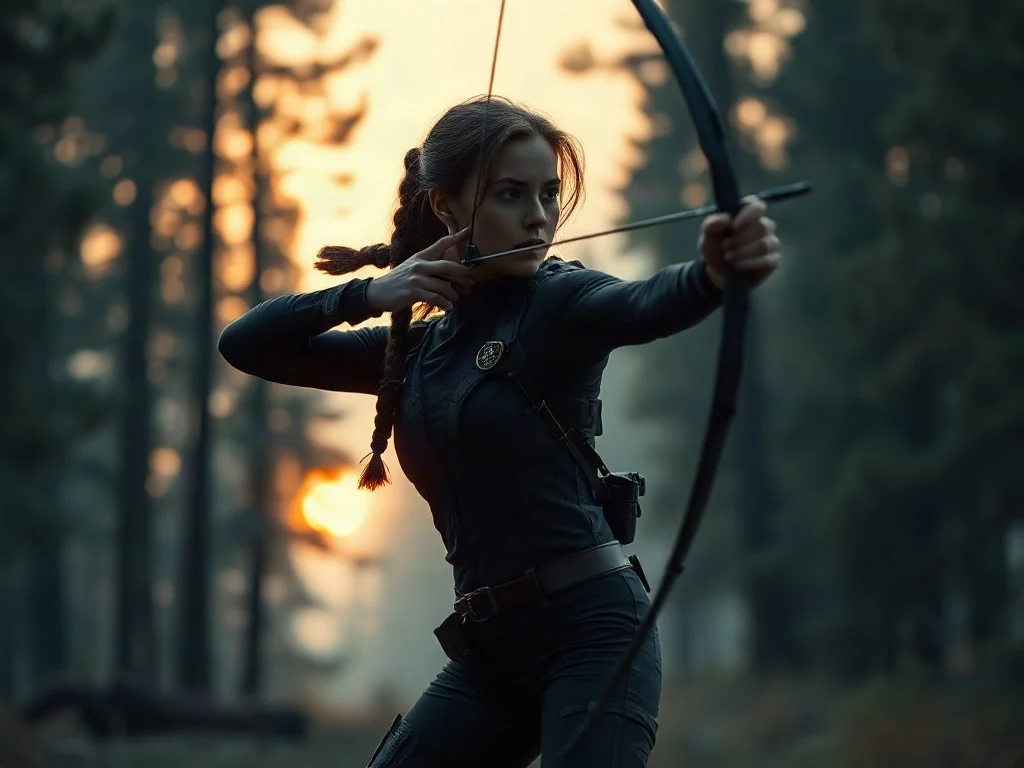
Ranking the Hunger Games movies sounds like a simple parlor game, but the exercise exposes real questions about adaptation, pacing, and political storytelling. Entertainment Weekly recently published its own worst-to-best ranking of all six films. This article does not reproduce that list. It builds a separate, criteria-driven analysis of why some entries endure while others fade, so you can judge any ranking, including EW’s, on its merits.
The Hunger Games film series is unusual among young-adult franchises. It is a dystopian satire built on spectacle, and it keeps being asked to deliver spectacle while criticizing it. The films that handle that contradiction best tend to be the best films.
How the Hunger Games Movie Series Got Here
The series adapts the work of novelist Suzanne Collins. Lionsgate released the first film in 2012 and built a franchise around a then-rising star, Jennifer Lawrence. Four films adapt the original trilogy, with the final book split into two parts, a common studio practice of the era. A fifth film adapts Collins’s prequel novel The Ballad of Songbirds and Snakes. The sixth, Sunrise on the Reaping, adapts Collins’s later prequel novel about Haymitch Abernathy.
So how many Hunger Games movies are there? Six, counting the newest prequel. The table below covers the five films whose critical and commercial records are established. Worldwide grosses are approximate and drawn from public box-office tracking, such as Box Office Mojo.
| Film | Year | Director | Approx. worldwide gross |
|---|---|---|---|
| The Hunger Games | 2012 | Gary Ross | $694 million |
| Catching Fire | 2013 | Francis Lawrence | $865 million |
| Mockingjay – Part 1 | 2014 | Francis Lawrence | $755 million |
| Mockingjay – Part 2 | 2015 | Francis Lawrence | $653 million |
| The Ballad of Songbirds & Snakes | 2023 | Francis Lawrence | $337 million |
The pattern is telling. Commercial peak arrived with the second film, and audience interest eroded steadily as the story moved from arena survival toward war politics. Box office is not quality, but it does record where audiences felt the series delivered.
The Criteria: What Makes the Best Hunger Games Movie
A defensible ranking needs stated standards. This analysis uses four.
- Narrative economy: does the film justify its runtime, or is it stretched material?
- Thematic clarity: does it treat propaganda, inequality, and spectacle as ideas rather than set dressing?
- Performance and character: do the leads and supporting cast carry emotional stakes?
- Craft: direction, production design, and tonal control.
Fidelity to the books is deliberately absent. Faithful adaptations can be inert, and loose ones can succeed. What matters is whether the film works as cinema.
Hunger Games Movies Ranked From Worst to Best
This is one critic’s ordering of the five established films. Reasonable viewers will disagree, particularly in the middle.
5. The Hunger Games: Mockingjay – Part 1
Mockingjay – Part 1 is the clearest casualty of the split-finale model. Its subject is the manufacture of a revolutionary symbol, which is intellectually interesting. But the film has no arena and little forward momentum, and it ends before anything resolves. Scenes of Katniss filming propaganda spots in District 13 make the thematic point and then repeat it.
Its strengths are real. The film is sharp about how both sides of a conflict use imagery, and it benefits from Julianne Moore‘s controlled presence as President Coin. But a film that functions as the first half of a story rarely survives scrutiny on its own terms.
4. The Hunger Games: Mockingjay – Part 2
Part 2 has more kinetic material, including the Capitol’s booby-trapped streets and the sewer sequence. It also delivers the series’ bleakest idea: liberation can reproduce the logic of the regime it overthrows. That is a mature conclusion for a franchise aimed partly at teenagers.
The film’s weakness is structural. The pacing of the revolution is uneven, and the emotional payoff of its biggest tragedy is muted because the film arrives mid-narrative rather than as a whole. It also carries the weight of production loss. Philip Seymour Hoffman, who played Plutarch Heavensbee, died before filming finished, and the production adjusted his remaining material. The film’s rating over Part 1 comes from having at least a destination.
3. The Hunger Games: The Ballad of Songbirds & Snakes
The prequel is the most ambitious misfit in the series. It follows a young Coriolanus Snow, played by Tom Blyth, and asks whether an audience can watch the origin of a tyrant without sympathy sliding into excuse. Rachel Zegler‘s musical performances give the film a texture the earlier entries lack, and Viola Davis brings theatrical menace as the Games’ architect, Dr. Volumnia Gaul.
The problem is length and shape. Running well over two and a half hours, the film is split into three acts, and the final one, set largely outside the arena, plays as an extended coda. The ideas are strong, but the pacing is not. It ranks above the Mockingjay films because its central question is more provocative and its lead performances are stronger.
2. The Hunger Games (2012)
The original film, directed by Gary Ross, remains the most grounded. Its handheld photography in District 12 makes poverty feel physical, and Lawrence’s performance anchors a premise that could have felt lurid. The Capitol is satirized with sharp contrast: pastel absurdity against Appalachian-style deprivation.
Its limits are equally clear. The arena violence is deliberately restrained to secure a youth-friendly rating, which blunts the stakes, and the shaky camera in action scenes can obscure geography. Even so, it is the film that established the series’ emotional contract. The reaping, the volunteer moment, and the final-act decision around the berries remain the franchise’s most efficient storytelling.
1. The Hunger Games: Catching Fire
Catching Fire is the franchise’s best film, and the reason is balance. Director Francis Lawrence expands the political world without abandoning the arena, so spectacle and satire reinforce each other. Donald Sutherland‘s President Snow becomes a genuine antagonist, and Katniss’s trauma is treated as a consequence of the first film rather than a plot device.
The Quarter Quell structure also solves a problem the series later suffered from: it keeps the personal stakes of the Games while advancing the rebellion. Its cliffhanger works because the story has earned it, unlike the manufactured break of Part 1.
Where the Sixth Film Fits
Sunrise on the Reaping is the variable in any six-film ranking. Because it adapts the Haymitch Abernathy prequel, it revisits the Games through a character the original films treated as a mentor and a drunk. That promises a more intimate, tragic angle than the Snow-centered prequel. Whether it lands will depend on whether it avoids the Ballad’s structural sprawl. This analysis does not place it, because a ranking built on unverified impressions would be the kind of guesswork good criticism avoids.
Why Hunger Games Movie Rankings Keep Shifting
The split-finale penalty
The Mockingjay films are judged harshly partly because they illustrate an industry-wide trend. Studios divided final installments into two parts for financial reasons, and critics now read that choice as a creative cost. Rewatching both parts back to back improves them, which suggests the problem is theatrical pacing rather than raw material.
Political resonance changes the reading
The series is a dystopian story, and its meaning shifts with the political climate around it. Viewers who dismissed Part 1’s media satire in 2014 often reassess it after years of intensifying debate about manipulated imagery and information warfare. Rankings made in different years can legitimately differ for that reason.
The star-power factor
Lawrence’s presence defined the original quartet. The prequels necessarily lack a performer of comparable fame, which affects how audiences weigh them, independent of quality.
FAQ
Which Hunger Games movie is the best?
Many critics point to Catching Fire, and this analysis agrees. It combines the arena and the political story in a single coherent structure. The original film is the most common alternative choice.
What is the correct Hunger Games movie order?
By release: The Hunger Games, Catching Fire, Mockingjay – Part 1, Mockingjay – Part 2, The Ballad of Songbirds & Snakes, then Sunrise on the Reaping. By story chronology, the prequels come first, though the release order is generally the better first viewing.
Is the prequel worth watching?
Yes, if you are interested in the franchise’s ideas about power and complicity. It is slower than the original films and works better as a character study than as an action movie.
Why do the Mockingjay films rank lowest?
Primarily because the finale was split into two films, leaving each with structural weaknesses. The acting and production values remain strong, but the pacing suffers.
The Question the Franchise Still Hasn’t Answered
The most useful insight from ranking these films is that the series is strongest when it makes spectators uncomfortable with their own appetite. Catching Fire does that best, the prequel tries to, and the Mockingjay films mostly describe it rather than enact it. Every installment that moved away from the arena lost some of that tension.
The test now is whether the Haymitch-centered film can restore it. A story about a victor traumatized by the Games gives the franchise a chance to return to its core, but only if the filmmakers resist the temptation to expand the lore at the expense of tension. If it does, the original ordering may need revisiting. If it does not, Catching Fire will likely remain the standard against which every later entry is measured. Which of those outcomes occurs will say a lot about whether a franchise about the cost of spectacle can resist becoming one.
Frequently Asked Questions
Why does the analysis leave book fidelity out of its ranking criteria?
The author argues that faithful adaptations can feel lifeless while looser ones can succeed. The ranking therefore asks whether each film works as cinema, judging narrative economy, thematic clarity, performances and craft, rather than how closely it follows Suzanne Collins's novels.
Why are only five of the six Hunger Games movies ranked?
Sunrise on the Reaping, the sixth film, is the newest prequel. The article ranks only the five films with established critical and commercial records, using public box-office tracking such as Box Office Mojo, so the newest entry is counted but not placed on the list.
Does a higher box office mean a Hunger Games film is better?
No. The article states that box office is not quality. It treats grosses only as a record of where audiences felt the series delivered, noting that revenue peaked with Catching Fire and then declined as the story moved from arena survival to war politics.
Why is Mockingjay – Part 1 ranked last?
The article calls it the clearest casualty of splitting a finale. It has no arena, little forward momentum and no resolution, and its propaganda scenes repeat their point. Its sharp look at imagery and Julianne Moore's performance as President Coin are acknowledged as real strengths.
What makes Mockingjay – Part 2 notable despite its flaws?
It offers more kinetic action, such as the booby-trapped Capitol streets and the sewer sequence, and delivers the series' bleakest idea: liberation can reproduce the logic of the regime it overthrows. Its weakness is structural, with uneven pacing and a muted emotional payoff.
Why does the article say the franchise faces a built-in contradiction?
The Hunger Games is a dystopian satire that criticizes spectacle, yet as a blockbuster it must also deliver spectacle. The article suggests the best films are those that handle this contradiction most skillfully rather than ignoring it.