
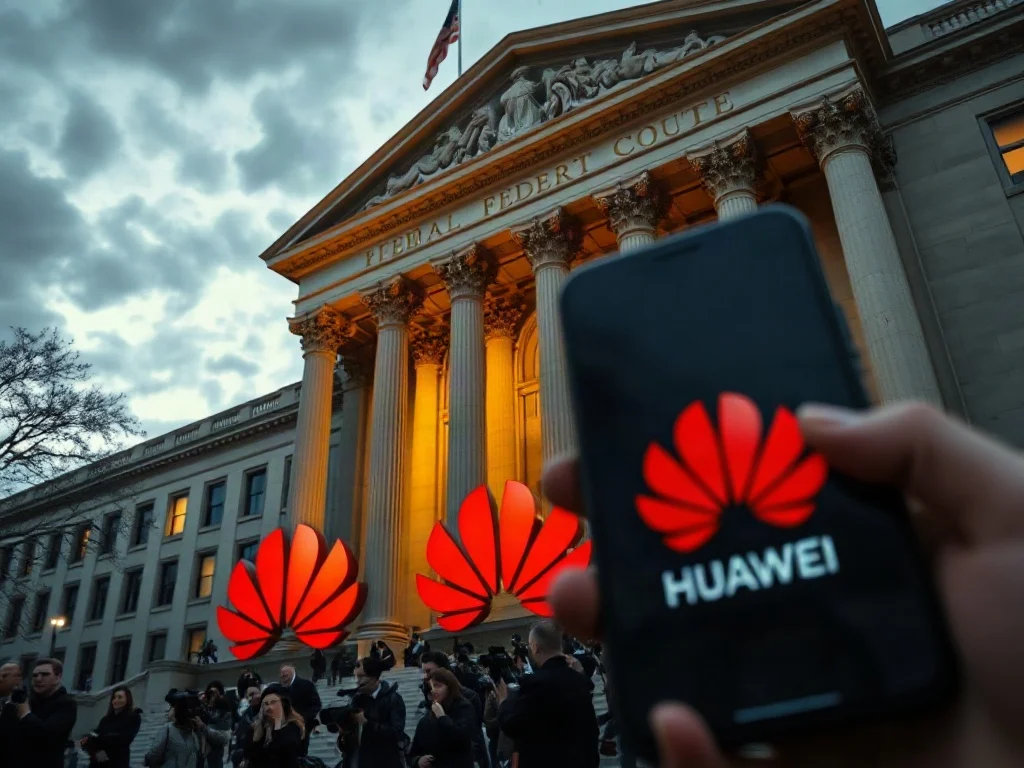
A federal jury in New York has delivered a Huawei trade secrets verdict that lands like a thunderclap in the long contest between Washington and Beijing’s most famous technology company. After a three-month trial, jurors found Huawei guilty of stealing trade secrets and of other criminal offences. They also acquitted it of a racketeering conspiracy and of obstruction of justice. The decision is both a victory and a limit for prosecutors, and the gap between those two outcomes is where the real story lies.
What the Jury Decided in New York
The case was tried in New York, where Huawei faced a prosecution that grew out of years of American suspicion toward the company. The jury convicted on the trade secret theft allegations and on other criminal counts, but it declined to convict on the two charges that carried the heaviest symbolic weight. Public reporting on the verdict does not detail every count, so any analysis beyond the headline outcomes should be treated with caution until court records and official statements are reviewed.
Guilty: Stealing Trade Secrets
A trade secret is confidential commercial information that gives a company a competitive edge. In the United States, its theft can be prosecuted under the Economic Espionage Act of 1996. That the jury found Huawei guilty of stealing trade secrets hands prosecutors a concrete finding. It is a conviction for corporate conduct, not a claim about hypothetical future risk.
Acquitted: Racketeering Conspiracy and Obstruction
The acquittal on the racketeering conspiracy charge matters enormously. Racketeering law lets prosecutors portray a company as a criminal enterprise operating over time, and the jury did not accept that portrait. The jurors also rejected the charge of obstruction of justice. A split verdict like this often signals that jurors examined the evidence count by count rather than accepting one sweeping narrative.
Why This Case Carries So Much Weight
The prosecution sits atop a decade of tension. Washington has long argued that Huawei’s role in global 5G networks poses a national security threat, a charge Huawei has consistently denied. The company was added to the Entity List in 2019, restricting its access to American technology. Its chief financial officer, Meng Wanzhou, was arrested in Canada in 2018 and later resolved her own case through a deferred prosecution agreement. This verdict is the first time a jury has weighed in on the corporation itself.
A conviction on trade secrets and an acquittal on racketeering tell two stories at once: the company broke the law, but not in the all-encompassing way prosecutors alleged.
Legal and Commercial Consequences
What Happens Next
A corporation cannot be jailed, so penalties for a company typically involve fines, probation and restitution. Sentencing details have not been established in the reporting available here. Post-trial motions and appeals are common in complex corporate prosecutions, so the legal story is unlikely to end with the jury’s decision. Readers can follow developments through the U.S. Department of Justice and the docket of the Eastern District of New York, if that is where the case was heard.
Business and Policy Fallout
Partners and customers will weigh reputational risk alongside price and performance. Telecom operators that already limit telecommunications equipment from Chinese vendors may feel vindicated. Others may point to the acquittals as proof that the most dramatic claims did not hold up. Regulators such as the Federal Communications Commission make their own national security determinations, and a criminal verdict can reinforce those judgments without being legally required to.
What Companies Should Learn From the Huawei Conviction
- Audit how you acquire information. Competitive intelligence and industrial espionage are separated by a legal line that employees must understand.
- Protect confidential assets. Strong contracts and access controls strengthen intellectual property claims if a dispute arises.
- Document compliance. Clear records can be the difference between a narrow conviction and a sweeping one.
- Track export rules. Export controls can reshape supply chains almost overnight.
Frequently Asked Questions
Was Huawei found guilty of stealing trade secrets?
Yes. A New York jury found Huawei guilty of stealing trade secrets and of other criminal offences.
Why was Huawei acquitted of racketeering conspiracy?
The jury’s reasoning has not been made public in the reporting available. Jurors are not required to explain a verdict, so any explanation is speculation. What is known is that they did not find the racketeering and obstruction charges proven.
What does the verdict mean for US-China tech relations?
It adds a judicial finding to an already tense trade and technology rivalry. Its practical effect will depend on sentencing, appeals and political decisions that have not yet been made.
The Question the Verdict Leaves Hanging
The sharpest insight here is that a jury refused to treat a technology giant as a pure criminal enterprise while still convicting it of real wrongdoing. That nuance is uncomfortable for both sides. Washington cannot claim total vindication, and Huawei cannot claim innocence. Watch three things next: the sentence, the appeal, and whether governments that have wavered on Huawei hardware treat the conviction as a deciding factor or merely another data point. The unresolved question is whether courtrooms can settle a conflict that is fundamentally about geopolitics, or whether this verdict will simply become one more chapter in a rivalry that no single jury can end.
Frequently Asked Questions
Why does the acquittal on racketeering matter if Huawei was still convicted of stealing trade secrets?
Racketeering law lets prosecutors portray a company as a criminal enterprise operating over time. The jury did not accept that portrait. It found specific unlawful conduct but rejected the broader narrative, which can limit the penalties and the reputational damage prosecutors sought.
Can Huawei be sent to prison after this conviction?
No. A corporation cannot be jailed. Penalties for a company usually involve fines, probation and restitution. The reporting available does not establish sentencing details, so the actual consequences will depend on what the court decides in later proceedings.
Is this verdict the end of the case?
Probably not. Post-trial motions and appeals are common in complex corporate prosecutions, so the legal story is unlikely to end with the jury's decision. Updates can be followed through the U.S. Department of Justice and the court docket in New York.
How is this case different from the one involving Meng Wanzhou?
Meng Wanzhou, Huawei's chief financial officer, was arrested in Canada in 2018 and resolved her own case through a deferred prosecution agreement. This verdict is the first time a jury has weighed in on the corporation itself, rather than on an individual executive.
Does the criminal verdict automatically change how regulators treat Huawei?
Not automatically. Regulators such as the Federal Communications Commission make their own national security determinations. A criminal verdict can reinforce those judgments, but it is not legally required to trigger them, and the Entity List restrictions from 2019 are a separate matter.
Does the verdict prove that Huawei's 5G equipment is a security threat?
No. The conviction concerns trade secret theft, which is corporate conduct, not a finding about hypothetical future risk. Washington's national security argument about 5G networks is a separate dispute, and Huawei has consistently denied that charge.