
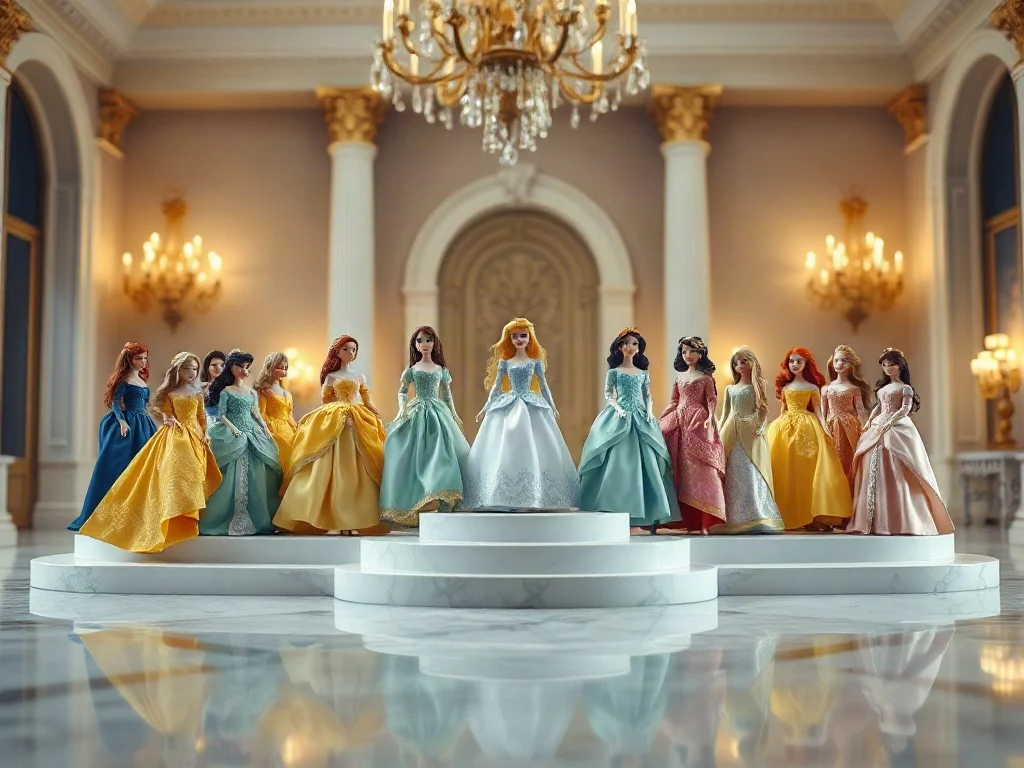
Any list of Disney princesses ranked is partly a fight about nostalgia and partly a fight about craft. The Disney Princess franchise now spans more than eighty years of animation, from a hand-drawn 1937 fairy tale to a 2021 fantasy epic. Its heroines were written for very different audiences. Ranking all 13 official Disney princesses therefore means asking what each character actually does with her story, not which one has the best dress or the loudest fan base. This ranking judges them on narrative agency, character development, the quality of the film around them and cultural staying power. Ariel fans should read to the end before reaching for the comments section.
How This Disney Princess Ranking Works
The official Disney Princess lineup is a corporate designation, not a creative one. The franchise took shape around the turn of the millennium as a merchandising umbrella, which explains oddities such as the inclusion of characters who are not royal by birth and the exclusion of popular heroines from other Disney films. The current lineup contains 13 characters: Snow White, Cinderella, Aurora, Ariel, Belle, Jasmine, Pocahontas, Mulan, Tiana, Rapunzel, Merida, Moana and Raya.
A fair comparison has to account for era. A 1950s heroine was written under different constraints than a 2010s one. Even so, the criteria below are applied to all of them:
- Agency: Does she drive the plot, or does the plot happen to her?
- Arc: Does she change in a way the film earns?
- Film quality: Do the songs, animation and supporting cast give her a story worth inhabiting?
- Durability: Does she still hold up on a rewatch?
This is a critic’s judgment, not a data-driven poll. Two reasonable viewers could swap several adjacent positions. The top and bottom are the least contestable.
The Bottom Tier: Historic but Hollow
13. Aurora
Aurora of Sleeping Beauty is the clearest case of a title character who barely functions as a protagonist. The film belongs to the fairies and to Maleficent, one of the studio’s most formidable villains. Aurora is asleep for most of the climax and spends the rest of the film in a dreamy romantic sequence. The 1959 film is gorgeous, with its stylized backgrounds and its use of Tchaikovsky’s ballet score. Its heroine is a visual motif more than a character.
12. Snow White
Her ranking is a matter of influence versus execution. Snow White and the Seven Dwarfs is widely recognized as the first full-length cel-animated feature, and without it there is no franchise. As a character, though, Snow White is defined by kindness and domestic competence, and the dwarfs are far more vividly drawn. She earns respect as a pioneer, not as a personality.
11. Cinderella
Cinderella is a notch above because her resilience is the point of the story. She endures mistreatment without becoming bitter, and she takes small acts of defiance, such as getting herself to the ball. The problem is that the fairy godmother does most of the heavy lifting. The tale, drawn from Charles Perrault’s version, rewards patience more than initiative.
10. Pocahontas
This is the most uncomfortable placement. The 1995 film Pocahontas has serious ambitions, a score that still gets praise and a heroine with real authority in her community. But it reshapes the life of the historical Pocahontas into a romance, and historians and Native commentators have long criticized that choice. The film is earnest, but its central conceit limits it. It lands low because the story is compromised, not because the character lacks strength.
The Middle Tier: Beloved, Uneven
9. Ariel
Here is where the Ariel stans stop being nice. The Little Mermaid started the Disney Renaissance, and its songs are among the best the studio has produced. Ariel has real drive, and her curiosity pushes the whole plot. But her central decision, surrendering her voice and her home for a man she has barely met, is the weakest premise in the lineup. The film is a landmark, but its heroine’s choices are less defensible than its music. Compare this with Hans Christian Andersen’s far bleaker original tale, which at least treats her sacrifice as tragic.
8. Rapunzel
Tangled gives its heroine a vivid comic energy and a nuanced villain whose control is emotional, not physical. Rapunzel is resourceful and funny, and the film is better than its reputation. What keeps her out of the top half is a plot that leans heavily on Flynn Rider’s arc and a somewhat conventional resolution.
7. Jasmine
Jasmine’s strongest moments come in her first act, when she rejects the idea that her marriage is a political transaction. That is a real stance. Unfortunately, Aladdin is dominated by the title character and by Robin Williams’s Genie, and Jasmine becomes a prize in the second half. She is better written than her screen time allows.
6. Raya
The newest member of the group, Raya of Raya and the Last Dragon, is a genuine action lead. Her central flaw, an inability to trust, is the engine of the film, and her arc is earned. The film is let down by a somewhat busy plot and a world that feels thinly developed. Raya is among the best-written princesses, in a film that does not fully support her.
The Top Tier: Where the Princess Is the Story
5. Merida
Merida is the only princess whose central conflict is with her mother, not a villain or a suitor. Brave, from Pixar, is a flawed film, but it is bold in rejecting romance as its engine. Her inclusion in the franchise also produced a minor controversy in 2013 over a glossier redesign, which was reportedly reversed after public criticism. Merida’s stubbornness is a feature, not a bug.
4. Tiana
The Princess and the Frog introduced the studio’s first Black princess in a hand-drawn feature, and it gave her a defining trait that was not romantic: ambition. Tiana wants a restaurant and works for it. The film’s weakness is that she spends much of the movie as a frog, but her work ethic and the New Orleans setting give her one of the clearest identities in the lineup.
3. Belle
Beauty and the Beast was the first animated film nominated for the Academy Award for Best Picture, and Belle is a large part of why. She is a reader who feels out of place in her town, she engages the Beast as an equal, and she makes a genuine choice to trade places with her father. The Stockholm-syndrome critique of the romance is legitimate, but the film’s craft carries it.
2. Moana
Moana has no love interest at all. Its heroine is a chief’s daughter driven by duty and curiosity, and the film treats her leadership as the point. The songs, co-written by Lin-Manuel Miranda, are strong, and the animation of the ocean is among the studio’s best. Only the slightly familiar quest structure keeps her from first place.
1. Mulan
Mulan is the most complete heroine in the lineup. She acts on her own initiative, her flaws and her competence both matter, and she saves the empire by thinking, not by being rescued. The film grapples with gender expectations without lecturing, and the legend of Hua Mulan gives it a mythic weight. Technically she is not royal, which raises the question of what “princess” means in this franchise. As a character, she is the standard for the others.
The Full Ranking at a Glance
| Rank | Princess | Film | Year |
|---|---|---|---|
| 1 | Mulan | Mulan | 1998 |
| 2 | Moana | Moana | 2016 |
| 3 | Belle | Beauty and the Beast | 1991 |
| 4 | Tiana | The Princess and the Frog | 2009 |
| 5 | Merida | Brave | 2012 |
| 6 | Raya | Raya and the Last Dragon | 2021 |
| 7 | Jasmine | Aladdin | 1992 |
| 8 | Rapunzel | Tangled | 2010 |
| 9 | Ariel | The Little Mermaid | 1989 |
| 10 | Pocahontas | Pocahontas | 1995 |
| 11 | Cinderella | Cinderella | 1950 |
| 12 | Snow White | Snow White and the Seven Dwarfs | 1937 |
| 13 | Aurora | Sleeping Beauty | 1959 |
What the Rankings Reveal About the Franchise
A pattern emerges once the characters are lined up. The strongest princesses are the ones whose stories are not primarily about marriage. Mulan, Moana, Merida and Tiana all have goals independent of romance, and the weaker entries tend to define the heroine by whom she ends up with. That is not a modern moral imposition. It is a structural observation about how much story each film hands to its lead.
The list also shows how much the studio’s craft has changed. The early films, produced by what is now Walt Disney Animation Studios, relied on fairy-tale passivity, while the 1990s brought musical-theater ambition and the 2010s brought more self-aware writing. Yet the ranking is not a simple upward line. Ariel and Jasmine, both from the Renaissance era, sit in the middle, and Belle’s 1991 film remains hard to beat.
Common Disagreements and Fair Objections
- Nostalgia bias: Many fans rank the princess they grew up with first. That is a valid personal criterion but a poor critical one.
- Screen time: Aurora’s low placement is partly about how little the film lets her do, which is different from whether the character is likable.
- Royalty: Mulan and Tiana are not born princesses, so some argue they do not belong. The franchise’s own lineup says otherwise.
- Era fairness: Judging 1937 by 2016 standards is imperfect, which is why historical importance is acknowledged even where placement is low.
Frequently Asked Questions About Disney Princesses
Who is the best Disney princess?
There is no objective answer, but on agency, arc and film quality, Mulan and Moana are the strongest cases. Belle and Tiana are close behind.
How many official Disney princesses are there?
There are 13 in the current official lineup: Snow White, Cinderella, Aurora, Ariel, Belle, Jasmine, Pocahontas, Mulan, Tiana, Rapunzel, Merida, Moana and Raya. Characters such as Elsa and Anna are not part of it.
Who was the first Disney princess?
Snow White, from the 1937 film, was the first. The franchise itself was created much later, by grouping existing characters together.
Is Mulan really a Disney princess?
Yes, she is in the official lineup, although she is not royal by birth. She was included because of the film’s cultural impact and the strength of the character.
The Next Question the Lineup Has to Answer
The most important insight from this exercise is that the franchise improves when its heroines are given jobs, not destinies. The best-ranked princesses lead rather than wait, and the worst-ranked are defined by what happens to them. The next test is whether Disney can keep that standard while its brand identity is pulled between live-action remakes and original animation. Remakes tend to preserve the original characterizations, including the weakest ones, so the real progress will come from new heroines such as Raya, not retellings of Aurora or Snow White. Watch whether the 14th princess, whenever she arrives, is allowed to define the story without a prince to complete it. If she is, the question of who ranks first will get much harder to answer.
Frequently Asked Questions
Why are only 13 characters counted as official Disney princesses?
The lineup is a corporate designation created around the turn of the millennium as a merchandising umbrella, not a creative one. That is why some characters who are not royal by birth are included, while popular heroines from other Disney films, such as Elsa and Anna, are excluded.
What criteria does this ranking use to place each princess?
Each princess is judged on four criteria: agency (does she drive the plot), arc (does she change in a way the film earns), film quality (songs, animation and supporting cast) and durability on a rewatch. Looks, dresses and fan-base size are explicitly not part of the judgment.
Is it fair to compare a 1937 princess with a 2021 one?
The article acknowledges that a 1950s heroine was written under different constraints than a 2010s one. Even so, it applies the same four criteria to all of them. It also admits that adjacent positions are debatable and that the top and bottom are the least contestable.
Why does Aurora rank last even though her film is so beautiful?
Sleeping Beauty is praised for its stylized backgrounds and Tchaikovsky-based score. But the story belongs to the fairies and to Maleficent. Aurora sleeps through most of the climax, so she functions more as a visual motif than as a protagonist with agency or a real arc.
Why is Pocahontas ranked low if she is described as strong?
The placement is about the story, not the character. The film gives her real authority in her community and has a well-regarded score. But it recasts the life of the historical Pocahontas as a romance, a choice that historians and Native commentators have long criticized, and that compromise limits the film.
Why is Ariel only in the middle tier despite starting the Disney Renaissance?
The Little Mermaid is a landmark with some of the studio's best songs, and Ariel's curiosity drives the plot. However, her central choice of giving up her voice and home for a man she has barely met is judged the weakest premise in the lineup, so her choices are less defensible than the music.