
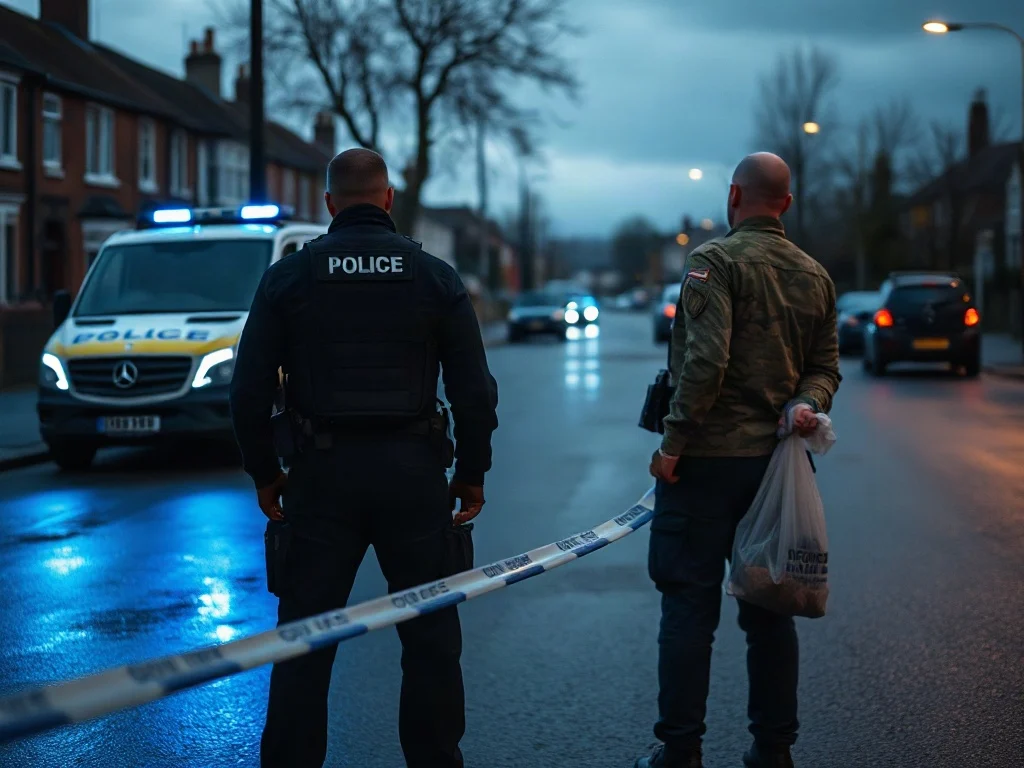
The news that a senior US soldier arrested by UK counter-terror police is being held on suspicion of offences under the National Security Act, relating to Russia, is notable for the status of the suspect as much as for the allegation. According to police, the man is 41 years old. Beyond that, public detail is thin. This analysis separates what is established from what is not, explains the legal machinery behind the arrest, and assesses what the case could mean for allied security cooperation.
An arrest is not a charge, and a charge is not a conviction. Nothing below should be read as a finding of fact about the individual. The more useful questions concern the law, the institutions and the pattern of Russia-related cases in the UK.
What Is Actually Known About the Arrest
The confirmed facts are narrow. A 41-year-old serving US military member, described as senior, was arrested by counter-terrorism police. The arrest was on suspicion of offences under the National Security Act 2023, and police say those offences relate to Russia.
The reporting leaves several points unresolved:
- Which specific offence is suspected.
- Whether the suspect was stationed in the UK or visiting.
- Whether any classified or protected information is alleged to have been involved.
- Whether the suspect has been released, bailed or charged.
Anyone claiming to know the answers from the headline alone is speculating. The phrase “on suspicion of” sets a low evidential threshold. It reflects reasonable suspicion, not proof.
Why the National Security Act 2023 Matters
The Act is the UK’s most significant overhaul of state-threats law in decades. It received Royal Assent in 2023 and replaced much of the older Official Secrets Act 1911 regime, which had been criticised as outdated for modern espionage. Parts of the Official Secrets Act 1989 remain relevant to unauthorised disclosures by public servants.
The Offences in Outline
The Act creates a cluster of state-threat offences. Among them are obtaining or disclosing protected information, assisting a foreign intelligence service, entering prohibited places, and sabotage. Foreign interference is also covered. Several offences carry maximum sentences of life imprisonment.
The Foreign Power Condition
A central design feature is the foreign power condition. Conduct becomes more serious when it is carried out for, on behalf of, or with the intent to benefit a foreign state. It does not require proof that the state formally directed the activity. For a Russia-related case, the legal question is therefore not only what was done but whether the conduct met that condition. Prosecutors need evidence of that link, which is often the hardest element to prove.
Arrest and Detention Powers
The Act gives police arrest powers tailored to state-threat suspects and allows extended pre-charge detention, up to 14 days with judicial authorisation. Those powers resemble those used in terrorism investigations, which explains why counter-terror officers lead these cases.
Why Counter-Terror Police Lead State-Threat Investigations
It can seem odd that UK counter-terror police handle a suspected Russia-linked case. The reason is institutional. MI5 gathers intelligence but has no powers of arrest. Police counter-terrorism units have the powers, the forensic capability and the established relationships with prosecutors at the Crown Prosecution Service. Cases under the Act generally require the consent of the Attorney General before prosecution, which adds a political-legal check. Details of the police structure are on the Counter Terrorism Policing website.
This division of labour is efficient in practice, but it blurs categories in public debate. A state-threats arrest is not a terrorism arrest, and the suspect’s treatment, evidence and defence follow a different logic.
The Russia Dimension: A Pattern, Not an Anomaly
Since the Russian invasion of Ukraine, British authorities have repeatedly warned about hostile activity linked to Moscow. The 2018 Salisbury poisoning was an earlier turning point. Reporting has also linked the Wagner Group to a London arson plot that produced prosecutions under the new Act. The pattern is that Russian intelligence tends to recruit intermediaries, often with money or ideology as the lever, rather than rely only on trained officers.
What would distinguish this case, if the allegations are ultimately proven, is the suspect’s profile. Most publicised UK cases involve civilians, criminals recruited online, or people with limited access. A serving senior soldier of an allied army would fall into a more sensitive category, because of the potential for access to counterintelligence-relevant information. That is a hypothesis about significance, not an established fact about this arrest.
Jurisdiction: A US Soldier on British Soil
The jurisdictional questions are among the most analytically interesting. The legal position of US forces in the UK is shaped by the NATO Status of Forces Agreement and the Visiting Forces Act 1952. In general, these frameworks distribute criminal jurisdiction between the sending state and the host state depending on the nature of the offence and whether it arose in the course of official duty.
Offences against the security of the host state are an area where the host’s interest is strong. Yet the sending state, here the United States Army or another service, may also assert interest through court-martial authority. The exact service, status and location of the arrested man are not public. It would therefore be wrong to predict which system will handle the case, or whether any waiver or transfer will occur.
The Insider Threat Problem
The case, whatever its outcome, revives a long-running debate about the insider threat within allied militaries. Two competing views are worth stating.
- The vetting view: Individual failures are inevitable, and vetting, monitoring and need-to-know compartmentalisation are the right mitigations.
- The structural view: Large, interconnected alliances multiply access points. The 2023 case of Jack Teixeira, a US airman who leaked classified documents online, showed how broad access can outpace oversight.
The Teixeira case involved leaking, not foreign recruitment, so it is an imperfect comparison. It does illustrate that a single individual’s access can strain trust between allies. Any serious suspicion about a senior service member will prompt internal reviews on both sides of the Atlantic, regardless of the legal result.
The Rule of Law and the Presumption of Innocence
High-profile state-security arrests invite premature conclusions. Reporting on the case should be read with the presumption of innocence in mind. Arrests in this field sometimes end without charge, and evidence in state-threat cases is often sensitive, which limits what authorities can say publicly. Silence from officials is not evidence of guilt or of weakness. It is the normal posture of an ongoing investigation.
There is a legitimate critique on the other side as well. The breadth of the Act’s definitions and its extended detention powers have drawn scrutiny from civil liberties and press-freedom groups. These concerns focus mainly on journalists and whistleblowers, but they apply to any suspect held for long periods before charge.
Practical Takeaways for Organisations and Analysts
For professionals in defence, government and critical infrastructure, the case is a prompt to review controls rather than to draw conclusions about the individual. Sensible priorities include:
- Review access governance. Confirm that access to sensitive material is justified by role, and revisit it when circumstances change.
- Train for recruitment approaches. Staff should recognise unusual contact, financial offers and social-engineering attempts, and know how to report them.
- Clarify reporting duties. Employees should understand what to disclose about foreign contacts and travel, and should not fear punishment for raising concerns.
- Understand the Act’s reach. Its provisions on foreign interference and assisting foreign intelligence services extend beyond classic spying.
A common mistake is to focus on technical security while neglecting personal circumstances such as debt, grievance or isolation, which intelligence services have long exploited.
Frequently Asked Questions
What is the National Security Act 2023?
It is UK legislation that modernises the law on espionage, sabotage, foreign interference and related state threats. It replaces much of the older Official Secrets Act framework and introduces the foreign power condition.
Why would counter-terror police arrest a US soldier?
Counter-terror police hold the arrest powers and investigative capacity for state-threat cases. MI5 provides intelligence but cannot make arrests.
Has the soldier been charged?
Based on the information available, the person was arrested on suspicion of offences. A charge has not been reported in the source material, and any later outcome should be confirmed through official statements.
Which country’s courts would hear the case?
That is undetermined. It depends on the suspect’s status, the location and nature of the alleged conduct, and arrangements under NATO and UK visiting-forces law.
The Questions This Arrest Leaves Open
The most important insight is structural. The arrest, whatever follows, shows that the UK is now using a modern statute to test state-threat cases against suspects who sit inside allied institutions, not only at their margins. That raises the stakes for evidence, diplomacy and public trust.
Three things are worth watching. The first is whether charges are brought and which offence is chosen, since that will reveal how prosecutors read the foreign power condition. The second is whether US authorities assert jurisdiction or cooperate fully with a UK prosecution. The third is whether the case prompts visible changes to vetting or information-sharing arrangements between the allies.
A reasonable prediction is that the facts will emerge slowly and the legal process will take months at least. The unanswered question is whether this case will prove to be an isolated failure or an early sign that hostile services are targeting alliance personnel with greater precision. The answer will matter far more than the headline.
Frequently Asked Questions
Does the arrest of the US soldier mean he has been charged or is guilty?
No. An arrest on suspicion only requires reasonable suspicion, a low evidential threshold. Police must still gather evidence, and prosecutors must decide whether to charge. Charging also generally needs the Attorney General's consent. The suspect remains presumed innocent, and the article stresses that nothing should be read as a finding of fact.
Why are counter-terror police, not MI5, handling a suspected Russia-linked case?
MI5 gathers intelligence but has no powers of arrest. Counter-terrorism police have arrest powers, forensic capability and established working relationships with the Crown Prosecution Service. This is a division of labour, not a sign the case involves terrorism. A state-threats arrest follows a different legal logic from a terrorism arrest.
What is the foreign power condition in the National Security Act 2023?
It is a central feature of the Act. Conduct becomes more serious when carried out for, on behalf of, or intending to benefit a foreign state. Prosecutors need not prove the state formally directed the activity, but they must show the link, which is often the hardest element to prove.
How long can a suspect be held without charge under the Act?
The Act allows extended pre-charge detention of up to 14 days, but only with judicial authorisation. These powers resemble those used in terrorism investigations, which is one reason counter-terror officers lead these cases. Detention length in this particular case has not been publicly confirmed.
What details about the case are still unknown?
Reporting leaves several points open: which specific offence is suspected, whether the man was stationed in the UK or visiting, whether classified or protected information is alleged to be involved, and whether he has been released, bailed or charged. Anything beyond the age and the Russia link is speculation.
What did the National Security Act 2023 replace, and why?
It replaced much of the Official Secrets Act 1911 regime, which critics considered outdated for modern espionage. Parts of the Official Secrets Act 1989 still apply to unauthorised disclosures by public servants. The new Act covers offences such as assisting a foreign intelligence service, sabotage and foreign interference.