
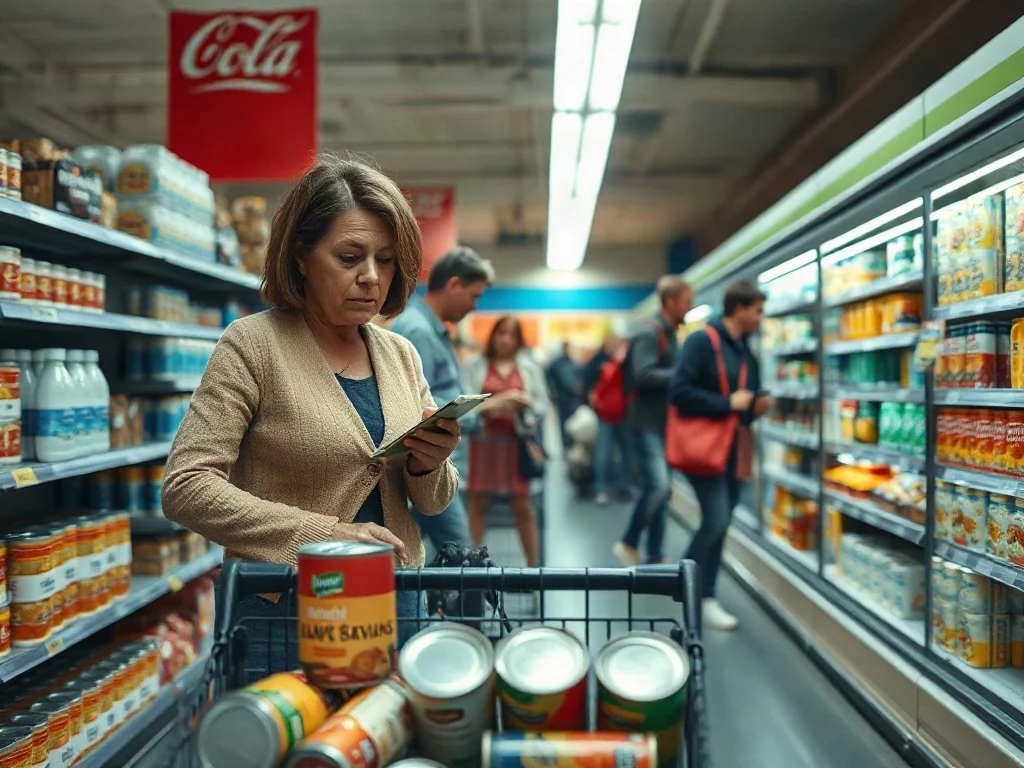
Within days of the government urging households to prepare for emergencies, retailers reported a jump in sales of tinned food, bottled water and hand sanitiser. The Be Ready campaign was designed to build household resilience. Its first measurable effect is a spike at the supermarket till. That raises an uncomfortable question for policymakers: does a public preparedness drive produce preparedness, or just a burst of anxious shopping? This analysis looks at what the sales data can and cannot tell us, why the response took this form, and what a better-designed campaign would look like.
What the Be Ready campaign sales surge actually shows
The reported facts are narrow. After the government called on households to be ready for emergencies, sales of essentials rose sharply, with hand sanitiser, tinned goods and bottled water singled out. Retailers have not, in the reporting available here, published a full breakdown. Any claim about scale, duration or geography should therefore be treated cautiously.
Even so, the product mix is informative. Tinned food, water and sanitiser are the items public guidance has long placed at the core of a household emergency kit. Shoppers are not behaving randomly. They are following a script, and the script matches the government’s message.
Signal versus noise
A sales spike after a high-profile announcement is a weak indicator of lasting behaviour change. Three readings compete:
- Compliance: households are following the advice and building a modest stockpile, which is the intended outcome.
- Anxiety: the campaign raised the perceived threat level, and shoppers are buying for reassurance rather than for any specific scenario.
- Contagion: people are reacting to seeing others buy, so the surge feeds itself.
The data cannot separate these explanations. Sales figures record purchases, not motives. They also say nothing about whether the goods end up in a cupboard, are eaten within the month, or are wasted.
Why preparedness messaging triggers stockpiling
The behaviour is predictable. Researchers who study panic buying point to a familiar mix of perceived scarcity, loss of control and observation of other shoppers. A government telling people to prepare supplies the first element directly. It implies something might go wrong and that supplies could matter.
The psychology of the empty shelf
The availability heuristic means people judge risk by how easily examples come to mind. Recent memory supplies plenty: the toilet roll and pasta shortages of the COVID-19 pandemic in the United Kingdom, and the queues of the 2021 fuel supply crisis. Both showed that fear of a shortage can create the shortage. Social proof then amplifies the effect. A half-empty shelf of tinned tomatoes tells the next shopper that others have already decided to buy.
The government’s own wording matters here. An instruction to prepare is read as an implicit warning. Unless the campaign names specific risks and specific quantities, the public fills the gap with worst-case assumptions, and the result is open-ended buying.
The policy context: from Cold War leaflets to resilience planning
Public preparedness campaigns are not new. Britain’s Protect and Survive films were a Cold War attempt to tell households how to cope with nuclear attack, and they have been widely criticised since for being either unreassuring or unrealistic. Modern emergency management takes an all-hazards approach. It covers floods, power outages, pandemics, cyber incidents and conflict-related disruption rather than a single catastrophe.
The UK framework rests on the Civil Contingencies Act 2004 and the National Risk Register, coordinated by the Cabinet Office. Official information on emergencies is published through GOV.UK, and the British Red Cross publishes practical guidance for households.
The Nordic and EU comparison
The UK is following a wider European pattern. The total defence tradition in Sweden and Finland has long included household guidance, and Sweden has distributed a crisis-preparedness brochure to households. The European Union has also encouraged citizens to be able to cope for around 72 hours without outside help. Security concerns following the Russian invasion of Ukraine have pushed many governments to treat civilian resilience as a policy priority.
The key difference is delivery. Nordic campaigns come with a long institutional history and a high baseline of public trust. A UK campaign launched into a cost-of-living squeeze and a low-trust media environment faces a harder communication task.
The supply chain question
Retailers have spent decades optimising for efficiency. Modern grocery logistics rely on just-in-time replenishment, which keeps stock low and cuts waste but leaves little buffer for sudden demand. A coordinated rise in demand for a few categories can empty shelves faster than the system can respond, even when total supply is sufficient.
Demand spikes also travel upstream in distorted form. The bullwhip effect describes how small changes in consumer demand become larger swings in orders from retailers, wholesalers and manufacturers. A brief surge in tinned food purchases can therefore produce an oversized order cycle, followed by a slump once households are stocked. Producers of canned goods and bottled water may benefit in the short term. Planning production capacity around a campaign-driven peak is risky.
Who benefits and who loses
The winners are obvious: manufacturers of long-life goods and the large supermarkets. The losers are less visible. Lower-income households cannot easily buy several days of reserves in one shop, so a campaign that implies everyone should hold stocks risks widening a preparedness gap. If better-off shoppers clear the shelves first, vulnerable people face higher prices and thinner availability when they most need supplies.
How much food and water should you store for emergencies?
This is the practical question the campaign must answer, and the one panic-driven shopping ignores. Official guidance generally centres on short-term self-sufficiency rather than long-term hoarding: enough food, water and essential items to manage for a few days if services are disrupted. The EU’s 72-hour benchmark is the most frequently cited reference point.
A sensible baseline
- Water: the commonly cited rule of thumb is about three litres per person per day, covering drinking and basic hygiene. Check current official guidance before relying on any figure.
- Food: items that need no refrigeration and little or no cooking, such as tinned fish, beans, soup and fruit, plus a manual tin opener, which is often forgotten.
- Hygiene and health: hand sanitiser, wipes, regular prescription medicines and a basic first aid kit.
- Power and information: a torch, spare batteries, a battery or wind-up radio and a charged power bank.
- Special needs: infant formula, pet food, and dietary or medical requirements.
A realistic emergency preparedness plan is built around the household’s actual risks. A flood-prone area, a home dependent on electric medical equipment and a flat in a city centre each need different things.
Common mistakes in household preparedness
The surge in sales suggests several errors are likely to be widespread.
- Buying without a plan. A cupboard of tins is not a plan. Households also need a way to communicate, know where they would go, and be able to cook without power.
- Ignoring shelf life. Stock that is never rotated expires. The sensible habit is to buy what you already eat and replace it as you use it, an approach that also reduces food waste.
- Over-buying scarce items. Taking far more than a few days’ supply leaves less for others and brings no extra resilience.
- Neglecting neighbours. Community networks often matter more than individual stockpiles, particularly for elderly or disabled people.
A critical assessment of the campaign design
The government has understandable reasons to push preparedness. The risk landscape is real, and households that can cope for a few days relieve pressure on emergency services. The criticism concerns execution, in three areas.
Specificity
Vague messaging invites over-reaction. Behavioural research on nudges suggests that clear, bounded, actionable prompts, such as a checklist with a defined number of days, work better than general calls for readiness. A campaign that tells people what to buy but not how much, or why, will predictably produce uneven results.
Retailer coordination
If the government expects a retail response, it should coordinate with supermarkets in advance. Purchase limits, stock forecasting and clear communication about supply levels all help prevent the self-fulfilling shortage. Whether that coordination took place is not clear from the reporting.
Measurement
Sales are a poor proxy for success. A meaningful evaluation would track whether households hold usable kits, understand the guidance, and know what to do in a power cut or evacuation. Without that, ministers may mistake a retail spike for resilience.
Frequently asked questions
Why did tinned food and water sales jump after the Be Ready campaign?
The campaign told households to prepare for emergencies, and tinned food, bottled water and sanitiser are the standard items in preparedness guidance. Fear of shortages and seeing other shoppers buy likely amplified the effect.
Is it panic buying or sensible preparation?
Both are possible. Buying a few days of essentials is consistent with official advice. Buying far beyond that, or emptying shelves, is the behaviour that causes shortages for others.
What should be in a basic emergency kit?
Water, non-perishable food, a manual tin opener, medicines, a first aid kit, a torch, a radio, a power bank and hygiene items, adjusted to your household’s needs.
Will shops run out of essentials?
A short-term shortage in specific lines is possible while demand is elevated. Past episodes suggest shelves usually recover once buying normalises, though that depends on how quickly retailers can replenish.
The test that matters: what happens when the shelves refill
The most important insight is that the sales spike measures the campaign’s reach, not its effect. The real test comes in the months after the rush, when the novelty fades and the tins are still in the cupboard. If households can say what they hold, how long it lasts, and what they would do without power or water, the campaign has done its job. If they only know they bought something, it has not.
Three developments are worth watching. First, whether the government publishes clearer, quantified guidance in response to the buying surge. Second, whether retailers and ministers coordinate publicly on stock levels and limits. Third, whether follow-up evidence emerges on actual household preparedness rather than sales alone. A reasoned prediction is that demand will settle quickly, leaving a lasting but modest rise in baseline stockholding among already-engaged households. The unanswered question is whether the people least able to prepare, those on low incomes, in insecure housing or with limited mobility, will be reached at all. A resilience policy that works mainly for the already resilient has not solved the problem it set out to address.
Frequently Asked Questions
Does a spike in tinned food and water sales prove the Be Ready campaign is working?
Not necessarily. A sales spike shows purchases, not motives or lasting habits. It could reflect genuine compliance, anxiety about a perceived threat, or people copying others. The data cannot separate these explanations or show whether goods are stored, eaten or wasted.
Why does a government call to prepare make people stockpile?
People tend to read an instruction to prepare as an implicit warning. If a campaign names no specific risks or quantities, shoppers fill the gap with worst-case assumptions. Perceived scarcity, loss of control and seeing others buy then push them towards open-ended buying.
Can panic buying actually cause the shortages people fear?
Yes. Fear of a shortage can create one, as the UK saw with toilet roll and pasta during COVID-19 and the 2021 fuel supply crisis. Half-empty shelves act as social proof, signalling to the next shopper that others have already decided to buy.
Why are tinned food, bottled water and hand sanitiser the items being bought?
These items have long been at the core of public guidance for household emergency kits. Shoppers are following a script that matches the government's message, so the product mix suggests people are responding to the advice rather than buying randomly.
How does today's preparedness approach differ from Cold War campaigns like Protect and Survive?
Protect and Survive focused on a single catastrophe, nuclear attack, and has been criticised as unreassuring or unrealistic. Modern emergency management takes an all-hazards approach, covering floods, power outages, pandemics, cyber incidents and conflict-related disruption, within a framework built on the Civil Contingencies Act 2004.
Where can households find reliable guidance on what to prepare?
Official information on emergencies is published through GOV.UK, and the British Red Cross offers practical household guidance. The National Risk Register, coordinated by the Cabinet Office, sets out the risks the UK plans for, helping people prepare sensibly rather than buying in anxiety.