
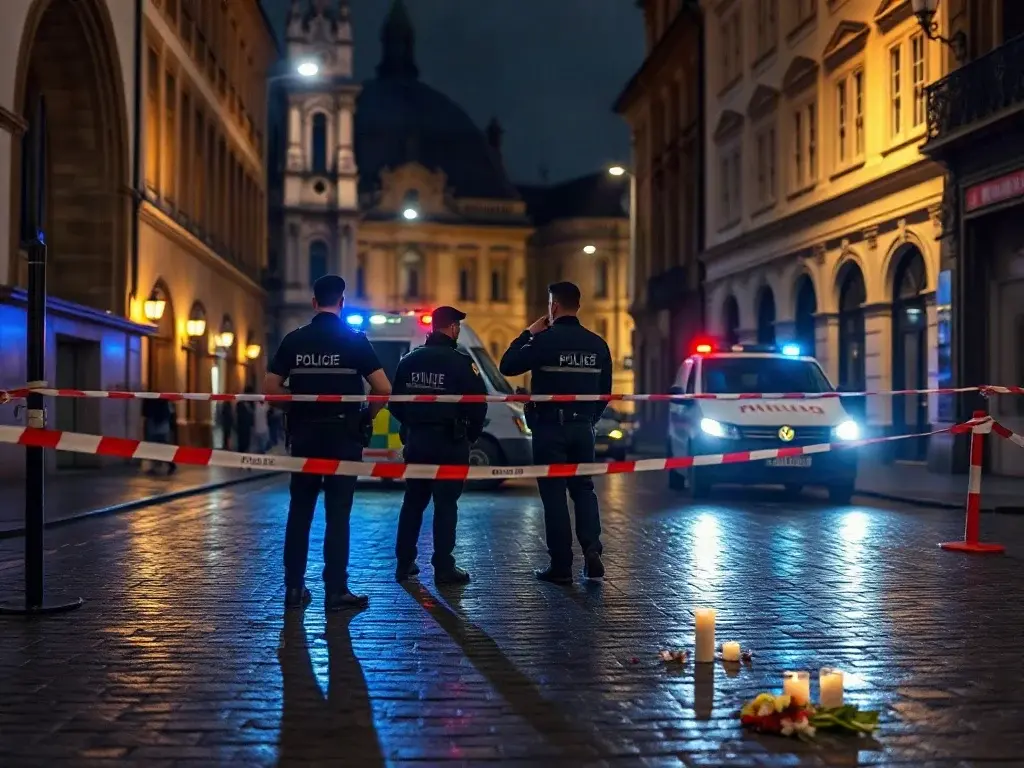
The Krakow mass shooting is, on the basis of early reporting, an attack in which at least six people were killed by a gunman in military fatigues who opened fire in Poland’s second-largest city. That is the entire verified core of the story at the time of writing. Everything else, including motive, weapon, identity, the exact number of wounded and the sequence of events, should be treated as unconfirmed until Polish authorities say otherwise. This analysis does not pad that gap with speculation. It separates what is established from what is not, explains why early facts in mass-casualty events so often change, and sets out what to watch as the investigation develops.
What we know about the Krakow mass shooting so far
The established facts are narrow. Reports state that at least six people were killed, that the attacker wore military-style fatigues, and that the shooting took place in Krakow, the second-largest city in Poland and the capital of the Lesser Poland Voivodeship. The phrase “at least” matters. It signals a floor, not a final count, and the number may rise as injured people are treated and hospitals report.
Equally important is what the reporting does not say. It does not establish that the gunman has been identified, that he was acting alone, that he was arrested, wounded or killed, or that he had any connection to the armed forces. It does not give a motive. A responsible reading holds each of those questions open.
What remains unconfirmed
Perpetrator and motive
In the first hours of any mass shooting, motive is the most speculated-about and least reliable element. Investigators need time to examine the weapon, digital devices, prior contacts with authorities and witness testimony. Early claims about ideology, grievance or mental health are routinely premature, and sometimes wrong. Until prosecutors or police make a statement, any motive attributed to the attacker is conjecture.
Weapon and how it was obtained
The type of firearm and whether it was legally held are central questions with major policy consequences. If the weapon was licensed, the debate turns to vetting and monitoring of license holders. If it was illegally acquired, the focus shifts to trafficking and enforcement. The available reporting supports neither conclusion.
Casualty totals
Counts of killed and wounded commonly shift as officials reconcile hospital records, emergency calls and scene data. Readers should expect revisions and should be wary of outlets that present a single number as final within the first day.
Why the military fatigues detail demands caution
The detail that stands out in the headline is the attacker’s clothing. Military camouflage is sold openly in surplus shops and online across Europe, and it is worn by hunters, airsoft players, hobbyists and, in some cases, people seeking to look threatening or to blend into a security context. Fatigues alone say nothing reliable about service history.
This is where early coverage can mislead. A gunman “in military fatigues” invites readers to infer a soldier, a veteran or a politically motivated actor, particularly given Poland’s proximity to the war in Ukraine and the visibility of the Polish Armed Forces in public life. None of those inferences is supported by the clothing. A critical reader should treat the uniform as a descriptive detail relevant to police tactics and witness accounts, not as evidence of identity or intent.
Poland’s context: rarity, regulation and the gun-control debate
Mass shootings of this scale are rare in Poland. The country operates a licensing system for civilian firearms that is generally regarded as restrictive by comparison with the United States, requiring a permit tied to a stated purpose such as sport, hunting, collecting or personal protection. That description is general, and the specifics of any licensing rules relevant to this case will depend on the facts that emerge.
Comparisons with other European events are instructive but imperfect. The Erfurt massacre in Germany in 2002 and the 2011 Norway attacks both occurred in countries with strict firearms regimes, and both prompted legislative and procedural reviews. The lesson is not that regulation fails or succeeds in a simple way. It is that rare, determined attackers can exploit gaps in vetting, storage or enforcement, and that each country’s response tends to focus on the specific gap the case exposes.
Expect the post-attack gun control debate in Poland to follow the evidence about the weapon. Calls for tighter rules made before that evidence is public are political positioning, not analysis. Searches for “Poland gun laws after the Krakow shooting” will be answered properly only once investigators disclose how the firearm was obtained.
How early casualty reporting goes wrong
Breaking-news coverage of shootings has recurring failure modes. Understanding them is the most practical defense against being misinformed.
- Number drift: Casualty figures rise or fall as double-counting is corrected and as the injured are triaged.
- Phantom second shooter: Echoes, panic and overlapping emergency responses often produce reports of multiple gunmen that later prove false.
- Premature identification: Names and photographs circulate on social media before official confirmation, and misidentification of innocent people is a documented risk in such events.
- Narrative anchoring: A striking detail, such as the fatigues here, becomes the frame through which every later fact is read.
The discipline for editors and readers is to attribute every claim to a named official source and to distinguish “police said” from “witnesses said” and “social media posts claimed.”
The information environment after the attack
Attacks in prominent European cities are quickly absorbed into wider political arguments about migration, security, the war in Ukraine and border controls within the Schengen Area. This produces fertile ground for misinformation and deliberate disinformation, which is especially likely when the perpetrator’s identity is unknown. Poland has been a target of organized influence operations in recent years, so a vacuum of verified facts is exactly where fabricated claims spread fastest. That is an analytical risk assessment, not a claim that such activity has occurred in this case.
Authorities also face the question of whether to label the event. Whether it is classified as terrorism depends on legal criteria concerning intent and aims, and it triggers different investigative powers. The label should follow evidence of motive, not the severity of the violence.
Victims, trauma and the community response
Beyond the number six are families, witnesses and first responders. Research on mass-casualty events consistently links exposure to elevated risk of post-traumatic stress disorder, including among people who were nearby but not physically harmed. Krakow shooting victims will need not only medical care but sustained psychological support, and the quality of that support is rarely covered once the news cycle moves on.
Media conduct also matters. Some researchers and public-health bodies argue that naming and glorifying perpetrators can encourage copycat crime. The evidence is debated, but the practical recommendation of focusing coverage on victims, minimizing the perpetrator’s name and avoiding the publication of manifestos has wide support among professional guidelines.
Practical guidance for readers and newsrooms
For readers following the story
- Rely first on official channels such as the Polish Police and the Polish government portal at gov.pl.
- Treat unattributed social media images and videos as unverified, and do not share footage of victims.
- Check whether a claim names its source and whether more than one independent outlet has confirmed it.
- Expect revisions to numbers and timelines, and do not read them as a sign of concealment.
For editors and content teams
Publish an explicit status line separating confirmed facts from open questions, update timestamps visibly, and avoid headline constructions that imply motive. Use crisis communication principles: speed matters, but correction speed matters equally.
Frequently asked questions
What happened in the Krakow shooting?
According to early reports, a gunman in military fatigues opened fire in Krakow, and at least six people were killed. Details beyond that have not been independently confirmed in the available reporting.
Has the Krakow gunman been identified?
The available reporting does not confirm the gunman’s identity, status or motive. Rely on statements from Polish police and prosecutors for updates.
Does wearing military fatigues mean the attacker was a soldier?
No. Military-style clothing is widely available to civilians, so it is not evidence of military service or affiliation.
Are mass shootings common in Poland?
They are rare. Poland licenses civilian firearm ownership, and events of this scale are exceptional in the country’s recent experience, which is part of why this attack will draw intense scrutiny.
Will the death toll rise?
It may. The phrase “at least six” indicates a minimum figure, and totals frequently change as hospitals and authorities finalize records.
The question that will define the aftermath
The most important insight from this early picture is how little it contains. Six people are dead, and the most visible detail, the uniform, is also the one least capable of explaining anything. The danger now is not only the violence itself but the speed with which a thin set of facts is stretched into confident narratives about who the attacker was and what the country should do.
Three developments will decide what this event becomes. The first is how the firearm was obtained, which will determine whether the policy focus falls on licensing, storage or illegal supply. The second is the prosecutors’ account of motive, which will determine whether the case is framed as terrorism, targeted violence or something else. The third is whether Polish institutions publish a transparent, evidence-based review rather than a rapid legislative reaction. Based on how comparable European cases have unfolded, a reasonable but unconfirmed prediction is that formal findings will take months and will complicate the first-day story. The unanswered question is whether public debate will be patient enough to wait for them.
Frequently Asked Questions
Why might the number of victims in the Krakow shooting change after the first reports?
Early figures usually reflect a minimum count. Officials need time to reconcile hospital records, emergency calls and scene data. Some injured people may die later, while duplicated or mistaken counts get corrected. The phrase "at least six" signals a floor, so readers should expect revisions and distrust any outlet presenting one number as final.
Does the attacker wearing military fatigues mean he was a soldier or veteran?
No. Military camouflage is sold openly in surplus shops and online across Europe, and hunters, airsoft players and hobbyists wear it. Some attackers use it to look threatening or blend in. Without official confirmation, fatigues say nothing reliable about service history, identity or motive, and should be treated only as a descriptive detail.
Can we say the gunman acted alone or has been caught?
Not on current reporting. The verified facts do not establish that he was identified, arrested, wounded or killed, nor whether anyone assisted him. Each of these questions remains open until Polish police or prosecutors make an official statement, so claims about a lone attacker should be treated cautiously.
Why is it risky to draw conclusions about motive so early?
Investigators need time to examine the weapon, digital devices, prior contacts with authorities and witness testimony. Early claims about ideology, grievance or mental health are often premature and sometimes wrong. Until prosecutors or police speak, any stated motive is conjecture, and repeating it can spread misinformation and unfairly shape public opinion.
How could the weapon's origin change the policy debate in Poland?
It determines the focus. If the firearm was legally licensed, attention turns to vetting and monitoring of license holders. If it was acquired illegally, the debate shifts to trafficking and enforcement. Current reporting supports neither scenario, so conclusions about gun-control reform would be premature until authorities explain how the weapon was obtained.
How does Poland's firearm licensing compare with the United States?
Poland is generally regarded as more restrictive. Civilians need a permit tied to a stated purpose such as sport, hunting, collecting or personal protection. This is only a general description, though, and which specific rules matter here will depend on facts that emerge about the shooter and the weapon.