
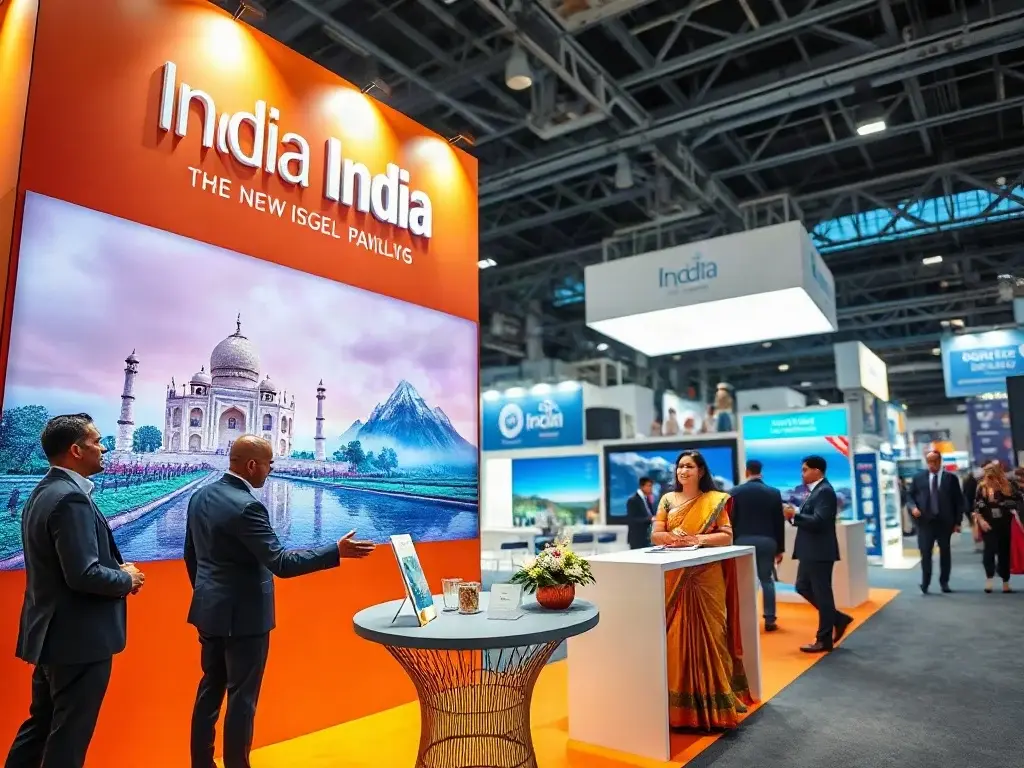
When the doors of ExCeL London closed on 5 November, India at WTM London 2026 had already become one of the more closely watched stories of the global travel calendar. The Ministry of Tourism, Government of India, concluded its participation at World Travel Market (WTM) London, held from 3 to 5 November, reporting significant international engagement, stronger industry partnerships and recognition for the Incredible India Pavilion.
This article separates what is confirmed from what is context and interpretation. The official summary is brief, so it does not invent deal values, visitor counts or signed agreements. Instead, it explains why a three-day showcase in East London matters to a country of India’s scale, how a national pavilion turns conversation into itineraries, and what to watch to judge whether the momentum becomes real travel demand.
What We Know About India’s WTM London 2026 Participation
The confirmed facts are straightforward. The Ministry of Tourism took part in WTM London 2026 at ExCeL London from 3 to 5 November. It reported strong international engagement and strengthened industry partnerships, and the Incredible India Pavilion received recognition. The announcement frames the outcome as a success for India’s global tourism outreach.
Beyond that, readers should look to the Ministry’s own channels, such as the Ministry of Tourism website, and to the official WTM London site for detailed figures and award information as they are released. Until then, the sensible reading is that the presence was well received. It is not yet possible to say how much business was generated.
Why WTM London Matters So Much to India’s Tourism Strategy
WTM London is organized by Reed Exhibitions (now operating as RX) and is one of the world’s major trade fairs for the travel industry. Its audience is not mainly the holidaymaker. It is the professional who builds holidays: tour operators, airlines, hoteliers, travel agencies, destination boards and media. That makes it a business-to-business arena in which one conversation can shape the brochures and booking engines that reach thousands of travellers months later.
The Weight of the UK Relationship
The United Kingdom has long been one of India’s important inbound tourism source markets, and the two countries share deep historical, diaspora and commercial ties, as outlined in the overview of India–United Kingdom relations. Family visits, heritage journeys and curated cultural tours all feed that flow. A London stand therefore reaches a market that already knows India and is often ready to go deeper than the familiar Golden Triangle circuit.
Recovery, Competition and the Need to Stand Out
Global tourism is crowded with destinations competing for the same long-haul travellers. India’s headline numbers, with foreign arrivals reported by the Ministry at roughly 9.95 million in 2024 according to official tourism statistics, are modest compared with its size, culture and natural diversity. That gap is also the opportunity. Trade-fair visibility is one of the most cost-effective ways to move India from a bucket-list idea to a booked product.
The Incredible India Pavilion: A Brand Built for Storytelling
The Incredible India campaign dates to the early 2000s and remains one of the most recognizable examples of a national destination marketing effort. At a fair like WTM London, the pavilion is more than a booth. It is a compressed version of the country, in which regional boards, hoteliers and tour operators present their products under a shared identity.
Recognition for the pavilion, as noted in the official summary, matters for two reasons. It signals that the design and presentation met professional standards among peers. It also strengthens the brand’s authority with buyers who must choose, in a hall of thousands of exhibitors, where to spend their limited meeting time.
The Product Pillars Buyers Look For
India’s strength is its breadth. The travel trade can package it in many ways:
- Cultural and heritage journeys built on palaces, temples and living traditions, closely tied to cultural tourism.
- Wellness and spiritual travel centred on Ayurveda and yoga.
- Nature and ecotourism, from Himalayan treks to wildlife reserves.
- Adventure travel, including mountaineering, rafting and coastal activities, part of the wider field of adventure travel.
- Healthcare journeys, which connect to medical tourism.
- Regional depth, with states such as Kerala and Rajasthan marketing distinct identities.
How Trade-Show Engagement Becomes Real Tourism Partnerships
Phrases like “strengthened partnerships” can sound abstract. In practice, the path from stand to suitcase is concrete, and understanding it shows what success should look like.
- Meetings and introductions. Tour operators meet state tourism boards, hotel groups and destination management companies, often for the first time.
- Product development. Buyers ask for new itineraries, such as longer stays, off-circuit destinations or wellness add-ons, and suppliers respond.
- Contracting and pricing. Rates, allotments and commissions are negotiated for the next season.
- Marketing alignment. Joint promotions, familiarization trips and media coverage are scheduled.
- Brochure and online listing. New or expanded India products appear in catalogues and booking platforms.
Common Mistakes That Waste a Trade-Fair Presence
- Treating the fair as a branding exercise with no follow-up pipeline.
- Promoting only the best-known icons while buyers want fresh, bookable alternatives.
- Failing to explain practical matters such as the visa process, flight connectivity and safety standards.
- Neglecting to measure outcomes, so lessons never reach the next edition.
Critical Perspectives: Opportunity Meets Constraint
A balanced view must weigh the enthusiasm against real challenges. Experts in destination management commonly point to three recurring issues for India.
Measurement and Accountability
Official statements of engagement and recognition are positive but not directly measurable. Whether the participation delivers depends on conversion: bookings, new products and arrivals. Without published follow-up data, the outcome remains a matter of reasonable expectation rather than proven result.
Infrastructure and Experience Quality
Marketing can raise demand, but delivery shapes reputation. Air connectivity, ground transport, accommodation standards and consistent service all determine whether a first-time visitor returns or recommends India. Marketing that outpaces delivery risks disappointment.
Sustainability and Crowding
Promoting India more widely brings a responsibility to guide visitors well. Concentrating growth in a few famous places risks overtourism, while spreading it into fragile regions demands careful management. The broader framework of sustainable tourism is increasingly a buyer expectation in European markets, not an optional extra.
Tourism as Soft Power
A national pavilion is also an instrument of soft power. Food, music, craft, spirituality and hospitality shape how a country is perceived long before anyone boards a plane. The wider picture of tourism in India shows how the sector links to employment, handicrafts, local enterprise and regional development. A successful showing in London is therefore part commerce and part cultural diplomacy.
What Comes Next for India’s Global Tourism Outreach
Several developments could shape the next few years. These are reasoned expectations, not confirmed plans.
- Niche packaging: Buyers increasingly want specialist products such as wellness retreats, slow travel and culinary routes rather than generic tours.
- Digital discovery: Travellers research through search, video and social platforms, so pavilion messaging must continue online.
- Trade and mobility agreements: Improved economic ties between India and the UK may support business travel and wider mobility, though the effect on leisure tourism is uncertain.
- Sustainability credentials: Verifiable environmental and community standards will probably become a stronger selling point.
Frequently Asked Questions
When and where was WTM London 2026 held?
WTM London 2026 took place from 3 to 5 November at ExCeL London, with India’s Ministry of Tourism taking part through the Incredible India Pavilion.
Why does India participate in WTM London?
The fair gives India direct access to global tour operators, airlines, hoteliers and media. It is an efficient way to build trade partnerships and keep India visible in a competitive long-haul market.
What is the Incredible India Pavilion?
It is the Ministry of Tourism’s umbrella presence at international fairs, bringing together India’s regions and industry partners under the Incredible India brand.
Did India sign agreements at WTM London 2026?
The official summary refers to strengthened industry partnerships but does not list specific agreements or values. Check official Ministry and WTM channels for detailed announcements.
The Real Test Begins After the Stands Come Down
The most important insight from India’s WTM London 2026 outing is that a trade-fair success is a promise, not a result. Recognition for the pavilion shows that India can present itself with confidence and polish. What matters is whether conversations in East London turn into contracted products, fresh itineraries and arrivals that spread beyond the usual circuits.
Watch for three signals in the coming months: published follow-up data from the Ministry of Tourism, new India programmes appearing in UK and European tour operator catalogues, and movement in air connectivity and visa facilitation. If those align, this edition will be remembered as a turning point. If they do not, it will be one more impressive stand. The unanswered question is whether India can pair the warmth of its welcome with the consistency of its delivery. The travellers who experienced that welcome in London will, in the end, be the ones to decide.
Frequently Asked Questions
Has India reported how much business or how many deals came out of WTM London 2026?
No. The official summary only confirms strong international engagement, stronger industry partnerships and recognition for the Incredible India Pavilion. It gives no deal values, visitor counts or signed agreements. Detailed figures and award information should be sought on the Ministry of Tourism website and the official WTM London site as they are released.}
Why does a trade fair like WTM London matter if it is not aimed at holidaymakers?
WTM London is a business-to-business event for tour operators, airlines, hoteliers, travel agencies, destination boards and media. A single conversation there can shape the brochures and booking engines that reach thousands of travellers months later, which makes it a cost-effective way to turn interest in India into booked products.
Why is the UK such an important audience for India's tourism promotion?
The UK has long been one of India's key inbound source markets, supported by historical, diaspora and commercial ties. Family visits, heritage journeys and curated cultural tours feed the flow. Because British travellers often already know India, they may be ready to explore beyond the familiar Golden Triangle circuit.
What does recognition for the Incredible India Pavilion actually signify?
According to the article, recognition suggests the pavilion's design and presentation met professional standards among industry peers. It also strengthens the brand's authority with buyers who, in a hall of thousands of exhibitors, must decide where to spend limited meeting time. It does not by itself prove higher bookings.
Are India's current tourist numbers considered high or low?
The article describes them as modest relative to India's size, culture and natural diversity. The Ministry reported roughly 9.95 million foreign arrivals in 2024. The article presents that gap as an opportunity, since greater trade-fair visibility can help move India from a bucket-list idea to a booked trip.
How is a national pavilion different from an ordinary exhibition booth?
The article calls the pavilion a compressed version of the country. Regional boards, hoteliers and tour operators present their products together under one shared Incredible India identity. This gives buyers a single, coherent entry point to many destinations and experiences, rather than a standalone sales stand for one business.