
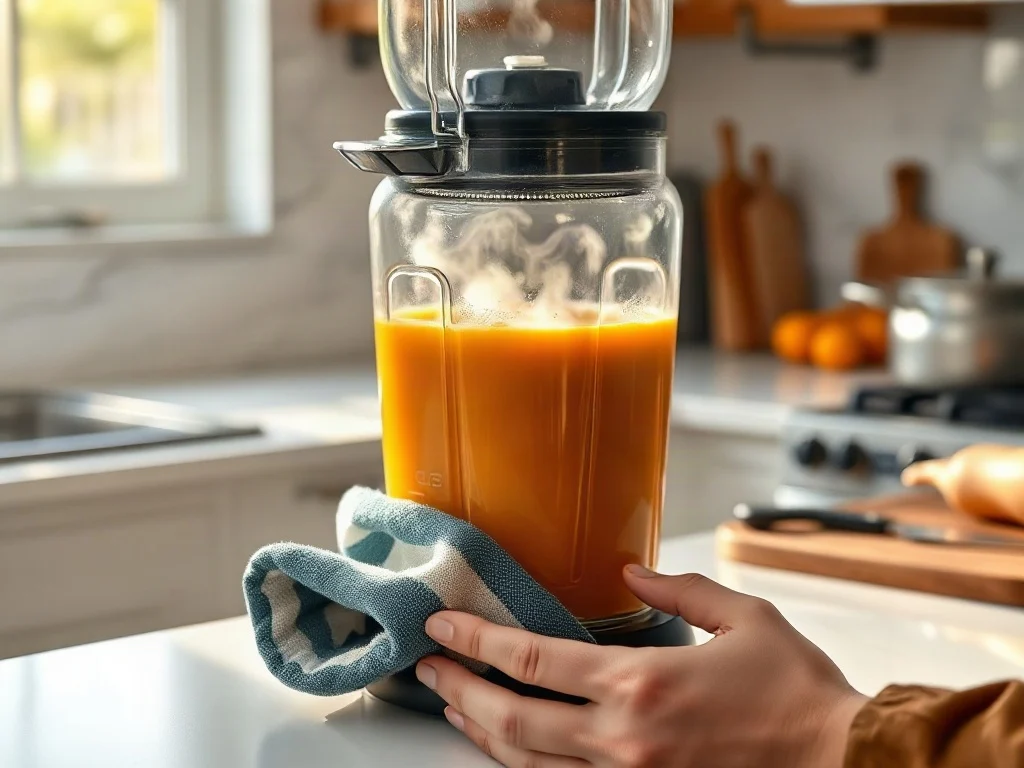
Among the most common blender safety mistakes, one stands out for how easily it turns a routine task into an injury: treating a blender as if it were a sealed, pressure-proof vessel. The headline that prompted this analysis, “Stop Making This Dangerous Mistake With Your Blender,” never names the error. This article therefore does not claim to know what that piece meant. It examines the best-documented hazards in home blending, ranks them by severity, and explains what the physics and product design say about prevention.
What the Headline Leaves Out
The teaser promises a single mistake but supplies no detail, which is a familiar pattern in consumer-safety coverage. Readers searching for answers deserve specifics. The most plausible candidate is blending hot liquids in a blender with a tightly sealed lid. Other candidates include reaching into a running jar, overfilling, and cleaning blades carelessly. Each has a different risk profile, so they are treated separately below.
Why Hot Liquids in a Blender Are the Highest-Risk Error
The physics of expanding steam
When hot soup or sauce is blended, the spinning blades agitate the liquid and release steam. Water turned to vapor occupies well over a thousand times its liquid volume at atmospheric pressure. In a closed jar, trapped vapor and heated air raise internal pressure, consistent with Gay-Lussac’s law, which links gas pressure to temperature at constant volume. Once pressure exceeds what the lid can hold, it can blow off, sending near-boiling contents upward.
The injury mechanism
The resulting harm is typically a scald to the face, hands, and forearms. The danger is amplified because liquid near its boiling point can burn skin almost instantly, and a sudden eruption leaves no time to react. I have found no reliable public dataset that isolates blender-specific scald incidents, so claims about exact frequency should be treated cautiously.
Other Blender Safety Mistakes Worth Ranking
- Overfilling the jar: Leaves no headspace for expansion, particularly with hot or carbonated contents.
- Reaching in while connected to power: Blades can cause a deep laceration, and cleaning is a common moment for this injury.
- Bypassing the lid or tamper design: Running without a seated lid defeats the intended containment.
- Ignoring wear: Cracked jars, worn gaskets, and loose blade assemblies increase failure risk.
- Poor hygiene: Incomplete cleaning invites cross-contamination, a lower-severity but more frequent problem.
On severity, hot-liquid eruptions and blade contact lead the list. On frequency, hygiene lapses probably dominate, though that is an inference rather than a measured finding.
Design Versus User Behavior: Who Is Responsible?
There is a legitimate debate here. Manufacturers point to manuals that, in many cases, advise filling hot liquids only partway, venting the lid, and starting at low speed. Critics counter that warnings printed in a manual are a weak control compared with engineering. Features such as a safety interlock prevent blade operation when the jar is not seated, and some premium brands such as Vitamix publish specific guidance for hot blends. Even so, an interlock does not stop pressure buildup in a sealed lid. The strongest case is that both matter: engineering should reduce the harm of foreseeable misuse, and users should treat hot blending as a distinct procedure.
Oversight exists but is reactive. In the United States, the Consumer Product Safety Commission handles complaints and oversees any product recall, and consumers can check current notices at cpsc.gov. Third-party certification by bodies like Underwriters Laboratories addresses electrical and mechanical safety, but it does not guarantee that a given use case, such as blending boiling soup, is safe.
How to Use a Blender Safely: A Practical Protocol
For hot soups and sauces
- Let the liquid cool for several minutes rather than blending straight from the pot.
- Fill the jar no more than about half, or follow the maximum hot-fill line if your model has one.
- Open the lid vent or remove the center cap, and cover it loosely with a folded towel to catch spatter.
- Begin at the lowest speed and raise it gradually.
- Blend in batches when making large quantities of soup or hot purée.
For everyday use
- Unplug the unit before removing or cleaning the blade assembly.
- Use a spatula, never a hand, to dislodge stuck food.
- Inspect gaskets and jars periodically, and replace damaged parts with manufacturer-approved components.
- For cold blends such as a smoothie, still seat the lid fully before starting.
Hand-held models need their own caution: immersing the blade head before turning it on and keeping it submerged reduces splatter, and the hot-liquid rules apply equally.
Frequently Asked Questions
Why do blenders explode with hot liquids?
Heat and agitation generate steam and expand trapped air. In a sealed jar, pressure builds until the lid gives way. Venting and partial filling reduce that risk.
Can you blend hot soup in a blender safely?
Yes, if you follow your manufacturer’s instructions: partial fill, vented lid, low starting speed, and ideally slightly cooled liquid. Some models prohibit hot liquids entirely, so check the manual.
Is it safe to clean blender blades by hand?
Only with the unit unplugged and with care. Many users prefer running warm water and dish soap in the jar itself, which avoids touching the blades.
What Comes Next for Blender Safety
The central insight is that the most dangerous blender error is not exotic. It is an assumption that a familiar appliance behaves the same way with every ingredient. Hot contents change the physics, and warnings that users skim are poor defenses against it. Expect incremental design responses rather than dramatic ones, such as clearer hot-fill markings, better venting geometry, and pressure-relief lids. Whether regulators or manufacturers drive that change depends on whether incident data becomes more transparent, and today it is thin. The question worth watching is whether safety labeling will move from the manual to the jar itself, where the decision is actually made.