
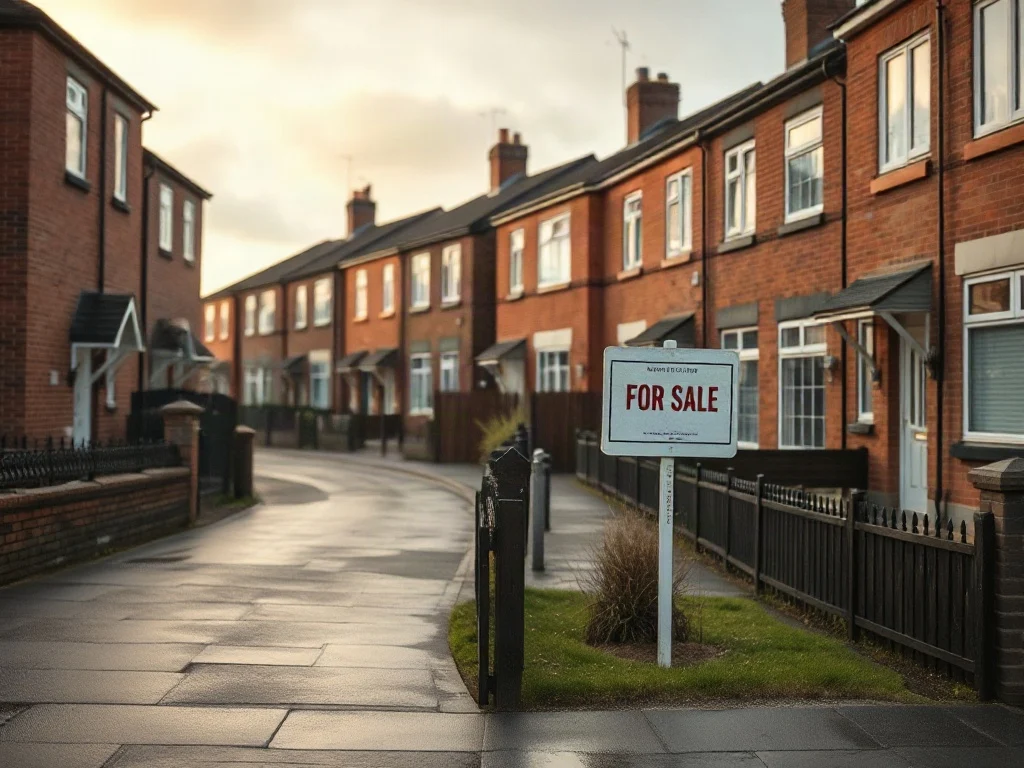
The Right to Buy scheme remains the most consequential housing policy in modern British history. It turned millions of tenants into owners and reshaped the politics of property. It also drained the public housing stock that the state is now struggling to rebuild. With Labour cutting the discounts that made the policy so attractive, the question is no longer whether Right to Buy mattered. The question is whether weakening it will do much about today’s shortage of social homes, or whether it is a symbolic correction to a much larger structural failure.
This analysis separates what the evidence supports from what the political debate assumes. It also tests the claim that ending a 1980s policy can repair a crisis with several causes.
What the Right to Buy Scheme Actually Did
The Housing Act 1980, introduced by Margaret Thatcher‘s government, gave secure tenants of local authorities a statutory right to buy their homes at a discount. The discount rose with length of tenancy. The Right to Buy was therefore both a social policy and a political one: it created a large class of owner-occupiers who had a personal stake in the property market.
The scale is well documented. Roughly two million homes in England have been sold under the policy since 1980. At the start of the 1980s, about one in three households lived in public housing. Today the social rented sector is far smaller as a share of the housing market, even after the growth of housing associations.
The Original Bargain
The policy’s defenders point to a real social outcome. Many working-class families acquired an appreciating asset, and home ownership in England climbed to a peak of around 71 percent in the early 2000s. That is an achievement few postwar policies can claim.
But the bargain had a design flaw. Councils were largely prevented from spending sale receipts on replacement homes, so each sale shrank the stock permanently. A policy built to expand ownership had no mechanism to protect the supply of affordable rented housing.
Did Right to Buy Cause the Housing Crisis?
The honest answer is that it contributed, but it did not act alone. Blaming the policy for everything ignores other factors, and exonerating it ignores the arithmetic of lost stock.
The Case Against
The critics’ argument rests on three observable effects:
- Stock depletion: sales removed social homes faster than councils and associations built replacements, particularly from the 1980s through the 2000s.
- Transfer to private landlords: a significant share of former council homes now sit in the private rented sector, often through buy-to-let investors. Some estimates, including London-focused analyses, suggest around four in ten ex-council homes in the capital are now privately let, though figures vary by method and period.
- Higher public cost: where households that once paid social rent are now housed privately, the state often pays higher rents through housing benefit, so public money flows to landlords rather than building assets.
The Case in Defence
Defenders make a fair counterargument. Councils built homes at scale until the 1970s, then largely stopped for reasons that had little to do with Right to Buy: fiscal constraints, shifting political priorities and a preference for housing associations. Local planning restrictions, land costs and a slow private building sector also limit supply. The housing shortage is a supply problem across all tenures, and a policy that sold two million homes did not stop anyone from building more.
Both sides are partly right. Right to Buy did not create the shortage, but it removed the social sector’s ability to absorb it, and the failure to reinvest the proceeds turned a one-off transfer into a permanent loss.
What Labour Has Changed
Angela Rayner, then Deputy Prime Minister and housing secretary in the Labour government, moved in late 2024 to cut Right to Buy discounts in England. The cut reversed the generous caps introduced in 2012 under the Conservative-led coalition. That earlier reform lifted the maximum discount and triggered a jump in sales from a few thousand a year to more than ten thousand at the peak. It was accompanied by a promise of one-for-one replacement that, by most independent assessments, was not met. The official guidance on the scheme is available on GOV.UK.
The government’s stated logic is simple: stop selling homes at deep discounts while replacement lags, and let councils keep more of the receipts to build. Ministers have also proposed protecting newly built council homes from the scheme for a period of decades. Those details have evolved through consultation, so readers should check current rules before relying on any specific cap.
The Devolved Contrast
England is not the only test case. The Scottish Government abolished Right to Buy in 2016, and the Welsh Government ended it in 2019. Neither country has solved its housing shortage. That outcome is the strongest evidence that abolition, or even a substantial weakening, does not on its own deliver a social housing recovery.
The Real Test: Social Housing Supply and Waiting Lists
Policy on discounts addresses outflow. The crisis is also about inflow. Around 1.3 million households in England are on local authority waiting lists, according to government statistics, and the number of households in temporary accommodation has reached record levels in recent years, above 120,000 households. Councils spend billions of pounds a year on emergency housing, which makes homelessness a fiscal problem as well as a human one.
The government has set a target of 1.5 million new homes in England over the parliament and committed around £39 billion over ten years to social and affordable homes. These are significant commitments, but they involve two caveats:
- Ambitious targets have been missed by governments of both parties, and delivery depends on planning capacity, construction labour and financing costs.
- Many new “affordable” homes are not social rent homes. They may be priced well above what households on the waiting list can pay.
Why Cutting Discounts Is Necessary but Insufficient
Ending deep discounts reduces the rate of loss, which is worth doing. But annual Right to Buy sales, at roughly ten thousand a year at their recent peak, are small compared with the backlog on waiting lists. Even a complete halt would not close the gap. Only sustained building on a scale not seen for decades would do that.
Risks and Unintended Consequences
Reform carries real trade-offs that deserve scrutiny rather than applause.
- Aspiration and mobility: Right to Buy gave some tenants their only route to ownership. Reducing discounts narrows that route, particularly in high-price regions such as London where market ownership is out of reach.
- Receipt dependence: councils that rely on sale proceeds for investment may see their funding fall if sales collapse, unless central government compensates them.
- Legal and political friction: a policy that tenants may already have planned around invites disputes over transition rules, and it may produce a rush of applications before changes take effect.
- Distraction risk: a visible reform on discounts can substitute for the harder work of financing and delivering homes.
What Practitioners Should Watch
For councils, housing associations and analysts, the useful indicators are not the headlines. They are measurable:
- Net change in social rented stock each year, after sales, demolitions and conversions.
- The share of new homes delivered at social rent compared with other affordable tenures.
- How much of each sale receipt is spent on replacement within a defined period.
- Waiting list duration and the volume of households in temporary accommodation.
Tenants considering a purchase should confirm eligibility and the current discount directly with their landlord, since qualifying rules differ by tenure and by nation within the UK.
FAQ
Did the Right to Buy scheme cause the housing crisis?
It was a significant contributing factor, mainly because sold homes were not replaced at the same rate. It did not cause the crisis alone. Planning constraints, funding choices and decades of low building all played a role.
What has Labour changed about Right to Buy?
Labour cut the maximum discounts in England, reversing the higher caps introduced in 2012, and has proposed giving councils more flexibility with receipts and protecting new homes from sale. Check GOV.UK for current rules.
Do Scotland and Wales still have Right to Buy?
No. Scotland ended it in 2016 and Wales in 2019. Both nations still face housing pressures, which shows that abolition is not a full solution.
How many homes were sold under Right to Buy?
Roughly two million in England since 1980, with sales concentrated in the 1980s and, after the 2012 discount increase, a smaller later surge.
The Question Policy Cannot Dodge: Who Replaces What Is Sold?
The most important insight from four decades of evidence is that the scheme’s sales were never the central failure. The failure was the absence of a rule guaranteeing that every public asset sold would be replaced, in the same place, at the same rent. Labour has addressed the discount, the easiest part of that problem. It has only begun to address the replacement obligation.
Watch three things over the next few years. First, whether net social rent stock actually grows rather than merely slowing its decline. Second, whether councils are able to build at scale, which depends on borrowing rules, staffing and land. Third, whether the political incentive to protect homeowners resurfaces when the next election approaches. If it does, the debate may swing back toward ownership incentives without any resolution of the supply gap.
A reasonable prediction is that discount reform will slow losses at the margin, while the housing crisis will turn on building volumes, not on the legacy of 1980. The unanswered question is whether Britain can sustain a long, unglamorous programme of building social homes for longer than a single political cycle. Right to Buy was an act of decisive policy. Repairing its legacy will require patience.
Frequently Asked Questions
Why couldn't councils simply use sale receipts to build replacement homes?
For much of the policy's history, councils were largely restricted from spending receipts on new housing, and the Treasury claimed a large share. Each sale therefore shrank the stock permanently. Later reforms allowed some reinvestment, but replacement lagged well behind the number of homes sold.
Does Right to Buy still cost the taxpayer money through housing benefit?
Often, yes. When a former council home is let privately, often through buy-to-let, tenants who once paid social rent may need housing benefit at higher market rents. Public money then flows to private landlords instead of building assets. The scale varies by area and by method of estimate.
Did Right to Buy cause the shortage of social homes on its own?
No. Councils largely stopped building at scale after the 1970s because of fiscal limits, shifting priorities and a preference for housing associations. Planning restrictions and land costs also hold back supply. Right to Buy removed the sector's capacity to absorb the shortage and was not the only cause.
Is the share of former council homes now privately let the same everywhere?
No. Some London-focused analyses suggest about four in ten ex-council homes in the capital are now privately rented, but figures differ by method, period and location. The number should be read as an estimate and not as a national figure.
Will cutting Right to Buy discounts be enough to fix the social housing shortage?
Probably not by itself. Lower discounts should slow the loss of existing homes and raise the receipts per sale, but the shortage has several causes, including weak building, land costs and planning limits. Without large-scale construction of new social homes, the reform risks being mainly a symbolic correction.
Why did Labour's changes target the 2012 discount caps specifically?
The 2012 reform under the Conservative-led coalition raised the discount caps, making purchases far more attractive and speeding up sales. Reversing it cuts the incentive to buy, so it targets the period when the policy became most generous and the loss of stock accelerated again.