
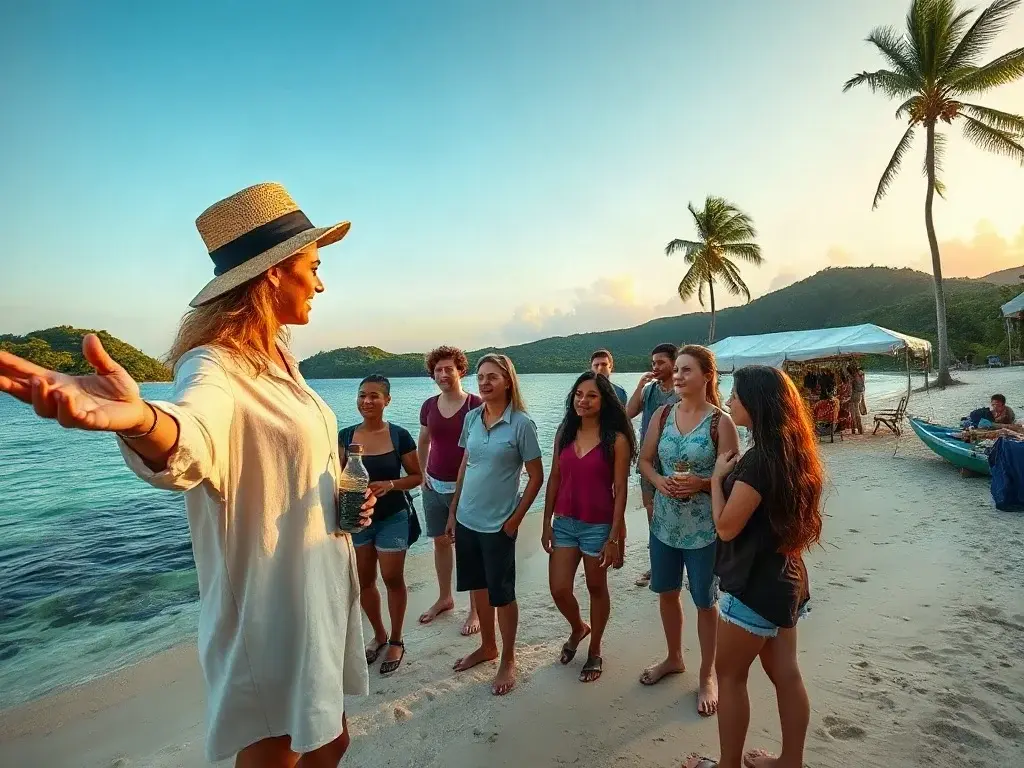
Sustainable tourism in Jamaica is no longer a branding exercise or a polite nod to environmentalism. It is the question that will decide whether the island‘s most important economic engine stays strong for decades or slowly erodes the beauty, culture and community life it depends on. The framing is powerful: think beyond the next booking, the next hotel opening, the next busy season, and ask what kind of country today’s decisions are building. This article looks at what responsible, community-centered tourism means for Jamaica, where the pressure points are, and what practical steps can turn good intentions into lasting results.
Will our communities become stronger? Will our natural surroundings remain beautiful? Will young Jamaicans have a meaningful opportunity to own, lead and prosper within the industry?
Those three questions give us a useful test. They cover community strength, environmental health and economic ownership, which are the three pillars of any credible approach to sustainable tourism.
Why Sustainable Tourism Matters So Much to Jamaica
Few countries are as closely tied to their visitor economy. Tourism in Jamaica is widely recognized as one of the island’s leading sources of foreign exchange and employment, and it supports many indirect jobs in farming, transport, entertainment, crafts and construction. The Jamaica Tourist Board and the Ministry of Tourism have reported record or near-record visitor numbers in recent years, so the sector’s momentum is real.
Growth, however, is not the same as development. A destination can welcome more visitors every year and still leave its own people on the margins. If beaches are degraded, reefs die and communities are priced out of the places they have lived for generations, the very assets that attract visitors are consumed. That is why why sustainable tourism is important for Jamaica is a strategic question, not a moral footnote. Jamaica sells a living culture and a living landscape, and neither can be restocked once it is lost.
The Island Context: Small, Beautiful and Vulnerable
Jamaica is part of the Caribbean and belongs to the group of Small Island Developing States. These nations share a distinctive risk profile: limited land, dependence on imports, fragile coastal ecosystems and high exposure to storms. Hurricane Beryl, which passed close to the island as a powerful storm in July 2024, was a reminder that climate risk is an operating condition rather than a distant forecast. A tourism model that ignores resilience is, in effect, a model that borrows against the future.
The Three Pillars: Environment, Community and Ownership
Protecting the Natural Product
Jamaica’s appeal rests on a remarkable range of natural settings: white-sand beaches in Negril, waterfalls near Ocho Rios, and the misty slopes of the Blue and John Crow Mountains National Park, a UNESCO World Heritage Site recognized for both natural and cultural value. Inland, the rugged Cockpit Country is a biodiversity and water-recharge landscape of national importance.
The most exposed assets are coastal. Healthy coral reefs and mangroves do double duty. They support fisheries and dive tourism, and they act as natural buffers against waves and coastal erosion. Caribbean reefs have suffered from coral bleaching, pollution and overfishing over several decades, so every resort drainage decision and every shoreline development has consequences well beyond the property line.
Carrying Capacity: The Concept That Is Easy to Cite and Hard to Enforce
The idea of carrying capacity asks how many people a site can host before quality declines for visitors, residents and ecosystems alike. In practice, there is rarely a single number. A river-tubing site, a cruise port and a mountain trail each have different thresholds. The honest answer is that carrying capacity must be measured site by site and revisited as conditions change. Destinations facing overtourism elsewhere in the world show how quickly congestion can turn a prized place into a resented one.
Strengthening Communities Through Community-Based Tourism
Community-based tourism in Jamaica puts residents in the role of hosts, guides, cooks and storytellers rather than spectators watching a resort economy pass by. The island has a long tradition of guesthouses, village tours, farm visits and cultural experiences built around community-based tourism principles. These models matter because they distribute income more widely and give visitors something an all-inclusive compound cannot: a real encounter with Jamaican cuisine, music, language and everyday life.
They are not a cure-all, though. Small operators often struggle with marketing, financing, quality standards and access to distribution channels. The strongest programs pair authentic experiences with training, micro-financing and reliable booking platforms. Without that support, community tourism can stay charming but fragile.
Ownership: The Question Behind the Question
The most pointed line in the original reflection is the one about young Jamaicans owning, leading and prospering within the industry. This is the heart of the issue. Economists use the term economic leakage to describe visitor spending that exits the local economy through imported goods, foreign-owned supply chains and repatriated profits. Studies of Caribbean tourism, including work by international development bodies, have long identified leakage as a structural challenge, although estimates vary widely by destination and method. Any specific percentage for Jamaica should be treated with caution unless it comes from a current, published analysis.
What is clear is the mechanism. When hotels buy local produce, hire local contractors, commission local artists and promote local talent into management, spending circulates and amplifies through the multiplier effect. When they do not, the island supplies the scenery and the labor while others capture most of the value.
The All-Inclusive Debate
Few topics divide Caribbean tourism experts like the all-inclusive resort. Supporters point to its capacity to generate jobs, attract investment, deliver consistent quality and fill rooms year-round. Critics argue that it can keep visitors inside the property and reduce spending in nearby communities.
A more useful view is that the model is neither villain nor savior. The decisive factor is how deeply the property is connected to the local economy. Programs such as the Tourism Linkages Network, supported through national tourism agencies, aim to connect hotels with farmers, manufacturers and creative entrepreneurs. A resort that sources its breakfast fruit from nearby growers and offers guests curated off-property experiences is doing something very different from one that imports almost everything and discourages exploration.
Practical Strategies for Sustainable Tourism Practices in Jamaican Hotels and Attractions
For operators asking which sustainable tourism practices Jamaican hotels should adopt first, the best answers combine environmental savings with commercial logic. The following steps are widely recommended in sustainability frameworks and tend to pay back over time:
- Energy transition: Use solar generation, efficient cooling and smart controls to cut fuel imports and exposure to price swings. Jamaica’s strong sunshine makes renewable energy a natural fit.
- Water stewardship: Install rainwater harvesting, greywater reuse and leak monitoring, because water stress is a growing concern on many islands.
- Local sourcing: Build farm-to-table procurement with contracts that give farmers predictable demand, so they can invest in quality and volume.
- Waste reduction: Apply circular economy thinking by eliminating single-use plastics, composting food waste and partnering with local recyclers.
- Talent pipelines: Offer apprenticeships, scholarships and clear promotion paths so young Jamaicans can move from entry-level roles into management and ownership.
- Third-party verification: Align with recognized benchmarks such as the criteria of the Global Sustainable Tourism Council so claims can be checked rather than merely asserted.
Common Mistakes to Avoid
- Treating sustainability as a marketing campaign instead of an operating standard.
- Launching community projects without long-term funding or training.
- Measuring success only by arrivals, rather than by local income retained, ecosystem health and resident satisfaction.
- Ignoring climate adaptation in site design, insurance and supply chains.
How Travelers Can Support Responsible Tourism
Visitors also shape outcomes. Travelers looking for responsible tourism in Jamaica can make a measurable difference through simple choices: staying at locally owned guesthouses or verified eco-conscious properties, hiring licensed local guides, buying crafts directly from artisans, eating at neighborhood restaurants and respecting reef-safe behavior in the water. Asking hotels where their food and staff come from sends a market signal that operators notice.
Policy, Measurement and the Role of Government
Voluntary good practice has limits. Lasting change depends on planning rules, environmental enforcement and incentives. Agencies such as the Ministry of Tourism and the Tourism Enhancement Fund help shape investment, product development and training. Aligning national tourism strategy with the Sustainable Development Goals offers a shared framework, and UN Tourism publishes guidance on measuring the sector’s economic, social and environmental footprint.
The hard part is monitoring. Without reliable indicators, such as local procurement rates, wage levels, reef condition and community sentiment, sustainability remains a slogan. Transparent, regularly published data would give investors, residents and visitors a shared picture of progress.
What Comes Next for Jamaican Tourism
Several trends are likely to shape the next decade, though these are reasoned expectations rather than confirmed outcomes. Climate resilience will move from a specialist concern to a core investment criterion, affecting insurance costs, building standards and destination reputation. Many travelers, particularly younger ones, increasingly say they value authenticity and sustainability, which could favor destinations that offer credible community experiences. Digital platforms may also give small Jamaican operators direct access to global customers, reducing dependence on intermediaries. Meanwhile, regional competition will intensify, and destinations that cannot prove their environmental and social credentials may find it harder to hold premium pricing.
Frequently Asked Questions
What is sustainable tourism in Jamaica?
It is an approach to developing the visitor economy that protects the island’s natural environment, respects and benefits local communities and creates lasting economic opportunities for Jamaicans, including ownership and leadership roles.
Why is sustainable tourism important for Jamaica?
Tourism is central to the economy, and it relies on beaches, reefs, forests and culture that can be damaged by poorly managed growth. Sustainability helps protect those assets while spreading the benefits more widely and reducing climate and economic risk.
How can travelers support sustainable tourism in Jamaica?
Choose locally owned accommodations or verified eco-conscious hotels, use local guides, buy directly from artisans, eat locally, conserve water and energy, and avoid activities that damage reefs or wildlife.
Is community-based tourism better than all-inclusive tourism?
Not automatically. Each has strengths. Community-based tourism tends to distribute income more directly, while all-inclusive resorts can generate large-scale employment. The key is how strongly each model connects to local suppliers, workers and culture.
The Real Test of Jamaica’s Tourism Future
The most important insight is that sustainability in Jamaica is ultimately a question of who the industry is for. Cleaner energy and fewer plastic straws matter, but the deeper measure is whether a young person in Montego Bay, Port Antonio or a small rural district can see a path to owning a business, leading a hotel or running a tour company in the place they call home.
Watch three signals over the next few years: how much visitor spending is retained locally, whether reef and coastal health improve or decline, and how many Jamaicans move into ownership and senior management. If those indicators rise together, the industry will have earned the right to call itself sustainable. If arrivals keep growing while those numbers stagnate, Jamaica may be building a brilliant business that its children can visit but never truly inherit. The unanswered question is whether policy, investors and communities will agree to measure success that way before the pressure of the next busy season makes it easy to look away.
SEO DATA
Primary Focus Keyphrase: sustainable tourism in Jamaica
Related Keyphrase 2: community-based tourism Jamaica
Related Keyphrase 3: sustainable tourism practices Jamaican hotels
Related Keyphrase 4: why is sustainable tourism important for Jamaica
Related Keyphrase 5: responsible tourism in Jamaica
Primary Keyphrase Synonyms: responsible tourism in Jamaica, eco-friendly tourism in Jamaica, green tourism in Jamaica, sustainable travel in Jamaica, ecotourism in Jamaica
SEO Title: Sustainable Tourism in Jamaica: Protecting People and Places
Meta Description: Sustainable tourism in Jamaica must protect reefs, empower communities and open ownership to young Jamaicans. Explore the strategies that matter.
URL Slug: sustainable-tourism-in-jamaica
Image Filename: sustainable-tourism-in-jamaica-community-beach.jpg
Image ALT Text: Jamaican tour guide showing visitors a coastal mangrove and reef area at sunrise
Image Title: Sustainable Tourism in Jamaica
Image Caption: Local guides and healthy coastal ecosystems are central to a tourism industry Jamaica’s next generation can inherit.
Search Intent: Informational (with commercial investigation elements)