
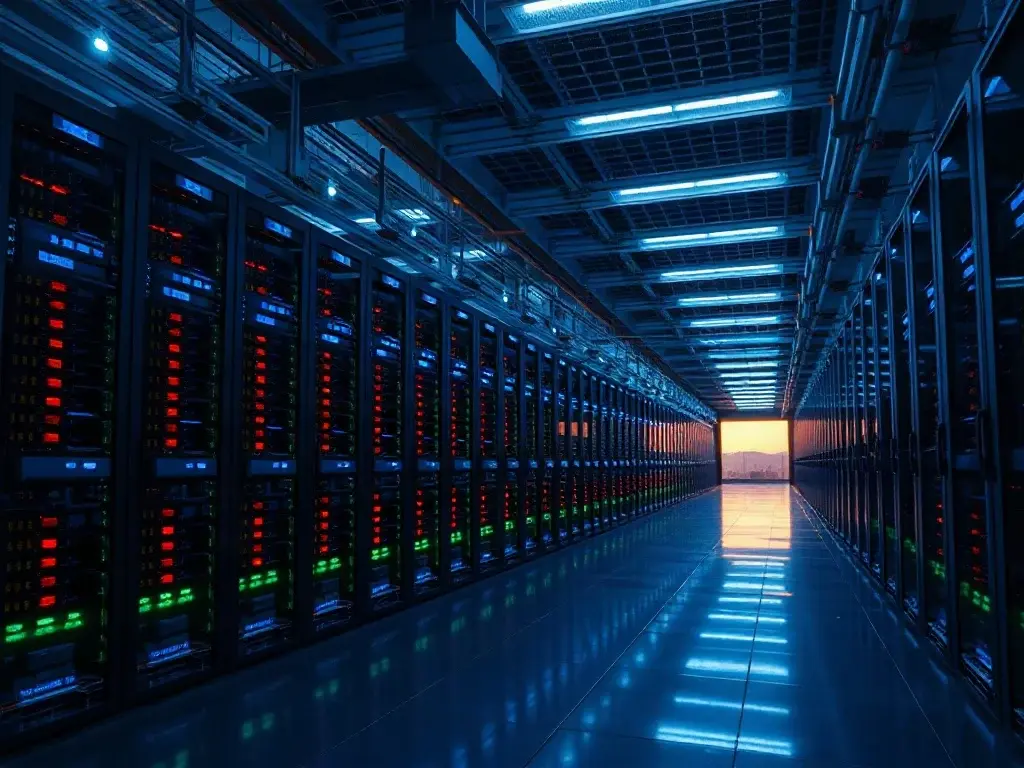
Microsoft has lowered its calendar 2026 capital expenditure forecast to $170 billion, down from $175 billion, a rare downward revision in an industry that has spent the past two years raising its AI infrastructure spending plans almost every quarter. The adjustment, disclosed by Chief Financial Officer Amy Hood on the company’s fiscal first-quarter earnings call, matters less for its size than for its cause. Microsoft did not say it is spending less because demand has softened. It said the capacity it planned to bring online has arrived late. That distinction shapes how investors, competitors, and enterprise customers should read the revision, and it raises a harder question about whether the AI data center buildout can keep pace with the capital flowing into it.
What Microsoft Actually Said
Hood attributed the change to delays in third-party capacity. Microsoft had expected new computing resources to come from outside providers, but some of these GPU-as-a-Service contracts have slipped into the second half of the fiscal year. In practical terms, these arrangements involve third-party cloud operators that own and run graphics processing units, typically Nvidia hardware, and lease that compute to hyperscalers such as Microsoft. Microsoft has used such partnerships to supplement its own data centers while it races to meet demand for AI workloads.
The timing is important. Hood indicated that capital expenditure is expected to accelerate in the second half of the fiscal year as the delayed capacity comes online. This means the reduction is best understood as a timing adjustment rather than a permanent retreat. Capital that was scheduled to be deployed earlier is now expected to be deployed later, and the company is signaling confidence that the underlying demand still requires the spending.
Reading the Numbers Carefully
The headline figures support that interpretation. Microsoft reported $92.3 billion in revenue for the fiscal first quarter ending September 30, up 19 percent. Azure cloud revenue rose 48 percent to more than $33 billion, exceeding Wall Street expectations. Growth of that magnitude is difficult to reconcile with a company retreating from AI demand. Shares rose roughly 3 percent in after-hours trading following the call, suggesting investors viewed the adjustment as a manageable scheduling issue rather than a warning sign.
Why Capacity Delays Are Becoming the Central Constraint
The most significant analytical point in this report is that the binding constraint on AI growth has shifted from chip design and software to physical infrastructure. Reporting on recent project setbacks has pointed largely to two obstacles: a shortage of electricity and local opposition to new facilities. Both are slow-moving problems that capital alone cannot solve.
Power is the most consequential. A large AI data center can draw hundreds of megawatts, comparable to the demand of a mid-sized city. Securing that load requires negotiations with utilities, grid interconnection approvals, and sometimes new generation or transmission infrastructure, processes that routinely take several years. Money can accelerate the procurement of servers and cooling systems, but it cannot compress an interconnection queue. This is why a company with abundant capital can still report delayed capacity.
Local Opposition and Regulatory Friction
Community resistance adds a second layer of friction. Data centers have drawn objections over water use for cooling, noise, land use, and the tax and employment benefits offered to attract them. The result is that the buildout is increasingly shaped by local permitting and public sentiment, not only by corporate planning. Companies that once treated site selection as a largely technical exercise now must treat it as a political one.
The Risk of Over-Reliance on Third Parties
Microsoft’s reliance on outside providers introduces its own exposure. When capacity is contracted rather than owned, the timing of delivery depends on another company’s construction schedule, power supply, and supply chain. The delay Hood described illustrates this dependency directly. For the hyperscaler, the trade-off is speed and flexibility in exchange for less control over when capacity actually arrives.
The Investor Question: Returns on AI Spending
Wall Street’s scrutiny of AI capital expenditure reflects a broader and unresolved debate. Cloud companies have collectively raised their AI spending forecasts over successive quarters, and the sums involved are now measured in tens of billions per company per year. Investors are asking when this spending will generate proportionate returns. Microsoft’s decision to keep its forecast unchanged last quarter, while many peers increased theirs, was notable precisely because it departed from the prevailing pattern. The current reduction, though modest at roughly 3 percent of the forecast, reinforces the sense that management is attempting to align spending with the pace at which capacity can be physically deployed.
There are two competing readings. The optimistic view holds that disciplined capital allocation, tied to real capacity milestones, is a sign of maturity and reduces the risk of overbuilding. The skeptical view holds that a downward revision, even a small one, could signal that demand forecasts or unit economics are less robust than the spending trajectory implied. Revenue growth of 48 percent in Azure favors the first reading, but the distinction will become clearer only as the delayed capacity arrives and utilization data becomes available.
Headcount and the Cost of the AI Transition
The report also notes that Microsoft’s headcount fell 2 percent during the quarter, and that the company offered a buyout to more than a quarter of its workforce. A spokesperson told Business Insider that the company expects no more than 5 percent of eligible employees to accept. Hood’s internal memo stated that the company expects very few people to select the offer because of growth opportunities. Taken together, these moves suggest a company reallocating resources: lowering operating costs in some areas while directing investment toward AI infrastructure and products. The coexistence of capital expansion and workforce reduction is characteristic of the current phase of the industry, in which capital intensity rises even as labor costs are scrutinized.
Practical Implications for Enterprises and Competitors
For enterprise customers, the principal lesson is that AI capacity is not infinitely elastic on a short timeline. Organizations planning large-scale AI deployments should account for the possibility that cloud providers’ capacity expansions may arrive later than announced. Practical steps include:
- Building flexibility into project timelines and avoiding commitments that depend on a single capacity milestone.
- Evaluating multi-cloud or hybrid architectures to reduce dependence on any one provider’s build schedule.
- Monitoring reserved capacity agreements and understanding the contractual remedies if delivery slips.
- Factoring energy costs and availability into long-term AI workload planning, since power is an increasingly scarce input.
For competitors and investors, the signal is that the AI race is becoming a contest over permitting, power procurement, and construction execution as much as over model quality. Companies that secure grid access and community approvals early may hold a durable advantage that is difficult to replicate quickly.
Future Developments to Watch
The next several quarters will test whether Hood’s expectation of accelerating capital expenditure in the second half of the fiscal year materializes. Three indicators deserve close attention. First, whether delayed third-party contracts begin delivering capacity on the revised timetable. Second, whether Azure growth remains strong as new capacity enters service, since revenue growth without matching capacity would point to demand running ahead of supply. Third, whether regulators and utilities develop faster interconnection processes or, conversely, impose stricter conditions on large data center loads.
Over the longer term, the industry may face a structural divergence between companies that can secure power and sites at scale and those that cannot. Such a divergence would reward firms with existing energy relationships and land holdings, and could concentrate AI infrastructure among a small number of well-capitalized operators. It remains uncertain whether public policy will ease the bottlenecks through transmission investment and permitting reform, or whether local resistance will slow the buildout enough to reshape competition itself. The answer will determine whether this quarter’s modest downward revision was an isolated scheduling adjustment or the first visible sign that the physical limits of the AI economy are beginning to bind.
Frequently Asked Questions
¿Por qué Microsoft redujo su previsión de gasto de capital para 2026?
Microsoft no redujo el gasto porque la demanda de IA haya disminuido. La empresa explicó que la capacidad de computación que esperaba obtener de proveedores externos llegó con retraso, sobre todo contratos de GPU como servicio que se desplazaron a la segunda mitad del año fiscal. Se trata, por tanto, de un ajuste de calendario más que de un retroceso permanente.
¿Significa que el gasto en IA de Microsoft va a disminuir de forma permanente?
No necesariamente. Según la directora financiera Amy Hood, el gasto de capital se acelerará en la segunda mitad del año fiscal a medida que llegue la capacidad retrasada. El capital que estaba previsto antes se desplegará más tarde, lo que indica que la empresa sigue considerando que la demanda justifica la inversión.
¿Qué son los contratos de GPU como servicio y por qué se retrasan?
Son acuerdos en los que operadores de nube externos poseen y gestionan unidades de procesamiento gráfico, normalmente hardware de Nvidia, y las alquilan a grandes proveedores de nube como Microsoft. Pueden retrasarse porque dependen de la entrega de hardware, de la construcción de instalaciones y de la disponibilidad de energía, factores que los propios operadores no siempre controlan.
¿Por qué la electricidad se ha convertido en el principal cuello de botella para los centros de datos de IA?
Un gran centro de datos de IA puede consumir cientos de megavatios, comparable a la demanda de una ciudad mediana. Conectarlo a la red requiere aprobaciones de las eléctricas, de los reguladores y, a veces, nueva generación o transmisión, procesos que suelen tardar varios años. El dinero puede acelerar la compra de servidores, pero no acortar esas colas de interconexión.
¿Cómo afecta la oposición local a la construcción de centros de datos?
Las comunidades han presentado objeciones por el consumo de agua para refrigeración, el ruido, el uso del suelo y los incentivos fiscales concedidos. Esto hace que el despliegue dependa cada vez más de permisos locales y de la opinión pública, de modo que la selección de ubicaciones pasa de ser un asunto técnico a uno también político, lo que añade plazos e incertidumbre.
¿Cómo deben interpretar los inversores esta revisión a la baja?
Los datos financieros sugieren que el ajuste es manejable. Microsoft reportó ingresos de 92.300 millones de dólares, con un crecimiento del 19 %, y Azure creció un 48 %, por encima de las expectativas. Que las acciones subieran unos 3 % tras la presentación indica que el mercado lo vio como un problema de programación y no como una señal de alarma sobre la demanda.