
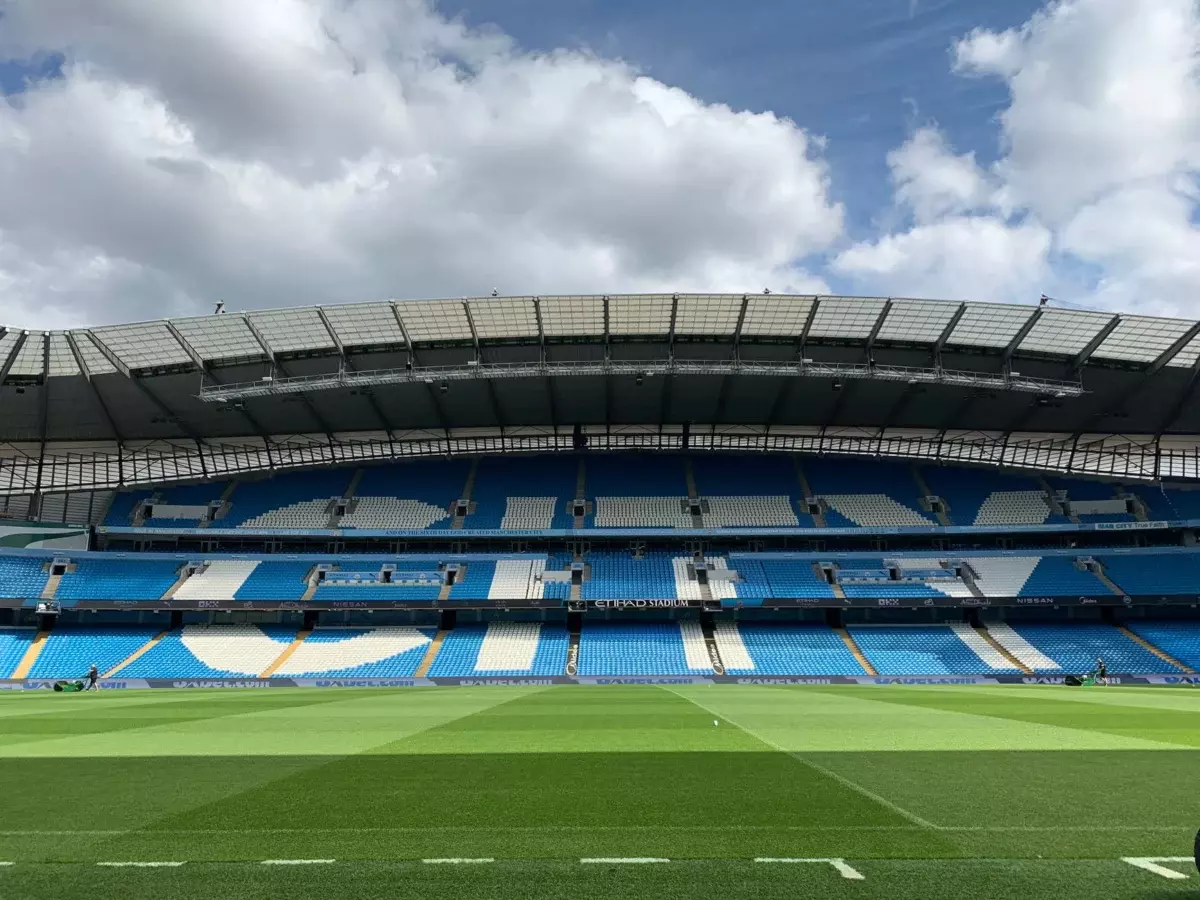
Pep Guardiola is expected to attend Manchester City‘s Champions League tie against Paris Saint-Germain next week, and the timing gives the occasion a significance that goes well beyond the scoreline. It will be City’s first home match since the club were found guilty of the majority of the Premier League‘s 115 charges, turning the night at the Etihad Stadium into a live test of how elite football absorbs legal and reputational pressure.
For supporters, the game still sits in the familiar frame of top-level association football: a heavyweight European tie, a packed stadium, and a manager whose methods have shaped an era. For observers, it is also a moment of symbolism. Guardiola, the public face of Manchester City under City Football Group ownership, now stands at the intersection of sporting routine and a much larger governance story.
Why this first home game matters more than a normal European night
In ordinary circumstances, a Champions League home fixture would be judged on tempo, pressing, set pieces, and the result. Here, the narrative is wider. The first home match after the Manchester City guilty verdict becomes a reference point for how the club wants to be seen: calm, disciplined, and focused on football rather than spectacle.
That matters because major clubs do not only compete on the pitch. They also compete in the court of public perception, where every line from the manager, every crowd reaction, and every camera shot is read for meaning. Guardiola’s attendance suggests continuity. It signals that the football operation intends to keep moving while the disciplinary process continues around it.
In modern football, the hardest part is often not winning the match, but separating the match from everything happening around it.
That separation is especially difficult when the club in question is one of the defining forces in Premier League history and one of Europe’s most scrutinized superclubs.
What the Premier League case means in practical terms
The Premier League is not only a competition; in cases like this, it also functions as a regulatory authority. That dual role explains why the phrase Premier League 115 charges explained keeps surfacing in fan debate, legal discussion, and media coverage. The issue is not simply whether a club won matches. It is whether the rules governing finance, transparency, and reporting were followed.
That is why the verdict sits at the intersection of sport and sports law. In football in England, disciplinary questions can shape club strategy, recruitment, and how rival supporters talk about competitive balance. The Premier League case also sits in the broader ecosystem of Financial Fair Play, even if the specific rules and enforcement pathways are not identical.
The league is more than a schedule-maker
Many fans still think of the league only as a fixture list and a table. But the current era of football governance has changed that. Clubs are now judged not just on points, but on compliance, disclosure, and accounting standards. That places cases like this in the same wider conversation as UEFA oversight and other major disciplinary processes across the sport.
Why appeals and process matter as much as headlines
Even after a verdict, the story is rarely over. Complex football disputes often continue through written reasons, appeals, and procedural stages, with the Court of Arbitration for Sport often cited in the wider landscape of elite-sport disputes. The important practical point is that a ruling can change the tone of a season long before every consequence is final.
Why Guardiola’s presence carries symbolic weight
Pep Guardiola has never been a neutral figure at Manchester City. He is not just a tactical reference point; he is part of the club’s identity. Since his arrival, he has become the face of a team that has dominated English football, influenced coaching trends, and raised the expectations placed on possession-based systems.
That is why his attendance matters. If Guardiola were absent, speculation would likely grow around distance, discomfort, or institutional uncertainty. His expected presence instead points toward stability. It tells players and fans that the football operation remains intact, and that the manager is not allowing the off-field narrative to define the week.
There is also a communication dimension. Elite managers know that a public appearance can carry meaning even when they say very little. In this case, Guardiola’s body language, pre-match comments, and touchline demeanor will all be read as part of the club’s response to the verdict.
The club’s ownership context also matters. City’s rise under Abu Dhabi United Group changed the economics of the team and turned it into a global force. That transformation brought trophies, but also scrutiny, especially from critics who connect wealthy ownership models with the broader debate around sportswashing.
Why Paris Saint-Germain makes the night even bigger
The opponent matters. A match against Paris Saint-Germain is never just another fixture; it is a meeting of two of modern football’s most heavily resourced, most debated, and most globally marketed clubs. The pairing is a perfect example of why the UEFA Champions League remains football’s most powerful stage.
PSG brings its own symbolism. Like City, it represents the era of superclubs built for immediate elite competition, with global audiences and relentless scrutiny. So the Champions League tie becomes more than a football match. It becomes a comparison of football projects, ownership models, and the ability of each club to keep competitive focus while under a media microscope.
For a neutral viewer, that combination is irresistible. For Manchester City, it is an opportunity to insist that the football project is larger than any single legal story. For rivals, it is a reminder that the club’s dominance will continue to be measured against questions of governance and accountability.
The commercial and reputational stakes are real even when the football is excellent
At elite level, reputation is not an abstract concern. It influences how clubs are discussed by sponsors, broadcasters, regulators, and supporters. Manchester City have spent years building a model that combines title-winning football with global branding, and any sustained disciplinary case inevitably affects how that model is interpreted.
This is where the story extends beyond the pitch. Clubs in the modern game operate inside a dense web of commercial expectations, compliance standards, and public narratives. A verdict does not automatically undo a sporting project, but it can alter how every subsequent success is received. That is especially true when the club is already part of a wider debate about the economics of football in England.
Even for supporters who want only the match, these narratives matter. They shape the tone of the stands, the questions asked in press conferences, and the frame in which every result is interpreted. In that sense, Guardiola’s attendance is not just about optics; it is about protecting the club’s sense of normality.
What to watch when the game finally arrives
There are several things worth monitoring as City prepare for the match:
- The atmosphere at the Etihad: Crowd tone can reveal whether supporters see the verdict as background noise, a rallying point, or a distraction.
- Guardiola’s language: Even carefully managed remarks can show whether the club is leaning into defiance, calm, or quiet confidence.
- On-pitch intensity: A fast, disciplined performance would help City keep the narrative on football rather than governance.
- Any procedural updates: The broader case may move at a different pace than the fixture list, but every new development will shape the next few weeks.
- How PSG approaches the occasion: Opponents often sense when a club is under unusual pressure, even if that pressure is external rather than tactical.
For readers following the issue closely, a useful internal content strategy would be to pair this story with explainers on Premier League regulation, Financial Fair Play, and Manchester City’s ownership model. That context helps turn breaking news into a more complete understanding of how elite football is governed.
Frequently asked questions
Why is Pep Guardiola’s attendance such a big deal?
Because he is the public face of Manchester City. When a club is dealing with a major disciplinary ruling, the manager’s presence sends a message of continuity and control.
Does the verdict change the Champions League match itself?
Not directly. The match is still played under normal competitive rules, but the off-field context changes how the fixture is viewed by fans, media, and rivals.
What does the Premier League guilty verdict mean for Manchester City long term?
It means the club’s next steps matter as much as the ruling itself. Any sanctions, appeals, or follow-up decisions could shape the club’s sporting and commercial outlook for years.
Could this affect how other clubs are regulated?
Yes. High-profile cases often influence how strict leagues, federations, and clubs are about documentation, transparency, and compliance. That is one reason this story resonates beyond Manchester.
The question that will outlast one night at the Etihad
The most important insight is that this is no longer just a story about a verdict or a fixture. It is about whether a modern football superclub can keep winning, keep projecting calm, and keep its football identity intact while the legal and regulatory machinery continues to grind in the background.
What readers should watch next is not only the result against PSG, but the cadence of the weeks that follow: the club’s language, the league’s procedural updates, and whether the football still feels insulated from the dispute. If Manchester City keep performing at the highest level, the case will not disappear, but it may show how resilient an elite sporting project can be under pressure.
The unanswered question is whether one of football’s most successful modern dynasties can remain fully dominant while being forced to explain its past. That tension, more than any single night, is what will define the next phase of the story.
Frequently Asked Questions
Why is Guardiola's attendance at this match significant if he is not directly involved in the legal case?
His presence matters because Guardiola is the public face of Manchester City's football project. Even though he is not the subject of the charges, attending the first home match after the verdict sends a message of continuity, stability, and unity. It also helps define how the club wants to be perceived while the wider legal process continues.
Does the guilty verdict mean Manchester City will face immediate sporting penalties?
Not necessarily. A guilty verdict in a regulatory case does not always produce instant sporting punishment. The next steps may involve written reasons, possible appeals, and then any sanctions being decided or confirmed. That is why the article frames the night as significant without assuming that every consequence is already settled.
Why is this being treated as more than just a Champions League match?
Because the game arrives at a moment when football, governance, and public perception overlap. On one level it is still a major European fixture. On another, it is the club's first home outing after a major verdict, so every reaction from the crowd, manager, and media will be interpreted as part of a larger story.
How is this Premier League case different from normal football controversies?
This is not about a bad result, a refereeing mistake, or a one-off disciplinary issue. It concerns alleged breaches tied to finance, transparency, and reporting, which places it in the realm of sports regulation and football law. That makes it more serious and more complex than the usual on-pitch controversies fans are used to.
Why do appeals and procedures matter so much in a case like this?
Because in major football disputes, a verdict is often only one stage in a longer process. Written findings, legal challenges, and appeal routes can all affect the final outcome. For clubs and supporters, that means the practical impact may evolve over time, even if the headline verdict has already changed the atmosphere.