
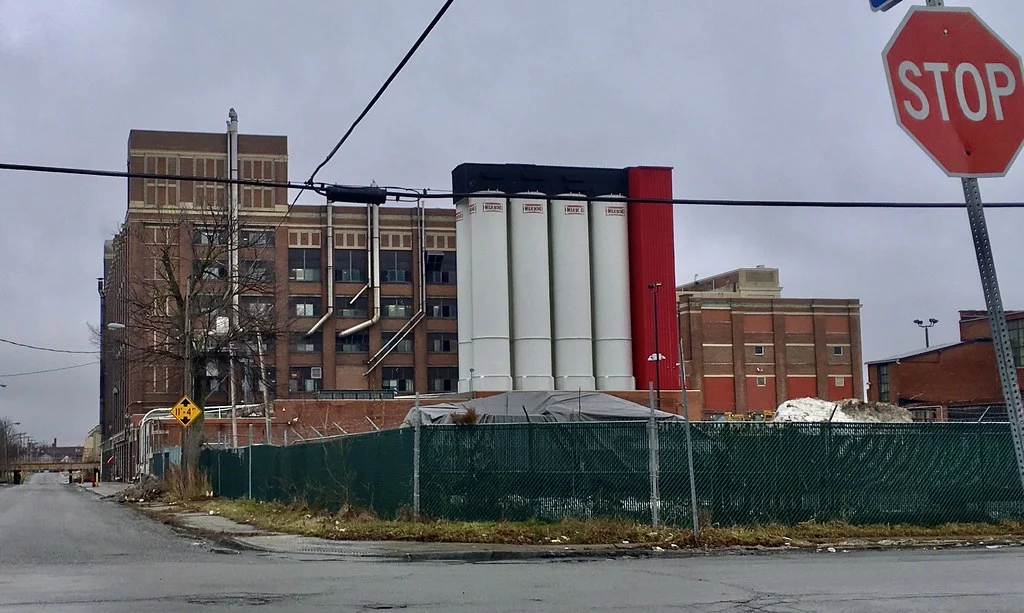
Greggs job cuts are not a routine restructuring story; they are a signal that even a well-known British bakery chain is being squeezed by persistent inflation and a still-fragile retail market. The company says it will cut about 740 roles and close four manufacturing sites over the next two-and-a-half years, a move that shows how price pressure has moved from a macroeconomic headline into a direct operational problem for the cost of living economy.
The announcement matters because Greggs is not a niche manufacturer. It is a high-frequency, value-led food brand whose model depends on tight coordination between production, transport and store replenishment. In other words, Greggs is not simply selling sausage rolls and sandwiches; it is managing a dense manufacturing and distribution system designed to keep products fresh, cheap and available. The closures therefore affect more than payroll. They change the shape of the company’s supply chain management and its logistics network.
The company’s own explanation is a familiar one: cost-saving. But the real issue is more specific. Greggs is trying to protect margins in an environment where ingredient costs, wages, energy and transport are all harder to absorb. That is the central tension in much of the modern food industry: value brands win volume, but volume only helps if the operating model stays lean enough to survive shocks.
What Greggs announced and why it matters
Greggs says the closures will be phased over roughly two-and-a-half years, which matters because this is not an emergency shutdown. It is a planned reconfiguration of production capacity. The gradual timeline suggests the company wants to shift output, retrain where possible and avoid a disorderly break in supply. That is sensible, but it also shows how difficult restructuring is in a network business: a bakery chain cannot close four sites and simply assume the remaining ones will absorb the load without consequences.
Central production is attractive because it standardises quality and spreads fixed costs over more units. Yet it also concentrates risk. The more a system depends on a smaller number of sites, the more a single disruption can ripple across stores, especially when the product must be delivered fresh and at low cost. This is where redundancy becomes more than a legal term: it is the human side of a design decision made to simplify the business.
The real question is not whether Greggs can cut costs. It is whether it can cut costs without weakening the freshness, availability and convenience that made those costs worth carrying in the first place.
Why inflation hits a bakery chain differently
Inflation affects a bakery business through multiple channels at once. Ingredients become more expensive. Energy bills rise. Packaging and transport costs climb. Labour becomes harder to budget for when wages move upward faster than expected. For a chain selling relatively low-ticket items, these increases are awkward because customers are highly sensitive to small price changes. That is why price elasticity of demand matters here: a modest price rise can preserve margin, but too much can damage volumes.
This is also why a company like Greggs cannot rely on brand power alone. The value proposition is simple and strong, but it is still a value proposition. If it moves too far away from its price anchor, customers will compare alternatives more aggressively. In a strained United Kingdom consumer market, where households remain careful about everyday spending, that risk is real even for a familiar high-street name.
That broader market pressure is why the announcement feels less like a one-off cost cut and more like a reaction to structural inflation in the UK economy. Official inflation releases from the Office for National Statistics are the most useful public guide to whether that pressure is easing, but even a slowdown in headline inflation does not automatically solve labour or energy costs for manufacturers.
Greggs job cuts: a strategic fix with real trade-offs
From a management perspective, Greggs job cuts can be read as a search for economies of scale. If production is concentrated in fewer sites, the company may reduce duplicate overhead, simplify maintenance and improve planning. If the product range is trimmed at the same time, forecasting can improve and waste can fall. In theory, that is good operations management.
But scale is only useful if it does not create fragility. A more concentrated network can save money and still be slower to respond to local demand shifts. It can lower unit costs and still increase transport complexity. It can make quality control easier and still make the business more dependent on a few critical facilities. The trade-off is not abstract; it is measurable in delivery timing, stock availability and the speed with which the business can react to demand swings.
| Strategy | Immediate benefit | Main risk |
|---|---|---|
| Close manufacturing sites | Lower fixed overhead and simpler operations | Longer distribution routes and less resilience |
| Increase automation | Reduced labour dependence and more consistent output | High capital cost and integration risk |
| Simplify the product range | Easier forecasting and less waste | Less choice and weaker customer appeal |
| Raise prices | Margin protection | Demand loss among price-sensitive shoppers |
That table captures the basic reality. Cost-saving moves rarely operate in isolation. If Greggs cuts factories, it may also need to adjust routes, production schedules and store ordering systems. If it invests in automation, it will need capital and implementation discipline. If it raises prices, it will test how much customer loyalty is real and how much is habit.
What the job losses mean for workers and local economies
The workforce impact is the most obvious part of the story, but it is also the part that gets flattened too easily into a number. A job cut is not just a line on a spreadsheet. It is a lost income, a change in household spending and, often, a blow to confidence. Under industrial relations, the way a company handles consultation matters almost as much as the announcement itself. Poor handling can leave lasting reputational damage that outlives the cost savings.
There is also a regional dimension. Greggs was founded in Newcastle upon Tyne, and that origin still matters symbolically. Plant closures in manufacturing communities are never received as purely technical decisions. They sit inside the longer British pattern of deindustrialization, where large employers have repeatedly reshaped local labour markets and left towns to absorb the fallout. That is one reason such moves have political and social weight well beyond the company itself.
For affected workers, the immediate practical question is not strategic but legal and financial. The UK government’s redundancy rights guidance sets out consultation rules, notice periods and pay entitlements. In other words, the humane response is not optional; it is part of the process. Firms that ignore that reality often discover that savings on paper turn into higher friction in practice.
Why this is not just a Greggs story
Greggs is unusually visible because it is a consumer brand, but the underlying problem is common across the UK retail and food industry. Businesses that sell affordable, repeat-purchase items are under constant pressure to hold prices down while absorbing higher costs upstream. That forces them to redesign supply chains, automate repetitive tasks and simplify operations wherever possible.
The real test is whether those changes create a stronger business or merely a smaller one. A leaner operating model can be an advantage if it improves resilience and execution. It becomes a problem if the company trims away the very capacity that makes speed, freshness and convenience possible. This is where the rhetoric of efficiency can be misleading. Efficiency is not the same as durability.
That is why the next phase matters. If the closures are accompanied by better forecasting, smarter scheduling and cleaner distribution, the company may preserve its customer offer while lowering overhead. If they are not, the savings could be offset by stockouts, weaker service or a more generic product line. In a value market, that is a serious risk because customers rarely reward a cheaper structure; they reward a better sandwich at a fair price.
What to watch next
The key indicators are straightforward. First, watch how Greggs handles the consultation process and whether it can redeploy workers into other parts of the business. Second, watch the company’s next pricing decisions. Third, watch whether the closures lead to a narrower product range, different delivery patterns or lower production flexibility. Those changes will reveal whether the restructuring is defensive or genuinely transformative.
Externally, the best context still comes from inflation and labour-market data. If the ONS inflation and price indices continue to show stubborn input pressure, more restructuring across the sector becomes likely. If costs ease but demand remains cautious, companies may still restructure to protect margins. Either way, the pattern points to the same issue: food retailers are being forced to do more planning with less room for error.
FAQ
Why is Greggs closing manufacturing sites?
Based on the company’s announcement, the closures are part of a cost-saving programme designed to reduce pressure from inflation and improve operational efficiency. The logic is straightforward: fewer sites can mean lower overhead, but only if the remaining network can absorb production without hurting service levels.
Will Greggs job cuts lead to higher prices?
Not automatically, but price increases remain possible. If Greggs cannot absorb rising costs through efficiency gains, it may pass some of them on to customers. The risk is that even small increases can matter in a price-sensitive market, especially for everyday food purchases.
What support do affected workers have?
Affected staff should be covered by standard UK redundancy rules, including consultation, notice and possible redundancy pay depending on eligibility. The practical starting point is the government’s redundancy guidance, and employees should also ask about redeployment, training support and any company-specific compensation arrangements.
The most important insight is that Greggs is not just cutting costs; it is trying to decide how much operational complexity it can remove before the business stops behaving like Greggs. The next few years will show whether the chain can centralise production, protect margins and still deliver the speed and affordability that built its brand. If it succeeds, the closures will look like disciplined restructuring. If it fails, they will look like the first step in a slower, less distinctive business model that saved money by narrowing its own advantage.
Frequently Asked Questions
¿Por qué Greggs está cerrando fábricas en lugar de limitarse a recortar gastos en otros ámbitos?
Porque su mayor presión no está solo en los salarios, sino en toda la cadena operativa: ingredientes, energía, transporte y distribución. Cerrar y concentrar la producción puede reducir costes fijos y mejorar eficiencia, pero también obliga a reorganizar la logística. En una red de productos frescos y de bajo precio, esa decisión afecta directamente al modelo de negocio.
¿Los 740 puestos eliminados se perderán de golpe?
No. La empresa ha planteado un proceso gradual durante unos dos años y medio. Eso sugiere que los recortes y cierres se irán haciendo por fases, con la intención de trasladar producción, evitar rupturas en el suministro y, en algunos casos, recolocar o formar a parte del personal. Aun así, el impacto laboral será significativo.
¿Estos cierres pueden encarecer los productos de Greggs para el cliente final?
Es posible, aunque no necesariamente de forma inmediata. La idea de la reestructuración es precisamente proteger márgenes y evitar subidas más agresivas de precios. Sin embargo, si la concentración de producción genera mayores costes logísticos o menos eficiencia, parte de esa presión puede acabar trasladándose al consumidor en el futuro.
¿Por qué la inflación afecta tanto a una cadena como Greggs si vende productos baratos?
Porque su negocio depende de vender mucho con márgenes ajustados. Cuando suben ingredientes, energía, transporte y mano de obra, incluso pequeñas variaciones impactan bastante. En productos de bajo ticket, una subida de precios demasiado grande puede hacer que el cliente cambie de hábito o compare más con otras alternativas.
¿Cerrar menos fábricas puede perjudicar la frescura o disponibilidad de los productos?
Sí, ese es uno de los principales riesgos. Centralizar la producción ayuda a estandarizar la calidad y reducir costes, pero también concentra la capacidad en menos lugares. Si surge una avería, huelga o problema logístico, el efecto puede extenderse más rápido a las tiendas y comprometer la disponibilidad de productos frescos.
¿Este anuncio significa que Greggs está en crisis?
No necesariamente en crisis, pero sí bajo presión. La medida parece más una reconfiguración defensiva que una reacción de emergencia. Greggs sigue teniendo una marca fuerte y un modelo de gran volumen, pero el comunicado muestra que incluso una cadena consolidada necesita ajustar su estructura para absorber la inflación y proteger su rentabilidad.