
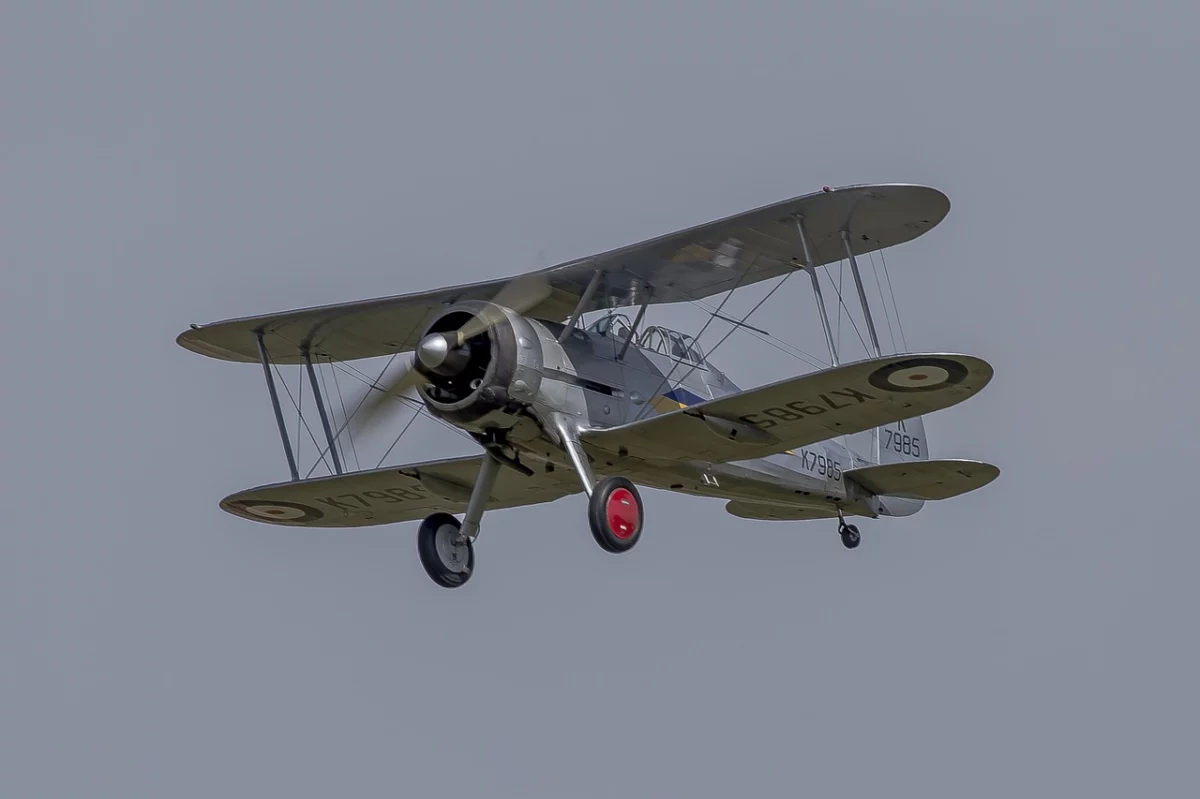
The crash of a vintage biplane in La Londe-les-Maures is not just a local tragedy; it is a live case study in light aircraft accident investigation. When a small aircraft goes down in a tourist region, the first public accounts are often fragmentary, emotionally charged, and technically weak. The investigation must do the opposite: reconstruct events with discipline, then test every assumption against physical evidence. That is why this kind of crash matters far beyond the people involved.
The aircraft type also matters. A biplane is not a modern airliner; it belongs to the world of light aircraft and general aviation, where operating margins are slimmer, weather tolerance is lower, and pilot judgment matters more minute by minute. That does not mean the aircraft is inherently unsafe. It means the causal chain in a crash can be short, and once the chain starts, there may be very little altitude or time to recover from an aviation accident.
Public discussion often jumps straight to blame: weather, engine failure, pilot error, or maintenance. Those are all plausible categories, but none should be treated as a conclusion without evidence. In a serious accident investigation, the real question is not which label fits first; it is which sequence of events turned a routine flight into an unrecoverable one.
Why this biplane crash matters beyond the headline
Small-aircraft crashes attract attention because they combine public visibility with technical ambiguity. The aircraft may be old, privately operated, or flown for pleasure, yet the investigation standards are still exacting. In France, the Bureau of Enquiry and Analysis for Civil Aviation Safety works within the broader international framework shaped by the International Civil Aviation Organization. That framework is designed to find causes, not to produce instant certainty for the public.
This is especially important for vintage or recreational flying. A biplane may look simple, but simplicity is deceptive. Age, restoration quality, operating environment, and pilot technique all affect airworthiness. If the aircraft was properly maintained, that still does not rule out a pilot-side issue. If the pilot was experienced, that still does not rule out a mechanical defect. In pilot-in-command terms, experience is relevant, but it is not a substitute for evidence.
The location also matters. La Londe-les-Maures sits on the Mediterranean coast, in an environment where wind shifts, thermal effects, and busy summer traffic can complicate low-level flying. A coastal setting does not automatically cause a crash, but it can magnify the impact of modest errors. In that sense, the setting is part of the analysis, not merely the backdrop.
How a light aircraft accident investigation is built
A credible light aircraft accident investigation starts with the wreckage and works outward. Investigators look for impact patterns, control-surface positions, engine signatures, fuel continuity, and any trace of pre-impact fire or structural failure. They also gather weather data, radio recordings, radar traces where available, witness statements, maintenance records, and pilot licensing information. The question is not whether any single item proves the cause. It is whether the combined record supports one explanation better than the alternatives.
Modern airline investigations often benefit from recorders, but many small aircraft do not carry a full flight data recorder. Some may carry an emergency locator transmitter, which can help locate a crash but does not explain it. That makes physical reconstruction more important, not less. It also means investigators must be alert to false certainty. A missing data stream is not proof of a particular failure; it is simply a gap that must be closed with other evidence.
The European and French systems are designed to avoid premature judgment. The BEA publishes interim and final reports, but those reports take time because material evidence has to be tested, not guessed. For readers trying to follow the process, the right mindset is to track what the investigators have actually confirmed, not what social media has decided.
Evidence investigators prioritize
| Evidence stream | Why it matters | Typical question |
|---|---|---|
| Weather and wind | Can change aircraft performance at low altitude | Was the flight conducted within safe limits? |
| Maintenance history | Reveals whether the aircraft met service requirements | Was the machine properly maintained and inspected? |
| Wreckage and engine condition | Shows whether power loss or structural breakup occurred | Did the aircraft fail before impact or because of impact? |
| Pilot actions | Clarifies speed, configuration, and decision-making | Was the pilot facing a recoverable situation? |
| Weight and balance | Affects controllability and stall margin | Was the aircraft loaded within limits? |
This list is not exhaustive, but it captures the core logic. In a light aircraft event, the difference between survivable and fatal can be a few seconds of margin, a few knots of airspeed, or a small maintenance defect that becomes critical under load.
The main failure modes in small-aircraft accidents
Weather and the coastal environment
Weather is often the first suspect because it changes quickly and it punishes low-altitude flying. Coastal air can produce gusts, turbulence, and abrupt wind changes that affect takeoff, approach, and low-speed maneuvering. The question of what causes a biplane to crash in coastal weather cannot be answered in the abstract, but it usually involves a combination of visibility, wind direction, air density, and the pilot’s reaction. A marginal condition may be manageable in a large aircraft, yet decisive in a small one.
That is why investigators will compare flight timing against local reports and official weather forecasting records. They will also look at whether the aircraft was close to a runway, a coast, or open terrain when the problem developed. Location is not destiny, but it shapes recovery options.
Stall and spin at low altitude
In light aircraft, one of the most dangerous pathways is a low-speed stall that develops into a spin. These are not exotic phenomena; they are basic aerodynamic limits. The problem is that at low altitude there may be no room for recovery. Weight, configuration, and center-of-gravity position all matter here, which is why investigators study center of gravity and weight and balance data so carefully.
A biplane can be stable and responsive when flown properly, but it is still an aircraft governed by the same physics. If the airspeed decays too far, or if the aircraft is banked aggressively during a turn, stall margin narrows quickly. That is one reason experienced pilots still need discipline: skill does not repeal aerodynamics.
Mechanical and maintenance issues
The second broad category is mechanical failure. Investigators will inspect the aircraft engine, fuel system, and control linkages to see whether the aircraft lost power, suffered fuel starvation, or experienced a component failure. They will also review the propeller for rotational damage that can indicate power at impact, though that evidence is never interpreted in isolation.
For older or enthusiast-operated aircraft, maintenance quality is often the decisive issue. A machine can look immaculate and still be vulnerable if inspections were incomplete, parts were fatigued, or modifications altered the certified configuration. In other words, cosmetic condition is not the same as technical condition.
Human factors and operational judgment
Many crashes in general aviation are ultimately traced to human factors: distraction, hesitation, poor fuel planning, overconfidence, or an overly optimistic assessment of the weather. That does not mean the pilot was reckless. It means the task demanded more margin than the situation offered. Investigators therefore look not only at logs and licenses, but also at recent flying experience, decision points, and workload in the final minutes before impact.
In a small aircraft, the pilot is the central system integrator. If the aircraft is flying high, the engine is healthy, and the weather is benign, there may still be a chain of bad decisions. Conversely, a skilled pilot can sometimes overcome a technical problem that would otherwise become catastrophic. The difference lies in timing and margin, not heroism.
Why vintage aircraft need stricter discipline
Vintage designs are not automatically unsafe, but they demand more from every layer of operation. A biplane may have higher drag, lower cruise efficiency, and a narrower performance envelope than a modern trainer. It may also depend on older certification assumptions and maintenance practices. That is why a question like general aviation safety cannot be answered by asking whether the aircraft was beautiful or historically significant. The only serious question is whether it was mechanically sound, properly flown, and appropriate for the conditions.
There is also a regulatory dimension. In Europe, oversight is shared across national authorities and the European Union Aviation Safety Agency. That matters because aviation safety is cumulative: design standards, pilot training, maintenance oversight, and reporting practices all influence the final risk profile. A vintage aircraft flown privately under good supervision can be entirely defensible. A similarly vintage aircraft flown casually, with weak maintenance discipline, is a different proposition.
This is where the public often misreads the story. The fact that the aircraft was a biplane does not prove that old aircraft are unsafe. The fact that the occupants were experienced or notable does not prove competence in the specific moment that mattered. Investigators need the chain, not the legend.
What the public should and should not assume
First, do not assume the cause from the headline. A crash report often names victims before it identifies technical causes. Those are separate questions. Second, do not assume that a single detail, such as the pilot’s background, tells the whole story. A retired military or airline background may indicate broad experience, but it does not reveal aircraft condition, weather exposure, or final handling.
Third, do not confuse location with causation. A holiday coastline can be busy and visually calm at the same time. That combination can tempt pilots into trusting conditions that are less forgiving than they appear. But until the BEA completes its work, the correct position is caution, not theory.
The disciplined answer in aviation is often uncomfortable: the real cause is usually not one thing, but a chain of small decisions, small degradations, and small errors that only become visible in retrospect.
How operators and passengers can reduce risk
For pilots and aircraft owners, the practical lessons are unglamorous but decisive. Respect weight and balance limits. Treat weather minima as hard constraints, not flexible suggestions. Document maintenance carefully. Verify fuel state physically, not just by assumption. Keep proficiency current, especially in stall recognition, go-around decisions, and emergency procedures. And if the aircraft is vintage, be more conservative, not less.
- Check the flight against conservative weather thresholds before departure.
- Confirm maintenance status and inspect the aircraft beyond the minimum paperwork.
- Review load, seating, and balance before engine start.
- Assume a low-altitude problem will leave little time for recovery.
- Carry and test survival equipment and the emergency locator transmitter where applicable.
Passengers also have a role, even if it is limited. They can ask whether the aircraft is maintained, whether the weather is suitable, and whether the pilot appears willing to delay or cancel. In general aviation, the safest culture is one where caution is not treated as weakness.
FAQ: how investigators and readers should interpret small-plane crashes
How are small plane crashes investigated?
Investigators combine wreckage examination, maintenance records, weather data, witness statements, and any onboard data. In France, the BEA leads this work, with the aim of identifying causes and safety lessons rather than assigning blame.
Are biplanes less safe than modern aircraft?
Not inherently. Safety depends on design, maintenance, pilot skill, and operating conditions. A biplane may be more demanding to fly and maintain than a modern trainer, but that does not make it unsafe by definition.
Why can coastal weather be risky for light aircraft?
Because wind, turbulence, and rapid changes in air mass can reduce margin during takeoff, approach, and low-speed flight. In a light aircraft, those margins are smaller than in larger transport aircraft.
How long does a probe usually take?
It varies. Simple findings may emerge quickly, but a full technical report often takes months because investigators must test competing explanations, not just publish the first plausible one.
What the probe still has to prove
The central unanswered question is not whether the crash was tragic; that is already clear. The unanswered question is whether it reflects an isolated event, a maintenance breakdown, a weather-related loss of control, or a deeper vulnerability in how vintage aircraft are operated in tourist regions. That distinction matters because only one of those outcomes points to a broad safety lesson.
Over the next few months, the BEA’s findings will matter for more than this single wreck. They will shape how operators think about weather limits, how inspectors evaluate older aircraft, and how the public understands risk in general aviation. The most important test of the report will not be whether it names a cause quickly. It will be whether it identifies the chain that others can interrupt before the next flight becomes the next investigation.
Frequently Asked Questions
Why is a vintage biplane crash harder to investigate than a modern aircraft accident?
Vintage biplanes usually have fewer onboard records, less standardized equipment, and more variation in maintenance history than modern aircraft. That means investigators cannot rely on cockpit data alone. They must reconstruct the flight from wreckage, weather, witness accounts, and aircraft condition, which makes the process slower and more dependent on physical evidence.
Does the age of the aircraft automatically imply a maintenance problem?
No. An older aircraft can be airworthy if it has been properly maintained and operated within its limits. Age may increase the number of variables investigators must check, such as restoration quality or parts fatigue, but it does not prove negligence. A maintenance issue is only one possible link in the chain, not the default conclusion.
Why do investigators avoid blaming weather, pilot error, or engine failure too early?
Because those categories are often only broad labels, not explanations. A crash may involve weather, pilot decisions, and a mechanical issue at the same time. Investigators try to identify the sequence of events, not just the first plausible cause. Premature blame can hide the actual failure chain and lead to wrong lessons.
How can a coastal environment affect a light aircraft flight without being the direct cause of the crash?
Coastal areas can create variable winds, changing visibility, and thermal effects that make low-level flying less forgiving. These conditions may not cause an accident on their own, but they can reduce the margin for recovery if something else goes wrong. In light aircraft, even modest environmental stress can quickly become critical.
If there is no flight data recorder, how can an investigation still reach a reliable conclusion?
Investigators can still build a strong case by combining wreckage analysis, engine examination, fuel evidence, maintenance logs, radar data, radio traffic, and witness statements. None of these sources is perfect alone, but together they can support or exclude specific scenarios. The absence of a recorder is a limitation, not a dead end.