
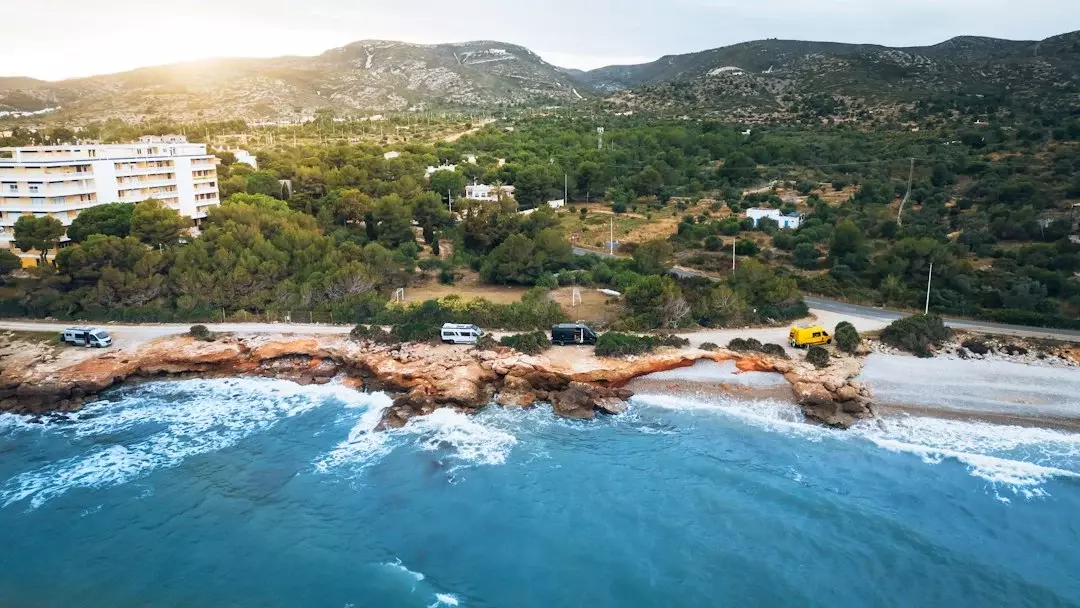
The Costa del Sol wildfire that forced five helicopters and more than 60 firefighters into action is more than a dramatic summer headline. It is a clean example of how fast a wildfire can turn a popular stretch of the Costa del Sol into an emergency zone. The immediate challenge is tactical: stop the flames before they reach homes, roads, or dense scrub. The deeper issue is structural: this coastline is a textbook wildland-urban interface, where tourism, permanent settlement, and fire-prone vegetation sit uncomfortably close together.
Reports on the blaze near a village popular with British expats described a level one emergency, meaning the fire had crossed the threshold where local capacity alone was no longer enough. That matters. A designation like this is not just administrative language; it is a signal that emergency management has moved from routine response to coordinated escalation. It also highlights a hard truth about Andalusia: when summer heat, dry fuels, and wind line up, the region’s firefighting model is tested in minutes, not hours.
What the blaze reveals before the smoke clears
According to the initial reports, the fire spread quickly enough to justify aerial attack and a large ground deployment. That combination is standard in serious Mediterranean fires: helicopters can slow the front, but ground crews must build containment lines, protect structures, and exploit any gap in the weather. The fact that the blaze prompted five helicopters suggests that authorities treated it as a real containment threat rather than a small brush fire. In fire terms, that is often the moment when the outcome is still negotiable.
There was also early speculation that the ignition may have started near a small Catholic site. If that detail is confirmed, it would underline a common pattern in southern Europe: ignition often begins in ordinary places, not dramatic ones. A roadside verge, a neglected plot, an electrical fault, a discarded cigarette, or work near buildings can be enough when fuels are dry. The origin matters for investigators, but the scale of the emergency is decided by terrain, weather, and fuel continuity.
The critical variable in a serious coastal fire is not just where it starts, but whether the landscape lets crews stop it before wind and slope do the rest.
Why the Costa del Sol burns so easily
Mediterranean climate is a fire climate
The coast around Málaga and the wider Málaga province sits inside a classic Mediterranean climate: wet enough in parts of the year to grow abundant vegetation, then hot and dry enough in summer to cure that same vegetation into fuel. This is why a green spring can be deceptive. By late summer, the same hillsides can become highly combustible. Fire behavior in this setting is shaped by fire ecology, which explains how vegetation, heat, wind, and ignition interact over time.
The problem is not simply vegetation. It is continuity. Dense scrub, pine stands, roadside verges, abandoned plots, and ornamental plantings create fuel corridors that allow flames to move rapidly. Once a fire is pushed by wind, even relatively modest slopes can accelerate it. In the coastal hills of southern Spain, this can produce a situation where a fire that starts small becomes difficult to suppress before first responders even fully establish a line.
Tourism, settlement, and the risk of proximity
The Costa del Sol is not just a coastline; it is a built environment layered onto a fire-prone one. Resorts, detached homes, villas, restaurants, and transport corridors often sit close to vegetation. That makes the area economically valuable and operationally difficult. A fire near a tourist zone creates immediate pressure to protect lives, roads, and critical access points, while also avoiding panic among residents and visitors. This is where tourism and fire management collide.
Long-term expatriate communities intensify the challenge. Permanent residents may understand local fire seasons, but short-term visitors often do not. They may underestimate evacuation urgency, delay decisions, or try to protect property too long. That is one reason local authorities increasingly rely on rapid alerting, traffic control, and clear evacuation advice. In a coastal corridor, hesitation can be dangerous because roads can jam quickly and smoke can reduce visibility before flames arrive.
Why helicopters help, but do not solve the problem
Aerial firefighting is support, not victory
The sight of helicopters over a wildfire is reassuring, but it can also create a false sense of control. Firefighting helicopters and other forms of aerial firefighting are useful because they slow the spread, knock down hotspots, and buy time. They do not, by themselves, eliminate the fuel on the ground. If the wind shifts, if smoke reduces visibility, or if the terrain is too steep, water drops only delay the fire’s next move.
This is why serious wildfire response is always a mixed operation. Air assets suppress, ground crews hold, and command teams decide where to concentrate resources. The aircraft become most valuable when they allow firefighters to safely construct a line or defend a building. In other words, the helicopter is a multiplier, not the strategy. That distinction is often missed in public coverage, which tends to treat a large air response as proof that the situation is already under control.
Ground crews still decide the outcome
At the point where crews can reach the edge of the fire, the job shifts from spectacle to grinding logistics. Hose lays, hand tools, backfiring only when authorized, and road access become decisive. The right shoulders of roads, the placement of vehicles, and the ability to move personnel without blocking each other can matter as much as flame height. This is also why local road networks and defensible access routes are part of wildfire emergency response in Spain, not just a municipal planning detail.
There is a practical limit to how much aircraft can achieve if the ground layout is poor. A steep slope, dead-end road, or gated development can create blind spots. So can unmanaged roadside vegetation. The most effective systems pair aerial attack with pre-planned access, fuel breaks, and local knowledge. Without that, helicopters become an expensive way to delay a problem that will return with the next wind event.
What residents and visitors should actually do
When smoke appears near the coast, the correct response is not curiosity. It is preparation. The most useful advice is plain, because wildfire leaves little room for improvisation.
- Follow local emergency alerts immediately and keep your phone charged.
- Know two evacuation routes, not one, because traffic can close a coastal road in minutes.
- Pack medication, passports or ID, chargers, water, and essential documents early.
- Close windows, shutters, and vents if told to shelter, but do not delay evacuation once ordered.
- Do not drive toward smoke or try to reach a property after authorities have closed access.
- If you are staying in a hotel or rental, ask staff in advance how evacuation is handled.
For homeowners, prevention is more effective than reaction. Clear dry vegetation, remove combustible debris near structures, and keep access points open for emergency vehicles. Use local guidance rather than assumptions, because rules and distances vary by municipality and region. The point is not to make a home fireproof. The point is to reduce the chance that a small ignition becomes a house loss.
Visitors often think the safest move is to wait for more information. In wildfire situations, that is usually the wrong instinct. Smoke, ash, and road congestion move faster than reassurance. If a local authority says leave, leave.
Why this keeps happening on the same coast
The recurring issue on the Costa del Sol is not just weather. It is the combination of climate, land use, and governance. As hotter summers become more common, the margin for error shrinks. Climate change does not ignite a fire by itself, but it increases the likelihood that a spark becomes a severe incident. More heat, more evaporation, and longer dry periods make drought-stressed vegetation easier to burn.
That is the uncomfortable part of the analysis: more helicopters will not fix a landscape problem. The long-term answer is fuel management, better land maintenance, stricter control of risky ignitions, and planning that treats the coast as a fire landscape rather than merely a real-estate market. Forest fire policy in Mediterranean regions increasingly depends on whether authorities can intervene before summer fuels accumulate to dangerous levels. In practical terms, that means maintaining firebreaks, clearing interfaces, and coordinating across public and private land.
There is also a policy issue hiding inside the economics of coastal development. A place can be highly valuable for tourism and still be badly designed for fire safety. That tension has long shaped the Mediterranean coast, where growth often outruns the infrastructure needed to protect it. In the next few years, the key question will not be whether fires continue. It will be whether planning finally catches up to the fire regime.
What this blaze means for the next fire season
The important insight is straightforward: the Costa del Sol wildfire is not an isolated event, but a stress test of the region’s fire resilience. If aerial units, ground crews, alerts, and evacuation planning worked well, then the incident becomes a case study in effective response. If they were merely sufficient by luck, then the next fire may expose the gap. That is why the real measure of success is not the number of helicopters in the sky. It is whether the next ignition finds a landscape that is harder to burn, faster to defend, and easier to evacuate.
Watch three things closely. First, whether local and regional authorities tighten fuel management before peak summer heat. Second, whether residents and property managers improve preparedness rather than assuming emergency crews will carry the burden. Third, whether climate-driven fire seasons force a shift from reactive suppression to prevention-first planning. The unanswered question is whether the Costa del Sol will continue to treat wildfire as an emergency that arrives every summer, or as a predictable risk that can be designed against before the first plume rises.
Frequently asked questions
Why is the Costa del Sol prone to wildfires?
Because it combines a Mediterranean climate, dry summer fuels, and dense settlement near vegetation. That mix creates frequent fire pressure, especially when wind and heat align.
Are helicopters enough to stop a wildfire?
No. Helicopters are useful for slowing spread and protecting structures, but the fire is won or lost on the ground through containment lines, access, fuel conditions, and weather.
What should tourists do during a Costa del Sol wildfire alert?
Follow local instructions immediately, avoid affected roads, prepare documents and medications, and leave early if evacuation is ordered. Do not wait to see the flames before acting.
Does a level one emergency mean everyone must evacuate?
Not necessarily. It means authorities have escalated coordination and resources. Whether a specific area evacuates depends on the fire’s behavior, proximity to homes, and local command decisions.
Frequently Asked Questions
What does a level one emergency actually mean in a wildfire like this?
A level one emergency means the fire has exceeded what local resources can comfortably handle and needs a more coordinated response. It does not automatically mean the fire is catastrophic, but it does signal that the situation could worsen quickly. In practice, it triggers escalation, additional crews, and closer regional coordination to protect people and infrastructure.
Why are helicopters deployed if ground crews still have to do most of the work?
Helicopters are used to slow the fire front, cool hotspots, and buy time for ground teams. They cannot build containment lines or secure a perimeter on their own. In a fast-moving coastal fire, aerial water drops are often the difference between a manageable incident and a fire that reaches homes or critical roads before crews arrive.
Why does the Costa del Sol seem so vulnerable even when the landscape looks green?
A green landscape can still be highly flammable. Mediterranean vegetation grows heavily in spring, then dries out in summer and becomes fuel. On the Costa del Sol, the problem is made worse by continuous scrub, pine stands, roadside vegetation, and abandoned plots, which let flames spread quickly once wind and heat combine.
Does it matter where the fire started, such as near a small religious site or roadside area?
It matters for investigators, but not necessarily for the fire’s scale. Many serious wildfires begin in ordinary places like verges, plots, or near buildings. What determines the outcome is usually the surrounding fuel, terrain, wind, and how quickly crews can stop the spread before the fire gains momentum.
Why is the Costa del Sol harder to protect than a more rural area?
Because it is a wildland-urban interface, where homes, hotels, roads, and vegetation are tightly mixed together. That means firefighters must do two jobs at once: suppress the fire and protect people and property. In tourist areas, they also have to manage evacuations, traffic, and public panic, which slows the response.
What should visitors or residents do if a wildfire breaks out nearby?
They should follow official evacuation instructions immediately, avoid driving toward smoke, and keep roads clear for emergency vehicles. It is also important to close windows, prepare identification and essentials, and not assume the fire will stay small. In fire-prone coastal areas, early action matters because conditions can change very fast.